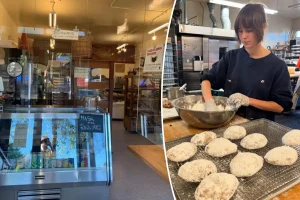


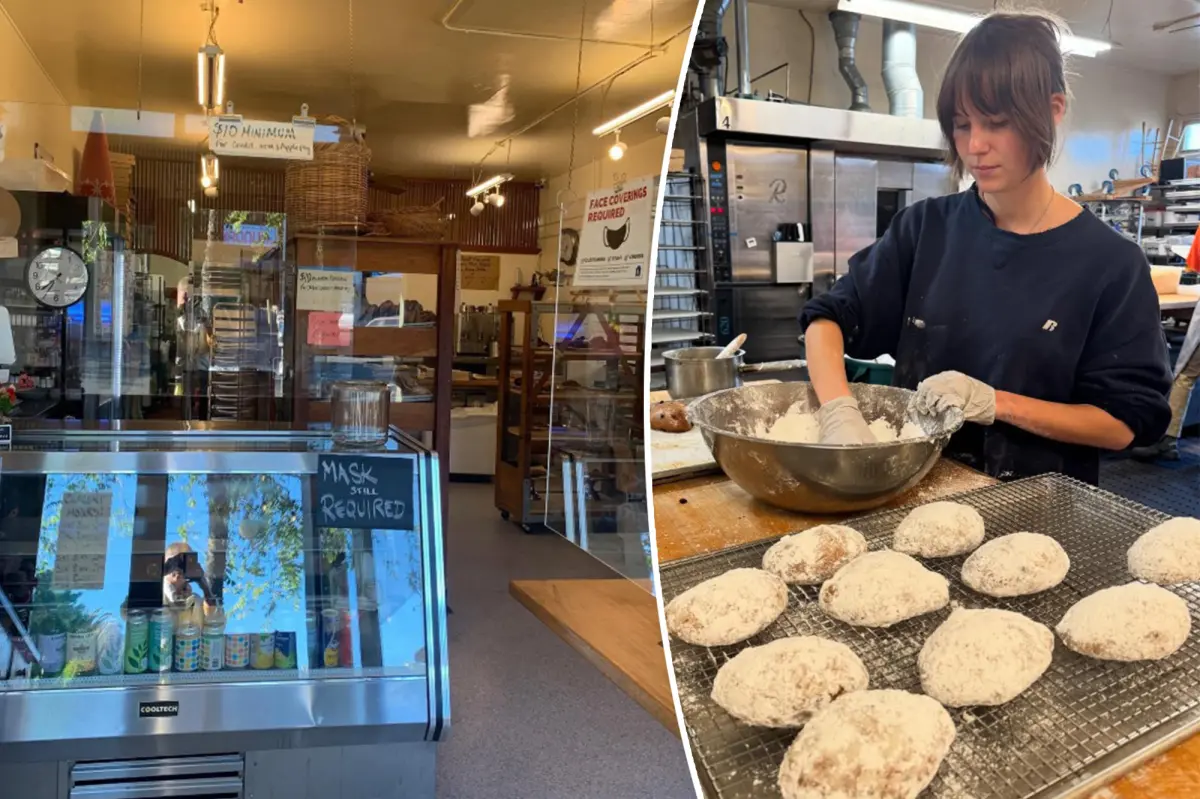
On Sunday, a cherished California bakery will close its doors for good, ending a fifty-year chapter that made it a cornerstone of a Berkeley neighborhood. Nabolom Bakery & Pizzeria, known for its glistening fruit danishes, braided challah, cinnamon-scented twists, and generously topped vegetarian pizzas, has decided to shut down after decades of service. For five decades, the bakery was woven into the daily rhythms of the city. It greeted the morning with coffee and pastries, marked the approach of the Sabbath with freshly baked challah, and offered a comforting slice of pizza to students, families, and longtime residents. It was not just a storefront; it was a place where birthdays were celebrated, where conversations drifted across worn tables, and where the simple pleasure of eating something made by hand gave people a reason to slow down. Co-owner Sabra Stepak confirmed the news to SFGate, explaining that the bakery could no longer survive the mounting pressure of rising costs and relentless competition. But for the people of Berkeley, the loss is more than a business failure. It is the disappearance of a familiar, warm presence that has been a quiet backdrop to so many moments in their lives. In a city that prizes character and history, Nabolom was a living piece of both. Its display cases were a small museum of comfort, and its aroma carried the memory of thousands of mornings. After fifty years, the final loaf will be baked, the last pizza will slide from the oven, and the lights will go out on an institution that gave the community so much more than food.
Stepak did not hide the truth when explaining why this moment had arrived. In an interview with SFGate, she described the crushing economic reality that has become all too familiar for small businesses across California. “It’s something that’s going on with all small businesses,” she said. “Chocolate has increased three times. My PG&E has gone up like 70%.” The cost of ingredients, utilities, labor, and insurance have all climbed relentlessly, while the price customers are willing to pay for a croissant or a loaf of bread can only stretch so far. At the same time, employee turnover makes it difficult to keep a trained and trustworthy team, and competition from large grocery chains, sleek coffee shops, and delivery apps has pulled customers in every direction. For Nabolom, there was no single catastrophe, no dramatic fire or sudden crisis. Instead, there was a slow, grinding squeeze that made each month harder than the last. The mathematics of running a bakery stopped working. The gap between what it cost to produce a perfect cinnamon twist and the price at which it could be sold grew thinner every week. Stepak spoke with the weariness of someone who had fought for years, someone who had tried every creative solution and still found the tide impossible to turn. Her honesty echoes a broader story about the fragility of independent businesses in an economy that often seems designed to swallow them. Nabolom was not closed because the owners stopped caring, but because caring alone could no longer pay the bills.
News of the closure sparked the kind of outpouring that many small-business owners can only dream of, and for Nabolom, it came in the very last days. On Friday morning, a line stretched out the door between eight and eleven o’clock, and by early afternoon the bakery had sold through almost all of its pastries. “We’ve probably had our most viable days in 10 years, probably three times more than we usually sell,” Stepak said. The rush was bittersweet, a burst of love arriving just as the shop was about to disappear. Customers who had once visited every week made a special trip to say goodbye, while newcomers who had never stopped in before suddenly understood what they had been missing. On social media, longtime patrons shared their grief. “Without a doubt, the recent incarnation of Nabolom with Julia and Sabra, was THE BEST BAKERY in Berkeley,” one user wrote. “I have lived in Berkeley for 60 years, and now grieve!” The comments were filled with memories of birthday cakes, quiet afternoons, post-school snacks, and late-night pizzas. It was never just about the food, though the food mattered deeply. It was about the warm lighting, the familiar faces, the sense that this was a place where you belonged. The last-minute rush was also a painful reminder that institutions like Nabolom are rare and irreplaceable. They cannot be summoned back once they are gone. The line out the door on Friday was proof that the bakery still meant something, even as the owners could no longer find a way to keep it alive.
The story of Nabolom is one of remarkable resilience. It began in 1976 as a worker collective, a radical experiment in shared ownership and cooperative decision-making that reflected the values of Berkeley at the time. For decades, the bakery built a reputation as a neighborhood anchor, known for its handmade breads, pastries, and the kind of quiet, unpretentious quality that keeps customers coming back for a lifetime. But the road was never easy. In 2004, the owners announced that the business was nearly thirty thousand dollars in debt and two months behind on rent. Faced with the possibility of closing, they tried to rally the community, taking advance payment for baked goods and expanding into new offerings like gourmet pizza and live events. It was a creative and desperate effort, and it bought the bakery more time. But in 2015, after several members of the collective left, Nabolom finally closed its doors. It seemed like the end of the story. A year later, however, Sabra Stepak and Julia Elliott stepped in. They bought the business, paid off most of its debt, and transitioned it from a collective to private ownership. They revived the bakery, restored its charm, and gave Berkeley another decade of challah, danishes, and beloved vegetarian pizzas. The revival was a labor of love, and it proved how much the bakery meant to the people who refused to let it die. Yet the underlying fragility never fully disappeared.
Now, the second goodbye feels even heavier. The recent flood of support has been affirming, but it cannot erase the long, exhausting years behind the scenes. “We’ve agonized over it and we just can’t do it anymore,” Stepak said. “We’re exhausted.” Those words carry the weight of every early morning and every late night, every broken oven and every difficult conversation about money. A bakery is not just a shop; it is a living, breathing thing that demands constant attention. It requires someone to wake before sunrise, to mix, shape, proof, bake, and clean, to manage staff, to greet customers, to worry about the weather, the rent, the price of butter, the flickering light in the dining room. Stepak and Elliott poured their time, their savings, and their hearts into Nabolom. They asked themselves again and again whether there was another way, whether they could restructure, downsize, or find a partner. Stepak said she remains open to selling the business to someone willing to continue it, but finding a buyer in today’s economy is no small task. For now, the priority is honoring the people who made the bakery special: the staff, the regulars, and the neighborhood that welcomed them for so long. The final days have become a slow, moving farewell. The display cases are emptying, the ovens are cooling, and the familiar rhythm of the day is winding down. Even in exhaustion, there is pride. Stepak and Elliott saved a Berkeley institution once, gave it new life, and gave the city another decade of sweetness. That is a gift that will not easily be forgotten.
The closure of Nabolom is part of a painful pattern unfolding across the country. Independent businesses, especially food businesses, are being squeezed by rising rents, corporate competition, shifting work habits, and the long shadow of the pandemic. But each closing is also irreducibly local. Berkeley will lose a particular smell, a particular taste, a particular gathering place. The void will be felt in the morning lines that will no longer form, in the quiet afternoons that once held the soft hum of conversation, in the families who always picked up challah for Friday night dinners and the students who shared a slice of pizza after class. What remains is memory, and perhaps a lesson. The last days of Nabolom showed what a community can do when it refuses to let a place go without saying goodbye. The long line on Friday and the sold-out pastry cases were a final tribute to five decades of craft, care, and connection. They were also a reminder to show up for the small businesses we love long before they are in danger. If a buyer emerges, Nabolom may yet rise again, transformed but still carrying its history. If not, it will join the long list of cherished institutions that live on in stories and taste memories, in the way a particular recipe is passed down or the way a familiar scent can bring back an entire afternoon. For now, Sunday will be a day of endings. The ovens will go dark, the chairs will be stacked, and the doors will be locked for the last time. But the sweet legacy of Nabolom—the fruit danishes, the cinnamon twists, the challah, and the people who made them—will not disappear overnight. It will linger in the hearts of a grateful city, in the collective memory of everyone who ever found comfort in its warm, fragrant air.