



Toto Pitches Cardano Treasury on $22.4M Tokenized Copper Plan, Eyeing a New Era for Real-World Assets
A High-Stakes Proposal Lands in Cardano’s Treasury Debate
The Cardano community is facing a decision that could redefine what a blockchain treasury is allowed to own. Toto, a company building a platform for tokenized physical copper, has formally asked the Cardano treasury for 22.4 million ADA to finance the launch of a copper-backed token ecosystem. The proposal has quickly become one of the most closely watched governance events in Cardano’s recent history, not only because of the size of the request but because it would push the network into the world of physical commodities. Monty Metzger, Toto’s founder and chairman, framed the pitch as both an investment and an experiment. In an email to CoinDesk, he said copper prices have the potential to climb sharply over the next two years, making the commodity an attractive asset for a treasury looking to diversify beyond volatile crypto markets. “Copper has significant upside potential, with bullish scenarios projecting approximately 30% annual appreciation,” Metzger wrote. “At that rate, copper would appreciate 69% over 24 months, potentially more than covering the 49.4% break-even threshold.” But he was quick to caution that the market does not move in one direction. “Of course, commodity prices can also decline,” he added. The proposal arrives at a moment when tokenized real-world assets are becoming one of the most talked-about sectors in blockchain, yet most of that activity remains concentrated on Ethereum. Toto’s plan to use Cardano as a second home for copper tokens could signal a shift in how smaller networks compete for institutional-grade asset tokenization. For Cardano, which has often been criticized for lagging behind in the decentralized finance race, this proposal represents a chance to enter a new market with a tangible, industrial asset rather than another speculative digital token. But it also carries real risks, and the community is clearly divided over whether the treasury should be used to buy physical copper in the first place.
Copper’s Moment: Why the Red Metal Is Suddenly So Attractive
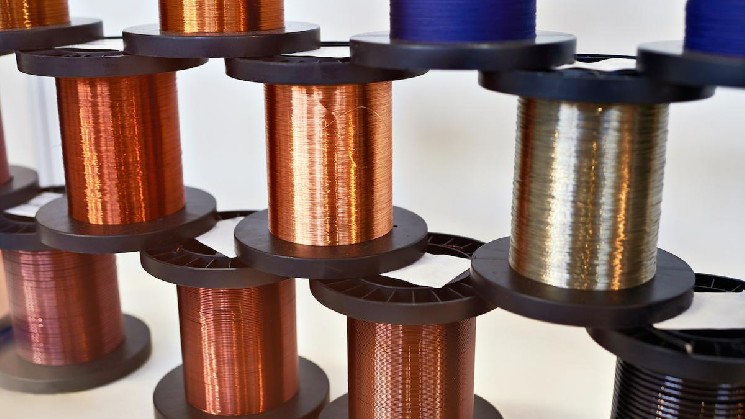
Toto’s thesis rests on copper’s unique position in the global economy. The metal is essential for everything from construction and power grids to electric vehicles, data centers and renewable energy infrastructure. As the world accelerates toward electrification, demand for copper is expected to rise dramatically, while supply remains constrained by mining challenges, declining ore grades and environmental permitting delays. This supply-demand mismatch is what makes copper a compelling candidate for tokenization. By putting copper on a blockchain, Toto aims to create a liquid, tradable asset that can be held by anyone, without the logistical headaches of storing physical metal. The proposed structure would allow ADA holders to effectively gain exposure to a commodity that has historically been difficult for individuals and decentralized organizations to access. Metzger’s numbers are central to the argument. A 30% annual appreciation rate would compound to roughly 69% over 24 months, which would surpass the 49.4% appreciation needed for the proposal to break even. In other words, if copper performs anywhere near the bullish projections, the Cardano treasury could come out well ahead. But the downside is just as real. Copper prices have historically been cyclical, swinging with global manufacturing trends, trade policy and macroeconomic shocks. A sudden recession or a slowdown in Chinese industrial output could send prices downward, leaving the treasury with a depreciating asset and questions from the community about whether the risk was worth it. That uncertainty has made the proposal a lightning rod for debate, with some praising the ambition and others warning that the treasury should not be used to speculate on commodities. Still, Toto’s broader vision is about more than copper’s near-term price. The company sees itself as a pioneer in the tokenized real-world asset space, and it wants Cardano to be part of that story. If successful, this could open the door to other commodity-backed projects, from gold and silver to lithium and rare earth metals, all of which are critical to the clean energy transition.
Inside the 22.4 Million ADA Budget: Where the Money Goes
The financial structure of the proposal is complex, and Metzger is keen to emphasize that Toto is not in it for the upside. “Toto takes no profit from this proposal,” he said, adding that much of the additional spending comes from Cardano’s constitutional requirements for oversight and auditing. The budget includes 2.64 million ADA allocated to Toto for technology and project management, along with a 441,732 ADA execution fee. On top of that, Toto could receive up to 278,291 ADA through a margin on third-party storage and insurance invoices, which are included in the operating budget. Combined, those payments could reach approximately 3.36 million ADA, or roughly 15% of the total request. The rest of the funds would be used to purchase physical copper, arrange secure storage, pay for insurance, and cover the legal and compliance costs associated with operating a commodity-backed token platform. The large percentage of the budget going to non-operational costs is a direct result of the governance framework in which the proposal exists. Cardano’s constitution is designed to protect the treasury from misuse, but that protection comes with administrative overhead. Audits, community reviews, and ongoing reporting requirements all add to the total cost. For Toto, this is a necessary price for legitimacy. For critics, it raises the bar for what the project must achieve. The proposal effectively needs copper prices to rise by nearly 50% over two years just to break even, a threshold that becomes harder to hit when administrative expenses consume a meaningful share of the capital. Supporters, however, argue that the structure is appropriate for a public blockchain treasury, where transparency and accountability are paramount. The more detailed and audited the proposal, the more confidence the community can have that the funds are being handled responsibly. Toto’s willingness to submit to that scrutiny may itself be a signal that the company is serious about delivering a working product rather than simply extracting value from the ecosystem. In a governance environment where trust is the ultimate currency, that level of openness could make the difference between approval and rejection.
What Toto Keeps, and What the Cardano Treasury Gets Back
One of the most striking aspects of the proposal is what Toto stands to retain. The company would keep the platform’s commercial rights and any income generated by its separately funded CuTT business. That means Toto could benefit from the growth of tokenized copper beyond the boundaries of this specific treasury proposal, even while the Cardano treasury bears much of the upfront risk. The treasury’s financial return, by contrast, would come from copper sales and from any unused funds left at the end of the project. If copper prices rise as projected, the treasury could sell its copper at a profit and recoup its investment. If prices fall, the treasury would be left with a loss, and Toto would still have its platform and commercial operations. Metzger made no secret of the company’s ambitions. He said Toto wants to scale the product to “$5 billion in tokenized copper assets” and described Cardano as a potential “flagship showcase.” That language has generated both excitement and concern. Some see a visionary company using Cardano’s treasury to bootstrap a new asset class. Others see a misaligned incentive structure in which Toto captures the long-term value while the treasury takes on the commodity risk. Toto’s defenders would argue that the company’s success depends on the platform’s overall adoption, not just the treasury’s investment. If Cardano becomes the network where billions of dollars in copper are tokenized, the ecosystem itself benefits through fees, user activity, and attention. That could make the proposal a strategic investment in Cardano’s position within the tokenized real-world asset sector, rather than a simple bet on copper prices. The outcome will likely hinge on whether the community believes Toto can actually deliver a secure, reliable platform that attracts third-party users. A successful launch would validate the idea that Cardano can support physical commodity markets. A failure, or a half-finished product, would set back the entire narrative around blockchain-based commodities and make future treasury proposals far more difficult to pass.
Ethereum First, Cardano Second: The Bridge Strategy
The technical design of Toto’s platform is another important piece of the puzzle. The copper tokens would first be minted on Ethereum, where the infrastructure for tokenized assets is most mature. They would then be locked in a bridge, a piece of software that enables matching tokens to be issued on Cardano. In theory, this allows the same physical copper to back tokens on two different blockchains, making the asset accessible to both Ethereum’s established DeFi ecosystem and Cardano’s growing network. But the plan is not without complications. The smart contracts and security reviews for the bridge remain future work, according to Metzger. That is a significant caveat, especially in a market where blockchain bridges have frequently been targeted by hackers. A vulnerability in the bridge could result in the loss of the underlying tokens, and by extension, the copper they represent. The decision to launch on Ethereum first is pragmatic. Metzger noted that trackers of tokenized real-world assets have “historically focused heavily on Ethereum-based assets.” By issuing the tokens on Ethereum initially, Toto gains visibility and credibility within the broader crypto market. Cardano, in turn, gets a chance to participate in a major real-world asset project without having to build all of the infrastructure from scratch. The bridge also reflects a growing reality in the blockchain industry: no single network can dominate every use case. Cross-chain interoperability is becoming the norm, and projects like Toto are exploring how to use multiple networks together. For Cardano, the proposal offers a way to plug into the rapidly expanding tokenized commodities market while still maintaining its own governance and treasury systems. The question is whether the technical risk can be managed well enough to protect the treasury’s investment. If Toto can deliver a secure bridge and transparently track the copper holdings, the project could become a landmark example of cross-chain real-world asset tokenization. If not, it could become another cautionary tale about the dangers of prioritizing speed over security.
A Defining Vote for Cardano and the Future of Tokenized Commodities
At its core, this proposal is about more than copper. It is about whether a blockchain treasury should take an active role in the physical world, whether tokenized commodities can be a legitimate asset class, and whether Cardano can compete with Ethereum in the race to tokenize real-world assets. The decision will be made by ADA holders through Cardano’s governance process, a system that is itself still evolving. A vote to approve the proposal would signal that the community is willing to take calculated risks in pursuit of innovation and diversification. It would also send a message to the broader crypto industry that Cardano is open to ambitious real-world asset projects, even ones that involve physical commodities and cross-chain infrastructure. A rejection, on the other hand, would be a clear statement that the treasury should remain conservative, focused on preserving capital rather than speculating on copper. Metzger, unsurprisingly, is optimistic. He sees Toto’s proposal as a potential turning point, a way to prove that Cardano can handle the complexity of tokenized commodities while generating real returns for the treasury. “Cardano could become our flagship showcase,” he said, and if the project succeeds, that showcase might attract other companies looking to bring everything from gold to lithium to rare earth metals onto the blockchain. The global market for tokenized assets is still young, but it is growing quickly. Copper, with its industrial importance and price volatility, could be one of the most interesting early experiments. For Cardano, the stakes are high. The treasury has a finite amount of ADA, and how it is deployed will shape the network’s development for years to come. Toto’s proposal offers a vision of a treasury that is not just a holding pool but an active participant in the emerging on-chain economy. Whether that vision is too risky, too early, or exactly what Cardano needs will ultimately be up to the community to decide. Either way, the debate itself is a sign that decentralized governance is working, and that Cardano is willing to ask hard questions about its future.