



Monero Futures Open Interest Nears Record High as XMR Leverage Builds Once Again
The privacy coin’s derivatives market is flashing a warning that feels all too familiar after January’s violent selloff.
Leverage Returns to the Forefront of Monero Futures
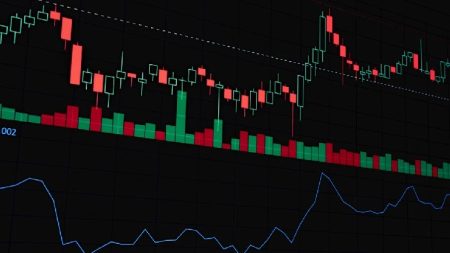
Monero has always been a different kind of cryptocurrency. It is built for privacy, it operates in the shadows of the broader digital asset market, and it attracts a fiercely loyal community that values anonymity above all else. But the signal flashing right now has less to do with the coin’s privacy features and more to do with the mechanics of risk. According to fresh market data, leveraged positions in Monero futures have once again drifted into dangerous territory. Total open interest in XMR futures has climbed beyond $300 million, bringing the market within striking distance of the record high of roughly $320 million set in January. That number is far more than a technical curiosity. It is a reflection of how much borrowed capital is currently riding on the next move in Monero’s price. When open interest expands this quickly, it usually means traders are piling into positions with borrowed funds in pursuit of outsized returns. And when a market becomes loaded with leverage, it also becomes vulnerable to sudden, cascading liquidations. For Monero, the current setup is uncomfortably reminiscent of the last time this happened. The previous surge in open interest ended with a crash that wiped out two-thirds of the coin’s value in a matter of weeks. No one can say with certainty that history will repeat, but the market is once again walking a narrow ridge with a heavy pack on its back.
The speed of the move has caught the attention of derivatives analysts as much as the size of it. In dollar terms, open interest has surged from a far more modest level in a relatively short span, and the shift has been even more pronounced when measured in Monero itself. The latest figures show that open interest has reached a five-week high of approximately 515,730 XMR. Just a week earlier, that number stood closer to 400,000 XMR. The jump represents a significant influx of new positions in a market that does not always attract this kind of speculative energy. More importantly, it suggests that the current wave is being driven by momentum-seeking traders rather than by investors quietly accumulating exposure over time. When leverage arrives that quickly, it tends to leave the market brittle. There is usually no cushion to absorb a sudden reversal, and the same contracts that helped push prices higher can become forced sell orders when the direction changes. For Monero, that is not a hypothetical risk. It is a pattern that has already played out once this year.
What Rising Open Interest Means for XMR Traders
To understand why this matters, it helps to look more closely at what open interest actually represents. Open interest is the total number of futures contracts that have been opened but not yet closed or settled. It is different from trading volume, which measures how many contracts change hands over a given period. Volume is activity; open interest is exposure. When open interest rises, it means new money is entering the futures market and new positions are being created. When open interest falls, it means positions are being closed, either by choice or through liquidation. That distinction is crucial because open interest tells analysts how much leverage is still sitting on the table at any given moment. In Monero’s case, the current open interest figure of more than $300 million signals that a substantial amount of speculative capital is committed to the market. In token terms, the five-week high of 515,730 XMR shows that the leverage is not just a byproduct of price appreciation. The number of contracts has grown meaningfully even when measured directly in the underlying asset.
That is a warning sign for several reasons. First, it means there is a large pool of leveraged traders who are exposed to sharp price movements. Second, it means the market is now dependent on a continuous flow of new buyers to keep those positions healthy. If that flow slows down, even slightly, the system becomes vulnerable. Third, it suggests that sentiment may be crowded. When too many traders are positioned in the same direction, there is no one left to absorb the shock when the market turns. Rising open interest alone does not tell you whether traders are long or short, but in a market like Monero’s, where much of the recent attention has centered on price recovery, the presumption is that many of these contracts are bullish bets. That is precisely the kind of positioning that can unwind violently. A modest decline in price can trigger margin calls, margin calls become forced liquidations, and forced liquidations add more selling pressure. The process feeds on itself until the leveraged excess has been flushed out of the market. That is what happened in January, and the latest data suggests the ingredients for a similar episode are once again in place.
A Painful Lesson From January’s XMR Crash
The last time open interest reached these levels, the outcome was brutal. In January, Monero’s futures market was carrying roughly $320 million in open interest, a record for the privacy-focused asset. At the time, the price was trading near $790, and the mood among traders appeared confident. What followed was one of the most dramatic collapses in Monero’s recent history. The price spiraled downward, eventually falling below the $300 mark. By the time the selling was over, Monero had lost around 66% of its value. The decline was not a gradual, orderly correction. It was a forced deleveraging event. As the price fell, long positions that had been opened with leverage were automatically liquidated by exchanges. Each liquidation generated sell orders that pushed the price down further. Those lower prices triggered more margin calls and more liquidations, creating a negative feedback loop that overwhelmed any attempt by buyers to stabilize the market. The open interest that had looked like a sign of strength became fuel for the fire.
The comparison with today’s market is difficult to ignore. Open interest has again pushed above $300 million, close to the January record. The token-denominated open interest has also expanded sharply, indicating that traders are not just paying higher prices for the same number of contracts; they are actively opening new positions. That does not mean Monero is doomed to repeat the same crash. Market conditions have changed, and the broader cryptocurrency landscape is different from what it was at the start of the year. But the underlying mechanics remain the same. Leverage amplifies moves in both directions, and when too many traders are leaning the same way, the market becomes fragile. Some analysts have pointed out that a short squeeze could just as easily send Monero sharply higher, especially if the leveraged positioning is skewed toward bearish traders. But the asymmetry of market panics means downside moves tend to be faster and more violent than upside moves. January proved that Monero’s futures market can break quickly, and the latest data suggests the pressure has been building again.
The Mechanics of a Liquidation Cascade
To fully appreciate the risk, it helps to understand how a liquidation cascade works in practice. When a trader opens a leveraged futures position, they are required to deposit a fraction of the total contract value as margin. This margin acts as collateral for the trade. If the price moves in the trader’s favor, their margin balance grows. If the price moves against them, their margin balance shrinks. When it falls below the exchange’s maintenance margin requirement, the position is flagged for liquidation. If the trader does not add more funds in time, the exchange automatically closes the position. That closure is executed as a market order, which means it is filled at the best available price, regardless of how favorable that price is. In a highly leveraged market, many traders can be liquidated at roughly the same time. Their combined market sell orders can overwhelm the order book, pushing the price down quickly. That sharper price drop causes more positions to enter the danger zone, triggering another round of liquidations. Before long, the market is caught in a self-reinforcing spiral.
Monero’s futures market is particularly susceptible to this dynamic because its trading depth is considerably thinner than that of Bitcoin or Ethereum. There are fewer orders on the books to absorb sudden bursts of selling pressure. That means a relatively small amount of forced selling can produce a disproportionately large price movement. The January crash was not caused by a single event; it was the result of leveraged positions being unwound in a cascading sequence, each liquidation adding to the selling pressure and pushing the price lower. The same potential exists today. The current open interest data shows that the market is carrying a heavy load, and if price momentum stalls or reverses, that load could become much harder to maintain. For traders who are long, the math is unforgiving. A 10% drop can be enough to wipe out a position that was levered tenfold. A 25% drop, like the kind Monero has seen in the past, can erase accounts that were levered even more conservatively. That is why the open interest figures are not just abstract numbers; they represent real risk sitting on the market’s shoulders.
Why Monero’s Privacy Adds to the Risk
Monero’s unique characteristics make this moment even more complicated. Unlike Bitcoin or Ethereum, which are widely regarded as open networks with transparent ledgers, Monero is built around privacy. Its transactions are designed to be untraceable, a feature that has earned it a devoted following but also drawn scrutiny from regulators and law enforcement agencies around the world. That regulatory pressure is another source of uncertainty that can amplify price swings. When news breaks about exchange delistings or new compliance requirements, Monero’s futures market often reacts more sharply than the rest of the crypto sector. The recent surge in open interest may be tied to growing conviction in Monero’s long-term value, or it may simply be speculative money looking for volatility. Either way, the privacy narrative adds a layer of unpredictability that does not exist in more mainstream digital assets.
There is also the question of market participants. Monero tends to attract a mix of privacy advocates, long-term believers, and high-risk traders. That combination can produce extreme positioning. Some futures traders may not care about Monero’s underlying fundamentals at all; they are simply looking for a levered bet on price direction. When those traders enter the market in large numbers, they tend to do so with short time horizons and little patience for drawdowns. The result is a market that can turn from calm to chaotic in a matter of minutes. The current open interest spike may be a reflection of that speculative influx. It may also be a sign that institutional players are beginning to take notice of Monero, though there is little data to confirm that theory. What is clear is that Monero’s futures market is once again carrying a heavy load, and the margin for error is thin. For a coin that has already experienced a devastating crash this year, the cost of being caught on the wrong side of the next move is higher than ever.
A Market Bracing for Volatility
Where does Monero go from here? The honest answer is that no one knows. Market data can highlight risk, but it cannot predict the future. What the current figures do show is that Monero’s futures market is approaching a critical inflection point. Open interest above $300 million, a record high of roughly $320 million within reach, and a sharp increase in token-denominated open interest over the course of a week all point to one thing: volatility is coming. The same combination of factors preceded one of Monero’s worst selloffs this year. It could also, at least theoretically, precede a breakout to new highs if buying pressure remains strong enough to absorb the leveraged positions and keep pushing prices upward. The outcome will depend on capital flows, order book depth, and the behavior of leveraged traders once the market begins to move. For those watching from the sidelines, the key metrics to monitor are open interest, funding rates, and liquidation levels. If open interest starts to decline rapidly, it may signal that positions are being unwound, whether voluntarily or through forced liquidations. If price breaks below a major support level, the odds of a liquidation cascade increase substantially. If price rallies, traders should ask whether the open interest rise is being sustained by new money or whether it is beginning to fade.
In any case, the current environment is not one for overconfidence. Leverage is a powerful tool, but it is also a dangerous one. It can amplify gains, but it can just as easily amplify mistakes. Monero has survived regulatory attacks, exchange delistings, and dramatic market crashes over the years. The question now is whether it can survive the consequences of its own derivatives market. The futures data is flashing a warning that no serious trader should ignore. Monero is once again built on fragile foundations, and the same speculative bets that could drive prices higher could also trigger the next sharp reversal. For now, the market is holding its breath. The next few sessions will likely determine whether Monero is setting the stage for a breakout or bracing for another fall. Either way, the message is clear: risk has returned to XMR futures, and this time, the price of leverage could be very high.