


Trump Administration Takes Aim at Crypto-Fueled Crime Wave with Sweeping Enforcement Push and White House Cyber Showcase
White House Cybercrime Event Spotlights Battle Against International Crypto Fraud
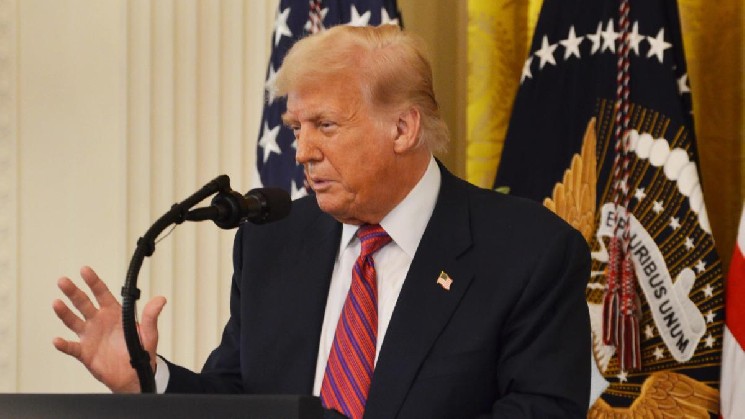
WASHINGTON — President Donald Trump is preparing to place his administration’s escalating war on international crypto crime at the heart of a White House cybercrime event this Wednesday, using the gathering to spotlight an enforcement campaign that has already intercepted hundreds of millions of dollars flowing through overseas fraud networks, according to a senior administration official. The event arrives at a moment when cryptocurrency-related scams have metastasized into one of the most pressing financial-security threats facing American families, with cross-border criminal organizations siphoning billions from ordinary citizens at a pace that has left even seasoned federal investigators stunned.
Crypto-related schemes have drained tens of billions of dollars from U.S. residents in recent years, the official said, describing a criminal ecosystem of staggering scale, operational sophistication, and cold-blooded efficiency. Trump’s remarks at the event are expected to frame the crackdown as both a consumer-protection imperative and a national-security priority, highlighting the federal government’s expanding arsenal — from freezing digital assets to dismantling fraudulent platforms — in its pursuit of transnational cartels that have grown increasingly brazen. The presentation is designed to offer the public a rare look at a side of the administration’s cyber strategy that receives less daily attention than domestic hacking or election-interference cases but is wreaking acute damage on everyday citizens: the industrialized, borderless world of crypto-enabled swindling.
The upcoming address comes at a pivotal juncture, as digital-asset crime dominates global law-enforcement conversations from Washington to Bangkok. It signals that the White House intends to maintain its aggressiveness squarely on the transnational organizations that have transformed fraud into a dark-industry enterprise rivaling drug trafficking in profitability. The official, who briefed reporters on condition of anonymity to discuss internal planning, emphasized that the administration’s core strategy revolves around the ability to trace, halt, and confiscate cryptocurrency moving through criminal pipelines — and to do so faster than the criminals can adapt. The event will also showcase the broader government-wide apparatus now deployed in the fight, including interagency task forces that coordinate intelligence, financial sanctions, and criminal prosecutions across multiple continents. Administration officials are acutely aware that these are not low-level nuisance operations but military-grade, professionally managed crime syndicates with deep financial reserves, highly trained personnel, and, in some regions, disturbingly cozy relationships with local political and military figures.
Anatomy of a Digital Crime Wave: Inside the Global Scam Centers
At the core of the crisis lies a predatory tactic that security experts have come to call “pig butchering” — a deliberately brutal metaphor describing the way criminal cartels fatten their victims with false hope and fabricated profits before the final, devastating slaughter. The technique usually begins innocently enough: a friendly text message to the wrong number, a swipe right on a dating application, an unsolicited WhatsApp note offering a brilliant investment tip. Over the course of weeks — sometimes months — the scammer cultivates an intimate bond, pretending to be a romantic partner, a trusted friend, or a well-connected financial mentor. Eventually, the conversation turns to cryptocurrency, and the victim is invited to test the waters with a modest deposit on a slick-looking trading platform.
What follows is a meticulously choreographed performance designed to dissolve the line between illusion and reality. Victims are shown fabricated portfolio dashboards with rising balances, sometimes allowed to withdraw small amounts to cement their confidence, all while the scammer of the “platform” provides round-the-clock encouragement and “insider” guidance. Once the marks are sufficiently hooked, the pressure ratchets upward dramatically: savings accounts are liquidated, retirement funds cracked open, homes mortgaged, loans taken from friends and family. The relationship is treated as sacred, the investment as pragmatic. And when the scam reaches its endgame, the victim discovers there is no money left, no platform, no broker — only a mute screen and a memory of a person who never existed. In many cases, the psychological damage inflicted is as devastating as the financial ruin.
These operations are executed from fortified scam compounds scattered across Southeast Asia — sprawling, guarded facilities in places like Burma, Cambodia, Laos, and the Philippines — where thousands of workers, many of them trafficked or lured under false pretenses, are held in virtual servitude and forced to run scripts tailored to exploit human vulnerability. The operations function with call-center discipline and factory-floor efficiency, processed through automated messaging systems and data harvested from breaches. Parallel to the romance and investment frauds, the same syndicates run large-scale phishing campaigns and ransomware networks, breaching businesses, hospitals, and municipal governments. The proceeds of these crimes are then laundered through crypto mixers, tumblers, and loosely regulated exchanges, moving in chaotic digital patterns deliberately calculated to frustrate conventional law-enforcement tracking.
Hitting the Cartels Where It Hurts: $833 Million Halted, 503 Sites Seized
Against that backdrop, the administration can now point to a set of enforcement milestones that are nothing short of substantial. Federal law-enforcement agencies, the White House official said, have successfully halted approximately $833 million in cryptocurrency connected to overseas scam operations — a striking figure that demonstrates both the intensity of the federal response and the vast ocean of illicit wealth still moving through the shadows. That sum represents more than a meaningless data point; it symbolizes the government’s growing capacity to reach inside the digital underworld and remove the oxygen — often quite literally the wallet — on which these criminal networks depend.
The operational numbers attached to the effort are significant. U.S. authorities have seized 503 fraudulent cryptocurrency websites under the watch of the Homeland Security Task Force, methodically dismantling the polished, professional-looking digital faCades that gave these schemes an aura of legitimacy. In addition, federal authorities have contacted nearly 9,000 American citizens, informing them that they were actively being victimized by ongoing fraud schemes. For many of those individuals, the notification arrives as a jarring and often humiliating revelation — a call from an FBI agent or a letter from the Department of Homeland Security explaining that the loving online partner or the exclusive investment adviser they trusted is, in fact, a member of an international criminal syndicate operating from a guarded compound on the other side of the world.
In some cases, the intervention stops the hemorrhaging and allows victims to reclaim at least a portion of their funds. In others, the psychological ties between victim and scammer are so powerfully entrenched that federal agents struggle to break through the fog. The seizures and website takedowns are also strategically significant: by eliminating scam platforms and freezing funds mid-transfer, investigators are forcing the cartels to adapt constantly, raising their administrative costs, disrupting their money-handling routines, and narrowing the window for laundering stolen assets. Even so, the administration fully acknowledges that the scale of the problem is formidable. Every disrupted operation is quickly replaced by a new one, and every seized site spawns a dozen imitations — which is precisely why federal agencies have made intercontinental coordination a centerpiece of their strategy.
Scam Center Strike Force: A Multi-Agency Counteroffensive Takes Shape
The institutional architecture underpinning this crackdown came into sharper focus last November, when the Department of the Treasury announced the formation of the Scam Center Strike Force — a cross-government initiative specifically engineered to dismantle the pig-butchering networks that have made Southeast Asia ground zero for the global fraud crisis. The strike force unites the full breadth of federal financial-intelligence and law-enforcement capabilities, bringing together Treasury, the FBI, the Department of Homeland Security, the Justice Department, and other agencies under a singular mission: cut off the cartels’ revenue streams and bring their leaders to justice, wherever on earth they may be hiding.
The significance of this multi-agency approach is difficult to overstate. The criminal networks under investigation operate like transnational conglomerates, with regional coordinators running operations across multiple jurisdictions, using shell companies and anonymous corporate layers to obscure their ownership. They launder proceeds through a dizzying array of intermediaries, mixing Bank and e-wallet accounts with crypto vehicles to avoid detection. The strike force model allows investigators to pool their most sophisticated resources — blockchain analysis, satellite imagery signals intelligence, financial forensics, and human-source reporting — to strip away the layers and expose who is pulling the strings.
The geographic focus is equally deliberate. Burma, Cambodia, Laos, and the Philippines have emerged as preferred host locations for scam compounds, frequently under arrangements with local political and military stakeholders who receive a share of profits in exchange for protection. The humanitarian dimension is similarly pressing: numerous workers at these compounds are themselves trafficking survivors, lured by promises of legitimate tech jobs and then imprisoned, withheld pay, or threatened with violence to compel their participation. For American investigators, untangling that web — prosecuting the predatory leaders while simultaneously addressing the humanitarian catastrophe on the ground — is a challenge of extraordinary complexity. The strike force is designed to navigate that reality, using financial sanctions, diplomatic pressure, and legal actions to pursue the entire infrastructure rather than merely its foot soldiers.
The Delicate Balance: Encouraging Crypto Innovation While Policing Abuse
The White House event also places the administration’s actions in a deliberately nuanced policy context. Trump has positioned himself prominently as a champion of the American crypto economy, vowing at public appearances, including major industry conferences, to make the United States the undisputed global capital of digital assets. The administration has made clear that it wants America to lead in blockchain development, decentralized finance, and the broader fintech revolution — an ambition that has electrified industry participants, sparked billions in new investment, and set a markedly different regulatory tone from the skepticism that characterized earlier eras in Washington.
At the same time, the administration is prosecuting an aggressive campaign against the criminal misuse of those same technologies. The nuance is essential: this is not a war on cryptocurrency itself; it is a calculated campaign against the bad actors exploiting the decentralization that makes digital assets so appealing. The administration’s broader message, articulated across multiple policy forums and regulatory actions, is that legitimate innovation will be protected and nurtured, while criminal enterprises that abuse the ecosystem will face the heaviest consequences the federal government can muster. That balancing act has produced a distinctive policy posture that has become something of a hallmark over the past year.
Federal agencies have markedly upgraded their blockchain-tracing and forensic analysis capabilities, transforming the transparency of public digital ledgers from a privacy concern into an investigative advantage. Anti-money-laundering frameworks have been strengthened, tax enforcement armors hardened, and information-sharing between agencies accelerated. The administration is simultaneously pressing international cooperation — pushing allies and regional partners in Asia to tighten their own financial-crime laws and intelligence-sharing arrangements — so that scam operators cannot simply relocate their compounds to more permissive jurisdictions as pressure builds. For the legitimate crypto industry, the signal is complex but ultimately constructive. Many responsible companies have begun advocating for clearer regulatory standards themselves, recognizing that robust anti-money-laundering protocols and energetic know-your-customer practices are not obstacles to growth but essential safeguards for the ecosystem’s long-term credibility.
Persistent Threats and the Long Road Ahead
As Wednesday’s event unfolds, the administration is expected to frame the present moment as a pivotal inflection point in the battle against crypto-fueled crime. The numbers — the $833 million blocked, the 503 websites seized, the 9,000 Americans warned — offer persuasive evidence that a coordinated, politically backed federal push can produce concrete outcomes with unusual speed. Yet the road ahead remains long, arduous, and filled with uncertainty. The scam centers of Southeast Asia are driven by a radical profit motive and backed by deeply entrenched criminal networks; they have already demonstrated the ability to evolve in response to enforcement pressure, shift their operational bases, and develop ever more sophisticated methods of evasion. The strike force, while a promising model, requires sustained funding, continuous staffing, and persistent high-level attention if it is to remain at the front of the chase.
Beyond the metrics lies a deeper, profoundly human dimension that the administration’s new emphasis has begun to pull into public view. Tens of thousands of American families have been financially devastated by these schemes — retirees stripped of their life savings, young professionals saddled with debt taken on at the urging of phantom partners, parents unable to pay for children’s college education because a persuasive stranger needed one more “investment round.” The shame and humiliation experienced by victims has frequently discouraged them from coming forward, allowing the fraud networks to continue their work undetected, consuming new victims daily. This is one of the reasons officials point to the educational and notification efforts as nearly as important as the prosecutions themselves: each warning delivered, each public awareness campaign launched, chips away at the epidemic of silence that has so often shielded these criminals.
Wednesday’s event is, in a fundamental sense, a challenge to that silence. By elevating the fight against crypto-fueled fraud to the highest level of the U.S. government, the administration is signaling to the world that these crimes will no longer exist in the shadows — and that the world’s most powerful financial system will not stand idly by while its citizens are harvested by organized international predators. Whatever political differences may animate the broader debate over digital-asset policy, there is a broad consensus that the struggle against malicious actors is urgent, legitimate, and far from finished. The White House event offers the public a chance to see the campaign clearly, to measure its results, and to understand the stakes of a fight that is likely to define the next decade of digital finance.