


Tether’s Washington Power Play: Inside the Stablecoin Giant’s Growing Political Machine
A Quiet Political Ad Firm Suddenly Becomes a Million-Dollar Player
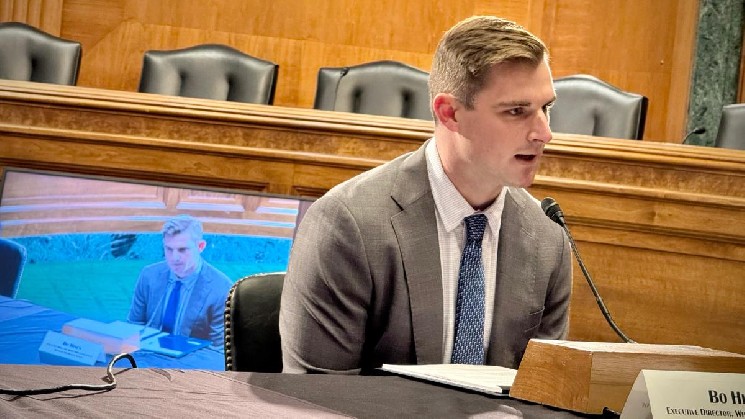
Tether, the company behind the world’s largest stablecoin, has long been a dominant force in digital asset markets. But in recent weeks, the company has found itself at the center of a different kind of story: one about political influence, campaign advertising, and the quiet machinery of Washington power. Spokespeople for Tether did not immediately respond to requests for comment, as fallout continued to build around a report that tied the stablecoin issuer to a little-known political advertising operation that has reaped millions of dollars in campaign work. According to CoinDesk, which first reported the story, Hines’ family firm, known as Nxum, has served as the main campaign-advertising provider for a political action committee associated with Tether. The revelation raised immediate questions because Nxum had almost no track record or experience in politics before the arrangement came to light. Yet the firm, according to the report, has been making millions as one of the most important pieces of the PAC’s media-buying strategy.
For an industry that is already struggling to shed its reputation as a regulatory gray zone, the news was deeply unwelcome. Tether has spent years battling accusations related to transparency, reserve management, and its relationships with international financial partners. Now the company is facing a different kind of scrutiny: whether it has attempted to purchase political influence in ways that go beyond normal campaign contributions. The fact that a relatively obscure family firm with little political background could land such a lucrative contract is, by itself, suspicious to many watchdogs. It suggests that Tether may be relying on a network of insiders and consultants rather than traditional lobbying firms to tell its story in Washington. The timing could hardly be worse. Regulators in the United States and Europe are actively debating new rules for stablecoins, and political sentiment toward the crypto industry has hardened. The news about Nxum, and the money flowing through it, has given lawmakers and critics a new line of attack, raising difficult questions about who is really funding the political push for crypto-friendly policy and what they may expect in return.
A Revolving Door Between the White House and Tether’s Political Orbit
The political entanglement does not end with campaign advertising. Nxum has recently hired Harry Jung, another official who worked as a White House crypto adviser during the Trump administration. The hiring is the latest sign that the firm is building a team with direct knowledge of how digital asset policy is made at the highest levels of government. But perhaps more striking is what is happening inside the White House itself. The office that advised Trump on crypto issues has since gone vacant, following the departure of Patrick Witt. Witt, notably, had replaced Hines as the executive director of that office. That means the chain of personnel moves runs directly from a senior government advisory post to a privately held firm that is now receiving millions of dollars in political advertising work tied to Tether.
The revolving door between government and the private sector is nothing new in Washington. But in this case, the movement is particularly glaring. Hines went from advising the White House on digital asset policy to leading a family firm with deep ties to a Tether-linked political action committee. Now another former White House crypto adviser, Harry Jung, has followed the same path. Together, these moves create an appearance of a coordinated effort to keep crypto-friendly insiders close to power, even as the formal structures of the White House crypto office sit empty. For Tether, having allies with firsthand knowledge of the policy process could prove invaluable as the industry faces an uncertain regulatory future. For critics, the arrangement is a textbook example of how corporate interests blur the lines between public service, private gain, and political influence. The vacancy left by Witt’s departure only adds to the sense that the Trump administration’s crypto policy apparatus is in flux, even as industry players continue to build their own carefully connected networks around it.
Senator Blumenthal Widens His Crypto Investigation Net
At the center of the growing storm is Senator Richard Blumenthal, a Connecticut Democrat who has emerged as one of Congress’s most aggressive and vocal critics of the crypto industry. Blumenthal has turned his attention to nearly every corner of the digital asset ecosystem. He has raised questions about President Trump’s memecoin, the crypto backers behind the president’s business projects, the Trump family’s cryptocurrency firm World Liberty Financial, and even activities tied to Binance, one of the world’s largest exchanges. But no company has drawn more of his focus than Tether. For Blumenthal, stablecoins represent a systemic risk that goes beyond ordinary market concerns. He has argued that the ability to move hundreds of billions of dollars in digital tokens with limited oversight could allow bad actors to evade sanctions, launder money, or destabilize financial systems.
His recent work reflects that deep concern. Blumenthal has used his position on the Senate’s investigative subcommittee to push for answers, demand documents, and generate headlines. He has made clear that crypto will remain a focal point of his agenda, especially if his party regains control of the Senate. That posture has put him squarely in Tether’s crosshairs. The company has sought to paint Blumenthal as an overzealous politician more interested in press coverage than facts. But his investigations have continued, and each new report or letter adds to the sense that Tether is being systematically examined by one of the few lawmakers with the institutional authority to make the scrutiny stick. What makes Blumenthal particularly dangerous for Tether is not just his interest, but his persistence. He has repeatedly demonstrated a willingness to stay on an issue longer than the news cycle, using successive hearings and statements to keep pressure on the companies he believes are acting irresponsibly. For Tether, that kind of sustained attention is far more threatening than a single critical report.
The Iran Report and the Cantor Fitzgerald Question
Blumenthal’s investigation has already produced significant findings. He issued a report outlining what he described as Tether’s financial connections to Iran, a claim that immediately resonated across the national security community. The report suggested that Tether’s stablecoin could be used as a tool to bypass U.S. sanctions, allowing sanctioned actors to move money across borders without the traditional banking system. Tether rejected the findings, insisting that it complies with international regulations and cooperates with law enforcement. But the report itself was a stark reminder that stablecoins are no longer seen as a niche product for a digital-first economy. They are now considered a potential national security issue. In the weeks that followed, Blumenthal piled on further pressure. He demanded answers about Tether’s relationship with Cantor Fitzgerald, its U.S. financial partner. Cantor Fitzgerald is a major American financial services firm, and its connection to Tether has been a source of contention for years. Blumenthal wants to know exactly what services Cantor provides, how reserves are managed and disclosed, and whether a U.S. institution is effectively insulating Tether from the legal consequences of operating in international markets.
The questions go to the very heart of Tether’s business model. Tether claims that every USDT token is backed by reserves, and Cantor Fitzgerald has been part of the architecture that gives Tether credibility in U.S. financial circles. If Blumenthal can demonstrate that the relationship is less transparent than it appears, the implications would be enormous. It could affect Tether’s ability to access U.S. banking infrastructure, shake confidence among institutional investors, and invite further scrutiny from other regulators. Blumenthal has not said what he believes the Cantor Fitzgerald relationship will yield. But the direction of his investigation is clear. He is tracing Tether’s connections to influential financial and political institutions, and he is doing so with the kind of methodical approach that often precedes subpoenas, hearings, and legislative action. For Tether, the stakes in this particular line of inquiry could not be higher.
Tether Fires Back at Allegations of Political Grandstanding
Tether has not taken the attacks lying down. This week, Paolo Ardoino, the company’s chief executive, publicly criticized Blumenthal in unusually sharp terms. Ardoino accused the senator of ignoring important information that would undermine the narrative he has constructed. More pointedly, he argued that Blumenthal shared his report with the press before giving Tether a fair opportunity to examine the contents or respond. The implication was clear: Tether believes it is being tried in the court of public opinion, not in a legitimate investigative process. Ardoino’s comments reflect a growing frustration within the company, which has long maintained that it is being unfairly scapegoated by politicians who do not understand the technology or the industry. Tether’s supporters argue that the company has gone to great lengths to work with regulators, improve transparency, and combat illicit activity. They say the relentless attacks are driven more by politics than by facts.
But the decision to go on offense is a risky one. Engaging in a public fight with a sitting senator can draw more attention, not less. It can also create the appearance that Tether is trying to discredit legitimate oversight rather than cooperate with it. Yet Ardoino appears to have concluded that the old strategy of staying quiet and issuing legalistic denials is no longer sustainable. Tether may believe that its best hope is to shift the conversation and cast Blumenthal as the aggressor. Whether that approach will succeed is another matter. The senator has shown no sign of backing down, and his office has signaled that there are more questions to come. The collision between Ardoino and Blumenthal has turned the stablecoin debate into a personal and political standoff. And in Washington, personal standoffs are often the beginning of even deeper investigations, not the end.
A Senate Majority Could Change Everything
The political landscape could shift dramatically in the months ahead. Blumenthal is a Democrat, and Democrats are currently in the minority in the U.S. Senate. But the odds of that changing have improved in recent weeks. Prediction market Kalshi currently gives Democrats a 69 percent chance of reclaiming the chamber in the next election cycle. If that happens, Blumenthal would almost certainly return to the chairmanship of the investigative subcommittee, a position that would grant him significantly greater powers to issue subpoenas, compel testimony, and control the committee’s agenda. He has already made clear that crypto would be among his top areas of focus. For Tether, the prospect of a chaired Blumenthal-led investigation is an existential concern. A Democratic-controlled Senate investigative committee could open expansive inquiries into the company’s international operations, its financial partners, its reserve management, and its political spending. It could demand internal documents, call executives to testify under oath, and keep the company in the headlines for months.
The broader crypto industry would feel the effects as well. A reinvigorated Senate investigations committee focused on stablecoin risk could reshape the debate around digital asset regulation, sanctions enforcement, and corporate political spending. Lobbyists and legal teams are already preparing for a scenario in which Tether becomes a case study in oversight. But there is still time for the political arithmetic to change, and nothing is guaranteed. For now, the only certainty is that the pressure is rising. Tether has built a global financial network and, increasingly, a Washington political operation to defend it. But the combination of a skeptical senator, a shifting political environment, and mounting questions about how influence is purchased could eventually prove impossible to manage. The coming months will determine whether Tether’s political machine becomes a model for the industry — or a cautionary tale about the limits of power in a city that demands accountability. Either way, the stablecoin giant has already learned a key lesson: in Washington, attention is the most expensive currency of all.