



Crypto Perpetual Futures: The 12-Hour Bitcoin Crash That Forced an Industry to Evolve
The Night the Pricing Anchor Broke
In March 2020, as the world went into pandemic lockdowns, Bitcoin delivered a market shock that traders still talk about in hushed tones. Over a period of just over twelve hours, the price of the world’s largest cryptocurrency collapsed from roughly $7,800 to $3,800 — a fall of more than 50 percent in the span of a single, terrifying day. To put it bluntly, the market’s plumbing failed at the exact moment it was needed most. Market makers withdrew liquidity from exchanges, leaving order books thinner than a winter coat. A chaotic backlog on the Ethereum blockchain slowed settlement and made it nearly impossible for arbitrageurs to move funds quickly enough to correct dislocated prices. And in the middle of that storm, one anomaly exposed how fragile the entire crypto derivatives machine had become: BitMEX’s benchmark perpetual contract was trading around $500 below the spot price on Coinbase. In an efficient market, that gap would be closed in seconds by traders who buy the cheaper asset and sell the expensive one. But there was no one willing, or able, to do that job. The pricing anchor that keeps perpetual futures tethered to reality had broken, and the crash became more than a story about Bitcoin’s volatility. It became the starting point for a complete rethink of how crypto perpetual futures are designed, traded, and protected.
The Pricing Anchors That Keep Perpetual Contracts Honest
To understand why the $500 dislocation mattered, it helps to understand the strange mechanics of a perpetual futures contract. Unlike traditional futures, which have a settlement date, a perpetual contract never expires. It is an instrument designed to run indefinitely, allowing traders to hold leveraged positions without worrying about rolling contracts forward. But this design creates a serious problem: without a settlement date to force the contract price back to the underlying asset, the perpetual can drift away from the real market. The solution is the funding payment. Periodically, the contract compares its own price with an external spot-price index. If the perpetual is trading above the spot market, longs pay shorts a funding rate; if it is trading below, shorts pay longs. That payment creates a constant, economic pull back toward the anchor. But as the 2020 crash showed, an anchor only works if it is visible, reliable, and relatively stable. That is why BitMEX paired its funding mechanism with something called the mark price. Rather than reacting to every sudden spike in a single exchange’s order book, the mark price is a smoothed, carefully calculated reference price used to determine when positions should be liquidated. It is deliberately slower than the raw market, and that is exactly the point. A single manipulative trade or an erroneous quote on one venue should not be enough to wipe out thousands of leveraged accounts. By using an external index and smoothing the data, the system filters out noise and buys precious time. The design is not perfect, but it became the foundation of a deeper realization: pricing anchors are only as strong as the infrastructure surrounding them.
When the Losing Trader Wasn’t the Only One Who Paid
Even the best pricing engine cannot prevent every default. When a market moves with enough force, some traders will end up owing more money than they actually have. That raises an uncomfortable question for exchanges: who absorbs the loss? In the early years of leveraged crypto trading, the answer was often “everyone.” That approach was tested to its breaking point on August 3, 2018, when OKEx’s quarterly futures market was hit by a catastrophic position worth roughly 50,000 BTC. As the market lurched, one large trader fell into bankruptcy, and the exchange was left with a shortfall that could not be ignored. Rather than letting the exchange bear the burden alone, OKEx initiated a socialized clawback. Profitable traders watched their balances shrink because another trader had failed. They were asked, in effect, to subsidize the losses of someone who had made the wrong trade at the wrong time. The reaction was fast and furious. Traders complained that they were being punished for being right. The event exposed a deep flaw in the industry’s risk-sharing logic: if profits can be clawed back arbitrarily, then winning in a derivatives market becomes a temporary condition, not a final result. That moment became a turning point, and exchanges began looking for a more surgical way to handle the aftermath of a default.
From Socialized Losses to Auto-Deleveraging
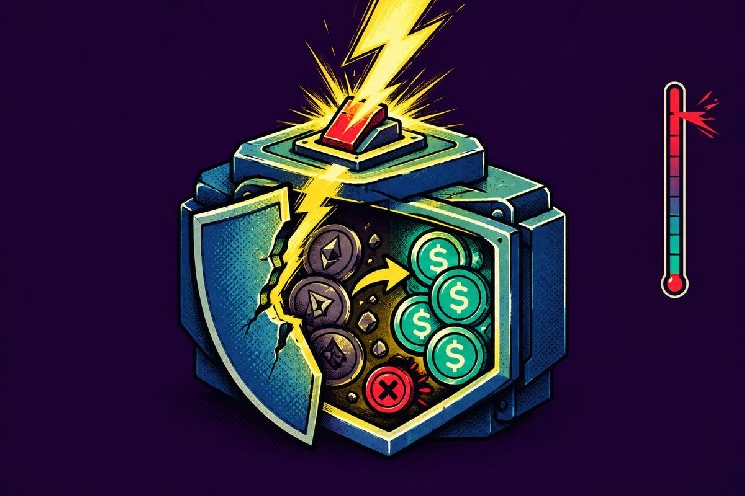
The answer, in its modern form, is auto-deleveraging, or ADL — a mechanism that was quietly pioneered long before the 2020 chaos. Huobi, the crypto exchange that gained prominence in China, developed ADL around 2014 and 2015 as a way to prevent one failed trader from taking the whole market down with him. The logic was simple: instead of clawing back profits from everyone, the exchange would identify the accounts most directly responsible for the imbalance — specifically, highly leveraged traders sitting on large profits on the opposite side of the losing position — and force them to close part of their positions until the loss was covered. In 2016, BitMEX adopted a modified version of the mechanism, and in a 2025 blog post, the exchange admitted its debt openly. “We copied the Huobi ADL mechanism but made a few tweaks,” the team wrote. That single sentence is a revealing glimpse into the history of crypto risk management: innovation in this industry is often shared, borrowed, and refined under fire. ADL did not replace the need for financial buffers. Modern exchanges now sit on top of substantial insurance funds designed to absorb liquidation shortfalls before ADL is ever activated. These funds have grown to serious scale. Early 2026 data from public sources suggested Binance’s fund was in the range of $500 million to $800 million, while Bybit’s USDT perpetual insurance fund was reported at more than $400 million. When the market starts to crack, those buffers are the first line of defense. ADL is the second. Together, they replaced the old world of socialized losses with a system that is targeted, predetermined, and more credible.
Stablecoin Collateral Ends the Doom Loop
The other major shift was collateral. Before 2020, a large share of perpetual futures were inverse contracts, meaning they were margined in crypto itself. A trader might post Bitcoin to trade a Bitcoin derivative. In a rising market, that arrangement feels natural. But in a falling market, it becomes a doom loop. The trader loses money on the position while simultaneously losing value in the collateral backing it. The margin ratio collapses from both ends at once. Liquidations trigger, selling pressure increases, and the price falls further. It is the kind of feedback loop that can turn a sharp correction into a systemic event. The solution that emerged was stablecoin-margined contracts, particularly those backed by USDT. By accepting a stablecoin as collateral, traders and exchanges separated the volatile asset being traded from the asset used to secure the trade. When Bitcoin falls by twenty percent, the USDT in a margin account does not fall by twenty percent. That simple change broke the old feedback loop and made the system far more stable during times of stress. Stablecoin-margined perpetuals rose sharply in popularity after the 2020 crash and gradually displaced their inverse coin-margined predecessors. Another, quieter improvement came in the form of partial liquidation. Older systems were unforgiving: a single margin breach could result in the liquidation of an entire portfolio, dumping everything into the market at once. Modern systems are designed to reduce positions in stages, selling just enough to restore the required margin and then waiting. Partial liquidation gives traders a chance to survive the storm and gives the market a chance to avoid a violent, self-reinforcing cascade.
The Accumulated Wisdom of a Market That Has Seen Worse
The industry that emerged from the 2020 crash is not the same industry that entered it. Crypto perpetual futures have evolved from a wild, experimental niche into a sophisticated corner of digital finance, shaped by the very disasters that once threatened to destroy it. The external spot price index, the smoothed mark price, the funding payment engine, the insurance funds, the adoption of ADL, the transition to stablecoin collateral, and the move toward partial liquidation all represent layers of protection that did not exist in a coordinated form before the market was stress-tested so brutally. No system built on Bitcoin can ever be fully safe. New risks — regulatory intervention, sudden depegging of a stablecoin, exchange failures, or a market shock even deeper than the one seen in March 2020 — will always remain possible. But the architecture of modern crypto perpetual futures was not designed in a think tank. It was forged in real panic, measured in actual losses, and refined by the people who watched their screens go dark in a world where a $500 gap between BitMEX and Coinbase seemed to rewrite everything they thought they knew. For investors and traders, the lesson is simple: the markets that survived 2020 did so because they evolved. The scars of the past have become the shock absorbers of the present, and the $500 pricing dislocation that once exposed the industry’s weakness is now the very story that explains its resilience.