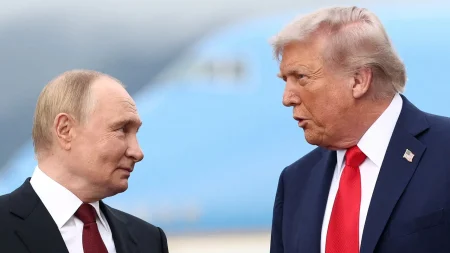
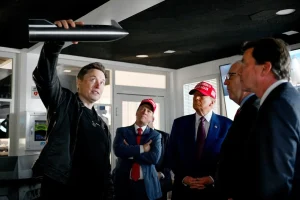


It was one of those Washington moments where the images and the words seemed to be pulling in different directions. President Donald Trump welcomed Qatar’s prime minister, Sheikh Mohammed bin Abdulrahman Al-Thani, to the White House on Monday, and the handshake was warm enough. But behind the scenes, the diplomatic road out of the U.S.-Iranian conflict remains rocky, uncertain, and full of contradictions. Secretary of State Marco Rubio, speaking to reporters in Paris before a G7 meeting, made it clear that no one should expect a sudden breakthrough. “I wouldn’t say we’re on the verge of a breakthrough,” he said, and he dismissed the terms coming out of Tehran as unrealistic. That blunt assessment landed right next to a very different message from the Iranian side. President Masoud Pezeshkian said Monday that Iran is willing to negotiate and resolve things “with dignity,” and that the supreme leader has told officials to end the uncertainty. But he also insisted that Iran will not bend to coercion. Trump, meanwhile, told CBS’s “60 Minutes” that he sees no reason to escalate the war and repeated that the Strait of Hormuz remains open. So you have all these voices speaking at once: hawks and pragmatists, American and Iranian, all talking about diplomacy, but none of them quite on the same page. Mediators have tried to bridge the gap with a two-day proposal under which the United States would lift its naval blockade and release some frozen Iranian funds, while Iran would take steps toward renewed nuclear inspections and help reopen the strait before broader talks begin. That plan has not been accepted, and the gaps between the two sides are still wide. For now, the conflict grinds on, and the diplomatic music keeps playing even as the drums of war haven’t fully stopped.
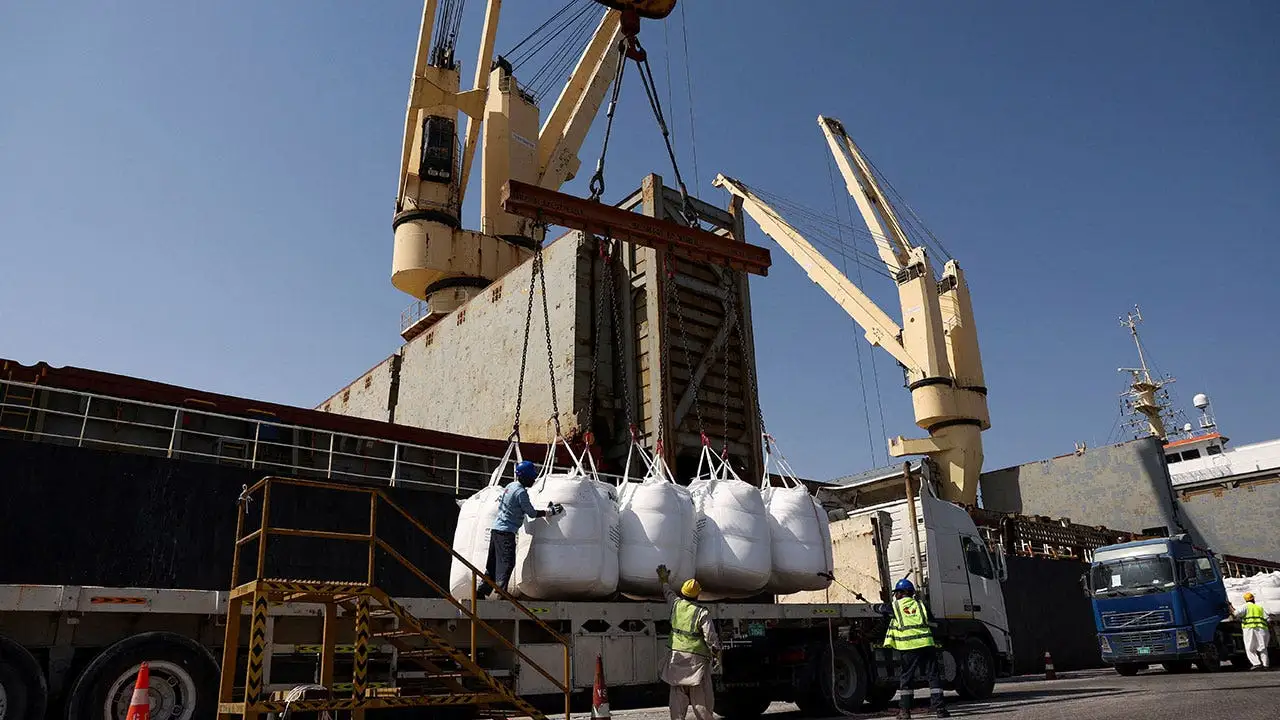
Nowhere does the distance between rhetoric and reality become clearer than in the Strait of Hormuz. That narrow ribbon of water between the Persian Gulf and the Gulf of Oman is one of the most vital economic arteries on Earth. Before the war, roughly a fifth of global petroleum liquids consumption and more than a fifth of the world’s liquefied natural gas trade moved through it, according to the U.S. Energy Information Administration. It is not an exaggeration to say that the global economy has a lot riding on those waters. Since the conflict began, the strait has become a battlefield. Iranian attacks, shipping restrictions, and American military operations have turned commercial shipping into a high-risk business. The U.S. Navy is present in force, but tankers are still being targeted. Reuters reported that attacks in the gulf and the strait accelerated sharply in October and carried into November, and Iranian authorities claimed a tanker struck a mine just east of the strait on Sunday. The official American line is that the strait is open and that military escorts are keeping commerce moving. In late October, CENTCOM said American forces had cleared primary shipping routes of Iranian mines and helped thousands of commercial vessels pass through safely. More than 3,000 vessels made the transit over a six-month period with U.S. military support. But not everyone sees that as proof that things are back to normal. Amos Hochstein, a former senior adviser to President Joe Biden and now a managing partner at TWG Global, put it pointedly to Fox News Digital at the ADIPEC energy conference in Abu Dhabi. He described a nightly hot conflict in the strait, with tankers getting fired on and hit. “If you need a heavy U.S. military presence just to let an oil tanker go through, to me that’s the definition of not open,” he said. In other words, an escort might get a ship through, but it doesn’t erase the danger, the insurance spikes, the rerouting, or the fear. The strait is technically available, but it is nowhere near what anyone would call normal.
The consequences of that abnormal reality ripple far beyond the Middle East. Every disrupted voyage, every elevated insurance premium, every tanker waiting nervously to enter the corridor sends a shockwave through global energy markets. Consumers in Asia, Europe, and the Americas end up paying the price. Dr. Angela Wilkinson, CEO of the World Energy Council, said the crisis in the Strait of Hormuz has exposed a fundamental problem in how the world thinks about energy. For decades, the goal was efficiency—getting energy from Point A to Point B as cheaply and quickly as possible. But efficiency alone is not enough when the route is vulnerable. “Efficiency is not enough. We have to have resilience,” Wilkinson said in Abu Dhabi. She called for a rebalancing of energy systems that addresses security, affordability, and sustainability together, rather than treating them as separate boxes. “We have escalating logistics costs, but we’ve got new vulnerabilities of interdependency,” she said. That is a polite way of saying that the world has become deeply connected in ways that can be weaponized. When one narrow waterway becomes a chokepoint, everyone feels it. And the longer the standoff continues, the clearer it becomes that the old assumptions no longer hold. The global energy system was built for a world of stable routes and reliable access. This war has broken that illusion. It has forced governments, companies, and traders to think about what happens when the map changes—and how much it costs to protect the lines that keep economies moving.
Inside the Gulf, countries are not waiting for Washington and Tehran to sort things out. The United Arab Emirates, in particular, has been working hard to avoid being held hostage by the strait. The Emirates has long invested in alternatives, most notably its pipeline to Fujairah, which sits on the Gulf of Oman and can receive oil without crossing the Strait of Hormuz. That investment has paid off in a dramatic way. An Emirati official at ADIPEC said the country’s oil exports have actually risen since the war began, from roughly 3.1 to 3.2 million barrels a day before the conflict to nearly 4.4 million now. Energy Minister Suhail Al Mazrouei said exports sometimes exceeded prewar levels. This is not luck. It is the result of deliberate planning. The UAE built redundancy into its system, and that redundancy is now proving its worth. Hochstein praised the UAE and Saudi Arabia for anticipating the risks of depending on a single maritime route. But he also made a sobering point: alternative infrastructure is redundancy, not a perfect substitute. It can reduce the damage of a disruption, but it cannot fully replace one of the world’s most important waterways. The pipeline to Fujairah helps, but it doesn’t mean the strait doesn’t matter. It just means the UAE is better protected than most. The broader lesson is that resilience requires built-in backups, and those backups cost money and time. Countries that waited for a crisis to start building them are now paying the price. Countries that planned ahead, like the UAE, are weathering the storm with fewer scars.
The Emirati perspective goes even deeper. Mohammed Baharoon, director general of the Dubai-based research center B’huth, described the confrontation over the Strait of Hormuz as a separate economic war being waged by Iran against the global economy. “The third war was Iran’s war on global economy by blocking the Strait of Hormuz,” he said. His point is that the victims of this conflict are not just the people in the Gulf or the soldiers on the front lines. They are also people in the Philippines, India, Brazil—places that have nothing to do with the quarrel between Washington and Tehran but still feel the effects through higher energy prices, delayed shipments, and economic uncertainty. Baharoon argued that the crisis has exposed an uncomfortable truth about the modern world: too many countries, too many companies, and too many critical supply chains depend on a single route. If that route is closed or contested, everything wobbles. The answer, he says, is redundancy. “Part of resilience is that you will not have only one outlet,” he explained. The war may have accelerated these projects and plans, but they were already in motion. The desire for more pipelines, more transportation networks, and more supply chains did not start with this conflict. The conflict just made the need impossible to ignore. Even if the Strait of Hormuz were to fully reopen tomorrow, Baharoon argued, the region would still need more ways to move goods and energy. The world needs durable, resilient, redundant systems—because relying on just one lifeline is not a strategy, it’s a gamble.
Where does all this leave us? The truth is that no one in the Gulf is betting everything on a quick diplomatic breakthrough. The Trump administration wants a deal, but not at any price. Rubio has called the war necessary but not popular, and he has made clear that the United States will not accept a settlement built on unrealistic Iranian demands. The Iranians say they are open to negotiations, but they also keep refusing to negotiate under pressure. The two sides are still talking past each other, and mediators are still trying to find a formula that both can accept. The Qatar meeting at the White House is a sign of activity, but activity is not the same as progress. In the meantime, the Strait of Hormuz remains the defining symbol of this strange and difficult moment. It is not fully closed, but it is not truly open either. Ships pass through under military escort, with insurance rates high and nerves even higher. The world is learning to live with a new normal, but it is a costly and uncomfortable normal. Energy markets are adjusting, Gulf states are diversifying, and experts everywhere are talking about resilience. But those are responses to a problem, not solutions to it. A real solution would require diplomacy to catch up with reality—an agreement that gives Iran a way out without surrender, gives Washington the guarantees it needs, and gives the global economy back its dependable highway through the Gulf. That is a tall order. The handshakes in Washington are a start, but they are not enough. Until the words match the facts on the water, the world will keep holding its breath every time a tanker enters the strait. The White House did not respond to a request for comment before publication, and the silence is just one more reminder of how much work remains.