

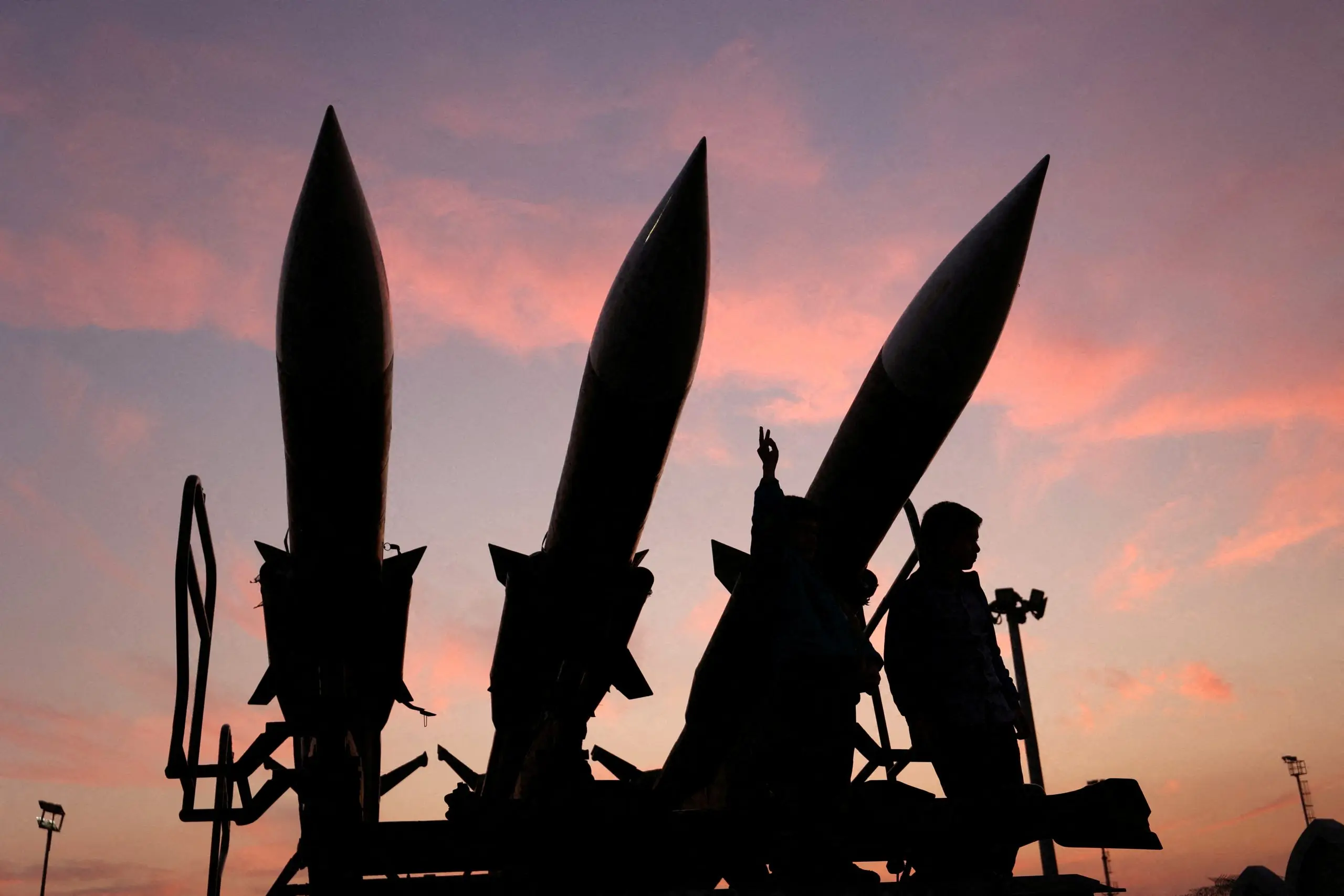
On a crisp November morning, the geopolitical chessboard shifted once again as Iran defiantly cast aside its self-imposed limits on ballistic missile development, signaling a new and dangerous phase in its long-simmering confrontation with the West. The declaration, made by a senior military official, was a direct and immediate rebuttal to a fresh American initiative designed to strangle the Islamic Republic’s weapons trade and illicit financial networks. This tit-for-tat escalation, playing out in real-time, underscores the fragile and volatile nature of power dynamics in the Middle East. The Iranian response was not merely a statement of policy but a theatrical warning, promising that its next generation of weaponry would leave the world in a state of sheer astonishment, a veiled threat that ripples with implications for global security. The timing of this announcement, coming just hours after the U.S. military establishment unveiled its new task force, was clearly intended to demonstrate that Iran remains unbowed and prepared for a prolonged struggle of wills.
The new American initiative, known as “Task Force Iron Gate,” was established under U.S. Central Command to systematically dismantle the logistical networks that supply Iran’s military machine. The operation is designed to target the movement of advanced weapon systems, disrupt the flow of dual-use materials that could be used for weapons production, and cut off the illicit revenue streams that fuel Tehran’s destabilizing activities across the region. This task force is not a naval blockade in the traditional sense but rather a comprehensive, multi-agency effort that leverages intelligence, diplomacy, and, when necessary, military action to impose a stranglehold on Iran’s economic lifelines. By focusing on both land borders and the strategic waterways of the Caspian Sea, the Pentagon is seeking to address the full spectrum of Iran’s smuggling operations. Military leaders emphasize that this collaborative approach, uniting various U.S. government agencies, will significantly hinder Iran’s capacity to finance its network of proxies, rebuild its industrial base after recent attacks, and replenish its depleted military stockpiles, creating a multi-faceted pressure cooker designed to force a change in behavior.
Analysts view this new task force as a significant evolution in U.S. strategy, moving beyond simple sanctions enforcement to a more proactive and kinetic approach. There is a growing expectation that the United States may now conduct “targeted strikes” against known weapons facilitators, applying not only economic but also direct military pressure on those who underwrite Iran’s illicit trade. Establishing this command within CENTCOM’s headquarters, which already oversees a vast area of operations, sends a clear message about the seriousness of the effort. Meanwhile, the strategic importance of the Caspian Sea basin cannot be overstated, as experts note it has evolved into a crucial two-way hub for sanctions-busting activities for both Iran and Russia. While Tehran officially downplayed the American initiative as mere “wordplay,” the IRGC simultaneously claimed to have already coordinated with neighboring countries to withstand this new pressure. This indicates that while Iran publicly projects confidence, it is actively preparing for the economic and military consequences of this intensified American campaign, suggesting a level of concern that belies its dismissive rhetoric.
In a bellicose press conference in Tehran, the IRGC spokesman laid out a stark vision of what a future conflict might hold, warning of “surprises” that would be unveiled on the battlefield should a third wave of confrontation erupt. These new, domestically-produced weapons, he boasted, would “astonish the entire world,” a claim that seeks to project an image of self-sufficiency and technological prowess. The threat was explicitly directed at both Israel and the United States, with a chilling promise that any future miscalculation would result in blows so devastating that they would leave the enemies “crippled for years to come.” This aggressive rhetoric is also aimed at a domestic audience, seeking to bolster national pride and demonstrate the regime’s resilience in the face of foreign pressure. The Iranian official further asserted that his country’s missile production capabilities remain intact, claiming that the IRGC’s Aerospace Force is able to manufacture advanced weaponry using only domestic expertise, a claim that analysts suggest is only partially true.
The lifting of the 2,000-kilometer range restriction marks a significant shift in Iran’s stated military posture, albeit one that largely formalizes existing capabilities. Even with the previous limit, Iran’s missiles were already capable of reaching targets across the entire Arabian Peninsula, the Levant, and parts of Europe. The true significance of removing this self-imposed cap is the clear signal it sends about Iran’s intentions to develop even longer-range offensive options, potentially bringing more distant targets within reach. In a notable incident earlier in the year, Iran launched an unsuccessful attack on a joint U.S.-British base on Diego Garcia, located roughly 2,500 miles away, which showcased the technical challenges but also the ambition of the Iranian missile program. In tandem with these new threats, Iranian officials have announced the impending unveiling of new underground “missile cities”—deeply buried production and storage facilities designed to withstand aerial bombardment. These installations represent a long-term investment in force protection, ensuring that Iran can continue its weapons manufacturing even under a sustained campaign of airstrikes.
The pressure being applied on Iran is not just military, but deeply economic and diplomatic, with a particular focus on its border trade with Iraq. Washington has been actively pressing Baghdad to shut down all but a couple of its border crossings with Iran, aiming to restrict the flow of goods and currency that help Tehran weather sanctions. However, Iraq’s response has been tepid so far, with only one crossing closed, revealing a delicate balancing act for a government caught between its strategic necessity to maintain good relations with Washington and the immense political influence wielded by Iranian-backed factions within its own borders. The Iranian ambassador to Iraq, a known member of the IRGC’s elite Quds Force, has been actively lobbying tribal leaders and political figures to push back against American demands and reopen the closed crossing. This tug-of-war highlights the deep complexities of the region, where economic coercion is met with political maneuvering, and where the frontlines of this new Cold War are often drawn not on open battlefields but in the complex web of local alliances and economic dependencies. The effectiveness of this new American strategy will ultimately depend on its ability to navigate these entrenched political realities and build a unified coalition capable of sustaining the pressure.