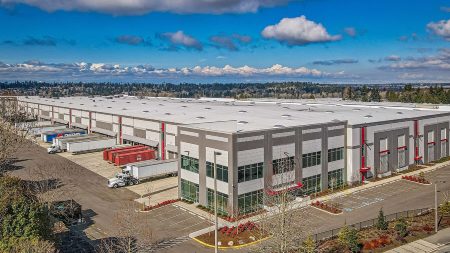




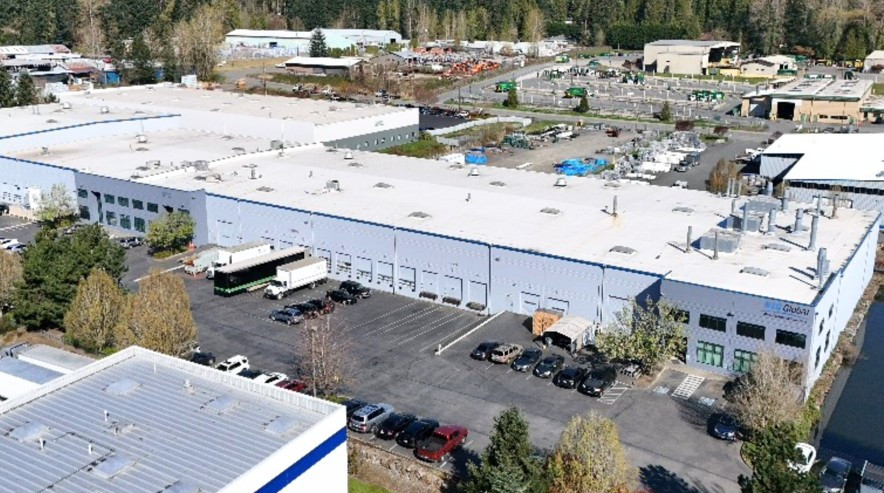
On a late October morning, the news arrived like a cold front: NIC Global, a metal fabricator whose name has been woven into the industrial fabric of Woodinville for more than two decades, will close its 100,000-square-foot plant there. The company told state regulators and its employees that 103 jobs will be eliminated, with layoffs beginning Jan. 18, 2027, and final departures scheduled for Aug. 31, 2028. The building, once home to three Seattle-area sheet-metal shops brought together in 2001, will be handed back to its landlord when the lease expires in September 2028. For the people who have spent years breathing in the smell of steel and coolant, listening to the whine of saws and the clatter of forklifts, this is more than a business decision. It is the closing of a chapter. Troy Wood, NIC’s president and CEO, didn’t hide the sorrow. “This is a sad day for our company,” he said. “Woodinville is where NIC was formed — three Seattle-area sheet-metal shops brought together under one roof in 2001 — and the people in that building built the foundation of everything NIC is today.” The words carry weight because they acknowledge what spreadsheets cannot: the company’s identity was forged in this place, by these workers, in the daily, unglamorous work of bending metal and building assemblies. The plant may be 100,000 square feet, but in human terms it is countless coffee breaks, safety meetings, shared birthdays, and quiet acts of pride on the shop floor. Now that world is being dismantled, not all at once, but in phases, with a long runway of uncertainty ahead.
The reason for the closure is not that NIC Global is failing. In fact, the company has nearly 600 employees across multiple states and is responding to a booming demand for data center infrastructure in Eastern Washington. The Woodinville plant mostly served energy and medical device customers, and that volume has declined. At the same time, customers building power distribution technology for data centers are growing in the Spokane area. For a sheet-metal fabricator, distance matters. “NIC is a supplier of sheet-metal fabrications and assemblies, and in our business, being close to our customers is what keeps us competitive,” Wood explained. That sentence is the cold logic behind a painful choice. When a customer needs a custom enclosure or a complex assembly, shipping delays and logistics costs can make or break a contract. Being close means quicker turns, easier problem-solving, stronger relationships. So the bulk of the Woodinville work will migrate to Spokane, and a smaller portion will go to NIC’s Gallatin, Tenn., facility. The company also has plants in Pullman, Wash., Chillicothe, Ohio, and Denton, Texas, with the out-of-state work focused on the heavy truck sector. The Woodinville closure is thus not an exit from manufacturing but a redrawing of the map. The forces driving it are larger than any single plant: the data center boom has transformed Washington’s energy landscape, creating a hungry market for the metal boxes, racks, and enclosures that house the electrical equipment feeding server farms. The work is moving to where the customers are, but that doesn’t make the loss easier for the people left behind.
For the 103 workers at the Woodinville plant, the notice is both a final answer and the beginning of an uncertain waiting game. The affected positions read like a roll call of manufacturing skill: assembly, engineering, quality assurance, metal fabrication specialists, and forklift operators. These are not anonymous job titles. They are men and women who know how to read a blueprint, set a brake press, check a weld, and take pride in a finished product that might outlast them. The timeline is unusual: layoffs begin in January 2027, but the last employees won’t leave until August 2028, and the building will not close until the lease expires in September of that year. That extended runway could give workers time to find other jobs, but it also means many will be living in limbo for nearly two years, wondering whether to look for work now, whether to move, whether to leave early or hold on until the end. NIC said laid-off workers will be encouraged to apply for openings at other plants, and the company has locations in Spokane, Pullman, Tennessee, Ohio, and Texas. But not everyone can relocate. A forklift operator with kids in Woodinville schools, an engineer with a spouse working in Seattle, a quality specialist who has spent decades in the same building — the option to move is not equally available to all. Wood’s comments suggest he understands the human weight of the decision. He praised the “quality and reliability” of the Woodinville employees’ work. “I am grateful to every one of them,” he said, “and especially to those who chose to stay with us through two and a half years of uncertainty and kept doing their jobs with integrity.” That phrase — “two and a half years of uncertainty” — reveals that this closure was not a sudden shock. The employees knew, or suspected, that the end was coming, and they showed up anyway. They kept doing their jobs with integrity. That is a quiet kind of heroism that won’t appear in any earnings report.
The story doesn’t end with a dark building. NIC Global’s legal and financial headquarters will remain in the Woodinville area, and the company plans to open a new office there for its finance, IT, sales, and West Coast support teams. So the name will stay in town, but the factory floor will not. The Seattle area also still has smaller metal fabricators, including JEMCO Components & Fabrications, which does precision machining and sheet-metal work for medical, aerospace, and defense customers, and QUAL-FAB, which serves medical and dental clients. These businesses prove that the region’s metalworking craft is not disappearing entirely. But the loss of a 100,000-square-foot plant is a significant blow to the local manufacturing base. It means fewer blue-collar jobs with good wages in a region known for tech wealth and rising housing costs. It means empty space where trucks used to load and unload, where lights used to burn late, where a community of workers used to gather. The decision to keep the headquarters nearby is a small comfort, perhaps even a strategic one: the company wants to maintain relationships with West Coast customers while producing goods closer to its fastest-growing market. But for the workers who won’t be moving to Spokane or Tennessee, the new office is not a place they’ll be welcome. Their jobs are the ones being shipped away. The human geography of a company can be rearranged on a whiteboard, but the lives of its employees are not so easily redrawn.
This closure is also a window into a larger transformation happening across Washington and the American West. The data center industry has become an economic colossus, consuming vast amounts of electricity and demanding enormous amounts of physical infrastructure. That infrastructure needs metal — enclosures, cabinets, busways, cooling systems, power distribution equipment — and the companies that build those components want to be close to their customers. Eastern Washington, especially around Spokane, has emerged as a hub for this kind of manufacturing, partly because of available land, energy, and a skilled workforce. Meanwhile, the Puget Sound region, with its high real estate prices and congested roads, has become a less natural home for heavy sheet-metal fabrication. The result is a shift in economic opportunity from west to east. That is good news for Spokane and other communities that have long sought a more diverse economy. But it creates a painful question for displaced workers: do they follow the jobs, retrain for a different field, or stay and hope something new rises in the old industrial spaces? There are no easy answers. The state’s employment security system will process the notice, and workforce development agencies may offer help with resumes and job searches. But no training program can replace the muscle memory of a metal fabricator who has spent decades perfecting a craft. No online course can substitute for the pride of walking out of a shop at the end of the day and knowing you built something real. As the economy pivots, it is easy to talk about “workers needing to adapt.” It is much harder to be one of those workers, standing on the floor of a plant that made you who you are, watching the machines get crated up for a new home hundreds of miles away.
In the end, the Woodinville plant’s closure is both an ending and a reminder. It reminds us that companies are not just balance sheets; they are collections of human beings who create, maintain, and sometimes inherit a culture. NIC Global will continue, with nearly 600 employees and facilities across the country, but it will no longer have the building where it was born. The Woodinville workers, meanwhile, will scatter. Some will find new jobs at other NIC plants, some will land with other fabricators, some will retire, and some will reinvent themselves in entirely new careers. What they built here will remain in the physical structures they made — the medical devices, the energy equipment, the components that helped keep hospitals running and data flowing. It will remain in the skills they carry with them and pass on to the next generation. It will remain in the memory of a company that began as three Seattle-area sheet-metal shops and grew into something larger because of the people who worked with their hands and their minds. Troy Wood’s gratitude is genuine, and his words are worth holding onto. “I am grateful to every one of them,” he said, “and especially to those who chose to stay with us through two and a half years of uncertainty and kept doing their jobs with integrity.” That integrity is not just a corporate buzzword. It is the quality of showing up, day after day, doing honest work even when the future is unclear. It is the quality that built NIC Global, and it is the quality that will carry the displaced workers forward. The plant will close, but the dignity of the people who worked there will not.