


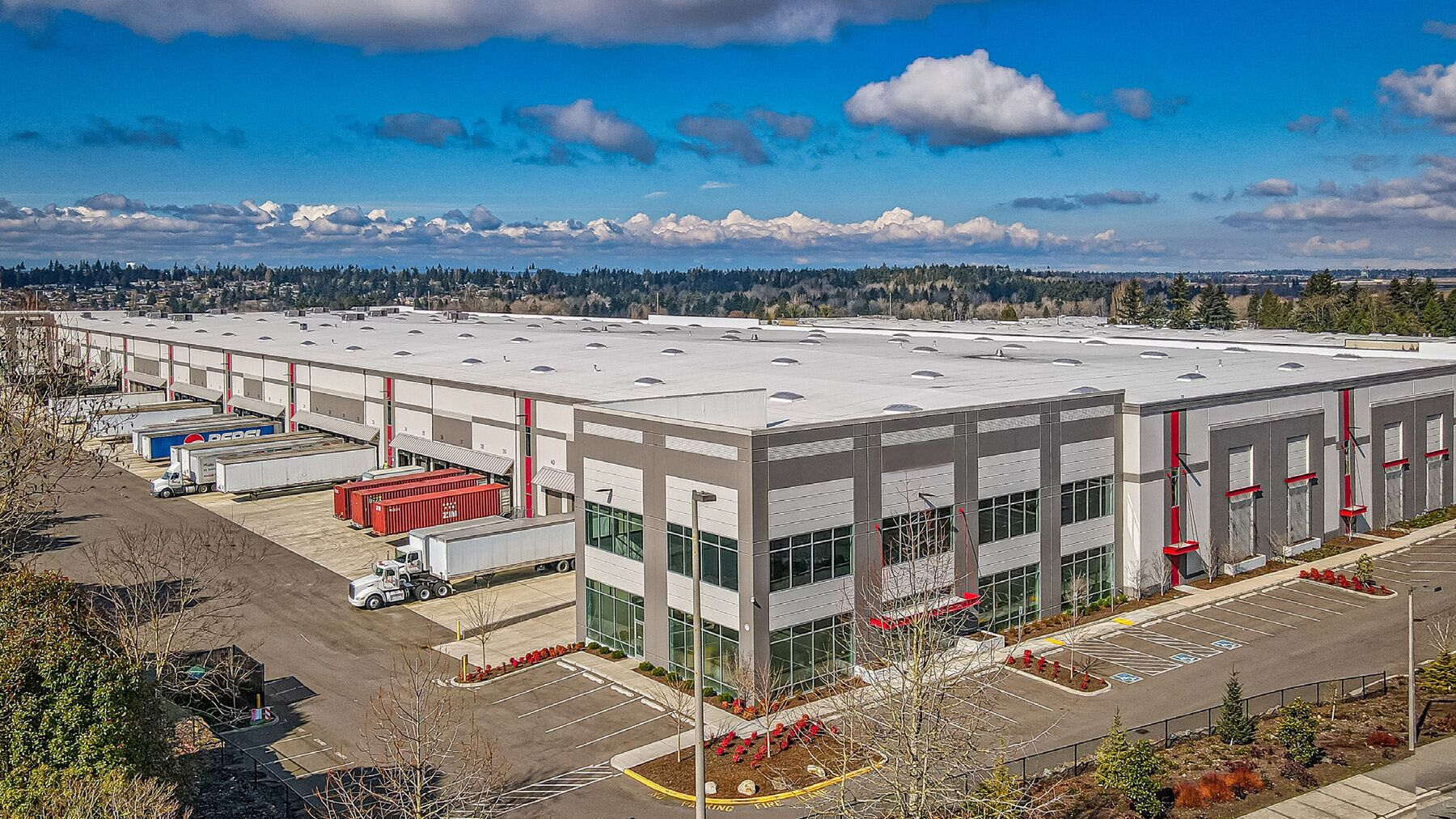
Just south of Seattle-Tacoma International Airport, in Des Moines, Washington, a building that once hummed with the activity of a regional drug distribution center is getting a new life. For decades, it was a place where trucks backed into loading docks and forklifts carried boxes of medicine and everyday essentials, a quiet cog in the machinery of daily life. Now Blue Origin, the space company founded by Jeff Bezos, is moving into the sprawling Prologis Park SeaTac 3 property at 21202 24th Ave. S. The 265,922-square-foot facility, previously home to Bartell Drugs, will become a mix of laboratory, development and light production space. For a community of roughly 33,000 residents, the news carries more than corporate significance. It means jobs, curiosity, and a front-row seat to the commercial space age. The company confirmed to GeekWire that, over the long term and at full capacity, the site is expected to support hundreds of employees. That is a meaningful number for a city that has long lived in the shadow of Sea-Tac, with its roar of jets and its endless stream of travelers. Now the roar is joined by something different: the quiet, deliberate work of engineers and technicians building things meant to leave Earth. The building itself is no gleaming campus. It is a warehouse, the kind of utilitarian structure that lines industrial roads all over the country. But what happens inside matters. Blue Origin’s plans include research and development, lab work, and light production, which could mean anything from satellite components to advanced manufacturing processes. The exact details are still emerging. KING 5 first reported the news, noting a state environmental application filed in September lists Blue Origin Manufacturing LLC at the address. A pre-application under review by the city suggests the property could be used for research and development of commercial satellites. That phrase alone opens up a universe of possibility. The work may not be visible from the street, but its effects could be felt far beyond the city limits. For the people of Des Moines, it may be hard to imagine exactly what those satellites will do. But they know what a steady employer looks like, and this one has a very ambitious mission.
Behind the move is a real estate deal that was kept quiet for a while. Commercial real estate firm Newmark announced a lease for the entire building last week, but initially did not identify the tenant. The mystery did not last long. When the name Blue Origin surfaced, the pieces clicked into place. Thad Mallory, executive vice chairman at Newmark, expressed enthusiasm in a statement, saying, “The manufacturing project that will be using this property is cutting-edge and we are excited about the job growth and possibilities that it represents for our region.” That kind of language is typical in commercial real estate announcements, but here it carries real weight. The idea that a former Bartell Drugs distribution center is about to host cutting-edge manufacturing is a vivid example of how quickly the Pacific Northwest economy is evolving. Bartell was a beloved local chain, part of Seattle-area life for over a century, and its distribution center was a place where trucks loaded and unloaded goods that ended up on store shelves. Now the same square footage is being reinvented for a company that aims to land on the Moon and, someday, to help millions of people live and work in space. The transition is not just about one building. It is about what industrial space means in a region where land is scarce, power is valuable, and the workforce is highly skilled. For Blue Origin, being in Des Moines is not a random choice. The company is headquartered in nearby Kent, about five miles away. That proximity means engineers and executives can move between sites without crossing the state. It also means the new facility fits naturally into Blue Origin’s existing geography, a network of facilities that stretches from Kent to Florida to Texas and beyond. For a company with such audacious vision, having a local workspace to call its own is not just convenient; it is essential. The lease is for the entire building, which suggests confidence in the company’s long-term plans. There are still regulatory approvals and environmental reviews ahead. But the direction is clear: Blue Origin is putting down deeper roots in the South Sound. And for a city like Des Moines, being chosen by Blue Origin is an affirmation of its place in the region’s future.
The Des Moines area is not just gaining one aerospace tenant. Around the corner from Blue Origin’s new home, Shield AI is building X-Forge 3, a 420,000-square-foot facility that will produce the company’s X-BAT autonomous fighter jet. Shield AI said last month that it expects to have 4,000 workers in the region by the early 2030s, and it is already looking for another 1 million square feet of space. That is a staggering amount of growth for an area that many people outside Washington state would struggle to find on a map. Des Moines, with its marina, its waterfront park, and its small-city feel, is becoming something of an aerospace hub. The presence of two advanced manufacturers in such close proximity is no accident. Both need land, both need power, and both need people with the skills to build complex machines. Thad Mallory put it simply: “It’s all about labor and access to power.” That perhaps is the least glamorous explanation imaginable for why a space company would choose a former drug warehouse. But it is also the most honest. Advanced manufacturing is hungry. It demands enormous amounts of electricity, especially for testing and production. It demands a workforce that can handle clean rooms, precision tools, and rigorous safety protocols. The Seattle area has long supplied that workforce, thanks to Boeing, Amazon, and the broader tech economy. Now that talent pool is being drawn into the new space race. For local residents, the changes are visible in traffic patterns, construction cranes, and the arrival of new faces at coffee shops. The jobs are not all engineers and rocket scientists. There will be roles for electricians, machinists, welders, security guards, and administrative staff. A facility like this creates a ladder of opportunity. A person can start in a support role, take classes at a community college, and move up into a technical career. That is the kind of economic mobility that communities value, and it is one of the reasons elected officials and local leaders have welcomed these projects with open arms. Still, growth brings challenges. Housing in the Seattle area is expensive. Traffic is already a headache. Schools and public services will need to keep pace. The question is whether Des Moines and its neighbors can capture the benefits of this aerospace surge without losing the character that makes the place worth living in.
Blue Origin itself has been a fixture of Washington state’s aerospace scene for more than two decades, even as its most visible operations have expanded to Texas and Florida. The company was founded by Jeff Bezos with a long-term vision of millions of people living and working in space. That vision can sound like science fiction, but the work is very real. Blue Origin’s headquarters in Kent has been home to thousands of employees who design engines, test hardware, and refine manufacturing techniques. The new Des Moines facility, with its focus on lab and light production work, fits into that broader ecosystem. It will not be a launch site or a massive rocket factory. It will be a place where ideas move from whiteboards into prototypes, where research grows up into products. For a company that has sometimes been criticized for secrecy and slow progress, the move signals a more practical, grounded phase. The mention of commercial satellites is especially telling. Blue Origin has talked for years about building a satellite business, and this facility could be where that ambition takes physical shape. Satellites are a booming market, with companies and governments around the world needing everything from broadband constellations to Earth-observation platforms. The Pacific Northwest already has a strong satellite industry, and Blue Origin’s presence could pull more suppliers and partners into the region. The hundreds of employees expected at full capacity may not sound like a lot compared with Amazon’s workforce, but for a specialized company, it represents real growth. And those jobs tend to pay well. They are the kind of careers that allow families to buy homes, save for college, and plan for the future. For Des Moines, a city that has often been overlooked, being the home of a Blue Origin facility is a point of pride. It is also a responsibility. The company is betting that this community can help it achieve ambitious goals. The community is betting that the company will be a good neighbor for years to come. That mutual bet is what economic development looks like at its best.
Blue Origin is in the middle of a challenging period. In May, one of its New Glenn rockets exploded during a ground engine test in Florida, damaging the launch pad that was supposed to send it skyward. The explosion was a dramatic reminder that spaceflight is hard, unforgiving, and full of setbacks. No one was injured, but the incident delayed schedules and raised questions about the company’s path forward. New Glenn, named after astronaut John Glenn, is a heavy-lift rocket designed to carry payloads and, eventually, people into orbit. It is central to Blue Origin’s commercial and governmental ambitions. The rocket is slated to carry Blue Origin’s Blue Moon Mark 2 lander on NASA’s Artemis 3 mission. NASA’s Artemis program aims to return astronauts to the Moon and establish a long-term presence there. Under the current timeline, an uncrewed test of the Blue Moon lander is planned for Earth orbit in mid-2027, ahead of a crewed moon landing targeted for 2028. Those dates could slip. In the space industry, they often do. But the plan shows a clear trajectory. Blue Origin is not just building hardware for the sake of it. It is aiming for the Moon, and the Des Moines facility may play a supporting role in that journey. The work of building satellites and other space systems is intimately connected to the larger mission. Satellites are how humanity communicates across space. They are how we observe the Earth, navigate our world, and understand the universe. The people who will work in the former Bartell warehouse will be part of that story, even if their tasks are as mundane as testing a circuit board or calibrating a sensor. Humanizing the space industry means remembering that it is not just about rockets exploding or landing safely. It is about the daily work of thousands of people who show up to jobs and solve problems. It is about the technicians who notice a crack before it becomes a catastrophe, the engineers who spend months chasing a bug, the admin who makes sure the parts arrive on time. The explosion in May was a setback, but it has not ended Blue Origin’s ambitions. The company is rebuilding its pad, reviewing its test procedures, and pushing ahead. That resilience is, in many ways, the heart of the space business. You fail, you learn, you fix it, and you try again.
In the end, the story of Blue Origin’s move into Des Moines is not just a story about cubic feet and corporate leases. It is a story about a region trying to build the future. The building at 21202 24th Ave. S. sits in a landscape of warehouses, freeways, and airport noise. But it is also surrounded by neighborhoods, schools, and families. The people who live there have watched the aerospace industry change over the years. Some have worked at Boeing. Some have relatives at Amazon. Now, a new generation of workers may find their calling at Blue Origin. The company’s decision to invest in this site says something about the region’s enduring importance. Washington state has always been a place where big ideas take flight, from commercial aviation to software to cloud computing. Space is the next frontier, and the South Sound is positioning itself to be part of it. With Shield AI’s massive facility nearby, and Blue Origin’s new lab and production site, the Des Moines area is becoming a cluster of aerospace innovation. That clustering matters. It creates an ecosystem where companies share suppliers, workers move between projects, and knowledge flows across parking lots. It also creates a sense of momentum. When people see construction cranes and hear about new jobs, they begin to imagine what their community could become. There will be challenges, of course. The cost of living, the strain on infrastructure, and the environmental impacts of industrial development are real concerns. But the promise of hundreds of good-paying jobs, of cutting-edge research and development, and of a role in humanity’s exploration of the Moon is hard to ignore. Blue Origin has a long road ahead. The New Glenn explosion was a reminder that spaceflight is not a straight line. But the company has not stopped. The Des Moines facility is evidence that it is still investing, still planning, and still building. For a small city along the shores of Puget Sound, that is a hopeful sign. The warehouse that once held medicine and household goods is being transformed into a workshop for dreams. And the people of Des Moines, with their eyes on the sky, are ready to see what comes next.