


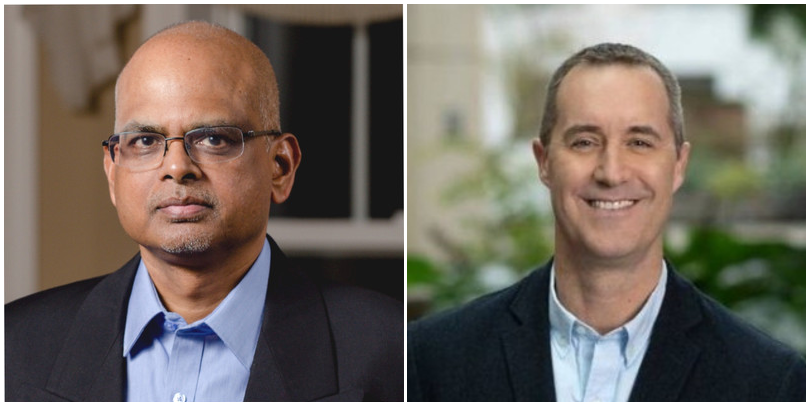
The Pacific Northwest’s technology and innovation ecosystem is defined by constant motion, and the latest wave of leadership changes captures both the excitement and melancholy of that churn. Nowhere is that more evident than in the aftermath of the massive Paramount Skydance acquisition of Warner Bros. Discovery, which closed on Oct. 6 and created the newly named Skydance Corporation. In the wake of that deal, two former Amazon executives who were instrumental in building Discovery’s direct-to-consumer operation in Bellevue, Washington, have decided to step away from their leadership roles. Avi Saxena, who joined Discovery in 2019 as chief technology officer of its direct-to-consumer business and later became CTO of Warner Bros. Discovery following the 2022 merger with AT&T’s WarnerMedia, and Tyler Whitworth, who served as executive vice president and chief product officer for WBD’s streaming business, are both transitioning into advisory roles during this period of organizational realignment. Their departures are not simply corporate footnotes; they represent the end of an era for the Bellevue office that Saxena helped establish and for the streaming products that Whitworth and his teams shaped during a pivotal time in entertainment technology.
Saxena and Whitworth both brought deep roots in Amazon’s customer-obsessed culture to the media world, and their trajectories illustrate how tech talent has increasingly flowed into entertainment and content businesses. Saxena spent 19 years at Amazon across two stints, most recently as vice president of technology for Amazon Marketplace, and he also held leadership positions at Microsoft and internet infrastructure startups. At Discovery and later WBD, he was responsible for the technology backbone that powered streaming services and digital experiences, helping to build a Bellevue engineering hub that became a center of gravity for the company’s direct-to-consumer ambitions. Whitworth, similarly, spent more than seven years at Amazon, where he led teams developing products and services for customers and third-party sellers. At WBD, he oversaw digital product teams for an impressive portfolio that included HBO Max, discovery+, Eurosport, TNT Sports, Food Network, and others. Together, they represented a bridge between the lean, data-driven ethos of Amazon and the creative, content-forward world of Warner Bros. Discovery. Their departure, along with that of WBD Chief Information Officer Dave Duvall, was announced in a memo from Dane Glasgow, Skydance’s chief product officer, who wrote, “Much of the strength of WBD’s product and technology organizations reflects their leadership and dedication. Please join me in thanking them and wishing them the very best.” It is a gracious acknowledgment of their contributions, but it also leaves open a significant question: what will happen to the Bellevue office that helped define the company’s streaming strategy? The company has not responded to queries about the future of that location, so the region waits with cautious optimism to see whether this talent and infrastructure will remain a lasting part of Skydance’s plans.
Meanwhile, the Microsoft alumni community is experiencing its own meaningful movement, as one veteran returns to the fold and another departs for new horizons. Bahadir Onalan is rejoining Microsoft as a vice president in its CoreAI organization, where he will focus on responsible AI, after nearly ten years at Amazon. Onalan’s first tenure at Microsoft began in 2005, when he contributed to Azure teams working on search, analytics, business intelligence, and security, eventually leaving in 2017 as a principal software group engineering manager. His time at Amazon was dedicated to machine learning initiatives, and now he comes back to the company with a mission that feels both timely and personal. In announcing his return, Onalan described the move as “a true homecoming” and added, “Our goal goes beyond shipping a platform or a product; we are here to define the global standards for AI safety.” His words reflect a broader shift across the tech industry, where the people who helped build powerful AI systems are increasingly turning their attention to the ethics, governance, and safety frameworks that will determine how those systems shape society. At the same time, Naria Santa Lucia is leaving Microsoft after seven years, most recently serving as a general manager with Microsoft Elevate, a role that focused on empowering communities and organizations. Before her time at Microsoft, she was executive director of the Washington State Opportunity Scholarship, a program that helps students and families navigate the path to higher education and career success. Santa Lucia did not announce a specific next role, but she shared a heartfelt reflection on her departure, saying, “I’ll carry the lessons I learned from my time at Microsoft as I continue my personal and professional mission to serve people and communities by teaching, advising nonprofits and mission driven organizations, and spreading joy and human connection.” Her exit is a reminder that not every career move is about climbing a corporate ladder; sometimes it is about returning to a deeper sense of purpose and impact.
In the climate technology space, VertueLab, a Pacific Northwest nonprofit dedicated to supporting entrepreneurs tackling climate challenges, is also undergoing a significant leadership transition. Leo Ochoa has been named the organization’s new executive director, promoted from his previous role as managing director for Oregon. Ochoa succeeds Aina Abiodun, who is stepping aside after more than three years as executive director but will remain involved as chair of the organization’s board. This leadership change is more than a succession plan; it is a celebration of a mission-driven career and a fresh opportunity to expand the organization’s reach. VertueLab praised Ochoa in a statement, saying, “Leo brings a unique blend of vision, relationships, and entrepreneurship experience,” and his background certainly supports that assessment. Before joining VertueLab, Ochoa worked as a wildland firefighter, founded a startup, and held a patent for wearable safety gear, giving him a firsthand understanding of the challenges and opportunities that climate tech entrepreneurs face. His experience spans both the urgency of environmental crises and the practical work of building products that can protect people and the planet. Abiodun’s tenure was marked by ambitious initiatives that helped elevate the organization’s profile and impact. She co-created the Seattle Climate Innovation Hub, launched the Opalene Climate Challenge, and helped lead the Just Future Climate Labs initiative, all efforts aimed at ensuring that climate solutions are not only innovative but also equitable and accessible. As she transitions to the board, her continued involvement will provide continuity while Ochoa brings his own energy and vision to the executive director role. The move signals a commitment to nurturing the next generation of climate leaders and ensuring that the Pacific Northwest remains a fertile ground for clean technology and sustainable innovation.
The Pacific Northwest’s growing space economy is also gaining fresh leadership. Seattle-based Pulse Space, a startup developing laser-based systems to deliver power and enable long-distance communications in low Earth orbit and beyond, has appointed Leah Sardone as vice president of engineering. The company’s approach is bold: using lasers not just for communication, but for wireless power transmission in space, a concept that could fundamentally change how satellites and spacecraft are designed and operated. In July, Pulse Space announced a $40 million U.S. Space Force contract to advance its laser-based space power technology, a clear signal that the defense and space industries see enormous potential in this work. Sardone brings more than 23 years of experience in hardware, sensors, and embedded systems development, and her résumé reads like a tour of some of the most ambitious engineering organizations in the country. She joins Pulse Space from IonQ, where she served as director of quantum networking and interconnects, and her previous employers include Lockheed Martin, Northrop Grumman, Honeywell Aerospace, Blue Origin, and Amazon’s Project Kuiper, now known as Amazon Leo. This remarkable breadth of experience spans aerospace, quantum computing, and satellite internet, giving her an unusually rich perspective on the technical and strategic challenges of building infrastructure in space. Her appointment is a strong vote of confidence in Pulse Space’s mission, and her leadership will be critical as the company moves from research and development toward deployment. With the commercial space industry rapidly expanding and the U.S. military increasingly interested in space-based energy and communications, Sardone’s arrival positions Pulse Space to be a major player in the next chapter of space innovation.
Finally, the biotech and research communities are making moves of their own, with new leadership and new funding arriving in Portland and Seattle. Caravel Bio, a Portland, Oregon startup developing technology to rapidly test newly designed proteins, has announced Michał Jastrzębski as its new chief technology officer. The company’s platform is designed to screen millions of protein designs in parallel at low cost, a capability that could dramatically accelerate the discovery of promising candidates for applications in human health, pollution reduction, and industrial processes. Alongside the executive appointment, Caravel also announced a nearly $1.25 million Small Business Innovation Research Phase II grant from the National Science Foundation to further develop the platform. Jastrzębski brings deep expertise to the role, having previously served as a principal machine learning engineer at Ginkgo Bioworks, as well as holding positions at GitHub and Intel. His background in applying machine learning to biology is well aligned with Caravel’s mission to combine computation, automation, and engineering to revolutionize how proteins are developed and tested. In a separate but equally notable development, Darick Baker has been appointed director of the University of Washington’s Washington Nanofabrication Facility, which the university describes as “the largest publicly accessible nanofabrication facility and cleanroom in the Pacific Northwest.” Baker joined the facility in 2012 as a research engineer and has served as acting director since 2025, so his promotion reflects both deep institutional knowledge and a demonstrated capacity to lead. Prior to his time at UW, he worked at the Colorado School of Mines. The nanofabrication facility plays a critical role in supporting researchers and startups across the region, providing access to advanced tools and expertise that would otherwise be out of reach for many organizations. Taken together, these appointments reflect the Pacific Northwest’s enduring strength as a hub for scientific discovery, engineering talent, and entrepreneurial energy. As leaders move between corporate giants, return to earlier homes, or step up into bigger roles, they carry with them the lessons and experiences that make this region a place where the future is not just imagined but built.