


Paragraph 1: The Final Countdown Begins
There is a particular kind of electricity that fills the air in the final stretch of an American election. It’s not just the changing leaves or the crisp autumn breeze; it’s the sense that every handshake, every speech, and every mile traveled by a campaign bus might tip the scales of history. With just nine days remaining until Election Day, the battle for control of Congress has exploded into a full-blown, coast-to-coast sprint. The map of the United States is crisscrossed with flight paths, motorcade routes, and rally stop after rally stop, as both major parties deploy their heavy hitters to rouse the faithful and persuade the uncertain. This is the moment when strategies become visible, when the abstract math of polling gives way to the tangible reality of crowd sizes, chants, and the weary but determined voices of candidates asking for one last chance. It is a time of intense urgency, but also of deep human emotion—frustration over prices at the grocery store, hope for a better future, anxiety about the direction of the country. The final nine days are not just about policy papers or television ads; they are about people gathering in convention centers, high school gyms, and airport hangars, looking for someone to speak to their concerns. And this year, both parties are answering with a remarkable display of star power, from the current Republican ticket to the familiar faces of Democratic leadership. The next week and a half will not be quiet. It will be loud, passionate, and often messy, because that is what democracy looks like when the clock is winding down and everything feels up for grabs.
Paragraph 2: Trump and Vance Hit the Road with Relentless Energy
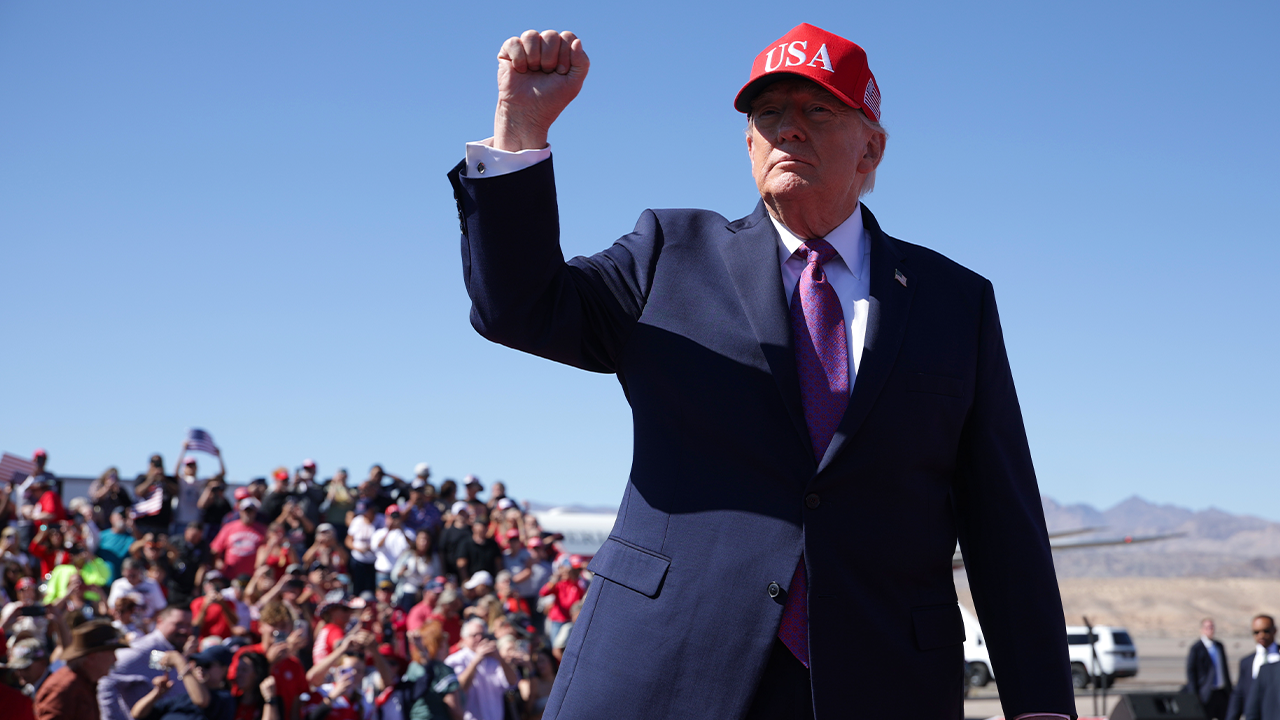
On the Republican side, the effort is being led by President Donald Trump and Vice President JD Vance, and they are operating at a pace that seems almost superhuman. Trump has long been known for his marathon-style rallies, and this campaign season appears to be no exception. Early in October, he announced plans to hold five to seven rallies a week, and he has largely kept to that grueling schedule. The map of his travels reads like a tour of the country’s political heartland: Texas and Oklahoma in the South, Ohio in the industrial Midwest, Georgia and Florida in the Southeast, and Michigan, a crucial northern battleground. Just this past weekend alone, he campaigned in Florida on Friday, Georgia on Saturday, and Michigan on Sunday—three states in three days, each with its own political dynamics and its own loyal army of supporters. There is something almost theatrical about these events: the music, the crowd’s roar, the inevitable moment when the former president walks out and soaks in the adulation. But beneath the spectacle lies a careful strategy. By visiting reliably Republican states like Oklahoma and Alabama, the campaign aims to energize the base, to ensure that the voters who always show up for Trump come out again for down-ballot candidates. These rallies are not just about the man at the podium; they are about firing up the grassroots network that makes phone calls, knocks on doors, and drives friends to the polls. In states like Ohio, Texas, and Iowa, however, the calculus is different. These are states with competitive Senate contests, where a strong turnout from the conservative base could make the difference between a Republican majority and a Democratic one. Trump’s presence in these places is a powerful magnet, and Vance, his running mate and a native of Ohio, brings his own intensity to the trail. Together, they are a double-edged sword—beloved by millions, feared by their opponents, and utterly relentless in their pursuit of victory.
Paragraph 3: The Economy Takes Center Stage and Competitive Races Heat Up
At the heart of the Republican campaign message is a simple but potent issue: the economy. High prices have put Trump’s economic record back in the spotlight, and the GOP is leaning hard into the argument that Republican leadership brings lower costs and more opportunity, while Democratic policies have led to inflation and struggle for ordinary families. This is not just a talking point; it is a lived experience for many voters. People feel the pinch at the gas pump, at the grocery checkout, and in their monthly rent or mortgage. In states like Ohio, Texas, and Iowa, the Senate races have tightened into coin flips, and recent polling from the Cook Political Report even showed Democratic candidates narrowly ahead in all three. Michigan, too, has become a key Senate battleground, a state where union workers, suburban women, and independent voters could go either way. In such a volatile environment, every campaign stop matters. The Republicans are counting on the former president’s ability to tap into economic anxiety and transform it into votes for the GOP. They are also using the closing days to remind voters of the contrast between the two parties: on one side, a message of lower taxes, energy independence, and a tough stance on trade; on the other, what they describe as reckless spending and government overreach. The polling numbers have shifted back and forth, but the rallies reveal something that polls cannot: the energy of the crowd, the intensity of the cheers, the long lines of people waiting outside in the cold just to hear a speech. In a highly polarized country, such energy can be a powerful predictor of turnout. The Republican strategy is built on the hope that economic frustration will drive conservative voters to the polls in droves, and that the same frustration will pull enough undecided voters to the GOP to tip close races.
Paragraph 4: Obama and Harris Lead the Democratic Counterpush
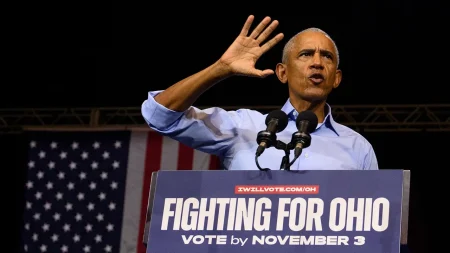
The Democrats are not standing still. They are deploying their own familiar faces, led by former President Barack Obama and former Vice President Kamala Harris. Obama, with his oratorical gifts and his enduring popularity among Democratic voters, campaigned in Ohio and Michigan, two states that are absolutely vital to the party’s chances of holding or expanding its congressional majorities. Ohio is a state that has trended increasingly Republican in recent years, but the Senate race there has proven competitive, and Obama’s ability to rally African American voters, young voters, and college-educated white voters could give the Democratic candidate a crucial boost. Michigan, of course, is a perennial battleground, and Obama’s appearances there are designed to shore up the coalition that carried the state for Democrats in recent elections. Harris, meanwhile, has been focusing on states where the Democratic base needs a jolt, including Nevada, Mississippi, and New Hampshire. These are very different places with very different voter profiles, but each has a Senate or House race that could be close. In Nevada, the Hispanic and working-class voters are essential. In Mississippi, the Black vote is the backbone of the Democratic Party. In New Hampshire, independent voters often decide the outcome. Harris’s visits are a recognition that a national message must be tailored to local realities, and that a speech that works in Detroit might not resonate in the Mississippi Delta. The Democrats are also trying to turn the economy into a winning issue, arguing that their policies—lower prescription drug prices, better infrastructure, and more support for families—will ultimately help ordinary Americans more than tax cuts for the wealthy. But their approach is less about attacking the former president and more about presenting a vision of government as a force for good. Obama’s calm, inspiring tone contrasts sharply with Trump’s fiery rhetoric, and the Democrats are hoping that this contrast will appeal to moderate voters who may be exhausted by the chaos of modern politics.
Paragraph 5: The Map as a Window into Strategy, Not a Ranking of Battlegrounds
The campaign travel map, which tracks the stops made by all four figures so far this month, offers a vivid snapshot of how the parties see the playing field. States visited by both sides are shaded gray, and it is fascinating to see where the paths cross. But it is important to note what the map is not: it is not a formal ranking of battlegrounds, nor is it a prediction of where the race will be decided. It is simply a record of where the parties have chosen to spend their most precious resource—time. The map shows that both parties are willing to visit deep-red or deep-blue states, not because those states are in doubt, but because rallies there serve a different purpose. They energize the base, raise money, generate media coverage, and create momentum that can spill over into neighboring competitive districts. A rally in Oklahoma, for example, might not change the outcome of that state’s Senate race, but it can inspire GOP volunteers to work harder for candidates in other states. Similarly, a Democratic event in Mississippi is not about winning Mississippi’s electoral votes; it is about turning out the Black vote, which has outsized influence in congressional races across the South. The gray areas on the map—states like Ohio and Michigan, where both parties have been active—are the real epicenters of the fight. In these places, the outcome may come down to a few thousand votes, and each visit by a national figure can help mobilize a few more volunteers or persuade a few more undecided voters. The travel patterns also reveal something about the personalities of the campaigns. Trump’s whirlwind schedule is a reflection of his boundless appetite for crowds and applause. Obama’s more select appearances are a reminder that his power lies in his ability to move listeners with a carefully crafted speech. Harris’s diverse itinerary shows the Democrats trying to cover as much ground as possible at a time when every mile counts.
Paragraph 6: The Human Element and the Final Push Before Nov. 3
As the final days tick down, it is easy to become lost in the numbers—the polling margins, the seat projections, the turnout models. But behind all of that data are real people making real choices. At every rally, there are stories: the union worker who lost his job during the pandemic and worries about his children’s future; the grandmother who is struggling to afford her prescriptions; the young college student who is voting for the first time; the small business owner who just wants the government to get out of the way. The candidates know this, which is why they are spending so much time on the road. The polls may change, but the human need for hope, security, and recognition does not. On November 3, millions of Americans will go to the polls, and they will carry with them the memories of all they have heard and seen over the past few weeks. They will remember the booming voice of the former president, the measured cadence of the former president who came before him, the fierce earnestness of the vice president, and the Midwestern sincerity of the vice president running for the other side. They will also remember the sound of rain on a tent roof, the smell of coffee in a crowded hall, the weight of a sign held high above a sea of faces. The map may show simply dots and lines, but those dots represent places where democracy has lived and breathed. The nine-day sprint is almost over, but the effects of this final push will be felt for years to come. In a democracy, power is ultimately transferred not through polls or rallies, but through the quiet act of casting a ballot. This year, that act feels more consequential than ever. The candidates have done their part—traveling thousands of miles, shaking thousands of hands, and giving thousands of speeches. Now it is up to the voters. The pace will slow, the lights will dim, and the stages will be packed away. But the decisions made in these last nine days will endure, reminding us that, in the end, politics is not just about winning or losing—it is about the people.