


There are moments in any great public debate when the weight of a single honest admission can shift the ground beneath an entire narrative. This week offered one of those moments. A senior member of the United Nations Commission of Inquiry on Israel, the body that had formally accused the Jewish state of genocide in Gaza, reportedly acknowledged that the commission never actually verified the central claim behind that accusation. The admission came from Chris Sidoti, a commissioner with the Independent International Commission of Inquiry on the Occupied Palestinian Territory, including East Jerusalem and Israel. In an interview reported by JNS and circulated on X, Sidoti was asked whether the commission had independently established that the Palestinians killed in the fighting were civilians. His answer was remarkably direct: “No, we didn’t because we don’t have that information … We literally do not know, nor does anybody else know, including the IDF, how many militants were there.” That statement lands with particular force because the commission’s September 2025 report had leaned on an article from the Guardian claiming that 83% of Gazans killed in the conflict were civilians. It was that kind of statistic that helped fuel the genocide narrative in international media, in diplomatic halls, and on university campuses. And now, one of the people responsible for putting that narrative into the world was admitting, in plain words, that the foundational number had not been independently checked.
The timing of Sidoti’s admission made it even more striking. Just days earlier, the former chair of the same commission, Navanethem “Navay” Pillay, had been awarded the Nobel Peace Prize. Pillay, a former United Nations High Commissioner for Human Rights, had been one of the most prominent voices accusing Israel of genocide. Her Nobel selection was celebrated in some circles and condemned in others, but Sidoti’s remarks seemed to undercut the very basis of the work for which she was being honored. Critics of the genocide allegations were quick to point out that the accusation had never rested on verified evidence. Instead, they argued, it rested on assumptions, estimates, and the unchecked repetition of casualty figures from sources with a political stake in the outcome. The human cost of that repetition has been immense. Around the world, Jewish communities have faced a surge of antisemitic incidents since October 2023, and many observers believe that the genocide accusation, repeated endlessly across mainstream media, helped to legitimize that hatred. When an official from the very body making the accusation admits that the central claim was never independently verified, it raises urgent questions about the responsibility of international institutions and news organizations to get the facts right before making accusations that can incite violence.
The latest data from Gaza’s own health ministry makes the genocide claim even harder to sustain. The Palestinian Ministry of Health, which has been the primary source for casualty figures throughout the war, released its first update on overall mortality in Gaza for 2025. This update was notable because it included non-violent deaths for the first time since 2022, before the October 7 terror attacks and the war that followed. The numbers are striking. According to the ministry, 24,650 deaths were registered in 2025. Of those, 18,085 were males and 6,565 were females. The ministry attributed 70.1% of the deaths, or 17,286 cases, to direct targeting in the war. At the same time, the ministry reported 50,227 live births in 2025. In other words, even during a year of intense military operations, Gaza’s population did not collapse. It grew. More than twice as many babies were born as people died. That single fact does more to undermine the genocide accusation than any number of press releases or legal opinions. The claim of genocide rests on the idea that Israel was deliberately trying to destroy the Palestinian people as a group. But a population that is growing, with births far exceeding deaths, is not a population being destroyed. It is a population enduring hardship, certainly, but it is also a population sustaining itself, adapting, and continuing to bring new life into the world.
Experts who have studied the data say the implications are profound. Elliot Malin, president of the Stratos Council, told Fox News Digital that the ministry’s figures make it “very hard for us to infer the intent of Israel was to destroy Palestinians in Gaza to a substantial portion.” He pointed out that with live births far exceeding deaths, “we’re not seeing a population under threat. We are seeing that it is actually able to sustain itself.” Malin also took aim at the Integrated Food Security Phase Classification, or IPC, which declared last year that famine had reached parts of Gaza in the summer of 2025. That declaration was widely cited as proof of Israeli cruelty and as evidence of genocide. But if the population is growing and sustaining itself, Malin argued, then the famine declaration is deeply suspect. “If the population is sustaining and growing through this, what they call a famine, it indicates that there is enough caloric intake to sustain the population,” he said. Gabriel Epstein, senior policy associate at the Israel Policy Forum, made a similar point. He said the ministry’s report “absolutely” demonstrates population growth in 2025. Given that Gaza has one of the youngest populations in the world, he said, it would be surprising if the population were not growing. He acknowledged that emigration and immigration make it impossible to calculate the exact rate of growth, but he stressed that anyone trying to claim negative population growth in 2025 would have to more than double the number of both violent and non-violent deaths. That is a mathematical impossibility, not a matter of interpretation.
The new data also undermines the broader narrative that Gaza was experiencing a hidden catastrophe of malnutrition and disease on a massive scale. Throughout the war, external organizations used estimates and ratios drawn from other conflict zones to suggest that the Palestinian Ministry of Health’s death toll was a dramatic undercount. Some claimed that the true number of deaths had already reached multiple hundreds of thousands, driven largely by non-violent causes like starvation and untreated illness. Those estimates were then used to fuel the genocide accusation, with the implicit message that Israel was deliberately starving the Palestinian people. Epstein said the latest ministry figures “really eliminate the possibility that there is a much higher death toll driven by non-violent or non-trauma deaths.” He explained that comparing the new report with the ministry’s ongoing casualty data shows that the health authorities were not missing the vast majority of malnutrition-related deaths that would have been necessary to justify the IPC’s famine assessment. In other words, the famine declaration was not based on what was actually happening in Gaza. It was based on projections and assumptions that have now been contradicted by real data. Andrew Fox, senior associate fellow at the Henry Jackson Society, was even more direct. “The data now shows that there was no famine in Gaza,” he said. He described the allegations as playing into “the ages-old blood libel of Jews killing children and undoubtedly stoked the global fires of antisemitism.” His conclusion was harsh but clear: “Agencies and the media who shared these false allegations have blood on their hands.”
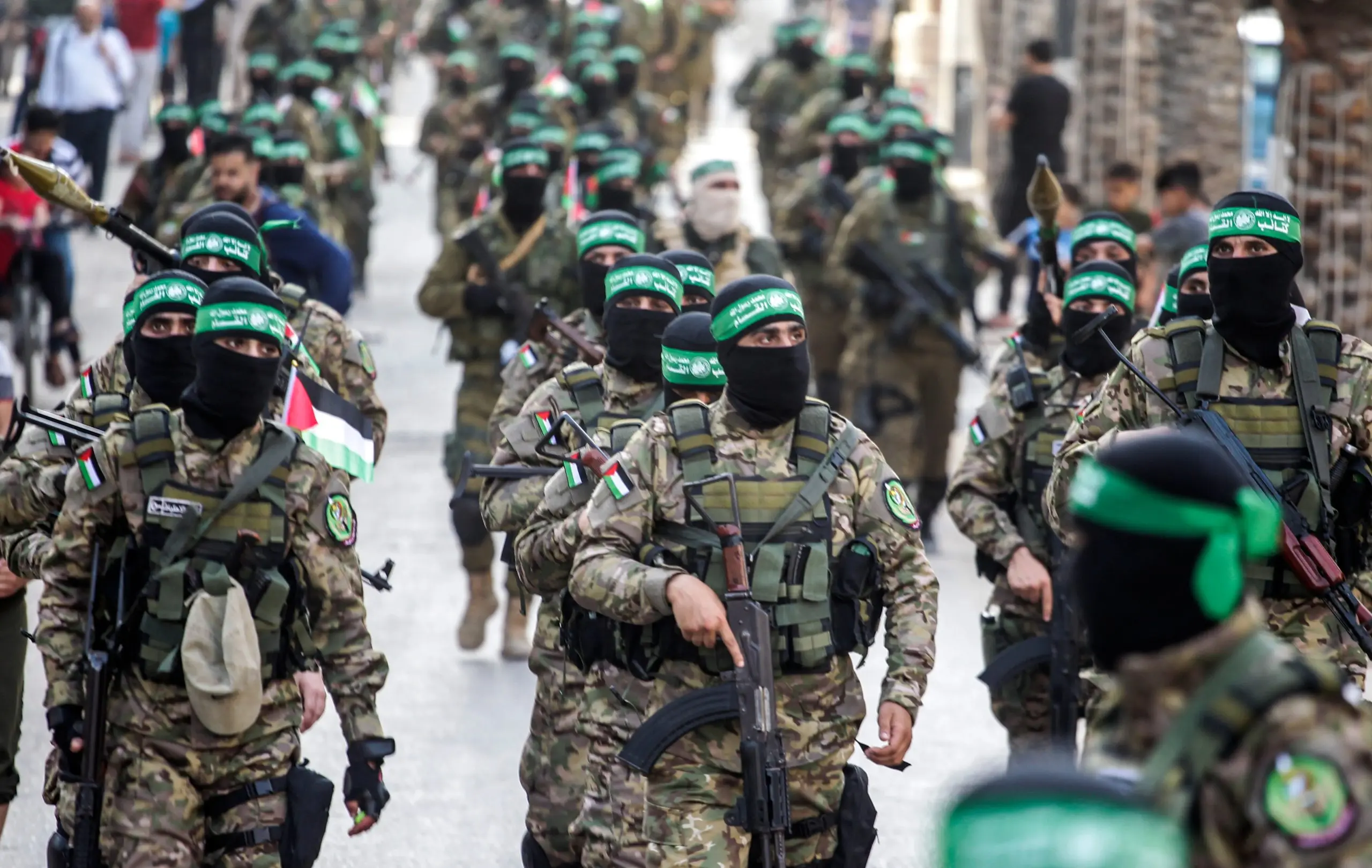
The question of who was actually being killed in Gaza remains complex, and the ministry’s own numbers point to a reality that is very different from the simple civilian-versus-military narrative. In its latest report, the ministry did not distinguish how many terrorists were among those killed. But it noted that the number of deaths among males was approximately 4.9 times the number of deaths among females, and it attributed this to “the direct targeting of working-age men during military operations.” The Israel Defense Forces rejected any suggestion that it was targeting men simply because they were men. A spokesperson told Fox News Digital that the IDF targets terrorists and military objectives, not civilians based on age or gender. The disproportionate number of military-age men killed, the spokesperson said, is consistent with the fact that terrorist organizations are predominantly composed of men in that age group. “It does not demonstrate that the IDF targets individuals because they are men or of a certain age,” the spokesperson said. The IDF added that targets are selected based on their military nature or an individual’s involvement in terrorist organizations, in accordance with international law and IDF directives. The statement also drew a sharp contrast with Hamas, which deliberately targets Israeli civilians, while the IDF takes all feasible precautions to mitigate harm to civilians. Epstein offered a similar analysis. He said that military-aged men do not appear disproportionately because the IDF was targeting them as a category, but because the vast majority of militants come from that range. He also noted that Gaza is unique in how heavily militarized its male population is, with a high percentage of men participating in armed groups. That reality, he argued, provides a rationale for military targeting that has nothing to do with genocide.
In the end, the latest data and the admissions from within the United Nations commission do not answer every question about the war, and they do not minimize the suffering of innocent Palestinians caught in the conflict. What they do is challenge a narrative that has been used to justify some of the most serious accusations possible under international law. The accusation of genocide is not a rhetorical device. It is a legal claim with profound moral weight, and it must be based on evidence, not assumption. The Palestinian Ministry of Health’s own numbers show a population that, despite enormous hardship, continued to grow in 2025. They show a death toll that, while tragic, is nowhere near the hundreds of thousands claimed by those who predicted mass starvation. They show a pattern of deaths that is consistent with a conflict against armed militants, not a campaign of extermination against a people. And the admission from a UN commissioner that the commission never independently verified the number of militants killed reveals the flimsy foundation on which the genocide accusation was built. None of this means the war has been without tragedy, and none of it means that every action taken by every soldier was justified. But it does mean that international institutions, media outlets, and political leaders who repeated the genocide accusation must now face a reckoning. They must answer for the consequences of their words, for the antisemitism that followed, and for the credibility of institutions that allowed politics to override evidence. The truth, as always, is more complicated than the slogans. But in that complexity lies the only real hope for accountability, and perhaps eventually, for peace.