


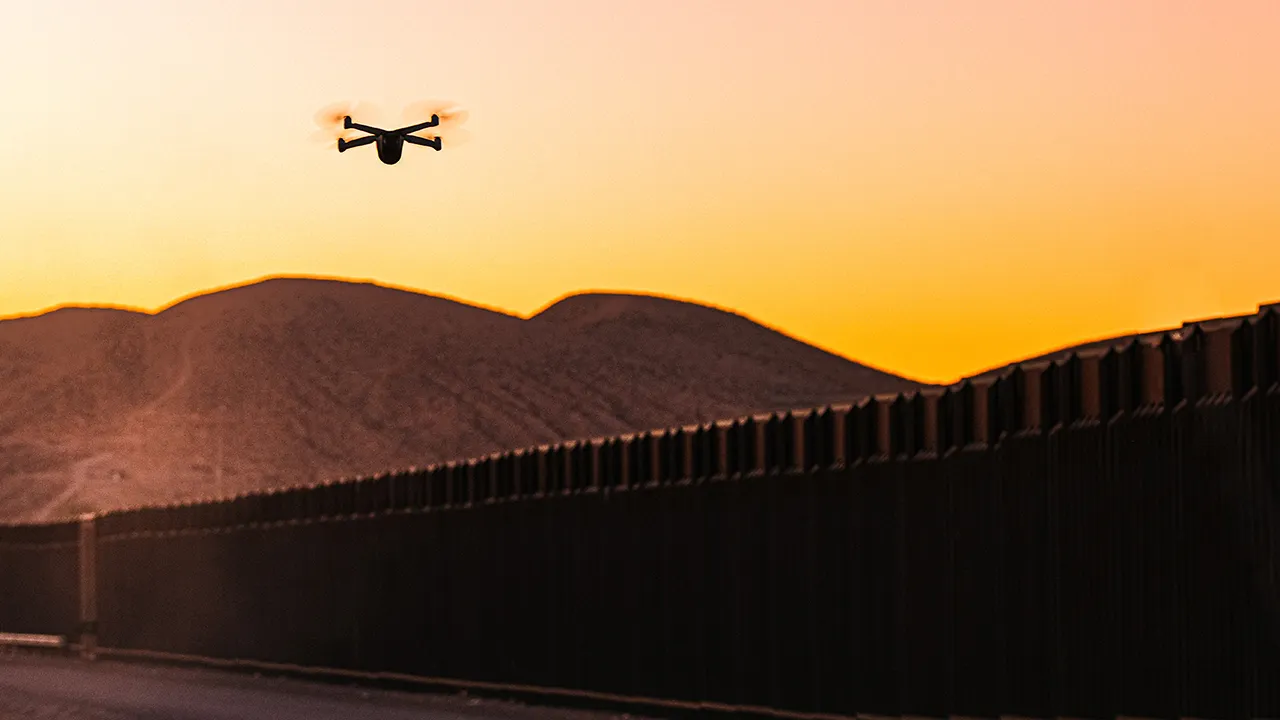
For the men and women stationed along America’s southern border, the threat no longer comes only from shadows in the desert or smugglers slipping through the dark. It now comes from the sky—often small, buzzing drones that look like something a hobbyist might fly. But these are not toys. According to U.S. military officials, Mexican cartels are using commercial and modified drones to watch American security personnel, map patrol routines, and smooth the path for smuggling operations. Brig. Gen. Brian Filler of Joint Task Force-Southern Border recently told reporters that U.S. forces detected 378 drone incursions along the border in just the previous 30 days, and the number was climbing. Most of these aircraft were commercial drones equipped with cameras, used not for dramatic attacks but for something more patient and unsettling: surveillance. Cartels are learning the rhythms of American life and law enforcement, looking for the best moments to move people and drugs across the border. Imagine an agent walking a remote stretch of fence, knowing that somewhere overhead, a tiny camera is recording every step, every pause, every routine. That is the new reality of border security—a quiet, high-tech cat-and-mouse game in which the other side is constantly adjusting its eyes.
The scale of this growing challenge is hard to grasp, but the numbers give a sense of it. A spokesperson for U.S. Customs and Border Protection confirmed that the agency detected over 42,000 near-border drone flights in fiscal year 2025, and more than 37,000 in fiscal year 2026, even before the year ended. These are not trivial figures. They describe a constant swarm of activity along the Southwest border, as cartels use unmanned aircraft for counter-surveillance, scouting crossing points, monitoring law enforcement, and coordinating smuggling operations. The official warning was blunt: drone technology presents “persistent threats,” including surveillance, illicit cargo movement, and even the possibility of kinetic attacks. In response, the Department of Homeland Security has authorized CBP to operate counter-UAS systems along the entire Southwest border and in areas extending 100 miles inland. Border Patrol teams in every Southwest border sector are now tasked with detecting, identifying, tracking, and mitigating these aerial threats. For the public, this may sound like advanced military strategy, but for the agents on the ground, it is deeply personal. Every drone overhead is a reminder that they are being watched by people who have little regard for borders, laws, or human life. It also shows how much the battlefield—if you can call a border crossing that—has changed from the days of simple foot patrols and static watchtowers.
Experts who study cartel innovation say this drone use is not random or scattered. It is strategic, organized, and constantly evolving. Austin Doctor, who directs strategic initiatives at the National Counterterrorism Innovation, Technology and Education Center and teaches criminology at the University of Nebraska at Omaha, explained that most cartels still rely on commercial, off-the-shelf drones—the same kind anyone can buy online. But more sophisticated aircraft are appearing, including larger agricultural drones that can carry heavier payloads. Doctor described a pattern of cartels innovating their drone designs, increasing payload sizes, improving resistance to countermeasures, and boosting operational capabilities. In other words, they are behaving less like criminal gangs and more like agile tech companies, iterating on their products based on what works and what gets shot down. Their primary use on the border remains surveillance and logistics—watching U.S. security personnel, identifying patrol patterns, and supporting smuggling outcomes. Weaponized use, by contrast, is more frequently documented inside Mexico, where cartels use drones for kinetic attacks against rival factions, civilians, and local security forces. Doctor pointed to the Jalisco New Generation Cartel, known as CJNG, as a key driver of drone innovation and adoption within Mexico’s cartel ecosystem. But he also made clear that drone use has spread far beyond any single group, touching cartels and states across the country. What emerges is a picture of highly adaptable criminal networks, constantly learning, sharing tactics, and testing new ways to stay one step ahead of the authorities who are trying to stop them.
The evidence of how this innovation plays out on the ground is frightening, especially in border cities. In 2025, in Reynosa, a city just across from McAllen, Texas, soldiers and state police detained a man and seized 18 drones, 151 explosive objects, two improvised explosive devices, a drone detector, and three counter-drone devices. The official announcement did not name a cartel, but Doctor said the safehouse was reported to be linked to the Los Metros faction of the Gulf Cartel. That suggests that even the hardware needed to fight drones has become part of the cartel inventory. More troubling still, weaponized drones have already reached Mexican border cities. In October 2025, Baja California’s prosecutor said a drone dropped homemade explosive devices at an anti-kidnapping prosecutor’s office in Tijuana. Four vehicles were damaged, and miraculously, no one was injured. Authorities called it criminal retaliation but did not publicly identify a cartel. Doctor noted that Tijuana stands out as an exception to the usual pattern, where attacks tend to occur farther inside Mexico rather than right at the border. Still, he warned that border regions remain critical facilitation hubs, and the risk of increased kinetic attacks there remains credible. For people living in cities like Tijuana and Reynosa, the idea of a bomb falling from a small drone is no longer science fiction. It is a real, present danger. And for American border communities, the prospect of that danger creeping north is a sobering thought. The border is not just a line on a map; it is a place where families live, where children go to school, and where a quiet afternoon can suddenly be shattered by something from the sky.
Mexico has not stood still in the face of this threat. The government says it is responding with interdictions, counter-drone equipment, military operations, and new criminal penalties. During last month’s Águila Alta operation in the Tijuana-San Diego area, the defense ministry said Mexican forces neutralized five drones, detained one person, and seized a gun, magazines, and ammunition. Importantly, one aircraft was initially detected in the United States and later neutralized in Mexico following information-sharing with Customs and Border Protection. That cross-border coordination is a positive sign, though officials released no before-and-after data showing whether drone traffic actually declined afterward. Earlier this month, Mexico deployed 500 soldiers and National Guard members, two helicopters, drones, and mobile and fixed counter-drone systems in five Tamaulipas municipalities. The Navy separately reported 159 personnel, 11 vehicles, and two drones under Operation Sable. Mexico also made certain drone-related conduct a federal crime in 2024, including dropping explosives, adapting aircraft to carry weapons or drugs, and surveilling public officials. These are meaningful steps, and they reflect a recognition that the drone threat is too big to ignore. But the official statements can feel like a game of whack-a-mole: every success is met with a new adaptation, every seized drone with a newer model, every neutralized aircraft with a different flight path. The human toll is hard to measure, but it is real. Soldiers and police officers are now looking over their shoulders—and up at the sky—in ways they never imagined. And the families who live in these regions are caught in the middle, hoping that the next drone overhead carries nothing more than a camera.
What remains unknown is just as important as what is known. No one can say exactly how many cartel-operated drones are flying along the border, which groups control individual flights, or whether Mexico’s countermeasures are actually producing lasting results. The silence in the official data is unsettling. Doctor, for his part, said increased counter-drone resources are important, but he cautioned that “it is almost certain that cartels will continue to innovate and adapt.” That is the heart of the problem. The border is not a static place, and neither is the threat. Drones are cheap, easy to obtain, and constantly improving. Cartels have shown they are willing to learn, invest, and push the limits of what is possible. For law enforcement and the military, every success is temporary; every new defense will eventually be tested and probed. For the public, the story is not just about technology or policy. It is about the people on the front lines—agents, soldiers, prosecutors, and ordinary residents—who must live with the knowledge that the sky above them is no longer neutral. It belongs to anyone with the money and will to put a camera or a weapon on a drone. The fight is far from over, and the next chapter in this strange new form of border warfare has not yet been written. What is certain is that the days of looking only at the ground, the fence, and the river are gone. The border now has a ceiling, and we are all just beginning to understand what that means.