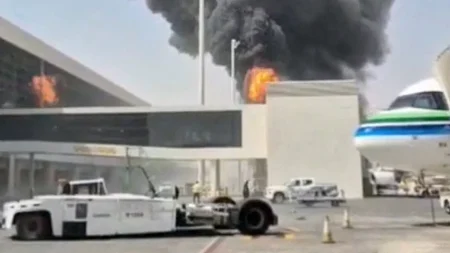


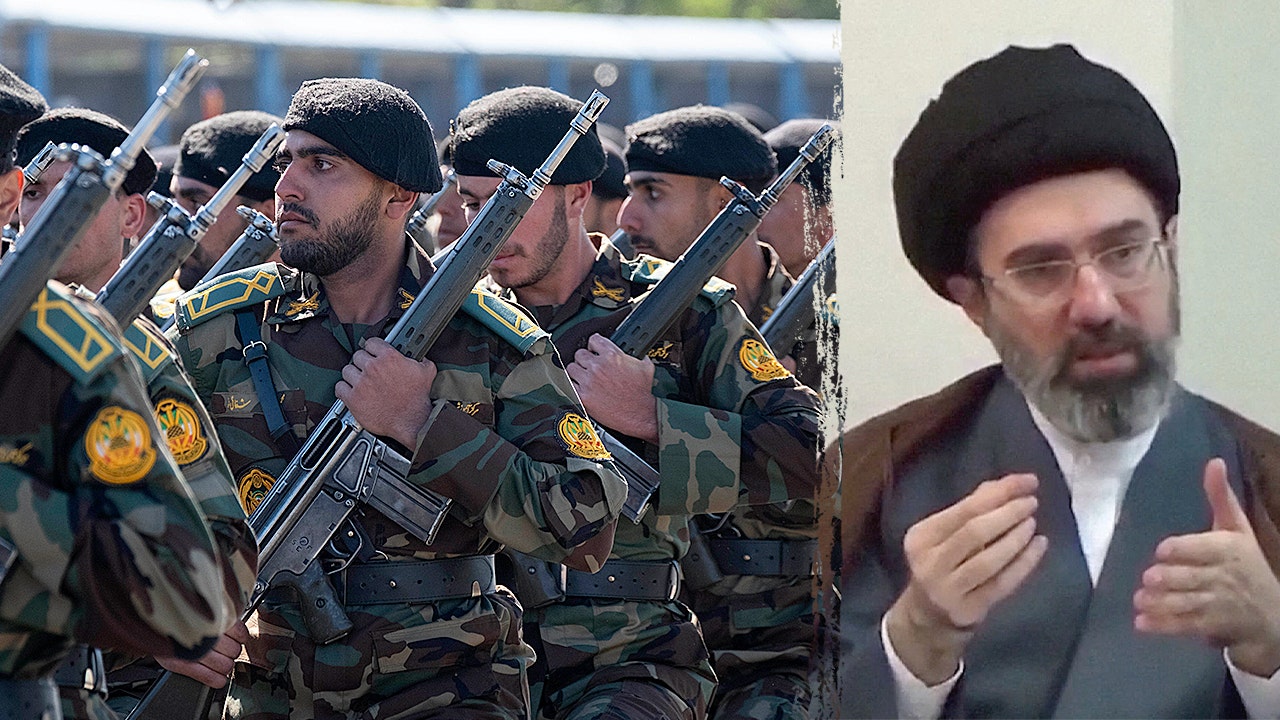
In the wake of sustained military pressure from the United States and Israel, Iran’s Supreme Leader, Mojtaba Khamenei, took to social media on October 8 with a defiant message that sought to reframe the narrative of the ongoing conflict. Rather than acknowledging any weakening of the Islamic Republic’s internal security apparatus, he claimed that the relentless strikes had failed to make even a dent in the resolve of the country’s law enforcement forces. His words were not merely a statement of fact but a carefully crafted piece of political theater, designed to project resilience and unity among the institutions that hold the regime together. By singling out the courage of police personnel who had been targeted in operations that Washington and Jerusalem labeled “Epic Fury” and “Roaring Lion,” Khamenei was making a pointed argument: the enemy’s strategy of decapitating Iran’s security leadership had backfired, only strengthening the institutional pride of those who remained. His praise was also a subtle acknowledgment of the immense pressure the country was under, as he described these attacks as “unparalleled throughout history,” a hyperbolic phrase that nevertheless conveyed a sense of existential struggle. In his eyes, the very persistence of the enemy’s focus on the police proved how vital the force was to the regime’s survival, turning a potential weakness into a narrative of indispensability.
To understand the weight of Khamenei’s words, one must first grasp the complex architecture of Iran’s security state, which is neither monolithic nor simple. The country relies on three principal pillars: the Artesh, the regular military responsible for conventional territorial defense; the Islamic Revolutionary Guard Corps (IRGC), the ideological vanguard tasked with protecting the revolution and projecting power across the region; and the Law Enforcement Command, known by its Persian acronym FARAJA, which handles domestic order, law enforcement, and internal security. It is this third pillar that has become the frontline of the regime’s battle against unrest and external subversion. FARAJA, commanded by Brigadier General Ahmadreza Radan, is the institution that Iranians encounter on a daily basis—at checkpoints, during protests, and in the enforcement of the country’s strict social codes. Over the years, it has evolved far beyond a simple police force, morphing into a powerful internal intelligence and suppression apparatus. According to watchdog groups like Iran Human Rights Monitor, FARAJA has been instrumental in crushing anti-government demonstrations, monitoring political dissidents, and ruthlessly enforcing the regime’s ideological restrictions on dress and behavior. Its reach is deep, and its methods are often brutal, which is why General Radan has been under U.S. sanctions since 2010, cited for beatings, killings, and arbitrary arrests following the disputed 2009 presidential election. Khamenei’s public embrace of Radan and his force is therefore not just a morale booster; it is a signal that the regime will continue to rely on coercive power to maintain control, no matter the international condemnation.
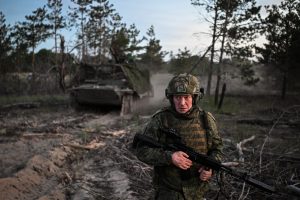
Khamenei’s October 8 message went beyond praise, however, as he explicitly called for an expansion of FARAJA’s capabilities, demanding additional personnel, equipment, and technology—including the integration of artificial intelligence for data analysis. This is a telling indicator of where Iran sees its vulnerabilities and where it intends to invest. By enhancing the technological capacity of its internal security forces, the regime aims to more effectively monitor and preemptively suppress any unrest that might arise as the war with the United States and Israel drags on. The timing of this call was also significant, coinciding with the release of a new U.S. Army “Know the Threat” recognition guide on September 24, which was later highlighted by Defense News on October 9. That guide, aimed at preparing American troops for potential ground encounters, featured an Iranian special forces soldier and a catalog of weaponry they might face: AKM rifles, Iran’s domestically manufactured Masaf-2, the German-designed G3, MG3 machine guns, and RPG-7 rocket-propelled grenade launchers. The juxtaposition of Khamenei’s demands and the Pentagon’s publication underscores a sobering reality: both sides are bracing for a prolonged confrontation that could extend into unconventional and domestic arenas. While the guide focused on the Artesh’s conventional threat, the Supreme Leader’s focus on FARAJA suggests that the regime is equally concerned with maintaining a firm grip on the home front, recognizing that a capable police force is as crucial as a standing army in the face of external aggression.
Yet, the condition of Iran’s conventional military—the Artesh—remains a mixed bag of resilience and attrition. According to a June assessment by the Jerusalem Institute for Strategy and Security, the Artesh’s Ground Forces were still estimated at approximately 350,000 personnel, including 220,000 conscripts, numbers that suggest a relatively intact manpower base. However, the same report painted a grim picture for Iran’s air, naval, and air defense components, which had suffered severe losses during the opening phase of the U.S.-Israeli campaign. With no ground invasion having taken place, the ground forces survived structurally intact, but their equipment, logistics, and support had been degraded. The Artesh is now commanded by Major General Amir Hatami, a former defense minister who took the helm in June 2025. Hatami has sought to project confidence, issuing his own warning on October 6 that Iran’s adversaries were facing “historic confusion” after failing to halt the country’s military production. He claimed that production lines continued to operate despite the constant bombardment, a statement that is difficult to verify but shows the regime’s determination to present a narrative of indefatigable self-sufficiency. The reality, however, is likely far more complex. While Iran has proven adept at improvisation and asymmetrical warfare, the loss of sophisticated air defense systems and naval assets is not easily replaced, especially under sanctions and with ongoing foreign attacks. The fact that Khamenei felt it necessary to publicly praise police and call for technological upgrades suggests an awareness that the conflict has reached a critical juncture, where maintaining domestic order is as important as rebuilding conventional strength.
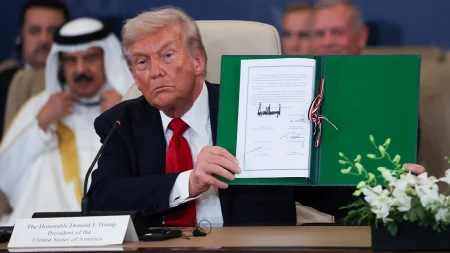
The broader geopolitical context adds another layer of intrigue to these developments. On the same day as Khamenei’s statement, former President Donald Trump, who has been a central figure in the U.S. approach to Iran, declared that Washington would not resume military strikes against Iran before the Nov. 3 midterm elections, citing “productive discussions” between the two countries. This remark, coming from a man who is both a political force and a potential candidate for the 2028 election, highlights the deeply interwoven nature of American electoral politics and foreign policy in the Middle East. Trump’s assertion suggests that there may be behind-the-scenes negotiations or at least a tacit understanding to de-escalate military action in the short term, a move that could be calculated to avoid domestic political fallout or to allow for a more diplomatic approach. For Iran, this creates a window of opportunity—a chance to consolidate its internal security measures, rebuild its damaged forces, and perhaps even engage in diplomatic maneuvers without the immediate threat of fresh strikes. Yet, it also carries a risk: the enemy could be using this time to resupply, reposition, and prepare for a more decisive campaign after the elections. For Khamenei, the prudent course is to continue projecting strength while quietly preparing for multiple scenarios. His call for strengthening FARAJA is thus both a defensive measure and a message to potential adversaries that Iran’s internal front is not a soft underbelly but a hardened shield.
Ultimately, the human dimension of this power struggle is all too easy to overlook amid the grand narratives of geopolitics and military assessments. Behind the Supreme Leader’s words, behind the anonymous soldiers in the U.S. Army’s recognition guide, behind General Hatami’s confident proclamations, are millions of Iranians who live with the constant threat of war, inflation, and political repression. The FARAJA officers that Khamenei praises are, for many citizens, symbols of state coercion—individuals who have been sanctioned for enforcing draconian laws and suppressing dissent. Yet, they are also family members, breadwinners, and ordinary people caught in a system that demands conformity and punishes deviation. The Iranian regime’s insistence on strengthening its domestic security apparatus, with new AI tools and expanded personnel, portends further surveillance and stricter control of civil society. Meanwhile, the conflict with the United States and Israel shows no signs of a clean resolution, even with the temporary pause in strikes. The question that hangs over all these developments is whether the institutions of the Islamic Republic—from the Artesh to FARAJA—can continue to absorb punishment and maintain morale, or whether the cumulative weight of economic hardship, military losses, and internal repression will eventually lead to cracks that no amount of ideological rhetoric can paper over. For now, Khamenei’s defiant message serves as a reminder that, however battered, the regime remains resilient, deeply entrenched, and willing to use every tool at its disposal to survive. But resilience is not the same as victory, and the true cost of this confrontation is measured not in statements or estimates, but in the lives and futures of the people who must endure it.