


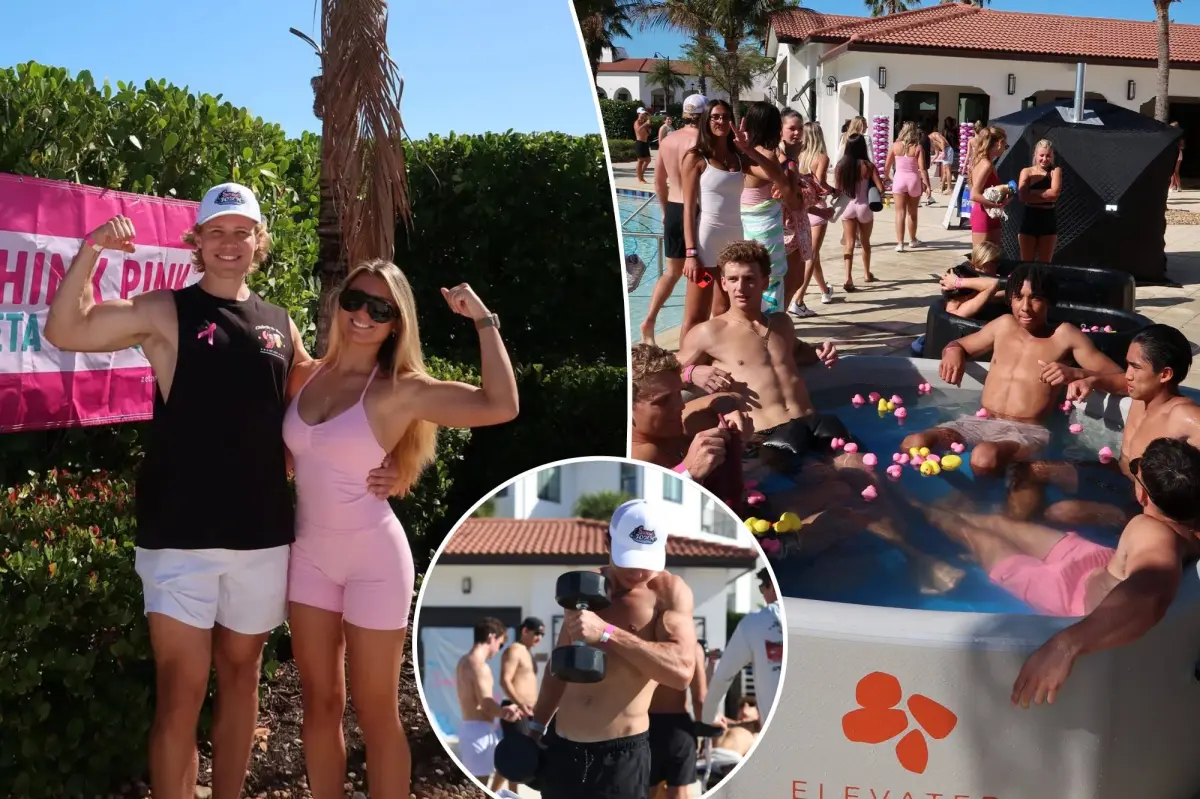
If you’ve been online at all this fall, you’ve probably seen the videos: college students in matching Lululemon sets, clutching cans of Celsius, sweating through a sunrise run, then hopping into a cold plunge with their sorority sisters while a DJ plays in the background. It’s called a “wellness darty” — a day party, but instead of beer pong and hangovers, there are saunas, Pilates, protein snacks, and the kind of clean, glowing energy that used to be reserved for influencer retreats. The trend has exploded across campuses, and it’s leaving older generations — especially post-grads who remember college as a blur of cheap vodka and questionable decisions — utterly baffled. The mental image of Friday night tequila shots has been replaced by Friday afternoon ice baths and group workouts, and the shift is so dramatic that it’s gone viral. But here’s the thing: current college students insist they’re not doing this to be performative or to judge anyone else. They genuinely love it. They say the judgment from older generations comes from a fundamental misunderstanding of what Gen Z actually wants out of the college experience. It’s not that they’re perfect angels; it’s that they’ve realized you can have a great time with your friends without destroying your body the next day. And for some of the younger crowd, this pivot toward getting sauna-sweaty with peers is turning out to be very good for business. Across the country, young entrepreneurs and recent graduates are sensing that campus wellness is more than just a phase — they’re packaging the darty movement and shipping it nationwide, complete with sponsors, branded merch, and Greek life partnerships.
At the center of this movement is 25-year-old Aydan Child, the founder of Peak Pulse, a wellness brand that essentially pioneered the college wellness event space. Child, a University of Florida graduate, originally started Peak Pulse as a simple run club in Gainesville. “The vibes and events we put on were in demand, so we kept evolving and growing,” he says. Now he leads a team of recent grads who curate and package wellness parties for students across the country. They bring cold plunges and saunas directly to fraternity and sorority houses, host workout classes, and fill the events with products from big-name brands. It’s not just a small campus thing either — Peak Pulse works with major Greek organizations, and Child says some SEC schools pay him thousands of dollars to throw these events. The sponsors have come flocking: New Balance and Lululemon provide outfit giveaways; Red Bull and Gatorade handle the drinks. “When you have a platform like the one we’ve created, the brands reach out first,” Child says. His motivation was personal too. Fresh out of college, he didn’t drink much and wasn’t into the bar scene, but he still wanted to meet people his age. So he built the kind of social space he wished existed: a party-like atmosphere without the pressure to get wasted. From Gainesville, the concept spread to Florida State University, where students embraced it and spread the word. Child wasn’t surprised by the positive response — he knew students were craving fun alternatives that didn’t revolve around “drinking all the time.” His team even brands each event for the Greek organization, bringing custom props and merch embroidered with their letters, plus professional photo albums and videos for social media. It’s a win-win for the sororities and fraternities looking to boost their online presence while throwing an event everyone actually remembers.
Of course, not everyone is thrilled. When videos of wellness darties started going viral, the comments section became a battlefield. Child says the backlash mostly comes from “tons of old, angry millennials.” He laughs it off, noting that people are always resistant to change. “For whatever reason, these millennials have an idea of stereotypical college being ‘let’s see how much we can drink.’ Sure, part of college is getting the partying out of your system, learning your limits, and figuring out how you hold your alcohol.” But he’s quick to correct the narrative that Gen Zers have completely sworn off fun. “Headlines are misleading when they say frats are ‘ditching parties for wellness darties.’ They aren’t quitting cold turkey. I promise you, they’re still drinking, partying, and having fun — they’re just bringing balance to it. They’re doing a run or a cold plunge before going out later at night.” He schedules events strategically, knowing that after a Friday night out, students probably want to sleep in, so he targets times when people are actually awake and ready to move. One of his viral videos, captioned “Imagine explaining a wellness darty to someone who went to college in 2012,” was filmed at a Friday 4 p.m. event that some students used as a pregame for the rest of their night. The video racked up 3.4 million views and prompted a flood of comments. One user joked, “I don’t think I ate one vegetable from 2015-2019.” White Claw’s official TikTok account even chimed in with, “I just broke out in hives.” Some users went further, politicizing the shift and calling darties a “right-wing pipeline,” linking rising purity culture to conservative trends. But despite the internet chatter, the major brands are all in. “I’ve been in meetings with Celsius talking about formal partnerships, and college is a huge focal point for them over the next couple of years,” Child shares.
The movement isn’t just one guy’s story. Martin “Marty” Moćs launched his own wellness darty venture, Sweat and Soak, in 2024, branding it as a “Greek Life Wellness Experience.” Moćs, a graduate of Liberty University, lost his mother to breast cancer two years ago, and the grief reshaped his entire outlook. “I was going through a rough patch and a good way to grieve was to help other women going through breast cancer as well,” he says. That same year, he and his college hockey team traveled to Finland, where a sauna and cold plunge experience unexpectedly brought them all closer. “We bonded so well — we were laughing, playing really well, and everyone’s acne was going away,” he recalls. The lightbulb went off: how could he bring that same experience back to the states? He noticed run clubs were already exploding in popularity, and he felt like there was “something there” with promoting wellness on campus. “There was nothing like it on college campuses, so I decided to go for it.” His first event drew 15 people. “I was an athlete, not an event planner, but the environment was great and people loved it.” Then a friend who went viral as a country artist on Spotify collaborated with him to host a “wellness Coachella” on UCLA’s campus — a combination of concert and wellness event that doubled as a fundraiser for local breast cancer charities and raised thousands of dollars. Word spread fast, and friends from UCLA and UNCW started asking for similar events. Just a year into business, Sweat and Soak is expanding across Florida, California, and SEC schools, with eyes on the Northeast next. They’re going on a college tour this semester, hitting schools like University of South Carolina and UW-Madison. The biggest economic hurdle, Moćs says bluntly, is that “most college students are broke,” so the brand relies heavily on sponsors to keep events affordable. Costs range from a few hundred to a few thousand dollars depending on the school’s budget and capacity. Smaller schools like FAU can host an event for a few hundred dollars, while larger SEC programs invest in more services and giveaways.
Moćs isn’t fazed by the online critics. “I live by the quote, ‘You’re never going to see a hater doing better than you.’ At the end of the day, taking care of your body and mind is a good thing.” He emphasizes that no one is forcing anyone to participate. “If people want to get drunk instead, they can. But Gen Z has a different mindset around mental health and wellness. We don’t think this is just a trend — we see it as the future of college life.” He also cleverly taps into the Greek life social hierarchy: fraternity pledges handle the heavy lifting during setup, which is both a productive way to earn their dues and a subtle way to build community. “The guys love to get a good pump in, look good, get their shirts off and the girls love to do Pilates in the Lululemon Vyori sets so it’s a win-win for the girls and guys,” he laughs. During event hours, alcohol is strictly off-limits — though students are free to do whatever they want afterward. Philanthropy is also a huge component. Sweat and Soak partners primarily with Zeta Tau Alpha, whose national philanthropy is breast cancer awareness, and helps nonprofits like Pink Ribbon Goods. Maya Podzorov, a Zeta Tau Alpha member at Florida Gulf Coast University, worked closely with Sweat and Soak on a philanthropic event. She calls herself “the grandma of my sorority” and says she’s always felt out of step with the party-obsessed college culture. “My freshman year it was a harder adjustment to find my crowd and people who agree with that as well.” But the wellness darty gave her exactly what she needed: a big crowd, loud music, and the chance to move her body — all while feeling energized instead of drained. Their event featured the usual saunas and cold plunges, plus a Pilates instructor and weights for the fraternity brothers. Alani Nutrition provided energy drinks, and local spots like Green Bites supplied protein treats. She admits the guys loved taking off their shirts and “showing off their fresh pump” in front of everyone. “Our goal is to offer alternatives to alcohol and substances so people can genuinely connect,” she says. “It’s rewarding to see students better themselves while fundraising for a great cause.”
At the end of the day, the wellness darty phenomenon is about more than just cold plunges and matching athleisure. It’s a reflection of a generation that grew up with wellness influencers, mental health awareness, and a deep understanding of how their choices affect their bodies and minds. These students aren’t rejecting fun — they’re redefining it. They still want to be social, to feel that rush of being young and together with their friends, to dance, to laugh, to show off a little. They just want to do it in a way that doesn’t leave them curled up on a bathroom floor or blacking out by midnight. And the older generations, who can’t quite wrap their heads around it, might just be missing the point. College has always been about exploration, finding yourself, and building connections, and this generation has decided that their campus years can be spent in a hot sauna with your best friends, then jumping into an ice bath and screaming with laughter, then grabbing a protein shake and heading out to a party later that night — and being fully present for all of it. The entrepreneurs behind Peak Pulse and Sweat and Soak aren’t just selling events; they’re selling a new kind of belonging, one that health-conscious students feel genuinely drawn to. They’re also building businesses that meet students where they are, and brands are paying attention because they know this isn’t a fad. It’s a cultural shift. The kids are doing what kids have always done: pushing back against the previous generation’s expectations, finding their own rituals, and creating their own kind of fun. Only this time, they’ve got a cold plunge, a wellness coach, and a professional photographer documenting every sweat-soaked smile. And honestly? It might just be the healthiest twist on college party culture yet.