


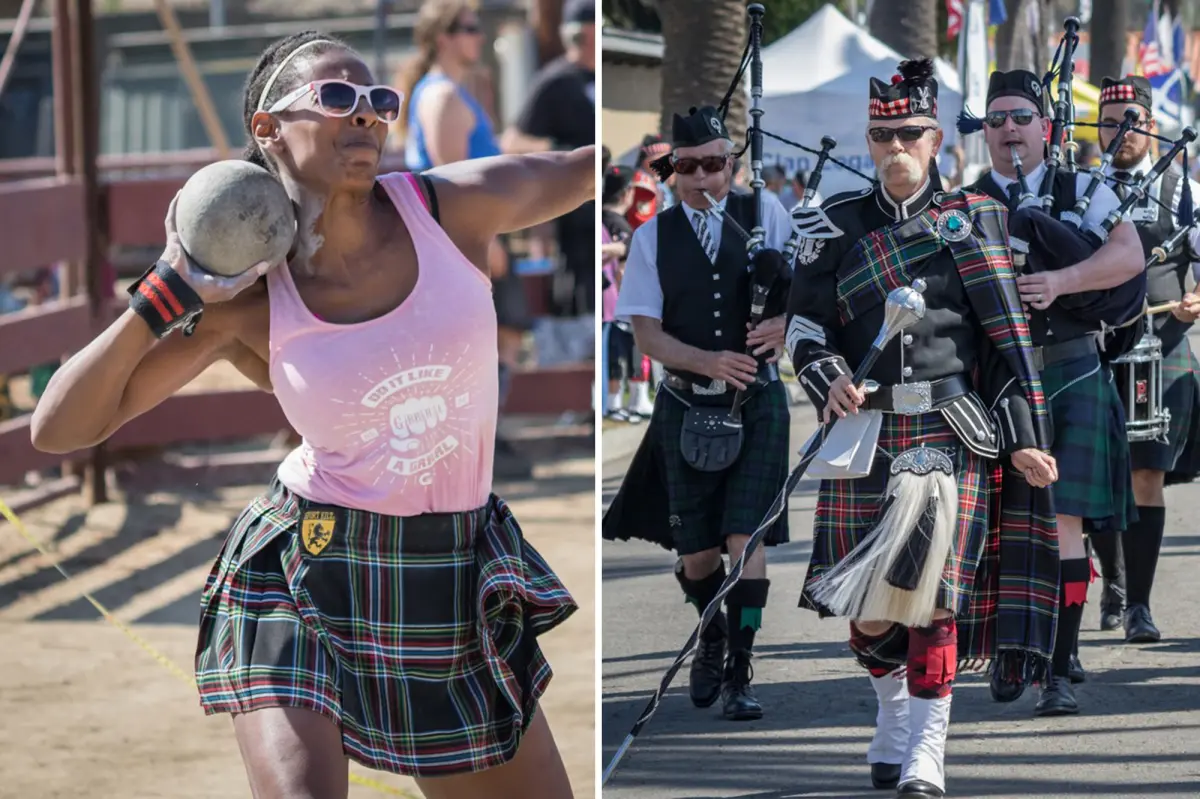
Southern California’s premier Scottish festival, the Seaside Highland Games, returned to the Ventura County Fairgrounds for its 22nd edition this weekend, and from the first sound of the pipes on Saturday morning, it was clear that this would be a celebration like no other. The fairgrounds had been completely transformed into an immersive, family-friendly Scottish village, where the scent of woodsmoke and grilled sausage mingled with ocean air, and where the bold colors of clan tartans seemed to be woven into the very fabric of the day. Children stared wide-eyed at towering flags and at men and women in full Highland dress; grandparents smiled as they heard familiar tunes; and everyone slowed down a little, letting the atmosphere sink in. What makes the Seaside Highland Games so special is its ability to make everyone feel like part of the story, whether they came because their ancestors were MacDonalds or simply because they love Celtic music. The 22nd edition carried that spirit proudly, with two full days of events unfolding on Oct. 10 and Oct. 11, and with a schedule packed full of music, competition, history, and good food. For many people, this festival is an annual pilgrimage, a chance to reconnect with their roots or to experience a culture that feels both ancient and alive. The fairgrounds, normally a place for rodeos and home shows, became something else for the weekend: a place where strangers greeted each other like old friends, where the sound of bagpipes floated across the lawns, and where the warmth of community was stronger than the coastal breeze. It was a weekend to linger, to listen, to learn, and to leave with a heart a little fuller than before.
At the heart of the weekend were three live entertainment stages, each offering a different flavor of Celtic sound. On Oct. 10, visitors were treated to rousing performances by Celtic rock and folk bands, whose music blended driving guitar riffs with the lilt of fiddles, ancient ballads with foot-stomping reels. The stages pulsed with energy as crowds clapped and cheered, and the grassy areas in front of the performers became impromptu dance floors where children twirled in hand-me-down kilts and adults let their inhibitions go. Musicians told stories between songs, speaking of ships crossing the Atlantic, of loves lost and found, and of the stubborn, joyful spirit of the Scottish people. On the second day, Oct. 11, the music kept flowing, with the sound of drums and accordions carrying across the fairgrounds alongside the cheerful calls of vendors selling everything from tartan scarves to hand-forged tools. It was not uncommon to see a bagpiper standing alone at the edge of the crowd, lost in a haunting sky, while a few yards away a rock band brought people to their feet with an electric rendition of a traditional dance tune. The entertainment was more than just background noise; it was the heartbeat of the festival, drawing people together, breaking down barriers, and reminding everyone that music is one of the most powerful ways to keep a culture alive. Whether you preferred the driving energy of Celtic rock or the quiet intimacy of a folk singer’s voice, there was a stage that felt like home, and the hours slipped by like minutes as the songs washed over the crowd.
But the Seaside Highland Games are far more than a music festival; they are also a showcase of extraordinary skill and strength. The heavy athletics competition was one of the biggest draws, with athletes from across the region gathering to test themselves in traditional feats of strength. The crowd gathered around the caber toss with a mixture of awe and nervous energy, watching as massive competitors hoisted long, heavy wooden poles, balanced them carefully in their palms, then ran forward and hurled them end over end with a power that seemed almost impossible. The hammer throw brought gasps and cheers as spinning athletes released heavy metal balls into the sky, their bodies straining with the effort and their faces breaking into smiles when the distance was announced. Other events, including the stone put, the weight throw, and the sheaf toss, added to the spectacle, each with its own moments of triumph and near misses that made the audience groan and clap. Around the same fields, a different kind of artistry took center stage in the judged competitions for Highland dancing, bagpiping, and drumming. Dancers in beautifully embroidered outfits performed the intricate steps of sword dances, Highland flings, and reels with a precision that made it look effortless, while pipers and drummers delivered both the thunderous march tunes and the slow, aching laments that give goosebumps to even the most casual listener. These competitions attracted top-tier Celtic talent from across the region, but the atmosphere remained warm and supportive, full of smiles and backstage congratulations, because everyone there knew how much love and practice had gone into those moments.
Heritage was the thread woven through every part of the weekend. In the clan area, representatives from the Clan Munro, Clan Gunn, and Clan Innis Societies of North America hosted information booths, inviting visitors to sit down, share their surnames, and begin the fascinating journey into their genealogy. It was deeply moving to watch people discover that the family name they had always carried was tied to a specific place in Scotland, to a history that stretched back centuries, or to a clan that had its own crest, motto, and stories. Volunteers at the booths helped piece together fragments of information, offered suggestions for further research, and, in some cases, simply listened as people shared what they could remember of their grandparents’ stories. The festival’s official website had promised that “The Harp Glen is an awesome stop and the World War II military encampment will teach you a thing or three about our tremendous history,” and the promise was kept. The Harp Glen offered a peaceful corner where the gentle notes of harpists created a soft, reflective atmosphere, a lovely contrast to the bold sounds of the pipes. Nearby, the World War II military encampment was a living history lesson, complete with reenactors in period uniforms, authentic equipment, and a treasure trove of stories about courage, sacrifice, and everyday life during a world-changing conflict. For younger visitors, it was a chance to see history up close rather than in a textbook; for older visitors, it was a reminder of the resilience of the generation that came before. These displays connected Scottish heritage to a broader, shared history, showing how culture survives not only in music and dance but also in memory and gratitude.
The weekend officially kicked off with a special Scottish Evening gala on Friday night, before the main two-day event, and it was a night of elegance and conviviality that set the perfect tone for everything that followed. Guests gathered for an evening of premium whisky tasting, sampling some of the finest single malts, while a buffet dinner offered a delicious array of Scottish and traditional fare. There was laughter, storytelling, and a sense of anticipation as clan leaders, performers, sponsors, and VIPs came together to celebrate the shared love of Scottish culture. It was a more refined side of the Highland Games, but it carried the same warmth and generosity that defined the rest of the weekend. By the time Saturday morning arrived, the fairgrounds were alive with that same spirit. Speaking to KEYT News on Saturday, festival attendee Jeana Weatherland perfectly captured the atmosphere with a joyful smile: “We love to enjoy the Seaside games and everyone who walks by we say hay because we are the Hay Clan.” Her simple, playful words said more than any official welcome ever could. The festival was full of people like Jeana, wearing their names and their histories with pride, greeting strangers with open friendliness, and embodying the kind of hospitality that has always been a hallmark of Scottish culture. In the end, it did not matter whether you were a Hay, a Munro, a Gunn, an Innis, or a Smith with no known Scottish connection; everyone who walked through the gates was welcomed into the family of the festival.
When the last notes faded on Sunday evening and the fairgrounds began to quiet down, there was a lingering sense that something special had happened over the course of the weekend. The Seaside Highland Games delivered everything a great festival should: thrilling competition, beautiful music, meaningful history, delicious food, and plenty of laughter. But it offered something even more valuable, a reminder that we all long to belong, to know where we come from, and to share our stories with others. The 22nd edition was a testimony to the power of tradition, and to the ways in which old customs can adapt and flourish in new places. For Southern California, a region far from the misty glens of Scotland, this festival brings the Highlands to life a little closer to home, making it possible for families to pass on culture to their children in a way that is joyful and relevant. Visitors left with sore feet, full stomachs, and perhaps a new appreciation for the tenacity of the human spirit. They left with the names of ancestors to research, the melodies of bagpipes in their heads, and the warmth of community in their hearts. The fairgrounds will return to their ordinary routines, but the memory of this weekend will linger for a long time. And when the seaside air blows through Ventura County again next year, people will gather once more, ready to celebrate, to remember, and to say “hay” to every passing stranger—because that is what the Highland Games have always been about.