


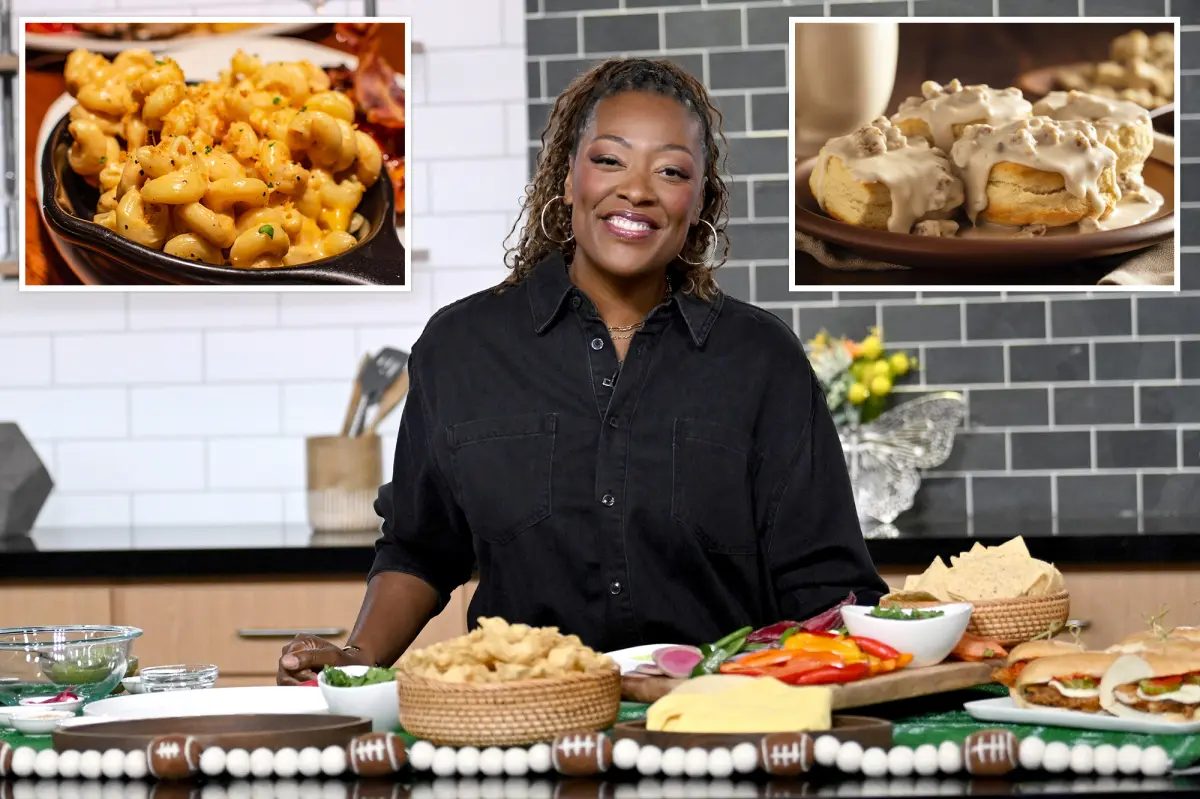
Southern food has a reputation that precedes it. Ask most people to describe it, and they’ll likely conjure images of crispy fried chicken, macaroni and cheese baked until golden, biscuits drowning in butter and gravy, and plates so heavy they demand a nap afterward. It’s a delicious caricature, one that has fueled countless restaurants, cookbooks, and food television segments. But according to Tiffany Derry, a celebrated chef, restaurateur, and now a judge on “MasterChef,” that stereotype is far from the whole truth. Derry, who grew up in Texas with deep Louisiana roots, has spent more than two decades in the restaurant industry, and she has little patience for the idea that Southern cooking is inherently unhealthy or excessive. “I think a lot of times that criticism comes from folks who don’t actually understand the South,” she said. Her own childhood is a testament to that. Derry grew up on a family farm, where meals were not built around indulgence but around the land. “We had a farm,” she recalled. “I ate from the farm very much.” Long before “farm-to-table” became a buzzword in upscale restaurants, fresh vegetables were simply a normal part of daily life. It wasn’t a trend or a marketing strategy; it was just what you did. Neighbors shared what they grew, and dinner was often a modest plate of rice, peas, beans, and a small amount of protein, with vegetables taking center stage. In that world, the garden wasn’t a novelty—it was the pantry. Derry’s memories challenge the way we talk about Southern cuisine, reminding us that a cuisine born of the land and shaped by resourcefulness has always had room for greens, okra, tomatoes, and beans alongside the biscuits and gravy that dominate the popular imagination.
The family table was also a classroom, and for Derry, cooking was never a solitary act. Her grandmother had eleven children, and Derry grew up surrounded by more than fifty cousins, which meant that every meal was a communal project. As a child, she helped prepare greens, shell peas, and snap green beans, learning early that food was not just fuel but a thread that connected generations. Those moments—standing at the kitchen counter with family, cleaning vegetables that had come straight from the earth—shaped her understanding of what Southern cooking really is. It was not about showmanship or elaborate recipes. It was about making the most of what you had, respecting the ingredients, and feeding the people you loved. That is why Derry is so careful to separate the everyday cooking of the South from the special-occasion dishes that have come to define it. “It’s important to not just tell the story of the country cooking where we talk about mac and cheese, and we talk about biscuits and biscuits and gravy,” she said. Those heavier dishes, she insists, represented “such a very small amount of the cooking” and were not everyday foods in her experience. They were celebratory, yes, but they existed alongside a much broader and more vegetable-forward tradition. Derry’s point is not that biscuits and mac and cheese are bad; it’s that they are only a slice of a much richer story. When we reduce Southern food to its richest dishes, we erase the ingenuity and the deep connection to the land that have always been at its core. “People don’t really understand where food comes from,” she observed, and that disconnect is exactly why so many misconceptions persist. For Derry, understanding the South means understanding the farms, the gardens, the family labor, and the communal spirit that made the food possible in the first place.
After twenty-seven years in the restaurant industry, Derry has seen cooking trends come and go, but she has also witnessed something more profound: a renewed interest in home cooking that gives her genuine hope. For a while, she noticed, many Americans seemed to be cooking less. Some people, she said, “just didn’t really know how to cook.” The skills that had once been passed down from parents and grandparents were fading, and convenience often replaced care. But now, something has shifted. Younger generations are turning to platforms like TikTok to discover recipes, hosting dinner parties at home, and even embracing the slow, patient art of bread-making. Derry can hardly contain her excitement about the sourdough revival. “I love the fact that people are interested in sourdough. Like, are you kidding me?” she said. “People are back making bread.” There is something deeply human about that return to the kitchen. In a world that often feels fast-paced and disconnected, the decision to knead dough, wait for it to rise, and bake it for the people you love is an act of resistance—a way of slowing down and reconnecting with the most basic rhythms of life. Derry sees this not as a passing fad but as a meaningful cultural shift. People are not just looking for meals; they are looking for meaning. They want to know where their food comes from, how to prepare it, and what it means to share it with others. The renewed enthusiasm for cooking at home suggests a hunger that goes beyond food itself—a hunger for tradition, for creativity, and for the kind of satisfaction that can only come from making something with your own hands.
Derry sees this evolution play out in real time on “MasterChef,” where home cooks from all walks of life step into the spotlight and produce dishes that look as though they came from professional kitchens. What strikes her most is not just the technical skill, but the determination and curiosity behind it. Many of these cooks did not grow up in households where cooking was a daily ritual. “So many of their parents didn’t really cook,” Derry noted. And yet, rather than letting that gap define them, they taught themselves. They learned through watching, through experimenting, through chefs on television, through books and magazines, and through sheer trial and error. That self-driven journey is, in many ways, a new kind of apprenticeship. It is not rooted in family tradition, but it is no less authentic. These cooks are writing their own culinary stories, drawing from a wide range of influences and building skills that will likely be passed down to their own children. There is something beautiful about that independence. It speaks to the resilience of human curiosity and the universal desire to create. When someone decides, on their own, to learn how to bake bread or perfect a sauce, they are engaging in an act of self-expression and self-reliance. Derry’s observation is a reminder that cooking is not a fixed inheritance; it is a living, breathing practice that can be learned at any age, from any source, and in any kitchen. The fact that so many people are choosing to learn now, despite the convenience of delivery apps and prepared foods, says a great deal about what we crave as human beings. We want to be participants in our own nourishment, not just consumers. We want to understand the alchemy of turning raw ingredients into a meal that brings people together. And we want to feel that sense of accomplishment that comes from feeding ourselves and others well.
The same spirit of creativity and reinvention is transforming how Americans think about entertaining, especially when it comes to game-day food. Derry recently partnered with Tostitos and the brand’s new Chunky Guacamole, and she has watched with amusement and admiration as tailgating culture has evolved. Gone are the days when a simple spread of burgers and chips was enough. Now, tailgates have become culinary showcases, with everything from Kobe beef sliders to elaborate, Instagram-ready presentations that look more like catering than parking-lot fare. Derry laughs at the shift, remembering a time when people simply ate the food in front of them without documenting it. “Before, people weren’t taking pictures of it. They were just eating it,” she said. “Now, I feel like people do first start taking pictures, you know? And I’m like, ‘This is for us to eat.’” There is a gentle humor in that observation, but also a deeper truth about how food and technology have become intertwined. We now experience meals not only with our senses but through our screens, curating our lives for an audience even as we feed ourselves and our loved ones. Yet beneath the filters and the captions, the impulse is still the same as it ever was: to gather, to share, and to celebrate. Whether it is a humble plate of homemade beans or a meticulously styled slider, the food on the tailgate is about connection. It is about the joy of being together, of cheering for a team, of passing a dish across a table and watching someone’s face light up. The pictures may be new, but the warmth behind them is timeless. Derry’s playful critique is not a dismissal of the trend; it is an invitation to remember that the best part of any meal is not how it looks on a phone, but how it tastes, and who you get to share it with.
In the end, Tiffany Derry’s story is about much more than Southern food. It is about the importance of honoring where we come from while remaining open to where we are going. The Southern cooking she grew up with was never static. It was shaped by the land, by the seasons, by the hands of family members who worked side by side, and by a community that believed in sharing whatever they had. It was a cuisine of survival, yes, but also a cuisine of generosity. And that spirit is still alive today, not only in the farmhouses of the South but in the kitchens of a new generation of home cooks who are teaching themselves to bake sourdough, to braise greens, and to make guacamole from scratch for a group of friends before a big game. Derry’s perspective reminds us that food is never just food. It is memory, identity, love, and labor. It is the smell of a grandmother’s kitchen and the taste of a vegetable pulled from the earth minutes before it hits the pan. It is the pride of a young cook who has taught herself everything she knows, and the joy of a family gathered around a table, passing dishes and telling stories. As Derry continues to judge, cook, and share her vision with the world, she carries with her the lessons of that farm in Texas and those Louisiana roots—lessons that cannot be reduced to a stereotype. They are lessons about resourcefulness, about respect for the natural world, and about the simple, profound act of feeding the people you love. In a time when so many of us are searching for connection, her story is a reminder that the table has always been one of the best places to find it. Whether the food is fancy or humble, photographed or not, the point is to gather, to share, and to remember that the most important ingredient in any meal is the one we often forget: each other.