


Paragraph 1: A Cold Island, A Warm Debate
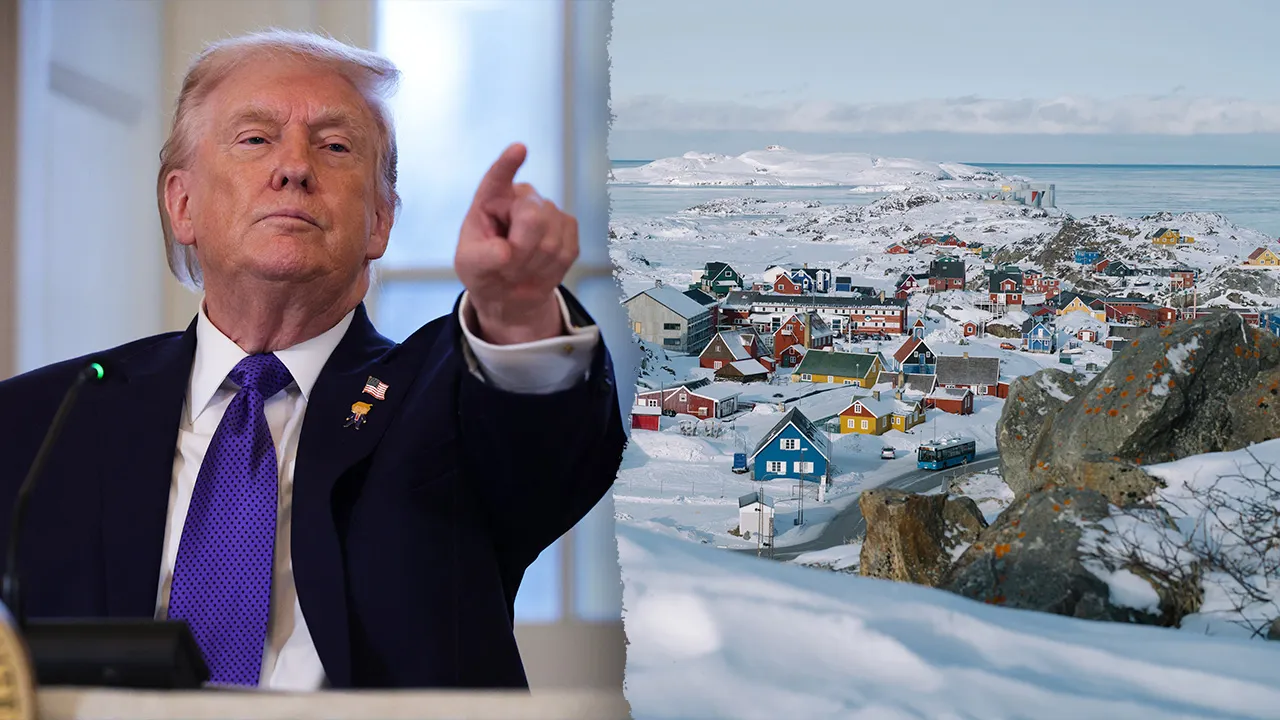
If you had wandered through Reykjavík on that crisp, late-autumn Saturday, you might have felt the usual pulse of a small capital—families bundled in wool, the smell of sourdough and geothermal steam drifting from cafe doors, a sea wind tugging at the roof of Harpa Concert Hall. But beneath the surface calm, there was an unusually electric hum. The island nation had been asked to answer a question that has haunted it for years: should Iceland reopen negotiations to join the European Union? The referendum was nonbinding, but it mattered. It mattered because Iceland sits exactly where great powers are now staring at each other across melting ice—about 180 miles from Greenland, which President Donald Trump has repeatedly claimed the United States should acquire. It mattered because Iceland has no army of its own, only a long-standing defense arrangement with the United States and the broader umbrella of NATO. And it mattered because for the first time in a long while, the old debate about fish quotas, agricultural subsidies, and national identity had crashed into an even bigger debate about security, sovereignty, and who will control the Arctic. As voters lined up in school gymnasiums, libraries, and converted municipal buildings, they carried with them a quiet but urgent sense that this vote was never just about Brussels. It was about whether a small country of fewer than 400,000 people can still chart its own path in a world where bigger neighbors are reordering the map. For many, it felt less like casting a ballot than taking the temperature of the era itself.
Paragraph 2: A Referendum That Is Both Familiar and Strange
The mechanics were straightforward enough. Roughly 275,000 eligible voters were asked simply whether Iceland should resume negotiations with the EU—not whether the country should actually join. If they answered yes, then the government would sit down with Brussels for what would likely be long and hard bargaining over fishing rights, agricultural tariffs, monetary policy, and a hundred other painful details. And only after those negotiations came a second referendum, where Icelanders would make the final call on full membership. In that way, Saturday’s vote was a beginning, not an ending—yet it still managed to divide families, friendships, and coalitions, just as every previous EU debate has done since the country’s aborted application in 2009. That application had been a response to economic catastrophe, sworn in after the banking collapse, but negotiations were shelved in 2013 under a government that argued Iceland should remain outside the Union, maintaining control of its fisheries and its currency. Now, more than a decade later, the terms had changed. Prime Minister Kristrún Frostadóttir promised to respect the result even if it was not legally binding, and she seemed genuinely energized by the whole process. “This has been a tight race, extremely exciting,” she told reporters after voting, adding that the campaign had lifted discussions about the EU, Iceland’s place in the world, and its geopolitical status “to a higher level.” There is something almost thrilling about a country that can still fight this hard over its own future—where politicians cannot simply refer questions to lawyers and unelected committees, but must go out and ask people face-to-face. For all the frustration that the campaign caused, there was also a sense of civic refreshment, a reminder that democracy is rarely more alive than when the question is awkward and the answer is genuinely unknown.
Paragraph 3: Fish, Farms, and the Price of Independence
To understand why this vote has never been simple, you have to understand Iceland’s complicated relationship with its own sovereignty. This is a place that takes its independence personally. It was ruled by Denmark for centuries, only breaking away in a series of steps that culminated in the founding of a republic in 1944—a fact that still carries emotional weight. When Icelanders think about joining the EU, many don’t just see an economic partnership; they see a potential return of distant foreign decision-makers, even if the Union’s institutions are far more consensual than any empire. That fear has been sharpened by the “cod wars,” a series of 20th-century confrontations with Britain over fishing rights that Iceland ultimately won, effectively extending its territorial waters and proudly projecting a David-versus-Goliath identity. Fish are not merely a commodity here; they are the bones around which the national body has been built. The EU’s Common Fisheries Policy, which centralizes access to some of Europe’s most productive seas, remains a flashing red light for many Icelanders, who fear that membership would surrender what they see as the crown jewel of their natural riches. There are also agriculture worries—Iceland’s farmers are heavily subsidized and protected, and they know full well that opening the market to continental competition could end their way of life. And then there is the currency: the Icelandic króna is small, volatile, and frequently a headache for businesses and households, but it also allows the country to use monetary policy independently in crises. For years, the pro-EU side has pointed to those very problems and argued that the euro, access to a giant internal market, and Brussels’ regulatory muscle would bring stability, investment, and lower prices. Meanwhile, the EU-skeptics have answered that stability is not worth absorbing rules made in a capital thousands of miles away, and that the island has survived—and thrived—on its own terms. The result on Saturday was always going to be close because both arguments pull at real, breakable threads in the Icelandic psyche.
Paragraph 4: The Greenland Shadow and the New Arctic Geopolitics
But no one talking about fish and tariffs could ignore the most uncomfortable stranger at the table: Greenland. President Trump’s repeated, undiplomatic declarations that the United States wants to acquire that vast, ice-covered neighbor have sent a jolt through the entire Nordic region. He has said that the U.S. would get Greenland “one way or the other,” an ominous phrase that might have been laughed off if it had come from any other president—but this one has already shown a willingness to upend alliances, impose tariffs on friends, and treat international boundaries as negotiable photographs. Greenland is a self-governing territory of Denmark, itself a NATO ally, and any suggestion that Washington might seize it by force would be an extraordinary challenge to the collective defense principles that have held Europe and North America together for seven decades. The Trump administration has reportedly considered options including the use of military force, which would set a precedent so dangerous that every small allied nation would lie awake wondering whether its own protector could become an adversary. Iceland, with no standing military of its own and a defense arrangement that depends on American goodwill, could not help but feel the tremors. Three hundred miles is not far; you can fly that distance in less time than it takes to watch a film. If the United States were to absorb Greenland, Iceland would suddenly find itself living next to a much larger, more powerful, and more unpredictable neighbor—possibly with an American governor in Nuuk and a serious military installation on its doorstep. That possibility has nudged even some traditional Atlanticists to wonder whether an anchor in the EU might provide an extra layer of stability, a European rope to hold on to if the American rope begins to fray.
Paragraph 5: A Small Ambassador’s Awkward Joke and a Continent’s Future
The tension became almost absurdly personal earlier this year when former Representative Billy Long, President Trump’s pick for ambassador to Iceland, reportedly joked to House lawmakers that Iceland might one day become the “52nd state” and that he would be its governor. It was dismissed as a private quip, and Long later apologized, but the remark did not land as a joke in Iceland. It landed as a signal, an echo of the same flippant attitude that has made Greenland a bargaining chip rather than a place with its own people and parliament. Icelanders are proud, ironic, and deeply aware of their smallness in the world, but they did not find the idea of being treated as an American territory amusing. The ambassador’s words became part of the referendum conversation, further muddying the line between friendship and hegemony. At the same time, the European Union has been moving—haltingly—to reclaim a role in Arctic security, holding onto its claims in the region while also navigating the messy realities of a post-Brexit, post-Trump era. If Iceland were to rejoin the EU, it would bring not just strategic geography but also a rock-solid democratic temperament, a history of managing the impossible, and a seafaring population that understands the Arctic better than most bureaucrats in Brussels. The Union needs allies in the High North, and Iceland needs friends who will stand beside it without asking for a rent check. Whether the EU could actually provide that remains an open question. Brussels is not a military alliance, and its foreign policy often resembles a committee trying to build a canoe. But for many Icelanders, the thought of being entirely alone between the United States, Greenland, and an increasingly assertive Russia is no longer acceptable. The world has changed; the ice retreats every year, exposing new shipping lanes, mineral deposits, and strategic outposts. And the island in the middle of it all wants to make sure it does not become a pawn in someone else’s chess game.
Paragraph 6: A Result That Isn’t the Last Word
As Saturday evening settled over the Atlantic, no official result had been called, and the country braced itself for a count that might stretch into the small hours. But in a way, the outcome had already begun to mean less than the experience of asking the question. Whatever the vote produced, Iceland had spent weeks wrestling with its own identity—weighing the cold loneliness of independence against the warmth of shared institutions, remembering its difficult history with Europe and its deep affection for North America, and doing all of this under the shadow of a president who keeps rearranging the world in his own image. The referendum was a mirror, and if the glass was streaked with doubts, it also reflected a vibrant, anxious, and wonderfully alive democracy. The prime minister seemed to feel that, perhaps more than anyone, when she called the race “extremely exciting.” This is what a political community is supposed to look like: not a bunch of algorithms quietly choosing what everyone does, but real people in real places deciding together what kind of world they want to live in. The nonbinding result will still carry moral weight, and if the vote favors negotiations, the island will begin a long, perilous journey toward Brussels, one that could take years and might never end in membership. And if it fails, Iceland will remain outside the EU, still lovely, still isolated, still free—but now with a clearer sense of the dangers gathering just over the horizon. Perhaps that is the real human story here: a nation discovering that security, like everything else, is not a gift from geography alone. It is a work of interpretation, a conversation, a promise to keep asking hard questions. The counting might have been quiet, but Iceland’s future was always going to be anything but.