



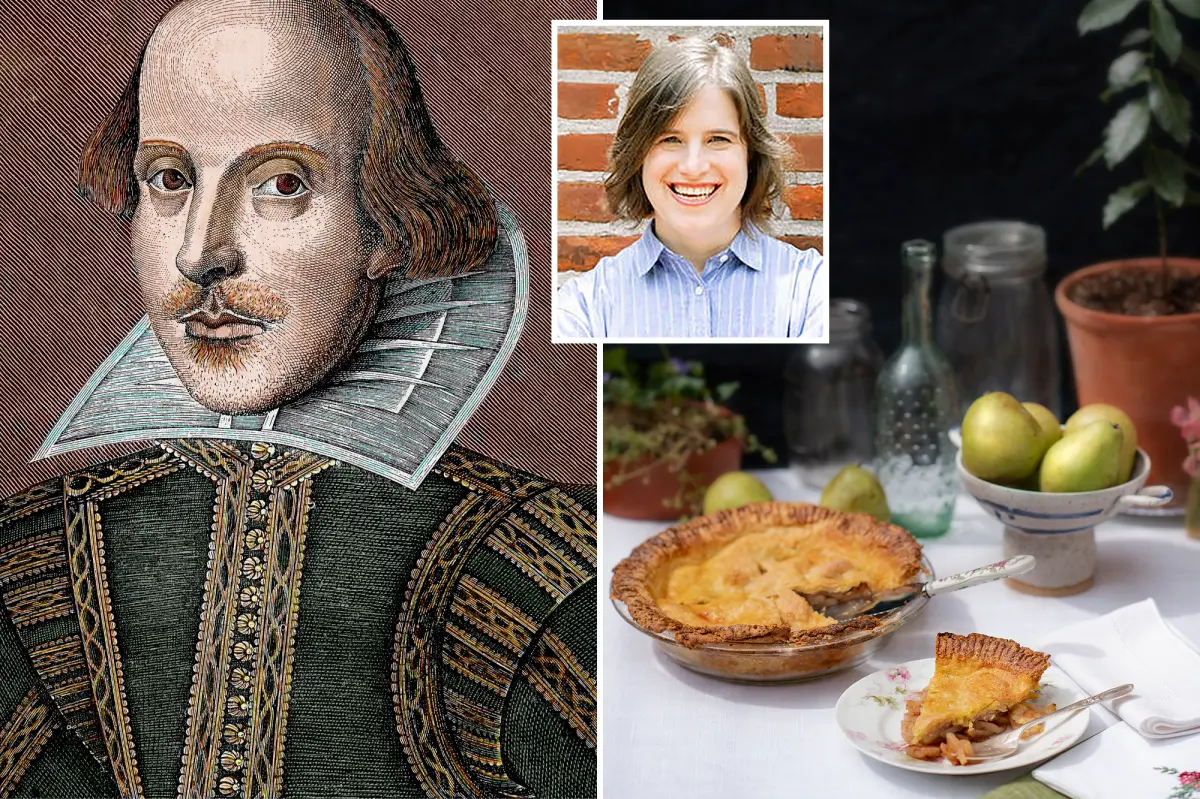
Long before we knew her as a brilliant scholar of Renaissance literature, Marissa Nicosia was a young girl growing up in Verona, New Jersey. The irony of her hometown’s name—sharing it with the romantic, tragic setting of Romeo and Juliet—was not lost on her. It felt like a subtle wink from destiny, anchoring a lifelong obsession with the strangely beautiful, witty, and complex language of William Shakespeare. Now forty-one and a respected professor of English and Renaissance literature at Penn State Abington, Nicosia has taken her academic love affair with the Bard out of the lecture halls and straight into the heart of her home kitchen in Philadelphia’s Bella Vista neighborhood. Her book, Shakespeare in the Kitchen, is a beautifully crafted labor of love that merges historical scholarship, theatrical analysis, and modern culinary adaptation. It is a work that invites us to look past the dusty, intimidating pages of our old school textbooks and instead experience Shakespeare through our most fundamental senses: taste and smell. By exploring the physical world that Shakespeare inhabited, Nicosia realized that the plays are not just intellectual puzzles; they are deeply anchored in the tactile realities of seventeenth-century domestic life. Her journey began with a simple observation: Shakespeare’s characters are constantly talking about, preparing, and consuming food. Whether it is a grand royal banquet, a humble peasant’s meal, a stolen piece of fruit, or a poisonous draught disguised as a drink, food is the invisible thread that weaves through the entire canon of early modern drama. For Nicosia, the kitchen became a laboratory of historical empathy, a physical space where she could resurrect the ghosts of the Globe Theatre using modern appliances, classic techniques, and a healthy dose of culinary curiosity.
To understand the culinary world of Shakespeare’s era, one must first dismantle the persistent modern myth that Elizabethan and Jacobean England was a dark, miserable place characterized entirely by muddy streets, plague, and flavorless bowls of grey gruel. In reality, Nicosia’s research reveals a society that was vibrant, adventurous, and unexpectedly sophisticated in its eating habits. Long before the modern “farm-to-table” movement became a trendy culinary buzzword, the citizens of early modern London and the English countryside lived this philosophy as a matter of daily survival and pleasure. They were intimately connected to the natural rhythms of the earth, foraging for fresh herbs, wild greens, nuts, and seasonal berries in the meadows and forests. They built their diets around local agriculture, baking nutritious breads from coarse barley, rye, and wheat flours, and practicing snout-to-tail eating by utilizing every imaginable part of the livestock they raised. It was a culture that despised waste and celebrated the natural bounty of the land. At the same time, this was an era of rapid global expansion and burgeoning international trade, which brought a dazzling array of imported luxury items to the tables of those who could afford them. London’s bustling ports were saturated with exotic goods from across the European continent and the Americas. The Elizabethans developed an intense craving for Mediterranean olive oil, which they used to dress lush salads of raw greens, and they fell head over heels for aromatic spices like cinnamon, nutmeg, mace, and cloves. Even more notoriously, they possessed an insatiable sweet tooth, fueled by luxury imports of unrefined Caribbean sugar, which they liberally used to sweeten everything from savory roasted meats to delicate fruit pastries. It was a culinary landscape defined by experimentation, a world where domestic tradition collided with new global flavors, creating a dynamic food culture that was anything but boring.
This dynamic, food-obsessed world is precisely what Shakespeare captured so brilliantly on the stage. Far from being mere window dressing, food references in his plays carry immense thematic weight, acting as social signifiers, emotional triggers, and dramatic catalysts. Nicosia points to some of the most famous examples, such as Hamlet’s bitter, sarcastic remark about his mother’s hasty remarriage: “the funeral baked meats / Did coldly furnish forth the marriage tables.” In just a few sharp words, Shakespeare uses the image of leftover, cold meat pies to convey deep betrayal, grief, and moral decay. Elsewhere, food is used for comedic and earthy effect, such as the mysterious “ill-roasted eggs” mentioned in As You Like It, or the gluttonous Sir John Falstaff’s legendary, self-destructive love affair with “sack,” a sweet, fortified Spanish wine. One of the most fascinating ingredients that captured Nicosia’s attention was the humble strawberry, a fruit that appears repeatedly in the plays and carries deeply symbolic meanings. In the tragedy of Othello, the fateful handkerchief that seals Desdemona’s doom is decorated with embroidered strawberries; in Richard III, the villainous king uses a sudden, bizarre craving for fresh strawberries from the Bishop of Ely’s garden as an ominous distraction before demanding the execution of Lord Hastings; and in Henry V, strawberries symbolize growth and hidden potential. By diving deep into these theatrical feasts and famine scenes, Nicosia demonstrates how Shakespeare used the shared language of eating to communicate complex human emotions feeding directly to his audience. The theatergoers of the early seventeenth century, whether standing in the muddy pit of the Globe or sitting in the expensive gallery seats, instantly understood these culinary cues because food was basic to their survival and social standing, making these theatrical moments incredibly immediate and visceral.
Recreating these historical dishes, however, presented a formidable challenge that required Nicosia to act as a part-time culinary detective and part-time laboratory scientist. Early modern recipes, which she painstakingly unearthed from dusty, centuries-old archive manuscripts and printed domestic handbooks, look nothing like the highly structured, step-by-step instructions found in modern cookbooks. Written in elegant but challenging secretary hand with archaic spellings, these seventeenth-century recipes were rarely written by professional cooks; instead, they were recorded by housewives and estate managers who assumed the reader already possessed a vast treasury of basic domestic knowledge. There were no standardized measurements like teaspoons, cups, or grams; ingredients were often listed by sight or approximate weight, and directions were famously vague, instructing the cook to boil something “until it be done” or to bake a pie “as long as you would say an Ave Maria.” Furthermore, these recipes were designed for a world without gas stoves, electric ovens, timers, or refrigeration. Renaissance cooks labored over open-hearth brick fireplaces, manipulating iron pots, roasting spits, and hot coals to regulate heat—a dramatic contrast to 21st-century kitchen conveniences. To make these historical dishes accessible and highly appealing to contemporary readers, Nicosia had to engage in a process of creative translation and adaptation. She spent years testing, scaling, and adjusting these ancient formulas in her own home, translating open-fire techniques into standard oven temperatures and simplifying ingredients so that a modern home cook wouldn’t have to hunt wild game or forage in a medieval forest. Instead of requiring readers to source wild venison that had to be hunted and hung to mature, Nicosia adapted the recipe for a classic venison pasty so that it could be easily recreated using affordable, accessible chicken purchased from a local neighborhood grocery store, like her favorite South Philadelphia ShopRite. This thoughtful bridge between past and present allows contemporary food lovers to experience the exact flavor profiles of the Renaissance without requiring a background in historical reenactment or an open-fire pit in their backyard.
The resulting collection of recipes in Shakespeare in the Kitchen is a delightful culinary tour of the early modern palate, offering everything from cozy comfort foods to exquisite celebratory desserts. Among the standout dishes is Nicosia’s personal favorite, a rich and spiced pear pie inspired directly by a line in The Winter’s Tale, where the character Clown lists the ingredients he must purchase for the sheep-shearing feast, including “saffron to color the warden pies”—wardens being a historic variety of firm baking pear. In her book, Nicosia pairs this historical reference with a delicious, achievable recipe that brings the warm, fragrant, and slightly sweet-savory flavors of the sheep-shearing festival straight to the modern table. The cookbook also features a chapter dedicated to strawberry conserve, a sweet, ruby-red preserve that would have been prepared in early summer to capture the fleeting flavor of fresh berries for the cold months ahead, alongside an incredibly rich, spiced strawberry tart adapted from a recipe dating back to 1608. For readers looking to indulge their sweet tooth, the book offers a delicate clove shortbread cookie, which highlights the Elizabethan love for intense, warming spices, as well as classic venison pasties—savory meat hand-pies that were the ultimate portable feast for hunters and aristocrats alike. No exploration of the era’s drinking culture would be complete without “posset,” a luxurious, comforting beverage made by curdling hot milk with spiced wine or ale, sweetened heavily with sugar and sometimes enriched with eggs, creating a rich, frothy drink that was the direct ancestor of our modern holiday eggnog. This warm and restorative drink was often given to the sick as a remedy, but it was also consumed as a decadent late-night treat, famously appearing in Macbeth as the spiked drink Lady Macbeth uses to drug the royal guards. Preparing and eating these historical dishes provides an incredible sensory portal, allowing modern cooks to experience the exact same textures, aromas, and flavor pairings that would have filled the air of London four centuries ago, making the historical past feel tangible, intimate, and extraordinarily delicious.
What makes Nicosia’s work so deeply resonant and human is her ability to show how little human nature and our relationship with food has changed over the span of four centuries. While modern technology has completely transformed how we cook and store our food, the core emotional experiences surrounding the dinner table remain untouched. Nicosia, who balances her career as an academic with the hectic daily realities of being a wife and a mother to a busy toddler, openly describes herself as an “enthusiastic home cook” rather than a professional chef, which makes her perspective incredibly relatable to everyday readers. Her book reveals that the Elizabethans struggled with many of the exact same domestic frustrations we face today, such as sudden supply-chain failures, severe weather disruptions, trade restrictions, and unpredictable ingredient shortages that could throw a household’s meal planning into utter chaos. Yet, then as now, cooking remained a primary way to foster connection, express affection, and find comfort in an uncertain world. Ultimately, Shakespeare in the Kitchen succeeds because it reminds us that Shakespeare’s timelessness is not just based on his high-minded poetry or philosophical musings on the human condition, but on his profound understanding of our shared physical experience. Shakespeare wrote masterfully about the most dramatic heights of human experience—intense romantic love, devastating loss, political betrayal, insatiable greed, and ruthless ambition—but he also knew that these grand dramas play out in a world where people still need to eat breakfast, prepare dinner, and share a drink with friends. By engaging with his plays through the medium of food, we are invited to pull up a chair to Shakespeare’s table, break bread with his characters, and understand his world in an incredibly fresh, intimate, and delicious new way.