


The Rise of Islamic Republic 3.0: How the US-Israel War Reshaped Iran’s Power and Nuclear Ambitions
The Iron Fist of Islamic Republic 3.0: How War Reshaped Iran’s Power Structure
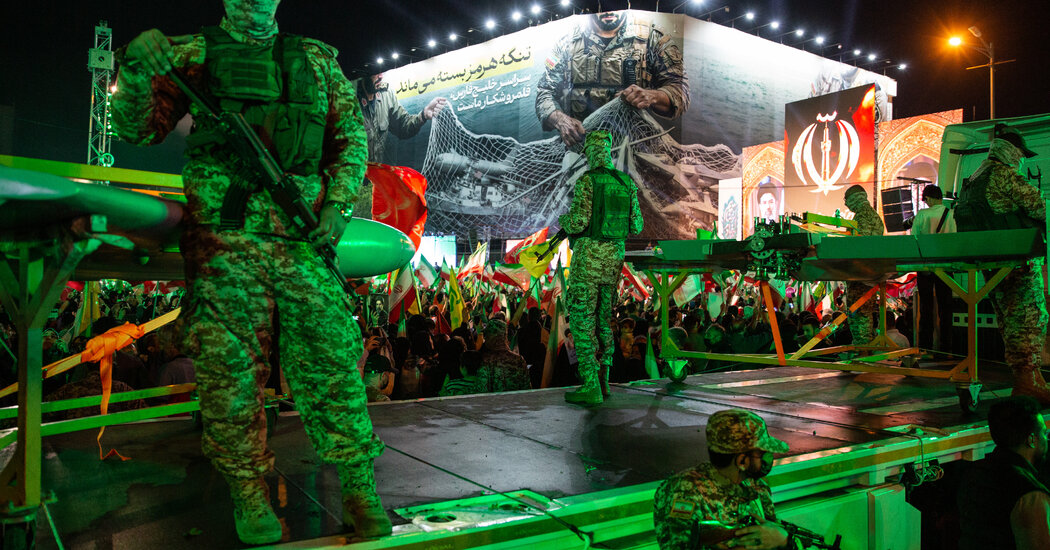
The high-stakes military campaign launched by the United States and Israel against Iran was designed to achieve a definitive, historic reset: the absolute dismantling of the clerical regime in Tehran and the elimination of its regional threat. Yet, nearly four months after the first missiles flew, the geopolitical reality on the ground highlights a stark and unintended transformation. What has emerged from the crucible of this conflict is indeed a new regime, but not the democratic transition or Western-friendly leadership envisioned in Washington and Jerusalem. Instead, the world is witnessing the rise of what analysts are calling “Islamic Republic 3.0″—a highly fortified, uncompromising military junta dominated not by turbanned clerics, but by the battle-hardened commanders of the Islamic Revolutionary Guards Corps (IRGC). This sweeping internal revolution was catalyzed on the very first day of the war, February 28, when a devastating strike assassinated the country’s longtime Supreme Leader, Ayatollah Ali Khamenei. For decades, Khamenei had played a delicate balancing act, carefully avoiding a direct, all-out confrontation with the joint forces of Israel and America while maintaining a religious decree against the production of nuclear weapons. His sudden death shattered the old theocratic equilibrium, sweeping aside the cautious elder statesmen of the regime and elevating a younger, far more aggressive, and deeply suspicious generation of security officials to absolute power. This new ruling class has effectively abandoned the traditional pretense of divine governance in favor of raw, unadulterated state survival through hard power. Under their command, Iran’s formidable security and intelligence apparatus has seized total control over every pillar of domestic policy, civil society, and international diplomacy, transforming a wounded nation into an incredibly resilient garrison state that refuses to bow to foreign coercion.
The Nuclear Paradox: A Wounded Giant Steels Its Resolve
                NUCLEAR STANDOFF IN THE MIDDLE EAST

 [  IRANIAN COERCION  ]                       [   WESTERN OBJECTIVES   ]
• Threshold nuclear status • Complete dismantlement
• Hold scientific IP & designs • Stop enrichment stockpiles
• Retain advanced centrifuges • Preserve regional deterrence
/
CURRENT STATUS /
• Limited suspension offered
• 50% export / 50% dilution of HEU
• Crucial knowledge retained
If the primary objective of the alliance’s military intervention was to permanently eradicate the Iran nuclear program, the current strategic landscape suggests a profound failure of coercive diplomacy and military action. Rather than capitulating under the weight of airstrikes, Tehran has emerged from the conflict with its scientific capabilities intact, displaying an unprecedented willingness to accept high levels of risk to preserve its technological sovereignty. Western intelligence officials are discovering that while physical enrichment facilities can be damaged, the sophisticated intellectual capital, engineering designs, and technical expertise accumulated by Iranian scientists over decades cannot be bombed out of existence. The new military leadership in Tehran remains steadfastly committed to securing Iran’s position as a nuclear-threshold state—a country that possesses all the essential blueprints, materials, and infrastructure to assemble a viable nuclear warhead at a moment’s notice, even if it chooses not to take the final step of weaponization. By refusing to abandon their sovereign right to enrich uranium, even under intense bombardment, these young commanders have signaled that they view their nuclear program not as a bargaining chip to be discarded for sanctions relief, but as the ultimate, non-negotiable guarantee of national survival. They believe with absolute certainty that only a robust, rapidly deployable enrichment capability can provide the necessary deterrence to prevent future foreign operations aimed at their destruction.
High-Stakes Diplomacy: Inside the Washington-Tehran Brinkmanship
Against this backdrop of smoking ruins and hardened resolve, the United States and Iran have spent the past week trading heavy military blows while simultaneously engaging in intense, back-channel diplomatic maneuvering to find a viable exit ramp from the war. By Friday, despite public displays of mutual hostility and accusations of bad faith, officials in both Washington and Tehran confirmed they were on the verge of finalizing an initial memorandum of understanding to halt the active fighting. This breakthrough prompted President Trump to confidently announce over the weekend that a formal signing ceremony would take place on Sunday, although Iran’s newly empowered foreign ministry immediately urged caution, publicly suggesting that the timeline for implementing such a sensitive agreement might move at a slower, more deliberate pace. This diplomatic friction underscores a fundamental asymmetric reality of the negotiations: even if a preliminary truce is successfully signed, Tehran intends to retain significant strategic leverage throughout the grueling 60-day implementation period designated for hammering out the highly complex issues of uranium enrichment, frozen assets, and maritime security. This calculated delay allows Iran’s negotiators to gauge the political temperature in Washington, testing whether the Trump administration is willing to risk a collapse of the truce and a return to active combat over technical details. Strikingly, foreign policy scholars note that the package currently being discussed on the international stage is significantly more restrictive and less favorable to Western interests than the comprehensive diplomatic deals Iran’s moderate diplomats had offered American envoys during pre-war summits in Geneva—a bitter irony that illustrates how the war has severely diminished the West’s diplomatic leverage.
Redefining Deterrence: Direct Strikes and the Proxy Network
               Tehran's Strategic Linkage

[ US-Iran Bilateral Talks ] <=========> [ Lebanon Ceasefire Talks ]
           ^                                        ^
           |                                        |
           +---------------[ LINKED BY ]------------+
                  Direct Military Leverage &
                 Strategic Proxies (Hezbollah)
The military calculations guiding the new regime in Tehran differ fundamentally from the risk-averse strategies of the past, representing an entirely new doctrine of active defense and strategic linkage. For years, Israel had targeted Iran’s regional proxies, particularly Hezbollah in Lebanon, with relative impunity, secure in the belief that Tehran would not risk a direct, devastating confrontation to defend its external network. However, the current regime has shattered those established rules of engagement, launching direct, long-range military attacks on Israeli soil in response to the sustained bombardment of Hezbollah’s strongholds in Beirut. This dramatic escalation was not merely an act of retaliation, but a calculated geopolitical gambit designed to hook the ongoing ceasefire negotiations in Lebanon directly to Iran’s bilateral talks with the United States. While Jerusalem and Washington have repeatedly tried to keep these strategic theaters entirely separate, Tehran’s new leadership has successfully demonstrated that it can, and will, escalate regional conflicts on multiple fronts simultaneously to protect its interests. Analysts point out that this newfound boldness stems from a sharp calculation by the IRGC junta that President Trump has little appetite for a prolonged, ground-based war in the Middle East, and has actively sought to restrain Israel’s more maximalist military ambitions. Confident that the United States is eager to declare victory and exit the conflict, Iran’s military leaders believe they have weathered the worst of the storm, leaving them free to maintain their uncompromising support for their regional proxy network, including Hamas in Gaza and the Houthi movement in Yemen.
Leverage at the Choke Points: The Battle for the Strait of Hormuz and Billions in Assets
An essential pillar of Iran’s strategy to force concessions from the international community is its continued leverage over global commerce, focused heavily on the highly vulnerable Strait of Hormuz. Despite the intense American naval blockades mounted during the war, Tehran has managed to maintain a credible, looming threat over this vital maritime corridor, through which a significant portion of the world’s daily petroleum supply must pass. Under the terms of the emerging diplomatic proposal, Iran’s negotiators are demanding the upfront release of $12 billion in frozen international assets as a mandatory gesture of good faith, with an additional $12 billion scheduled to be unfrozen as specific milestones of the agreement are met. Furthermore, in an assertive push that has deeply alarmed global shipping conglomerates and Western defense planners, the new regime is demanding the sovereign right to levy transit fees on commercial vessels navigating through the strategic strait. While Tehran may ultimately agree to a temporary, highly regulated suspension of its uranium enrichment activities—proposing to export half of its highly enriched uranium stockpile and dilute the remaining portion to lower, non-weapons-grade levels—it has absolutely refused to dismantle its advanced centrifuge manufacturing facilities. By preserving this critical dual-use infrastructure and retaining the capacity to disrupt energy markets at a moment’s notice, Iran is actively building a permanent defensive shield designed to deter any future military actions by the United States or Israel.
The Long-Term Limbo: Why the Status Quo Favors Tehran
                 THE DYNAMICS OF "NO WAR, NO PEACE"

   BENEFITS TO TEHRAN                  PRESSURES ON WASHINGTON
• Retains scientific knowledge • High exposure to energy volatility
• Preserves advanced centrifuges • Disrupted fertilizer / aluminum supply
• Divides Gulf Arab nations • Rising domestic political fatigue
• Undermines regional alliances • Urgent need to secure maritime trade
Ultimately, the long-term outlook for the region points toward a protracted, highly unstable state of geopolitical limbo—a gray zone of “no war, no peace” that, paradoxically, aligns closely with the strategic interests of the new Iranian leadership. Although Iran’s economy is in tatters after months of devastating blockades, and the potential for domestic unrest remains high once the immediate threat of war subsides, the regime’s leaders believe that Washington is under far greater domestic pressure to bring a definitive end to the crisis. President Trump faces urgent demands from global markets to restore stability to the international trade of essential commodities like oil, agricultural fertilizers, and aluminum, all of which have suffered severe disruptions during the conflict. Consequently, Iran’s military rulers are content to drag out detailed negotiations over the next 60 days, confident that the passage of time will only increase Western desperation for a deal and weaken Washington’s insistence on intrusive nuclear inspections. In the long run, the IRGC-led administration in Tehran is playing a sophisticated, multi-layered game: aiming to gradually rebuild its shattered economy, drive deep diplomatic wedges between the Arab Gulf states over how to navigate the Iranian threat, and ultimately isolate Israel within the region. By surviving an all-out military assault by the world’s most advanced armed forces, Islamic Republic 3.0 has not only preserved its core sovereign ambitions but may have permanently altered the balance of power in the Middle East, proving that coercion alone cannot rewrite the geopolitical realities of the region.