

Our national parks are often celebrated as America’s greatest idea, serving as vast, outdoor sanctuaries where the country’s physical beauty meets its rich historical narrative. They are not merely scenic backdrops for vacation photos, but living classrooms and sacred spaces where the complex story of a nation is preserved in stone, soil, and bronze. Yet, beneath the serene surface of these protected landscapes, a quiet but fierce ideological battle has been waged over who gets to write that story and how it should be told. This conflict reached a dramatic turning point when U.S. District Judge Angel Kelley issued a temporary restraining order, blocking a controversial directive from President Donald J. Trump’s administration. The executive order had mandated the removal or alteration of any interpretive signs, historical plaques, educational films, or museum exhibits within national parks that could be viewed as casting the United States “in a negative light” or “inappropriately disparaging” its citizens. By halting this sweeping initiative, the court has stepped in to protect the integrity of public education and historical preservation, ensuring that the physical markers of our shared history remain visible to the millions of visitors who flock to these parks every year in search of honest connection and deeper understanding.
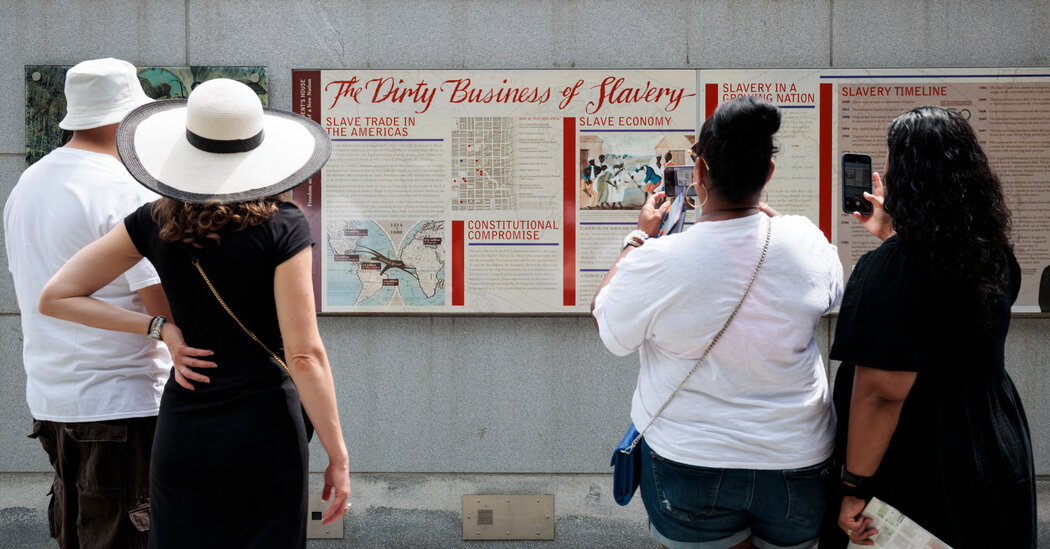
The real-world consequences of the administration’s directive were immediate and stark, translating abstract political rhetoric into the physical erasure of history from coast to coast. To comply with the White House’s orders, the National Park Service had already begun dismantling key educational features that grounded visitors in some of the country’s most challenging realities. At Independence National Historical Park in Philadelphia, the birthplace of American democracy, plaques detailing the lives of enslaved people who lived and labored in the shadows of the nation’s founders were quietly removed. In South Carolina, at Fort Sumter National Monument—where the first shots of the Civil War were fired—a sign explaining the devastating, modern-day impacts of climate change on coastal heritage was taken down. Even native histories were targeted; at Acadia National Park along the rugged coast of Maine, exhibits highlighting the enduring presence and struggles of Indigenous peoples were removed. These actions represented far more than minor administrative updates; they are a calculated attempt to curate a sanitized version of the past, stripping away the critical context that allows a casual tourist to understand how the triumphs and tragedies of America are deeply intertwined.
Responding to this systematic dismantling, Judge Kelley, who was nominated to the federal bench by President Joseph R. Biden Jr., issued a sharply worded, 63-page ruling that directly rebuked the administration’s actions. She warned that bowing to political pressure to alter historical exhibits did not just undermine the basic credibility of the National Park Service, but also set a highly “dangerous precedent of censorship and sanitization.” Writing with a keen appreciation for the diverse and often painful paths that have shaped the United States, Judge Kelley spent a significant portion of her opinion illustrating how our national parks serve as keepers of a complex national soul. She captured this sentiment beautifully, writing that “from the echoes of abolition in John Brown’s Fort in Harpers Ferry, to the genesis of the modern L.G.B.T.Q.+ civil rights movement at the Stonewall National Monument, to the retreating ice of Glacier National Park, the national parks preserve the multifaceted and multilayered history of our nation, including the good, the bad and the ugly.” Her ruling was not just a legal stopgap, but a philosophical defense of the idea that a mature democracy must have the courage to look at itself in the mirror, scars and all.
The legal battle itself was initiated by a coalition of dedicated historical, preservationist, and environmental advocacy groups who felt compelled to stand up for the integrity of their public lands. In their lawsuit, the plaintiffs argued that the sudden, sweeping orders to remove established educational materials were “arbitrary and capricious,” a direct violation of the Administrative Procedure Act, which regulates how federal agencies can implement major policy changes. They further accused the Park Service and its parent agency, the Department of the Interior, of vastly exceeding their legal authority by allowing partisan political motivations to override professional historical standards. The response from the administration was swift and deeply polarizing, illustrating the intense cultural friction surrounding the issue. Katie Martin, a spokesperson for the Interior Department, fiercely dismissed the court’s decision as the biased work of a “liberal activist judge.” Rather than addressing the legal merits of the case, she defended the administration’s nationalistic vision, choosing to pivot to a celebration of the upcoming “U.F.C. Freedom 250” on the South Lawn of the White House, casting the event as a tribute to our nation’s history under “the greatest president in the history of our country—President Donald J. Trump.”
In sharp contrast to the defensive political rhetoric coming from the executive branch, defenders of historical accuracy celebrated the ruling as a crucial victory for the public’s right to an unvarnished truth. Emily Thompson, the executive director of the Coalition to Protect America’s National Parks—one of the key advocacy organizations behind the lawsuit—strongly applauded Judge Kelley’s decision. Thompson emphasized that national parks are sacred trust lands belonging to all Americans, warning that they must never be reduced to propaganda tools or manipulated for partisan political agendas. “They exist to preserve and interpret the full American story, not just the parts that make some politicians comfortable,” Thompson stated, pointing out that true patriotism lies in understanding our history, not in hiding from it. This sentiment is shared by many of the rank-and-file historians, curators, and wilderness rangers who work within the parks, whose daily lives are dedicated to presenting researched, factual information to the public and who had found themselves caught in an agonizing ethical bind when forced to dismantle their own work.
In the immediate aftermath of Judge Kelley’s injunction, the physical dismantling of American history has been put on hold, and the National Park Service has been ordered to restore all of the altered or removed exhibits within a three-week window. This includes a separate, ongoing legal battle specifically protecting the slavery exhibits at the President’s House Site in Philadelphia, where another federal judge had already intervened on behalf of the city. Internally, park leadership reacted quickly to the court’s decree, with a high-ranking agency official sending an email to regional supervisors directing them to pause the implementation of President Trump’s directive “for the time being.” Although individual parks are still permitted to submit items for administrative review, actually carrying out any changes has been officially suspended. This moment of pause offers a vital opportunity for reflection on the true purpose of public memory. By keeping our national parks open to the full spectrum of our national journey—from our greatest achievements to our most profound struggles—we protect the right of future generations to engage with an authentic, evolving, and deeply human American story.