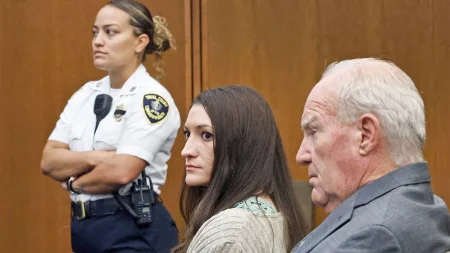



The heavy silence of a federal courtroom in Michigan served as a stark backdrop to a sobering reality for four young individuals who, until recently, were navigating the quiet avenues of higher education. Zainab Hakim, Paige Feyock, Jonathan Zou, and Colin Weger—ranging in age from 22 to 26—stood before U.S. Magistrate Judge Anthony Patti, their youth contrasting sharply with the gravity of the federal conspiracy charges leveled against them. This tense appearance followed a sweeping announcement by FBI Director Kash Patel, detailing the arrests of seven individuals linked to a deeply disturbing, coordinated escalation of campus activism. Once the defendants entered their pleas of not guilty, the reality of their situation set in as the judge approved their release on bond, but under extraordinarily strict conditions: they had to surrender their passports, submit to continuous GPS monitoring, accept severe travel restrictions, and avoid any contact with their co-defendants and alleged victims. Federal prosecutors had passionately argued that these young activists should remain behind bars, painting them as volatile threats to the local community and potential flight risks. However, Judge Patti hesitated to impose pre-trial detention, noting the delicate constitutional balance at play given how heavily the government’s case relies on ideological social media posts and political expression. The courtroom scene underscored a tragic transformation, highlighting how quickly academic passion can deteriorate when the lines between protected civil protest and serious criminal conduct become dangerously blurred.
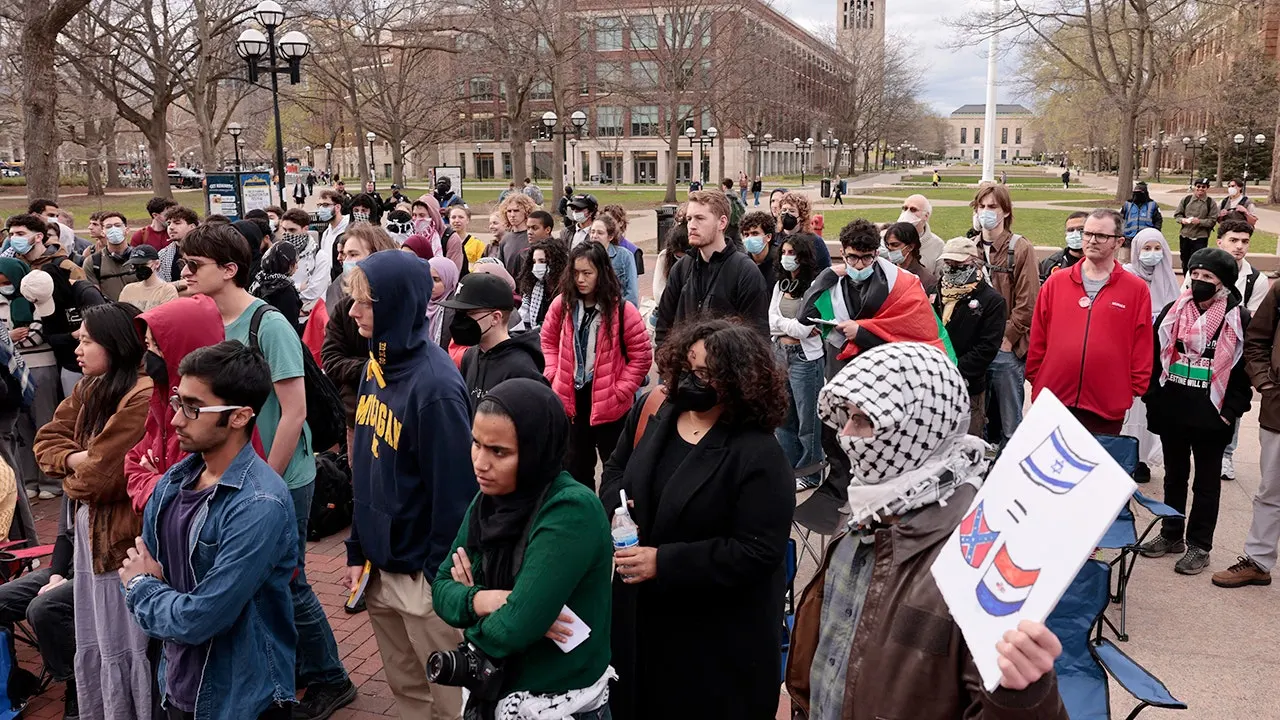
To understand how these college-aged individuals found themselves ensnared in a federal investigation, one must look back to the highly volatile atmosphere on campus following the Hamas attacks of October 7, 2023. In the wake of that geopolitical tragedy, the University of Michigan, like many institutions across the nation, became a hotbed of intense political debate regarding financial divestment from Israel. However, the federal indictment paints a dark picture of how a select group of activists allegedly chose to bypass traditional forms of democratic protest, choosing instead to embark on a systematic, clandestine campaign designed to terrorize, stalk, and manipulate those in positions of authority. Over several months, the co-conspirators reportedly utilized encrypted messaging apps to coordinate tactics, transforming their shared political anger into an organized effort to force the university’s hand. What began as campus rallies and passionate debates slowly devolved into a structured conspiracy aimed at intimidating university regents, administrative leaders, law enforcement officials, and local business owners. Prosecutors allege that the group’s digital spaces became echo chambers of radicalization, where members discussed utilizing extreme measures to break the resolve of their targets, discarding peaceful activism in favor of tactics designed to inflict maximum psychological distress and physical insecurity.
The human cost of this escalation became horrifyingly clear to the university’s leadership, perhaps most vividly illustrated by an incident on the front lawn of University of Michigan Regent Sarah Hubbard. In May 2024, Hubbard awoke to a grotesque display right outside her private residence: fake, life-sized corpses wrapped in bloodied sheets had been meticulously laid across her grass—a visual mimicry of war zones designed to bring the horrific realities of foreign conflict directly to her doorstep. For Hubbard, the message was not just a political statement; it was a deeply personal violation of her safety and sanctuary, prompting her to later express profound gratitude for the relentless efforts of federal law enforcement in bringing these charges forward. Beyond this horrifying display, the targeted campaign extended to physical property damage across the surrounding community, with homes and businesses vandalized with graffiti such as “Free Palestine,” “Divest Now,” and “Intifada.” The campus’s Jewish Federation Building was targeted on the emotional anniversary of the October 7 attacks, serving as a painful reminder of the rising tide of hostility. The indictment further alleges that the group resorted to tactical vandalism, using industrial caulk to seal office doors shut, using heavy bicycle locks to trap people within entryways, shattering windows, and launching glass jars filled with butyric acid and dye into the private living rooms of administrators, leaving residents to deal with both physical destruction and lingering fear.
Among the most chilling details revealed in the federal indictment are the private communications of Ahmet Korkaya, a medical student who allegedly collaborated closely with Paige Feyock. In a disturbing paradox, Korkaya—who was actively training in a profession dedicated to saving human lives and upholding the Hippocratic Oath—allegedly used encrypted text messages to discuss the physical elimination of people on his personal “hit list.” In May 2024, Korkaya and Feyock allegedly agreed to target, torment, and terrorize these administrators and their families, with Korkaya boasting in text messages that he would become the “dirtiest f—— doctor ever” and suggesting he could use his medical position to slowly and traceably poison those he deemed complicit in Israel’s actions. The conspirators allegedly spent months evaluating ways to deploy “poison, bombs, and psychological torture” against their targets, demonstrating a cold, calculated approach to political warfare that went far beyond spontaneous student anger. While Korkaya’s defense and his journey through the federal court system continue with an upcoming detention hearing in Detroit, the public revelation of these texts has sent shockwaves through the university community, leaving many to wonder how highly educated students could become so detached from basic human empathy in pursuit of an ideological cause.
The campaign of intimidation also directly targeted Provost Laurie McCauley, whose home became the scene of a terrifying incident in March 2025. Prosecutors allege that Jonathan Zou and Alexander Sepulveda attacked the provost’s residence, shattering her window with glass jars containing a mysterious blue chemical substance and spray-painting her walls with inverted red triangles—a symbol commonly used to mark targets of violence—alongside hostile demands to divest. The desperation of the suspects to avoid capture soon became apparent; when federal agents prepared to execute a search warrant at Sepulveda’s home in April 2025, an unidentified associate warned him of the raid via an encrypted chat room. This tip-off prompted Sepulveda to perform a panicked digital wipe of his phone and laptop computers in a frantic bid to destroy crucial evidence, showcasing the group’s awareness of their criminal liability and their efforts to evade justice. This internal paranoia apparently took an even darker turn when Hakim and Feyock suspected that someone within their own social circle was cooperating with federal investigators. The pair allegedly resorted to direct threats against this individual, earning themselves the indictment’s most severe charge of witness intimidation, a federal felony carrying a maximum sentence of twenty years in prison and a quarter-million-dollar fine—a devastating potential outcome for young people whose adult lives had barely begun.
As the legal proceedings unfold, the case stands as a tragic and deeply cautionary tale about the limits of political advocacy and the severe consequences of crossing the threshold into criminal extremism. The potential five-year sentences for conspiracy to destroy property and the far heavier penalties for witness intimidation mean that these defendants are facing the very real prospect of spending their formative years behind federal bars. For the broader public and academic institutions nationwide, this case forces a painful confrontation with the current state of campus discourse, where the line between protected First Amendment speech and the targeted terrorizing of public servants has become dangerously thin. While the defendants’ lawyers will likely argue that their clients’ actions were motivated by a passionate desire to end human suffering abroad, the methods documented by the FBI tell a story of domestic terror, harassment, and psychological warfare that left innocent neighbors and educators fearing for their lives. Ultimately, this case reflects the profound tragedy of young lives derailed by unchecked radicalization, leaving a fractured university community to heal from the scars of intimidation while grappling with the heavy price of turning political passion into a weapon of fear.