


Hope and Horizon: Inside the High-Stakes Diplomacy Aiming to Defuse a U.S.-Iran War
A Fragile Dawn: The Knife-Edge Diplomacy of a Potential U.S.-Iran Peace Accord
                 GEOPOLITICAL TRANSACTIONS AT A GLANCE
          ┌─────────────────────────────────────────────────┐
          │             PHASED DE-ESCALATION PATH           │
          └────────────────────────┬────────────────────────┘
                                   │
                    ┌──────────────┴──────────────┐
                    ▼                             ▼
         [ IMMEDIATE (Phase 1) ]       [ DEFERRED (Phase 2) ]
         • Reopen Strait of Hormuz     • Nuclear program limits
         • Lift naval blockade         • Deep sanctions relief
         • Establish 60-day truce      • Long-term regional security
The international community is witnessing a moment of extraordinary geopolitical friction as negotiators race against the clock to cement a historic, yet highly volatile, framework agreement between the United States and the Islamic Republic of Iran. On Saturday, Pakistani Prime Minister Shehbaz Sharif ignited a wave of global anticipation by announcing that a breakthrough peace deal was on the verge of being finalized, potentially within a twenty-four-hour window. This optimistic projection, broadcasted via social media, spoke of an imminent “electronic signing” which would quickly pave the way for intensive, technical-level negotiations in the coming week.
However, the jubilation was quickly tempered by Tehran. Esmail Baghaei, the spokesman for Iran’s Foreign Ministry, intervened to manage expectations, clarifying through state-run media channels that while a formal signing ceremony on Sunday remained highly unlikely, the diplomatic channels remained open and active for a potential breakthrough in the days immediately following. This delicate dance of public diplomacy underscores the profound structural mistrust that has accumulated over months of devastating, open military conflict.
Even as backchannel envoys exchange drafts, the physical reality on the water remains intensely hostile. Just hours before Sharif’s announcement, the United States military was forced to engage and destroy multiple Iranian-engineered attack drones over the vital waters of the Persian Gulf, where they had been actively targeting commercial shipping vessels trying to traverse the contested waters. This paradox—where diplomats draft treatises of peace while naval counter-measures intercept explosive ordnance in real time—vividly illustrates the precarious nature of a peace process being negotiated under fire, where a single miscalculation on either side could instantaneously collapse months of meticulous, behind-the-scenes mediation.
Navigating the Chokepoint: The Strategic Imperative of the Hormuz Framework
At the core of these urgent diplomatic maneuvers is a pragmatic, phased framework engineered to address immediate economic and security crises before tackling more systemic geopolitical grievances. According to senior Western and Middle Eastern officials familiar with the draft text, the initial phase of the agreement is designed as a temporary security valve, focused primarily on establishing a sixty-day cessation of hostilities and engineering a mutually verifiable de-escalation protocol.
The immediate, tangible objective is the systematic reopening of the Strait of Hormuz—the world’s most critical maritime choke point for global energy supplies—and the concurrent termination of the aggressive, months-long American naval blockade that has suffocated the Iranian domestic economy. By isolating these key maritime issues from more structurally intractable disputes, such as the future status of Iran’s uranium enrichment program and the lifting of broader, congressionally-mandated American economic sanctions, international mediators have managed to carve out a narrow lane of mutual interest.
Global energy markets, which have suffered from extreme volatility and soaring logistical insurance premiums under the weight of the blockade, have reacted with tentative optimism to the news of the sixty-day window. Yet, military strategists warn that deferring the nuclear question to a secondary phase is an immense gamble. It assumes that both the Trump administration and the hardline clerical leadership in Tehran can maintain domestic political support for a prolonged diplomatic process while the core drivers of their decades-long ideological enmity remain completely unresolved, leaving the fragile truce highly vulnerable to sabotage from domestic hardliners on both sides of the Atlantic.
   GLOBAL OIL TRANSIT & THE STRAIT OF HORMUZ CHOKEPOINT

   [ Persian Gulf ] ──► [ Strait of Hormuz ] ──► [ Gulf of Oman ]
                                │
                     ( Vital Energy Conduit )
                     ( ~20% of World's Oil  )
                                │
                    ┌───────────┴───────────┐
                    ▼                       ▼
          [ Blockade Impact ]        [ Framework Goal ]
          • Soaring insurance        • Unimpeded commerce
          • Supply disruptions       • De-escalation of forces
The Intermediaries: How Islamabad and Doha Bridged an Ideological Chasm
The unlikely emergence of this diplomatic framework is a testament to the highly coordinated, backchannel mediation campaign spearheaded by the governments of Pakistan and Qatar. Acting as geopolitical conduits in a conflict where direct bilateral dialogue is politically toxic, Islamabad and Doha have spent months shuttling revisions, clarifications, and compromises between Washington and Tehran.
For Pakistan, a nation sharing a highly porous, volatile border with Iran while remaining economically dependent on strategic relationships with both Western powers and wealthy Gulf monarchies, the role of peacemaker is born of absolute domestic necessity. Prime Minister Shehbaz Sharif’s proactive public messaging is a calculated attempt to lock both parties into their commitments, effectively weaponizing global public expectations to prevent either President Donald J. Trump or Iran’s supreme decision-makers from pulling back at the eleventh hour. Qatar, long recognized as the premier diplomatic Swiss Army knife of the Middle East, has provided the secure physical and financial architecture necessary to host these indirect talks, leveraging its deep relationships across the ideological spectrum.
The transition toward “electronic signing” and subsequent “technical-level talks” reveals a modern, hybrid model of troubleshooting, designed to bypass the domestic political fallout that would occur if senior American and Iranian cabinet officials were photographed shaking hands. This logistical creativity has allowed both administrations to maintain a public posture of strength for their domestic audiences while simultaneously authorizing their diplomatic deputies to negotiate the intricate, highly technical coordinates of naval standoff distances, shipping lanes, and maritime transit verification protocols required to make the truce operational.
The Lebanese Front: A Parallel War Threatens to Torpedo Global Pacts
The greatest immediate threat to this delicate diplomatic tapestry lies not in the Persian Gulf, but along the scorched hills of the Blue Line separating Israel and Lebanon. For over one hundred days, the Israeli Defense Forces (IDF) and the Iranian-backed militant group Hezbollah have been locked in a ferocious, high-intensity conflict that has defied all international efforts to establish a lasting cease-fire.
Even as rumors of a U.S.-Iran breakthrough circulated through global capitals on Saturday morning, the reality on the ground in the Levant was characterized by escalating violence. The IDF issued sweeping, urgent evacuation orders for nearly two dozen towns and villages across southern Lebanon, followed almost immediately by devastating waves of airstrikes and heavy artillery bombardments. This relentless military pressure on Hezbollah was met with defiant retaliatory strikes; the group launched precision attack drones and heavy rocket barrages targeting Israeli military installations and troop concentrations along the frontier.
The complexity of this theater was further highlighted when the Lebanese Armed Forces reported that an Israeli drone strike had seriously wounded one of its soldiers in the southern Nabatieh region, threatening to draw the formal Lebanese military directly into the crossfire. Iranian diplomats have repeatedly asserted that any comprehensive regional stabilization pact must be intrinsically linked to a total halt of Israeli military operations in Lebanon and a full withdrawal of IDF troops from sovereign Lebanese territory. This creates a volatile strategic dependency: as long as Israel and Hezbollah remain locked in an existential war of attrition, the potential for a localized escalation to drag Iran and the United States back into direct combat remains a constant, destabilizing reality.
         REGIONAL ESCALATION RISK & SYSTEM DEVIATION

              ┌──────────────────────────────┐
              │   U.S.-Iran Framework Deal   │
              └──────────────┬───────────────┘
                             │ (Vulnerable to)
                             ▼
              ┌──────────────────────────────┐
              │    Lebanon External Shock    │
              └──────────────┬───────────────┘
                             │ (Triggers)
     ┌───────────────────────┴───────────────────────┐
     ▼                                               ▼
[ IDF Airstrikes ] [ Hezbollah Rockets ]
• Nabatieh strikes • Ground defense ops
• Southern displacement • Northern Israel targeting
Israel’s Strategic Autonomy and Trump’s Volatile Brinkmanship
Further complicating the path to peace is the assertive, uncompromising posture of the Israeli government, which views any bilateral U.S.-Iran accommodation with deep skepticism. In an explicit public statement, Israeli Defense Minister Israel Katz made it unequivocally clear that Jerusalem does not consider itself bound by any diplomatic understandings reached between Washington and Tehran. Katz asserted that even if a sixty-day regional cease-fire is formally declared, the Israeli military will not withdraw its forces from the strategic territories it currently occupies in southern Lebanon, the Gaza Strip, and parts of southwestern Syria.
He reiterated that Israel must preserve its absolute, unilateral capability to launch preemptive military strikes to prevent Iran from crossing the threshold of nuclear weapons acquisition. This hardline stance stands in sharp contrast to the mercurial, deal-driven foreign policy style of President Donald J. Trump, whose administration has spent the past week vacillating wildly between total military escalation and rapid diplomatic accommodation. Only days prior, President Trump had sent shockwaves through the global oil market by threatening to permanently seize Kharg Island, Iran’s primary oil export hub in the Persian Gulf, only to retract the threat hours later in favor of promoting a diplomatic resolution.
This style of high-stakes brinkmanship—combining extreme economic and military threats with sudden, pragmatic pivots toward deal-making—has left both America’s allies and adversaries in a state of perpetual strategic uncertainty. For Iranian negotiators, the challenge lies in determining whether the proposed sixty-day framework represents a genuine opportunity for structural de-escalation, or simply a temporary pause designed to allow the United States and its regional allies to reposition their forces for a more decisive confrontation down the road.
The Shadow of Khamenei and the Treacherous 60-Day Horizon
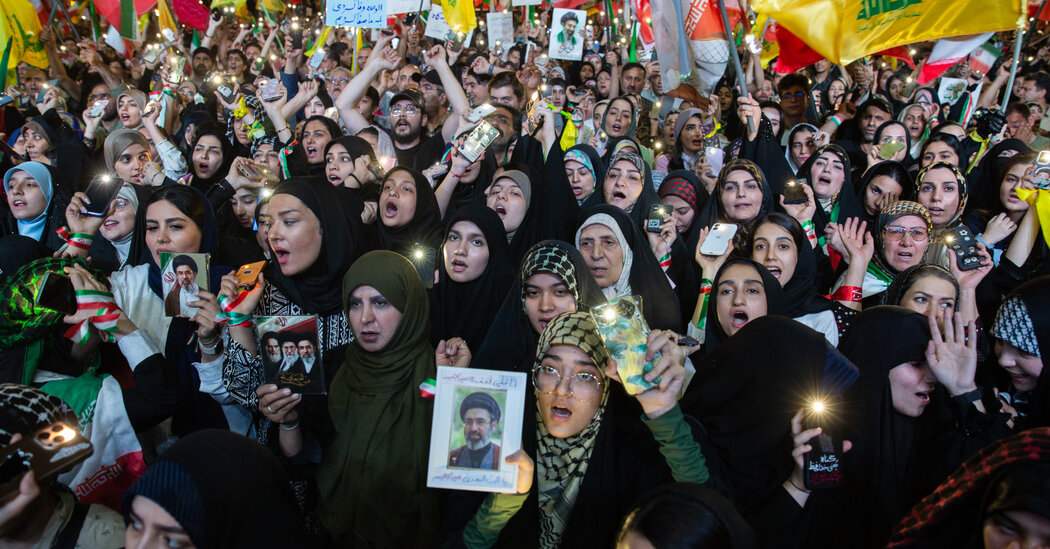
Ultimately, the diplomatic trajectory of the coming days is deeply colored by the profound domestic transitions currently reshaping the Iranian state. The nation is preparing for the highly symbolic state funeral of its long-serving Supreme Leader, Ayatollah Ali Khamenei, who was killed during a series of devastating, coordinated joint U.S.-Israeli military strikes in late February. Iranian state media has announced that several days of elaborate, highly choreographed public ceremonies will commence in early July, culminating in his formal burial in the holy northeastern city of Mashhad on July 9.
The loss of this paramount leader stripped the Islamic Republic of its ultimate decision-maker during a period of existential military crisis, plunging the internal political establishment into a period of intense, behind-the-scenes maneuvering. Analysts suggest that the interim leadership in Tehran is highly motivated to secure a temporary freeze of the American naval blockade to stabilize their domestic economic landscape and project an image of order and control during the highly sensitive transition period.
However, once the sixty-day clock on this initial framework begins to tick, the true systemic challenges will emerge. When the negotiations transition from the relatively simple mechanics of opening shipping lanes to the core disputes of nuclear non-proliferation, centrifuge dismantling, and irreversible sanctions relief, both sides will find themselves confronting the same irreconcilable positions that have fueled forty-seven years of mutual ideological hostility. The next weeks will determine whether this current framework is a legitimate diplomatic breakthrough or merely a brief, fragile pause in an inevitable march toward a catastrophic regional war.
CHRONOLOGY OF COLD & KINETIC CRISISFeb 2026 May 2026 June 13, 2026 July 4-9, 2026
┌───────────────┐┌───────────────┐┌───────────────┐ ┌───────────────┐
│ Khamenei dies ││ Naval Blockade││ Framework Deal│ │ State Funeral │
│ in airstrikes ││ chokes Gulf ││ announced by │ │ scheduled in │
│ near Tehran ││ energy lanes ││ Pak. Premier │ │ Mashhad city │
└───────────────┘└───────────────┘└───────────────┘ └───────────────┘