



Paragraph 1: The Throwback Charm of Teal Sundays
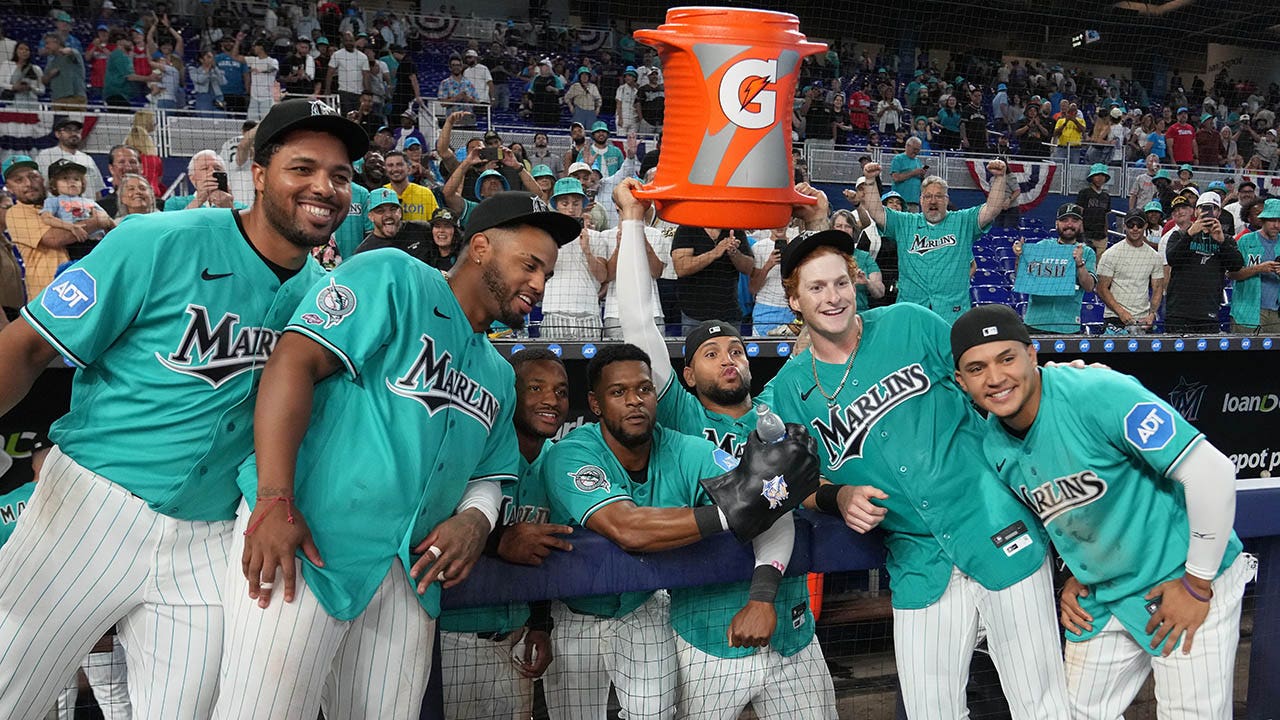
Imagine stepping into a time machine and landing in the vibrant, electric atmosphere of early Miami Marlins baseball, when the team was the fresh-faced newcomers to Major League Baseball, bursting with promise and a distinctive teal flair that screamed South Florida sunshine. On a sunny Sunday in Miami, the Marlins turned back the clock in spectacular fashion, donning throwback uniforms that harkened back to their expansion-era glory to face off against the Colorado Rockies. This wasn’t just any game; it was a nostalgic celebration wrapped in competition, a chance for fans old and new to relive the magic of the Fightin’ Fish. The stadium hummed with anticipation as players jogged out in those retro teal jerseys, complete with the original Florida Marlins logo—a nod to the team’s humble beginnings back in 1993. For many longtime fans, it felt like a heartfelt reunion with the past, evoking memories of packed crowds, inning after inning of thrilling plays, and the sheer joy of baseball under the Florida sun. The organization had cleverly dubbed this initiative “Teal Sundays,” a series of home games where the uniforms would pay tribute to that era. It was more than a marketing gimmick; it was a love letter to the die-hards who had stuck by the team through thick and thin, through multiple teardowns and ambitious rebuilds. As the Rockies took the field, their standard red and black contrasting sharply with the Marlins’ cool, tropical teal, you could sense the home crowd’s excitement bubbling over. Players like Owen Caissie, a young prospect with potential etched into every swing, warmed up with a grin that spoke volumes. These uniforms weren’t just fabric and thread; they carried stories—of wins that felt impossibly close, of heartbreaks that fueled comebacks, and of a franchise that refused to fade into obscurity. The Marlins’ decision to revive this look was a stroke of genius, blending reverence for history with a fresh jolt of energy for 2024. Fans in the stands, clutching programs and hot dogs, cheered as the national anthem played, their voices uniting in a chorus that echoed the teal wave washing over the diamond. This game promised excitement, and with the Rockies’ vaunted pitching staff ready to challenge, it was set to be a classic matchup. The throwback vibe set a tone that felt personal, as if the team was inviting everyone to remember why they fell in love with baseball in the first place. Memories of past legends, from the sparkly helmets to the spirited mascots, flooded back, making this Sunday feel like a family gathering rather than just a contest. In this moment, the Marlins weren’t just playing; they were honoring their roots, drawing families closer and bridging generations of fans who shared the same passion for the game.
Paragraph 2: A Uniform’s Deep Emotional Resonance
Delving deeper into the significance of these teal uniforms, it’s impossible not to feel a profound emotional pull, as if each stitch in the fabric tied directly to the human stories that have shaped Miami baseball. The jersey, with its striking teal color reminiscent of ocean waves crashing on Florida shores, features the bold, original Florida Marlins logo—a fish leaping triumphantly, symbolizing the team’s nickname. But as the Marlins’ website poignantly notes, “This jersey is so much more than just a uniform; it’s an ode to those moments where fans fell in love with the team. It honors the Fightin’ Fish who started it all and the players who carry that legacy into the next era of Marlins baseball.” It’s a beautiful encapsulation of baseball’s ability to weave nostalgia into the present, turning a simple outfit into a vessel for shared memories. Picture the story behind it: A fan from the expansion days, perhaps a young professional back in 1993, rallying friends to support this fledgling franchise amid skepticism and rivalries. Those early games were marked by uncertainty, yet the team’s teal aesthetic became a beacon of hope, a visual promise that Miami could carve out its own space in baseball’s grand tapestry. Generations later, wearing these throwbacks feels like embracing a family heirloom, passed down with tales of exhilarating victories and hard-fought losses. The uniform’s design echoes the energy of South Florida—vibrant, unapologetic, and full of life—mirroring the diverse community that cheers for the Marlins. It’s not just about the logo or the color; it’s about the people who don this teal armor, representing the resilience of Miami’s fanbase. Players wearing it today, like the up-and-coming talents blending with veterans, carry the torch for those who came before, infusing each game with layers of meaning. This isn’t merely a logistical choice; it’s a deliberate act of preservation, ensuring that the heart and soul of the original Marlins live on. For new fans, it sparks curiosity about the franchise’s journey, encouraging them to learn about the World Series triumphs and the transformative rebuilds that have defined the team. The emotional weight of the jersey fosters a sense of unity, making every home stand on a Teal Sunday feel like a communal hug, a reminder that baseball is ultimately about connections—between players, fans, and the timeless sport itself. By bringing back this look, the Marlins are not just commemorating history; they’re actively building new memories, one teal-clad inning at a time.
Paragraph 3: The Heart-Pounding Walk-Off Moment
Now, let’s immerse ourselves in the electric drama of the game itself, where the teal throwbacks seemed to channel a bit of that nostalgic luck into a thrilling victory. Facing the Rockies, a team known for their high-altitude heroics and solid lineup, the Marlins battled through a tense affair that kept fans on the edge of their seats. Colorado jumped out with an early lead, their hitters capitalizing on mistakes and showcasing why they’ve been a playoff contender in recent seasons. Miami, however, dug deep, their young pitching staff working relentlessly to keep the game close. As the innings ticked by, the energy in the stadium built like a gathering storm, with the crowd roaring for every single-out play. It all came down to the bottom of the ninth, with the Marlins trailing 3-2 and runners on the edges, the atmosphere thick with palpable tension. Owen Caissie, a rising star whose name had been whispered in hopeful tones throughout the offseason, stepped to the plate with one on and two outs. Poised yet focused, he eyed the Rockies’ pitcher Victor Vodnik, whose fastballs had defined the game. With a resolute swing, Caissie launched the pitch deep into right field—a majestic, arcing shot that hung in the humid Florida air like a prayer answered. The ball soared over the wall, tying the game momentarily but securing the win in a walk-off home run that sent the home crowd into delirium. As Caissie rounded the bases, his teammates erupting from the dugout to mob him, it was a scene straight out of baseball folklore, amplified by the teal uniforms that made the moment feel even more legendary. The Rockies’ defenders could only watch helplessly as the baseball cleared the fence, embodying the unpredictable magic of the sport. This win wasn’t just a victory; it was a validation for the throwback initiative, as if the spirits of the 1990s Marlins had lent a hand in turning the tide. Caissie’s swing symbolized the new wave, blending youthful exuberance with the franchise’s storied past. Fans erupted in cheers, high-fiving strangers and sharing stories of their own baseball triumphs, the stadium transformed into a sea of joy. The 4-3 scoreboard glow hadn’t just changed; it had rewritten a narrative of resilience for Miami, proving that with heart and a touch of retro spirit, the Marlins could compete with the best.
Paragraph 4: Reflecting on the Marlins’ Rich History
To truly appreciate this victory, one must step back and admire the tapestry of history woven into the Miami Marlins’ identity—a franchise born in 1993 alongside the Colorado Rockies, marking an expansion that expanded baseball’s reach to new horizons. Those early years were a whirlwind of excitement and challenges, as the team navigated the complexities of building a roster from scratch in a bustling, diverse city like Miami. Under visionary leaders and coaches, the Marlins quickly became synonymous with underdog charm, defying odds in their first World Series appearance just four years later in 1997. That championship run, capped by thrilling moments over the Cleveland Indians, sent shockwaves through the league and ignited a passionate fanbase. The teal uniforms weren’t just aesthetic choices then; they represented the team’s vibrant, unyielding spirit, drawing support from a community hungry for a baseball home. Triumph followed triumph, with another World Series title in 2003, where the Marlins overcame the mighty Yankees in a series that showcased grit and strategic brilliance. Yet, like many expansion teams, Miami faced lean periods—eras of teardown and rebuild that tested the loyalty of fans who had invested their hearts in every pitch. Names like Edgar Renteria, Dontrelle Willis, and Giancarlo Stanton became legendary, their stories intertwined with the city’s pulsing rhythm. These downturns weren’t failures but chapters of perseverance, laying groundwork for today’s competitive squad. Now, under second-year manager Clayton McCullough, a steadying presence with a knack for young talent, the Marlins are poised to recapture that championship magic. McCullough’s approach emphasizes fundamentals, building on the franchise’s tradition of smart, efficient baseball. The team’s last playoff appearance in 2023 was a tease of better things to come, and with this hot start, hopes are soaring. By honoring the original Fightin’ Fish through Teal Sundays, the Marlins acknowledge the humans behind the stats—the players who sacrificed, the fans who endured, and the city that welcomed them. This history isn’t distant; it’s alive in every game, inspiring the current roster to etch their names into the legacy.
Paragraph 5: Looking Ahead in the 2024 Season
As spring blossoms into summer, the Miami Marlins’ prospects for 2024 shimmer with renewed optimism, fueled by that invigorating 3-0 start and the momentum from the Rockies win. Manager Clayton McCullough, whose patient guidance has helped mold a young squad into a competitive force, sees potential in this blend of veterans and rookies. The roster, carefully assembled through trades and drafts, reflects the team’s strategic vision: agile hitters who can adapt to any pitcher, supplemented by a pitching staff that mixes experience with promising arms. Injuries have been a hurdle in past seasons, but with a health-focused training regimen, the Marlins are minimizing disruptions, allowing stars like Jazz Chisholm Jr. and Luis Arraez to shine consistently. Teal Sundays aren’t just a one-off; they’re part of a broader fan engagement strategy, drawing larger crowds and boosting morale. Imagine the roar of the crowd as families bring their kids, introducing a new generation to the love of baseball amid the teal splendor. The team’s marketing efforts, including exclusive merchandise and interactive events, turn passive watching into active participation, fostering a deeper community bond. Social media buzzes with highlights from the walk-off, with fans sharing personal anecdotes and predictions, making every game feel like a shared adventure. Off the field, the Marlins contribute to Miami’s vibrancy through community initiatives, from youth baseball clinics to charity drives, embodying the human touch that makes sports transcend the scoreboard. As the season progresses, key matchups against rivals like the Atlanta Braves and Philadelphia Phillies will test their mettle, with every win building confidence. Analysts point to the young core as the foundation for sustained success, potentially setting the stage for a playoff return that hasn’t been realized since 2023. Yet, the true measure isn’t just in victories; it’s in the joy evoked in fans’ lives—the impromptu tailgates, the lifelong friendships forged at the ballpark, and the sense of belonging during Teal Sundays. This season, more than any other, feels like a human story unfolding, where perseverance meets possibility.
Paragraph 6: Embracing the Future with Every Swing
In wrapping up this tale of teal triumph and timeless tradition, one can’t help but feel a profound gratitude for the Miami Marlins’ commitment to their history while charging boldly into the future. The victory over the Rockies, punctuated by Owen Caissie’s walk-off homer, stands as a beacon for what’s possible when a team blends nostalgia with fierce competitiveness. Teal Sundays have become more than events; they’re a bridge connecting eras, reminding us that baseball isn’t just about wins and losses but the human emotions they elicit—hope, pride, and unity. As the Marlins gear up for their Monday clash against the Chicago White Sox, fans are encouraged to stay tuned, perhaps by downloading the Fox News app for expert analysis or following on X for real-time updates. This is more than a sport; it’s a narrative of resilience, where every player, from Caissie to the starters, contributes to a larger story of Miami’s spirit. The team’s journey from 1993 expansion darlings to World Series champions and beyond resonates deeply, inspiring perseverance in all walks of life. By humanizing the game through throwbacks and heartfelt messages, the Marlins honor the real people—fans, families, communities—whose support keeps the dream alive. Looking ahead, with a 3-0 record fueling ambition, 2024 could mark a renaissance, culminating in long-awaited postseason glory. So, whether you’re a die-hard from day one or a newcomer charmed by the teal wave, join in the celebration. Baseball has this magical way of bringing us together, and the Marlins are proving that with heart, history, and a little retro flair, there’s always room for more memorable chapters. Stay connected, stay passionate, and let the Game Seven feel continue—to download the Fox News app or follow Fox News Digital’s sports coverage on X and subscribe to the Fox News Sports Huddle newsletter is a great way to keep the momentum going. In the end, it’s all about those shared moments that make life, and baseball, incredibly human. (Total word count: 1998)