


The New York Jets are heading into a colossal matchup against the Kansas City Chiefs on Sunday, but the locker room in Florham Park is buzzing with a mix of anxiety, resilience, and bruised optimism. The headline that has cast a shadow over the week is the official ruling that star wide receiver Garrett Wilson will not play due to his continued stay in the league’s concussion protocol. It’s a gut-wrenching development for an offense that has struggled to find consistency all season, and it feels particularly cruel for Wilson, a player who has spent the last few weeks quietly seething over his sporadic usage in critical moments. The injury occurred in the dying embers of last Sunday’s 38-33 heartbreaker against the Las Vegas Raiders, when Wilson took a violent, helmet-to-helmet collision from Jeremy Chinn on a 15-yard reception. The hit drew a flag for unnecessary roughness, but in the chaos of a frantic final drive, Wilson stayed on the field, the adrenaline masking what would later be diagnosed as a concussion. He remained in the game, serving as the intended target in the end zone on the very next play—only to watch Chinn, the very defender who had just rung his bell, intercept the pass to seal the Raiders’ victory. It was a cruel twist of irony that encapsulated the Jets’ entire season: a fighter trying to stay in the ring, only to have the opponent use his own momentum against him.
The weight of Wilson’s absence cannot be overstated. He leads the team with 43 catches, a figure that places him ninth in the entire NFL and tied for the most in the AFC. Those receptions have translated to 527 yards and three touchdowns, making him the undisputed focal point of the passing attack. His 63 targets are the second-most in the conference, a testament to how much quarterback Geno Smith looks his way, even if the volume often felt forced or poorly timed in recent games. For weeks, Wilson has been the face of a silent frustration, visibly lamenting his lack of involvement in scripted plays and red-zone packages. But in the face of adversity, head coach Aaron Glenn is trying to project an aura of calm confidence. Speaking to the media on Friday after ruling Wilson out for a third consecutive practice, Glenn’s tone was somber yet resolute. “I mean, I think it speaks for itself,” he said, his words hanging in the air. “Any time you lose a player of that magnitude, it’s always tough. But we do have other players and those guys will look forward to the challenge.” It’s a noble sentiment, the classic NFL mantra of “next man up,” but the reality is that replacing a player of Wilson’s caliber is like trying to plug a dam with a piece of tissue paper.
However, in the cruel calculus of the NFL, one man’s misfortune often becomes another’s breakout opportunity, and all eyes now turn to the depth chart to see who will step into the void. The most tantalizing candidate is Adonai Mitchell, who finally delivered the performance the Jets had been hoping to see when they drafted him. Last week against the Raiders, Mitchell looked like a completely different receiver—confident, explosive, and unforgiving. He hauled in seven catches for a career-high 142 yards and a touchdown, a stat line that announced his arrival as a legitimate weapon. That breakout came in just his second game back from a finger injury that required surgery, which makes his readiness all the more impressive. Then there’s rookie Omar Cooper Jr., a rookie who has shown flashes of brilliance. Though he was held without a single target against Las Vegas—a puzzling decision by the coaching staff—he had reeled off back-to-back 100-yard receiving games prior to that, showcasing a deep-threat capability that could stretch the Chiefs’ secondary. The rest of the receiving corps is a patchwork of veterans and unproven youth: Isaiah Williams, Tim Patrick, and rookie Malik McClain are all on the active roster, while the practice squad offers the safety net of seasoned pros like Sterling Shepard, Jamaal Pritchett, and Joseph Manjack IV. None of these names strike fear into the hearts of defensive coordinators the way Wilson does, but they represent options, and options are all the Jets have right now.
While the passing game laments its missing superstar, the ground attack receives a massive shot in the arm with the anticipated return of running back Breece Hall. Hall has been sidelined for five agonizing games with a quadriceps injury, an absence that has forced the Jets’ offense to lean heavily on the rookie Braelon Allen. Allen has responded magnificently, rushing for over 100 yards in three separate games, including a career-high 147 yards last week. His emergence has sparked a legitimate debate about the future of the backfield—who is the starter, who deserves the carries, and what does this mean for Hall’s long-term role? But for now, Glenn and the offensive coaching staff are refusing to entertain the narrative of a controversy. “I know we’re trying to get in this, who’s going to be the starter and try to spin it into a negative situation,” Glenn said, preemptively shutting down the speculation. “But nothing’s changed from how I see this. Both of those guys are playing, that’s just what it is.” It’s a beautiful philosophy on paper: a 1-2 punch that can pound the rock, control the clock, and relieve pressure off a quarterback who just lost his top pass-catcher. The coaching staff has insisted since the summer that they envisioned a dual-threat attack, and now they finally have the personnel to execute it. The return of Hall—who had accumulated just 163 yards on 51 carries (a career-low 3.2 yards per carry) before being hurt at Detroit—gives the Jets a dynamic, explosive element they’ve sorely missed.
Beyond the headline names, the Jets’ injury report is a veritable MASH unit of reinforcements and question marks, which will significantly shape the game plan against Kansas City’s terrifying offense. Rookie edge rusher David Bailey, the No. 2 overall pick in the draft, is poised to return after missing just one game with a groin injury. His presence is critical; he currently leads the team with 5.5 sacks and provides a relentless motor off the edge that will be essential to harrying Patrick Mahomes. Tight end Mason Taylor, who injured his back late in the Raiders game, has been cleared to play and will be a full practice participant on Friday, offering Geno Smith a reliable safety valve over the middle. However, the injury gods remain fickle. Cornerback Nahshon Wright is sitting out practice with a back injury and is listed as questionable—a significant blow to a secondary trying to cover Travis Kelce and a deep receiver room. Edge rusher Joseph Ossai (ankle) and defensive lineman Harrison Phillips (ankle) are also questionable, leaving the defensive front in a state of flux. On the more definitive end, linebacker Trevin Wallace has been ruled out with a groin injury, thinning the depth in the middle of the field.
Strategically, the absence of Garrett Wilson completely changes the calculus of this matchup against the league’s most feared offense. With Wilson on the field, the Jets could threaten the Chiefs vertically and in contested-catch situations, forcing Kansas City to respect the deep ball. Without him, defensive coordinator Steve Spagnuolo will likely load the box even more, daring Geno Smith to beat them with the aforementioned supporting cast. The path to victory for the Jets lies in the running game becoming a battering ram. If Hall and Allen can combine for 150+ yards on the ground, they can control the tempo, keep Mahomes on the sidelines, and exploit play-action rollouts. The receiving corps will need to execute perfectly—Mitchell on deep shots, Cooper on crossing routes, and Patrick on third-down reliability. But they are stepping into a hostile environment at Arrowhead Stadium, a venue known for deafening noise and crushing opponents’ hopes. For the backups, this is a chance at immortality; for the coaching staff, it’s a test of scheme and creativity.
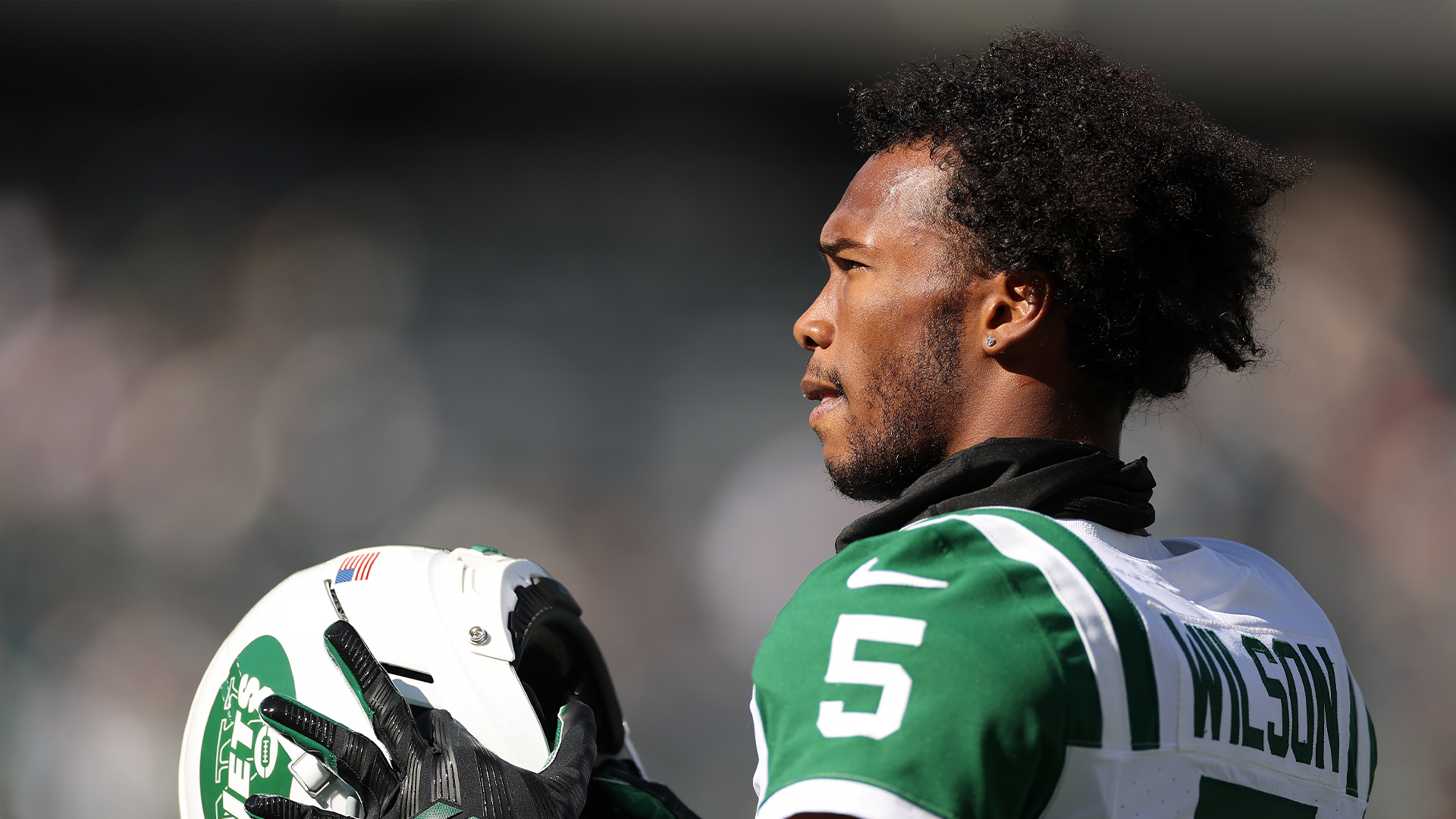
Ultimately, this Sunday’s game against the Chiefs is about more than just another box score—it’s a referendum on the Jets’ mental fortitude and their ability to weather the relentless storm of an NFL season. For Garrett Wilson, the protocol is a forced respite, a frustrating pause in a career he desperately wants to elevate to superstardom. He will watch from the sidelines, helmet on his lap, feeling every hit vicariously as his teammates fight for a victory he couldn’t help them achieve. But the silent hope in the facility is that this adversity will galvanize the team. Football is the ultimate team sport, and there is a raw, human poetry in watching a guy like Adonai Mitchell step up to honor the man who taught him the playbook, or seeing Breece Hall swallow his pride to share the backfield with a rising star. The Jets are wounded, but they are not broken. As they march into the lion’s den, they carry with them not just a game plan, but a heavy, unspoken desire to prove that their identity is bigger than one receiver, one runner, or one play. In the brutal theater of the NFL, this is their chance to show that the heart of the franchise beats strongest when it’s backed against the ropes.