



Paragraph 1: The Dark Symphony of the Desert Heist
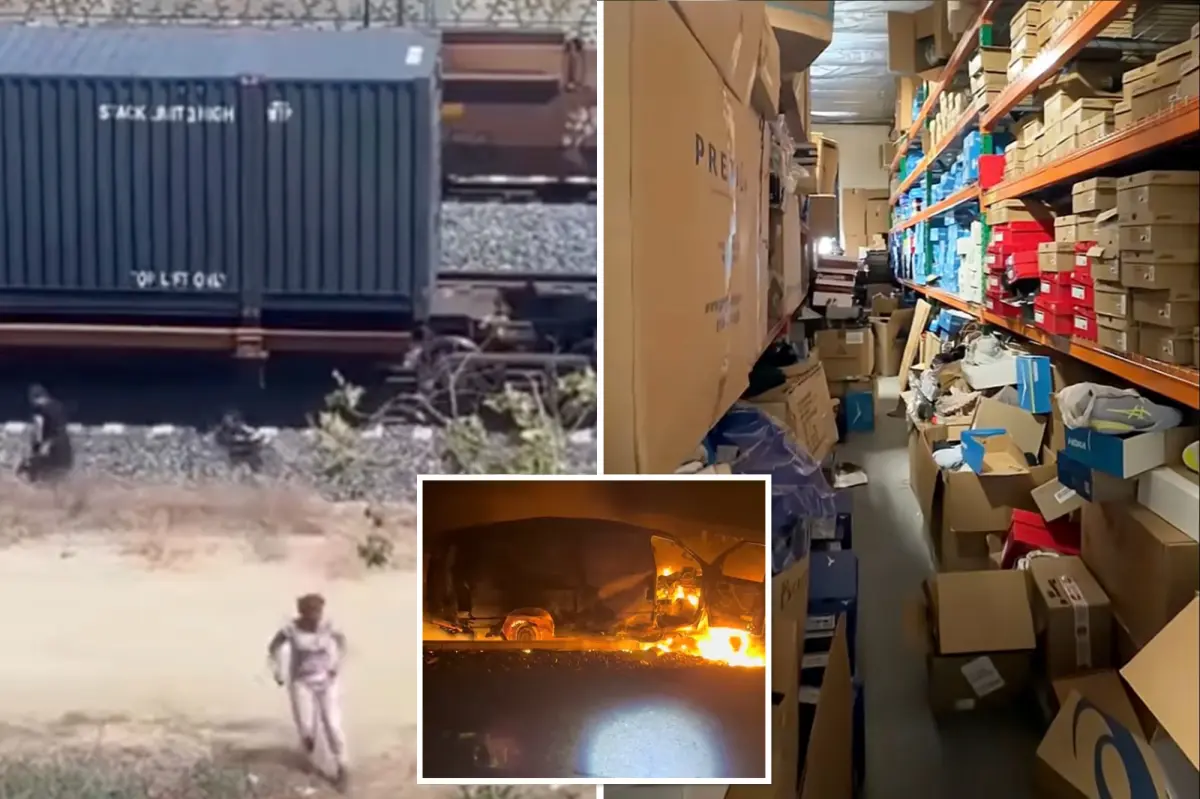
In the dead of night, far from the glittering lights of Los Angeles, a faint screech of metal pierces the silence of the Mojave Desert. A freight train, brimming with millions of dollars in consumer goods fresh off the cargo ships at the Port of Los Angeles, suddenly lurches to a violent, unexpected halt. The emergency brake system has been triggered—not by a mechanical failure, but by the deliberate, calculated act of a crew of thieves who have been riding the train like modern-day outlaws. Within minutes, masked figures descend upon the stationary steel cars, wielding electric handsaws to slice through the corrugated metal of shipping containers. Dozens of accomplices arrive in a convoy of vans, SUVs, and box trucks, their headlights cutting through the dusty darkness as they swarm the derailed cargo. This is not a scene from a Hollywood blockbuster; it is the grim, everyday reality of Southern California’s vast rail network, which has become the stage for a booming criminal enterprise. According to investigators, more than 65,000 train heists occur across the United States every single year, and a staggering 25% to 40% of those thefts take place right here in the Golden State. The plunder—ranging from designer sneakers to power tools, from high-end electronics to seasonal clothing—amounts to hundreds of millions of dollars in losses annually. Yet, the most chilling part of this epidemic is that the number of reported incidents barely scratches the surface. Because these crimes occur on private railways, many go unreported entirely, leading investigators to fear that the true scale of the problem is apocalyptic. The trend is not just growing; it is accelering at a breakneck pace, powered by cartel-run crime rings that have turned train robbery into a sophisticated, industrial-scale operation.
Paragraph 2: The Insider’s Betrayal and the “Shopping” Runs
To truly understand how these brazen heists are orchestrated, one must look not at the lonely train tracks, but at the gleaming, sterile offices of the Port of Los Angeles. For the past 25 years, this port has been the busiest container hub in the Western Hemisphere, with roughly 2.65 million twenty-foot containers leaving its docks via railway every year. Within this massive logistical behemoth, corruption breeds quietly. Investigators have discovered that insiders working at the port have access to sensitive computer files that detail the contents and value of incoming train loads. These corrupt employees feed tips to crime bosses, who then dispatch their “cavalry” to remote, vulnerable points along the tracks. Detective Carlos Monteroso, a supervisor with the LAPD’s Cargo Theft Task Force, describes the process with a chilling nonchalance. “We call it shopping,” he says. “The crews break into individual containers until they find what they’re looking for that’s high value. Then they’ll do their thing.” The detectives have observed a disturbing level of organization among these crews, who have mapped out the railway lines with military precision. They identify locations where the trains slow down or where desolate stretches allow for a quick escape. Once the train is boarded, the crew rides it out into the remote desert, cutting the brake hose to force an emergency stop. This gives them a window of precious minutes, sometimes even hours, to work before law enforcement can possibly arrive on the scene. It is a logistical nightmare for authorities, who must balance the vast geography of the rail network against the lightning speed of these surgical strikes. The insiders are the linchpin of the operation, and their willingness to betray their employers for a cut of the loot has created a neural network of crime that stretches from the docks to the desert.
Paragraph 3: The Swarm, The Saw, and The Haul
The moment the train screeches to a halt in the desolate high desert, the scene transforms into a frantic, almost carnivalesque frenzy. The detective describes the orchestrated chaos: “You’re seeing 20 guys, offloading several hundreds or thousands of boxes. You know, just taking as much of the property as they can.” The air is filled with the high-pitched whine of electric handsaws cutting through the steel walls of the containers. As the metal panels fall away, a treasure trove of consumer goods is exposed. Nike shoes, Victoria’s Secret pajamas, Yeti coolers, DeWalt tools, and the latest e-bikes are tossed carelessly into the backs of waiting trucks. The thieves are not picky, but they are selective. They look for high-value items that can be easily liquidated online, and they know exactly which brands command the highest prices in the stolen goods market. What makes these heists even more audacious is the sheer brazenness with which they are executed. The thieves do not skulk in the shadows; they film their exploits on smartphones, posting videos of their swag-filled trailers and triumphant hauls on social media platforms. These viral videos serve as both a marketing tool for their illicit goods and a taunt to law enforcement. The detectives, however, are getting smarter. They track these videos, using them as evidence to build cases against the mid-level workers who get their hands dirty. But for every video that surfaces, hundreds more go unwatched. The volume of goods stolen is so immense that it threatens to disrupt supply chains, particularly as the holiday season approaches. With Christmas coming, and new products making their way to stores for eager shoppers, Detective Monteroso warns that train thefts are set to explode, potentially creating shortages of sought-after holiday presents and driving up prices for legitimate consumers.
Paragraph 4: The Middlemen, The Fences, and The Undercover Bust
Once the stolen goods leave the rail yard, they enter a shadowy underground economy that operates on the mainstream internet. The merchandise is fenced to a network of resellers who flip it to unwitting customers on platforms like eBay, OfferUp, and Facebook Marketplace. These platforms have unwittingly become the primary clearinghouses for stolen property, offering anonymity and reach to a vast network of buyers. “There’s a whole network of buyers,” Monteroso explains. “This guy buys electronics, this guy buys shoes. This guy buys tools. This guy buys e-bikes. A lot of money can be made.” The detective’s team recently cracked a million-dollar case that exemplifies this intricate resale network. They discovered an unreleased collaboration shoe between Brooks and Disney that had been stolen off a train. The seller was advertising these highly sought-after sneakers on eBay before they had even officially hit the public market. Undercover investigators purchased a pair of the shoes, tracing the transaction back to a cavernous warehouse in Chatsworth. When they raided the facility, they found 35 pallets of Hoka, New Balance, Adidas, ON, and Salomon shoes, alongside a substantial haul of JanSport backpacks. The warehouse owner, a 51-year-old Simi Valley man named Heros Tasci, used a business called DesignerDeals4Less to launder the stolen goods into the legitimate market. Tasci was booked at Van Nuys Jail for receiving stolen property. Yet, as significant as this bust was, law enforcement acknowledges that individuals like Tasci are merely mid-level pawns in a vast, layered criminal industry. They are the faces getting caught, the desperate or greedy entrepreneurs who risk prison time to move tens of thousands of dollars in stolen clothing. Behind them lurks a far more dangerous and elusive power structure.
Paragraph 5: The Untouchable Kingpins and Cartel Connections
The true architects of these high-stakes heists, according to investigators, are nearly untouchable. They operate remotely, often from overseas, quarterbacking the ground crews with ruthless efficiency. These kingpins are connected to some of the most sophisticated criminal organizations on the planet: the Russian mafia, Turkish organized crime syndicates, and the notorious Mexican cartels. A recent bust in San Bernardino County highlights the cartel connection. Deputies arrested nine train bandits linked to the Sinaloa Cartel, seizing $333,000 in stolen loot that included JBL speakers, Logitech computer hardware, Victoria’s Secret clothing, Nike and New Balance shoes, and Husky tools. The raid also uncovered four semiautomatic handguns, a surveillance drone, a large amount of cash, and tools used to breach cargo containers, along with suspected fentanyl intended for sale. The nine suspects were all Mexican nationals from the crime-ridden state of Sinaloa. However, capturing these foot soldiers does little to dismantle the empire. Keith Lewis, a cargo theft expert with 45 years of experience and vice president of operations at Verisk CargoNet, explains the insurmountable wall of silence that protects the bosses. “The guys we catch, nobody speaks English, and if you do have somebody that does speak English, they want a lawyer and they have no idea who hired them,” he says. The communication is layered with impenetrable complexity: burner phones that connect to other burner phones, and the answering voice on the line leads to a dead end. Meanwhile, the true shot caller sits safely in a luxurious villa, perhaps in Russia or Mexico, sipping a margarita or a glass of vodka, directing the mayhem from a thousand miles away. They never touch the merchandise, never step onto the tracks, and harboring zero risk of capture.
Paragraph 6: Futile Defenses and a Broken Justice System
The railroad companies are not standing idly by in this war. They deploy aggressive countermeasures—drones, high-tech fences, and a network of cameras—to secure their most vulnerable lines. However, with thousands of miles of track snaking through remote, inhospitable terrain, securing every single foot is a Sisyphean task. Lewis acknowledges that the railways are proactive, even maintaining their own private police forces rather than relying on local 911 services. But there is a dark side to this privatization of security: a reluctance to share information. Because the thefts are a public relations nightmare and a financial black eye for the companies, many incidents are kept quiet, allowing the true scope of the problem to be vastly underreported. One top cargo theft investigator estimates that the actual value of merchandise stolen from trains nationally may exceed tens of billions of dollars annually, dwarfing official estimates. The core of the problem, however, lies within California’s criminal justice system. With light punishments for property theft, law enforcement finds it incredibly difficult to flip informants and build cases against the higher-ups. The absence of meaningful prosecution creates an atmosphere of impunity. “There is no threat of prosecution for any of these people,” lamented one top investigator. “So that’s the core of the problem. The whole thing is very poorly defined.” Until the penalties match the severity of the crime, and until the international networks of the masterminds can be penetrated, the trains of Southern California will continue to roll through the darkness, vulnerable, laden with the dreams of holiday shoppers, and just one cut brake hose away from falling into the hands of the seemingly invincible shadows that haunt the tracks.