


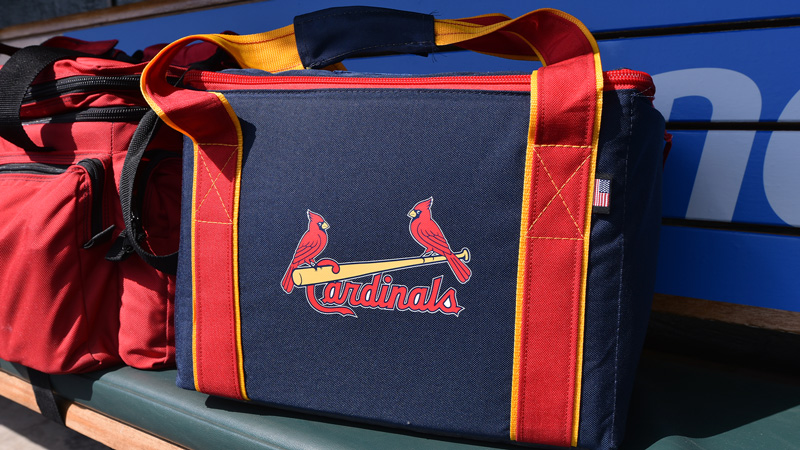
Professional sports organizations are often romanticized as places where the games decide everything, but in reality, most championships are built in windowless offices and on backfields where nobody is watching. On Friday, the St. Louis Cardinals made a quiet move that tells a much louder story. Rob Cerfolio, a 34-year-old from Indian Springs, Alabama, was promoted to general manager. The announcement, which came through the team and was distributed by The Associated Press, ended weeks of speculation about how the front office would change after the departure of assistant general manager Randy Flores. It also confirmed what many around baseball had suspected for a while: the Cardinals are willing to trust a new generation of thinkers, not just familiar faces. Cerfolio spent the past three seasons as St. Louis’s assistant general manager overseeing player development and performance, a title that sounds ordinary but covers an enormous amount of invisible work. He has been involved in everything from the way young pitchers are programmed to the way coaches communicate with hitters. When president of baseball operations Chaim Bloom introduced the move, he offered more than a routine congratulations. He used Cerfolio’s nickname, praised his work from top to bottom, and emphasized relationships. It was, by baseball front-office standards, almost warm. This is a story about a man who has never played in the majors but has spent his entire adult life preparing to help people who do. He has learned the game not from a clubhouse chair but from an analytical perch, blending Yale’s discipline with a scout’s instincts. And now, in the middle of a winter that has already seen significant change in St. Louis, he has been handed one of the most prominent baseball operations jobs in the National League.
The promotion did not happen in a vacuum, and it fits neatly into the larger restructuring that Bloom has been supervising since he arrived. Randy Flores left the organization Monday after eleven years, spending the last eight of those as the assistant general manager in charge of amateur and professional acquisitions. That meant Flores was the man responsible for identifying talent across both the draft and the major league roster, and his departure created a void that could have easily been filled by an outside hire with a long track record. Instead, Bloom chose Cerfolio, a person who has never run a draft room but has spent years watching players grow from teenagers into big leaguers. Bloom’s statement about the promotion was deliberately personal. “Since joining the Cardinals two years ago,” he said, “Cerf has spearheaded tremendous progress in our player development efforts from top to bottom, and in the advancement of our performance group and its integration within our entire organization.” Then he added something that should not be ignored: “He is relentless in his desire to move us forward, and is invested in relationships with both new hires and longtime staff alike.” In those lines, you can see why Cerfolio got the job. He is not being asked to be a miracle worker. He is being asked to do for the entire franchise what he has already done for the player development system: make it more modern, more integrated, more human. The old model of a general manager as a cap-wearing autocrat who watches every pitch from a luxury box has faded. The new model requires someone who can move between data reports and personal conversations without losing sight of either.
Cerfolio’s personal story is as interesting as the details of the promotion itself. He grew up in Indian Springs, Alabama, a small community outside Birmingham, in a state where baseball often competes with football for attention and where the summers are long enough to make a kid fall in love with a bat and a ball. He did not take a traditional path into the sport. He attended Yale, where he learned to think critically about complex problems, and after graduation he made his way into baseball operations with the Cleveland Guardians, who were then known as the Indians. For ten years, he worked his way up through a system that is respected precisely because it does things differently. He spent time in roles that did not come with fame or glory, and in the process he learned how important it is to treat players as people rather than as commodities. Eventually, he became Cleveland’s director of player development, a role in which he oversaw the growth of the organization’s entire farm system. The Guardians have long been admired for their ability to develop pitching and to find understated talent, and Cerfolio was a part of that culture. When Bloom left baseball operations at one level and landed in St. Louis, he needed somebody who understood both the science and the soul of development. He found that person in Cerfolio. It is not hard to imagine the two of them having long conversations about how to build a sustainable organization, because Blume’s reputation is that of a forward-thinking executive, and Cerfolio’s résumé backs up that same philosophy.
Now, however, the real work begins, and the context could not be more urgent. The Cardinals are coming off a 77-85 season in which they finished fourth in the National League Central and missed the playoffs for a fourth consecutive year. For many franchises, four years without October baseball is simply a bad stretch. For the Cardinals, it is almost an identity crisis. This is a team that has won eleven World Series championships, and its fans grew up expecting baseball to be played deep into autumn. The recent years have tested that patience. The roster has had aging stars, inconsistent pitching, and a farm system that did not produce enough impact players. That is where Cerfolio’s influence has already been felt. He has been credited with playing a role in the organization’s “burgeoning youth movement,” as the Associated Press put it, and there are young players who reflect the progress. Outfielder Jordan Walker, with his raw power and aggressive swing, has become the kind of player who can one day carry a lineup. Second baseman JJ Wetherholt, a recent top pick, carries himself with a maturity that suggests the development system is doing something right. Neither player alone can fix all the problems, but together they represent the hope that the Cardinals are finally building from within, and that is exactly what Cerfolio was brought in to help accomplish. His promotion sends a message to every minor league player in the organization: if you work hard, the people in charge will notice, and the people in charge are now the ones who built the system you are coming through.
The logistics of the new arrangement also deserve attention, because in the strange world of front offices, titles can mean many different things. Cerfolio will report directly to Chaim Bloom, which means Bloom remains the ultimate decision maker on major roster moves, trades, and perhaps the draft. But the general manager role still carries substantial weight. Cerfolio will now be the leader who coordinates the flow of information between development, performance, analytics, and the major league coaching staff. He will be the person who ensures that the scouting department and the player development department are speaking the same language. And with Flores gone, Cerfolio may have a louder voice in acquisitions as well, though the team has not spelled out a new division of responsibilities. The fact that Cerfolio chose to stay in St. Louis is also significant. He was reportedly a candidate for several front-office openings around the league this offseason, but he stayed, which suggests that he believes in what Bloom is building and that he values the relationships he has already formed. That kind of loyalty is rare in baseball. Front offices are often full of people who look at every job as a stepping stone. Cerfolio, by staying, has signaled that he wants to see this project through. It is not an easy job. The Cardinals have high standards, and the fan base is not known for its patience. But Cerfolio appears to be ready for the scrutiny that comes with the title, and he has already shown that he can handle the behind-the-scenes pressures that most fans never see.
In the end, the most human part of this story is that Rob Cerfolio is still a relative unknown to many fans, and yet he is now one of the most important people in the franchise. He did not get here through name recognition or a famous family. He got here through persistence, curiosity, and an ability to connect with the people around him. Baseball is often described as a game of failure, and that is true for players as much as executives. The best executives understand that every decision is a risk, every prospect is a gamble, and every relationship can be the difference between winning and losing. Cerfolio’s background has prepared him for that reality. He has spent years developing other people, and now he must develop an entire organization. His first months on the job will not be measured by the moves he makes at the trade deadline, but by the tone he sets in meetings, the trust he builds in the clubhouse, and the direction he gives the farm system. The Cardinals have made a fascinating bet on him. They have chosen a quiet, analytical, relationship-driven executive over the kind of famous name that might have generated more headlines. In doing so, they have reminded us that the best baseball stories are not always about the players on the field. Sometimes they are about the people behind them, working long hours, waiting for their chance, and then finally getting it. For Rob Cerfolio, that moment has arrived. The season ahead will be difficult, and the expectations remain enormous in St. Louis. But the Cardinals now have a general manager who knows that the road back to October runs through development, through small victories in minor league ballparks, and through the unglamorous work that often goes unnoticed. That, in many ways, is the most hopeful sign of all.