

The Night That Ended in Silence
Halloween in Albany, Georgia, usually brings a cacophony of laughter, rustling costumes, and the sweet scent of candy. But on November 1st, the streets of the 800 block of Cameo Lane were eerily quiet, punctuated only by the flashing lights of police cruisers. The night before, 15-year-old Austin Payne had gone out to celebrate the holiday with friends, weaving through the suburban neighborhoods like any teenager eager for a night of harmless mischief. But when the clock ticked past his curfew and the morning sun began to creep over the horizon, Austin didn’t come home. His mother, consumed by an anxiety that only a parent can know, refused to sit idle waiting for a phone call. Instead, she pulled out her cellphone and used a location-tracking app to find her son. The blue dot on the map led her to a decaying, abandoned house—a crumbling shell of a home that had long been forgotten by its owners and reclaimed by neglect. What she found inside shattered her world into a million irreparable pieces. Austin was lying there, unresponsive, the victim of a gunshot wound. The festive glow of Halloween had been replaced by the cold, sterile reality of death. The abandoned residence, meant to be a place of shelter, had become a tomb. Police arrived shortly after to find a mother weeping over the body of her child, a stark juxtaposition against the lingering holiday decorations that dotted the neighborhood.
The Arrests and a Community’s Shock
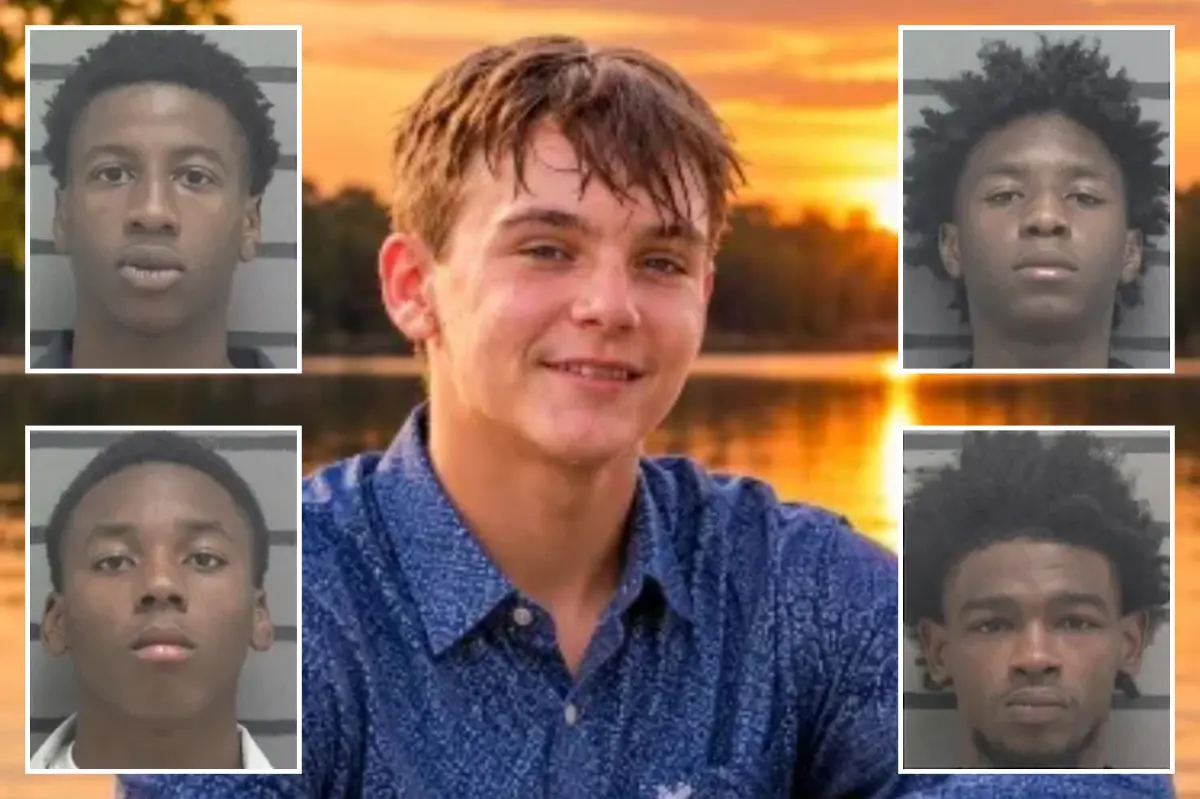
The Albany Police Department did not waste time. Within days, the investigation had yielded a list of suspects, and the arrests sent a seismic shockwave through the community. Officers took into custody Detravion Parke, a 22-year-old man, along with two 15-year-old boys and a 16-year-old. All four were charged with murder and transported to the Dougherty County Jail. The ages are the most staggering detail—a cluster of youthful faces, some barely old enough to have a driver’s permit, now facing the most serious charge in the legal system. For the two youngest suspects, they will likely be tried as juveniles or perhaps transferred to adult court depending on the severity assessed by the district attorney. Yet, regardless of the legal pathway, the weight of a murder charge is a crushing boulder that will define their entire existence moving forward. The community is left to grapple with a chilling statistic: half of the accused are the same age as the victim. This was not a crime committed by hardened older men in a vacuum; it was a violent outburst among the demographic that should be worried about final exams, part-time jobs, and first loves. Instead, they are staring at the cold metal bars of a holding cell, their futures erased by the decisions made in a few terrifying seconds on a street corner.
The Desperate Call and the Reconstruction of Horror
Albany Police Chief Michael Persley provided a gut-wrenching detail during a press conference on November 2nd that humanized the data. “He did make a call to his mother that he had been shot,” Persley stated. Those words paint a horrifying picture. Austin Payne, alone, bleeding, and facing the darkness closing in, used his final ounce of strength to dial his mother. Imagine the sound of his voice—strained, panicked, weakened by the rapid loss of blood—relaying the unthinkable news. It was a last-ditch plea for help, a final act of a child reaching out to the one person who always made everything better. The mother, frozen miles away, could only listen to the terror in his voice, unable to physically reach him in time. Investigators scoured surveillance footage from nearby homes and businesses, cross-referenced cellphone records that traced the movements of both the victim and the accused, and interviewed numerous witnesses. The narrative they pieced together is a terrifying sequence of events. Witnesses revealed that Payne was walking with a group of friends when they were approached by armed individuals. The assailants, allegedly seeking a quick score, demanded the group’s belongings in a classic robbery setup. But this was no simple mugging. As the demands were made, a weapon was brandished, and shots were fired. Whether the shooting happened in a moment of panic, rage, or cold intention, the result was the same: a 15-year-old boy collapsed to the ground, his life bleeding out onto the dirty floor of that abandoned structure.
The Motive and the Curse of Social Media
As detectives delved deeper, a motive began to emerge from the digital breadcrumbs left behind. According to reports from WALB, investigators believe that Payne was not just a random victim of a rogue robbery. He may have been specifically targeted because of something he had posted online. In the days leading up to the tragedy, Payne had reportedly displayed a handgun on his social media accounts. In today’s hyper-connected youth culture, flaunting a firearm over the internet is akin to painting a target on one’s back. It invites both envy and predation. Other teenagers, scrolling through their feeds, might see the weapon as a status symbol to be claimed or a threat to be neutralized. The armed individuals who approached the group might have already known about Payne’s post, making him the primary focus of their attempted heist. They didn’t just want any purse or wallet; they wanted his gun. It is a tragic, ironic twist that a teenager’s attempt to project toughness and street credibility into a digital void directly contributed to his physical death. The smartphone in his pocket, which allowed his mother to find his body, is the same device that signaled to his killers that he was carrying something worth killing for. This intersection of social media bravado and real-world violence is a recurring nightmare for parents in communities plagued by gang activity and easy access to illegal firearms.
A Family’s Unthinkable Grief
In the aftermath, the Payne family is left to wade through a mire of grief, funeral arrangements, and impossible questions. A relative, speaking on behalf of the family, launched a GoFundMe campaign to cover the cost of burial. The plea for donations is heartbreakingly pragmatic, a distraction from the emotional devastation. The relative wrote, “Our family is trying to process this heartbreaking loss.” But trying to process is an understatement. They are grappling with the future that was stolen. The fundraiser notes that Austin leaves behind his mother and his 17-year-old sister. The sister, a year older, will have to navigate the rest of her life as an only child, missing a sibling who was her companion in both shared secrets and sibling squabbles. And looming on the horizon is November 12th—a date that should have been marked with candles, cake, and the raucous energy of a Sweet 16 (or in this case, a 16th birthday). Instead, there will be a grave marker. The family is left to replay the final phone call in their minds, wondering if there was any way to decode his location faster, any way to save him. The Albany Police Department is still urging anyone with information to contact them at 229-431-2100, hoping to build an airtight case against the four accused, though no conviction will ever heal the gaping hole left in this family’s heart.
A Reflection on a Broken World
This tragic incident in Albany is far more than a local crime story; it is a mirror held up to a society struggling with an epidemic of youth violence. Four individuals are now charged with murder, and one young man is dead. The common thread is a terrifyingly low threshold for lethal force. In a nation where firearms outnumber residents, disputes over sneakers, social media posts, or perceived slights routinely escalate into homicide. The abandoned house on Cameo Lane is a metaphor for the hollowing out of hope in certain communities—a physical space of decay where a child’s life was extinguished. The suspects, some mere children themselves, now face the cold reality of the justice system, their own youth traded for a future of incarceration. The mother who used her phone to track her son is a representation of every parent’s worst nightmare—the helplessness of being too far away to shield their child from the brutal edges of the world. As the Payne family begins the painful process of burying their son, the families of the accused are preparing for months of legal battles, public scrutiny, and the realization that their own children are irredeemably changed. There are no winners here. Only a ghost of a boy who called his mother for help, a community that must ask itself hard questions about parenting, gun accessibility, and social media, and the haunting echo of those gunshots that ended a life before it had truly begun.