





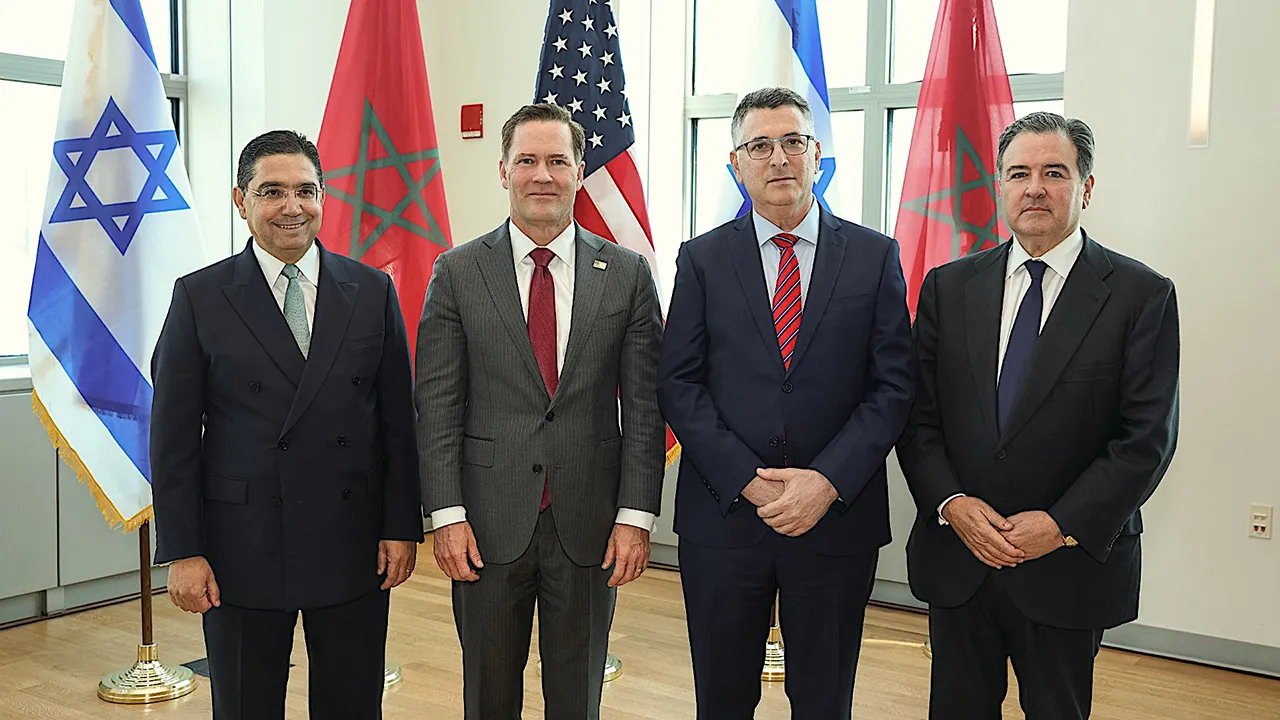
On a bright Wednesday afternoon in New York City, against the backdrop of the United Nations General Assembly, a quiet but consequential piece of diplomacy quietly unfolded. Israel and Morocco announced that they would upgrade their diplomatic representation from missions to full embassies and exchange resident ambassadors for the first time—nearly six years after Morocco first stepped into the U.S.-brokered normalization framework known as the Abraham Accords. The announcement came out of a trilateral meeting that included Morocco’s Foreign Minister Nasser Bourita, Israel’s Foreign Minister Gideon Sa’ar, and the U.S. Ambassador to the United Nations, Mike Waltz. The moment was deliberately timed: it came exactly one day after the sixth anniversary of the original Abraham Accords, signed on September 15, 2020, in a ceremony that reshaped the political architecture of the Middle East. It was a moment heavy with symbolism, but also with practical consequence, as three nations sat down in the same room to announce something that had once seemed impossible: the formalization and expansion of a relationship that had been quietly maturing for half a decade. Yet amid the handshakes and the prepared statements, a deeper story emerged—one not just about what happened, but about what it means for the shifting alignments of the Middle East and the enduring, complicated question of what Israel’s place in the region ultimately looks like.
To understand the weight of that Wednesday’s agreement, it helps to step back and remember how remarkable the Abraham Accords actually were. In September 2020, Israel signed historic agreements with the United Arab Emirates and Bahrain, marking the first time in decades that Arab nations had normalized relations with Israel without making formal progress on Palestinian statehood the prerequisite for doing so. The accords were brokered under the auspices of the Trump administration, which framed them as a historic breakthrough for peace and a dramatic reordering of Middle-East alliances. Morocco soon followed, though through a separate channel: on December 22, 2020, Morocco, Israel, and the United States signed a trilateral joint declaration in Rabat—a declaration that carried special weight because of Morocco’s unique position as a nation with a deep Jewish heritage, a historically moderate monarchy, and a long-standing alliance with Washington. The original accords were not just about handshakes, though. They called for diplomatic normalization, direct flights, and expanded economic cooperation, as well as a more ambitious regional vision. And one of the things that made Morocco’s entry so potent was its pledge, in exchange for normalization, of U.S. recognition of Moroccan sovereignty over the disputed territory of Western Sahara—a controversial but consequential diplomatic trade that the United States formalized under former President Donald Trump.
Wednesday’s agreement in New York was, in many ways, the next logical step in that journey. Israel and Morocco committed themselves to establishing fully staffed embassies and exchanging resident ambassadors, moving beyond the temporary liaison offices and semi-official missions that have characterized their relationship thus far. They also agreed to reinstate direct flights operated by both Israeli and Moroccan airlines before the end of 2026—a practical step that would make travel and commerce vastly easier for citizens of both countries. Business ties will get firmer footing too, as the two nations said they would finalize agreements on investment protection and the avoidance of double taxation. The joint statement, released on September 16, outlined a sweeping list of areas for expanded cooperation: trade, finance, technology, tourism, water management, agriculture, food security, energy, and telecommunications, alongside regional security. But perhaps most significantly, the statement also reaffirmed American and Israeli recognition of Moroccan sovereignty over Western Sahara, along with explicit support for Morocco’s autonomy proposal as the foundation for ending the long-running territorial dispute with the Algeria-backed Polisario Front. In essence, the agreement consolidated years of diplomatic inching into a firm, institutional reality—a strong signal that the relationship between Israel and Morocco has matured well beyond symbolic gestures.
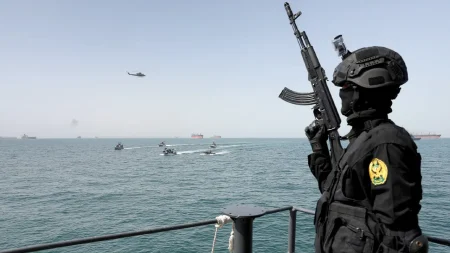
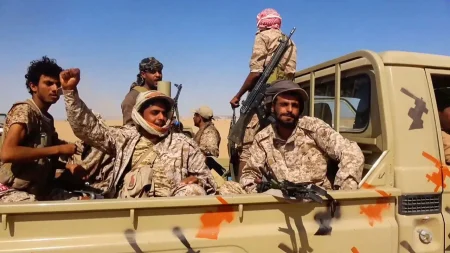
But diplomacy in the Middle East is never a purely bilateral affair, and Wednesday’s meeting quickly expanded into a discussion about the region’s most pressing security challenges—and the question of which nation might be next to join the Abraham Accords. With the Houthis, an Iran-backed rebel movement that controls large parts of Yemen, now threatening one of the world’s most vital maritime chokepoints, the conversation shifted to the strategic consequences of regional instability. The Houthis have made significant gains along Yemen’s Red Sea coast near the Bab el-Mandeb Strait, a narrow 18-mile-wide passage that links the Red Sea to the Gulf of Aden and carries approximately 7% of global oil output. Since late 2023, Houthi attacks on commercial shipping in that corridor have forced major shipping companies to reroute their vessels around the African continent, driving up costs, delaying deliveries, and exerting pressure on global markets. Ambassador Waltz was blunt when asked whether Saudi Arabia could be next to join the Abraham Accords, given reports of growing Israeli-Saudi security cooperation. He focused on the Houthi threat directly, calling the group a “scourge of terrorism” and noting that the rebels continue to act as a proxy for Iran. “You cannot attempt to punish the rest of the world to achieve a political end,” Waltz said. “The oceans, trade, and international waterways must remain open.” His comments underscored how the security arithmetic of the region has shifted—and how the threat posed by Iran’s network of allies has pushed even reluctant actors closer to Israel.
For Israeli Foreign Minister Gideon Sa’ar, the message was just as direct. Speaking with Fox News Digital, Sa’ar pointed to the attacks at the Bab el-Mandeb and Iran’s other proxy operations around the Strait of Hormuz as evidence that all nations with a stake in international commerce must be ready to cooperate. “What’s happening in Bab el-Mandeb, like what’s happened in the Strait of Hormuz, demonstrates the significance of all nations that want to respect freedom of navigation, world trade, and cooperate against this kind of modern piracy,” Sa’ar said. He declined to discuss the details of any operational cooperation with Saudi Arabia but made no secret of Israel’s ultimate ambition: to bring the normalization framework to its next and most consequential potential member. “It is clear that we would like this camp to be widened,” Sa’ar said—a phrase that captures the sense of a changing regional order, where shared threats and shared interests are slowly dissolving the old boundaries of hostility. The Houthis’ advance has exposed particular vulnerabilities for Saudi Arabia, which has watched a militia friendly to its regional rival Iran gain ground along its southern flank. And while the pathway to a full Saudi-Israeli accord remains complex—entangled in issues like the Saudi desire for a U.S. defense treaty, the pursuit of a civilian nuclear program, and the grinding war in Gaza—the trajectory has continued to point in a more pragmatic direction.
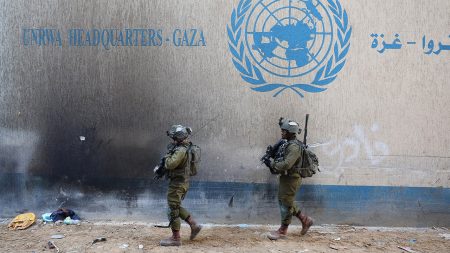
Beyond all the geopolitical calculation, however, the most striking and human dimension of the agreement may have come from Moroccan Foreign Minister Nasser Bourita, who offered a deeply philosophical justification for the entire enterprise of normalization. In a moment soaked with meaning, Bourita argued that maintaining relations with Israel gives Arab governments—and by extension, Palestinians—concrete tools for alleviating suffering, rather than only high-minded rhetoric from the safety of their own capitals. During the war in Gaza, Morocco used its channels with Israel to secure a land route that carried 40 tons of humanitarian aid to northern Gaza in March 2024—a small but tangible lifeline made possible precisely because of the relationships the Abraham Accords created. “Is it better to continue in the rhetorics, political positions, while sitting in our cities, our capitals, or take initiatives?” Bourita asked. “We don’t agree with Israel 100%. Each one may have its policy.” But, he argued, Morocco’s choice to use the “Abraham Accords spirit” to “promote peace” and “promote stability in the region” is a matter of courage. “I think it needs courage to contribute to peace,” Bourita added, “and it’s easier to keep on making statements and engaging in rhetorics.” Ambassador Waltz echoed that sentiment, praising Morocco’s humanitarian work and its role in postwar Gaza efforts, describing it as far more than merely showing up for photo opportunities. “It is far more than just signing agreements or coming to ceremonies,” Waltz said, before adding a warm, human flourish: “The Moroccan government, the Moroccan people are leaning in, in very meaningful ways for a more peaceful future.” In the end, that may be the truest expression of what Wednesday’s meeting in New York was really about: not just the signing of documents or the exchange of ambassadors, but the slow, painstaking work of turning political alignments into lasting relationships, and the recognition that diplomacy, at its most effective, is less about grand gestures than about showing up again and again—and finding, amid centuries of division and distrust, enough Common ground to keep moving forward, one careful step at a time.