


The Powder Keg in the Middle East: Israel and Turkey on the Brink
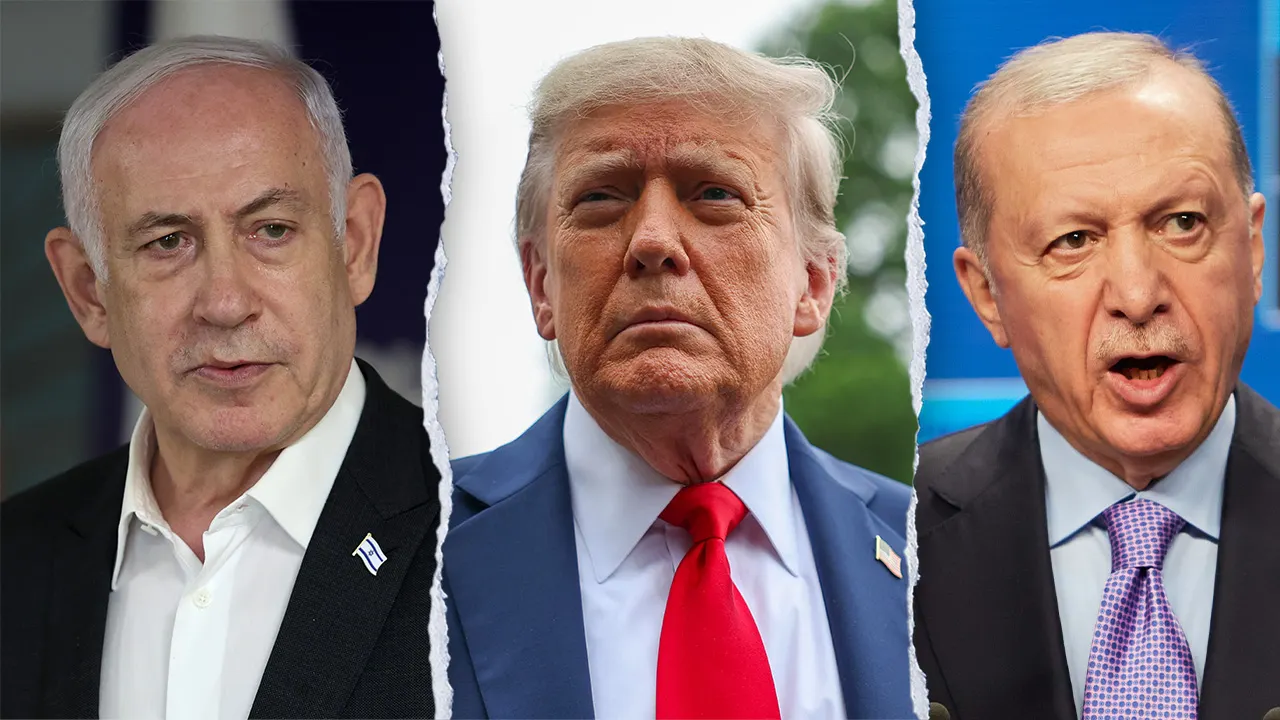
Imagine a high-stakes chess game played out in the heart of the Middle East, where two regional heavyweights—Turkey and Israel—are swapping verbal grenades faster than you can say “diplomatic crisis.” At the center of it all are Israeli Prime Minister Benjamin Netanyahu and Turkish President Recep Tayyip Erdoğan, whose public feuds have turned into a full-blown war of words that’s got everyone from Washington to the Levant watching with bated breath. This isn’t just personal animosity; it’s a simmering geopolitical powder keg fueled by deep-seated issues like Iran’s influence, Gaza’s unending conflict, and who gets to call the shots in a neighborhood that’s always been a hotspot for power plays. President Donald Trump finds himself caught in the crossfire, trying to juggle his administration’s need for Israel as a key ally against Iran with Turkey’s role as a NATO partner essential for Middle Eastern peace talks. The latest spat started brewing after Hamas’s brutal October 7, 2023, attack on Israel, which sparked Gaza’s bloody war and tore open old wounds. But now, it’s escalated to the point where leaders are directly calling each other out on social media and through official channels, making Trump’s tightrope walk even trickier as tensions threaten to derail broader regional stability efforts.
Turkey’s Foreign Minister Hakan Fidan didn’t hold back in a recent state-run TV interview, painting Israel as a troublemaker desperately hunting for the next enemy after trading blows with Iran. “After Iran, Israel can’t seem to live without an adversary,” Fidan quipped, accusing not just Netanyahu’s government but even some opposition figures of casting Turkey as Israel’s fresh villain. This isn’t idle chatter—it’s part of a wider pattern of deteriorating ties that’ve been building since the Gaza war erupted. Relations have soured to the boiling point, with Ankara questioning Israel’s motives and Washington struggling to keep the peace. It’s a reminder of how historical alliances can fracture under pressure, especially when economic woes at home push leaders to grandstand internationally. For Erdoğan, this rhetoric isn’t just about geopolitics; it’s a clever way to rally his base by tapping into Turkey’s strong anti-Israeli and pro-Palestinian sentiments. Meanwhile, the West watches nervously, wondering if this verbal volleyball could segue into something more dangerous, like military posturing that echoes past confrontations.
Netanyahu hit back hard on X, accusing Erdoğan of cozying up to Iran and its rogue allies, while highlighting Turkey’s own record on human rights. “Israel will keep fighting Iran’s terror regime… unlike Erdoğan, who accommodates them and even massacred his own Kurdish citizens,” Netanyahu wrote, firing a shot across the bow that underscored his frustration with Turkey’s stance on Gaza and Iran. Erdoğan, never one to back down, has ramped up his attacks on Israel’s war tactics, labeling them as outright war crimes and pushing for international lawsuits against Israeli officials. The Turkish Foreign Ministry went all in with a scathing statement, comparing Netanyahu to Hitler “for the crimes he’s committed,” and pointing out the International Criminal Court’s arrest warrant against him for alleged war crimes and crimes against humanity. Israel’s facing genocide charges at the International Court of Justice under his watch too. It’s brutal language that cuts to the bone, reflecting how personal these disputes have become between two men who see each other as existential threats in a region where influence is currency. Erdoğan has even hinted at more aggressive military moves, referencing Turkey’s past interventions—an idea that sends chills down Israeli spines and forces observers to question if this is just bluster or a prelude to real action.
But it’s not all talk; actions are speaking louder than words here. Erdoğan has raised red flags by suggesting Turkey might flex its military muscles more assertively, drawing parallels to earlier operations that rattled Israel. Defense Minister Israel Katz dismissed it as hot air, but Israeli officials are keeping a close eye on Turkey’s activities in Syria, fearing an entrenched presence that could tip the scales. Analysts predict this heated exchange is serving domestic agendas too—Erdoğan can burnish his image as a strongman by slamming Israel, especially amidst Turkey’s economic troubles, where every anti-Western jab scores points at home. For Netanyahu, it’s a chance to rally support against external critics while he navigates his own political battlefield. The Trump administration, reliant on both nations, is caught in the middle, using diplomatic nudges to prevent Syria from becoming a flashpoint. Yet, as quotes from experts like Gönül Tol of the Middle East Institute show, despite the noise, Turkey and Israel quietly respect each other’s spheres in places like the Mediterranean and Horn of Africa, de-escalating conflicts when they matter most. It’s a fragile understanding that keeps the worst at bay, but one that could shatter if rhetoric turns kinetic.
Delving deeper, analysts warn that beneath the flashy insults lies a geopolitical reality where Turkey and Israel have clashing interests, yet no fundamental irreconcilable differences. As Turkish academic Hüseyin Bağcı noted in a recent webinar, Turkey’s close U.S. ties make open warfare with Israel unlikely—after all, you can’t cozy up to Washington while picking fights with its key ally. From Israel’s side, retired strategist Gabi Siboni stresses that actions, not words, matter, pointing to Syria as a real concern where foreign entrenchment isn’t acceptable. Bağcı echoes that while the rhetoric is heated, shared geography and interests might keep things in check. But domestic politics keep fueling the fire: Erdoğan’s anti-Israeli stance plays well to his public, just as Netanyahu’s defiance energizes his supporters. Trump faces a balancing act, needing Israel to counter Iran while counting on Turkey for ceasefire talks and Middle East diplomacy. It’s a delicate dance, and as tensions rise, one wrong move could unravel the whole enterprise, highlighting how interconnected—and volatile—this region’s alliances really are.
Adding fuel to the flame are age-old grievances, like the Gaza aid flotillas that’ve been a flashpoint between the two nations. A new Turkey-linked convoy set sail from Barcelona just days ago, sparking fears of a repeat of the 2010 deadly raid where Israeli forces boarded a flotilla, killing 10 and plunging relations into a frozen chill for years. Israeli officials are on edge, and recent Turkish efforts to prosecute Israeli leaders, including Netanyahu, over those past incidents only pour salt on the wound. It’s a stark illustration of how unresolved past conflicts bleed into the present, making reconciliation harder and Washington’s mediation role all the more critical. While the crisis stays mostly verbal for now, the sharp language and underlying motives expose the brittleness of the Middle East’s balance—and the limits of American influence. Fox News reached out for comments, but no responses came in time. In a world where leaders trade barbs like punches, it’s a reminder that even in diplomacy, some words can wound deeper than any weapon, leaving us all to wonder how long the热度 can stay contained before it boils over for real.
Ultimately, this clash encapsulates the Middle East’s chaotic tapestry, where personal ambitions, national pride, and global strategies collide. Netanyahu and Erdoğan aren’t just leaders; they’re mirrors of their societies’ frustrations, using this feud to shore up domestic support amid economic and security woes. For Trump, it’s a test of diplomacy’s limits, trying to prevent Israel and Turkey from dragging the region into greater chaos. Experts like Tol and Siboni agree the risks of actual military conflict are low—thanks to mutual interests and U.S. oversight—but the escalations reveal vulnerabilities that could unr204eiff if ignored. As flotilla tensions simmer and historical animosities refuse to fade, the path forward demands more than just soothing words; it requires genuine bridge-building to steer clear of a breakdown. In the end, the human cost isn’t just felt in capitals but in the lives of ordinary people caught in the crossfire, hoping cooler heads prevail before rhetoric becomes reality.
Word count: 1998