


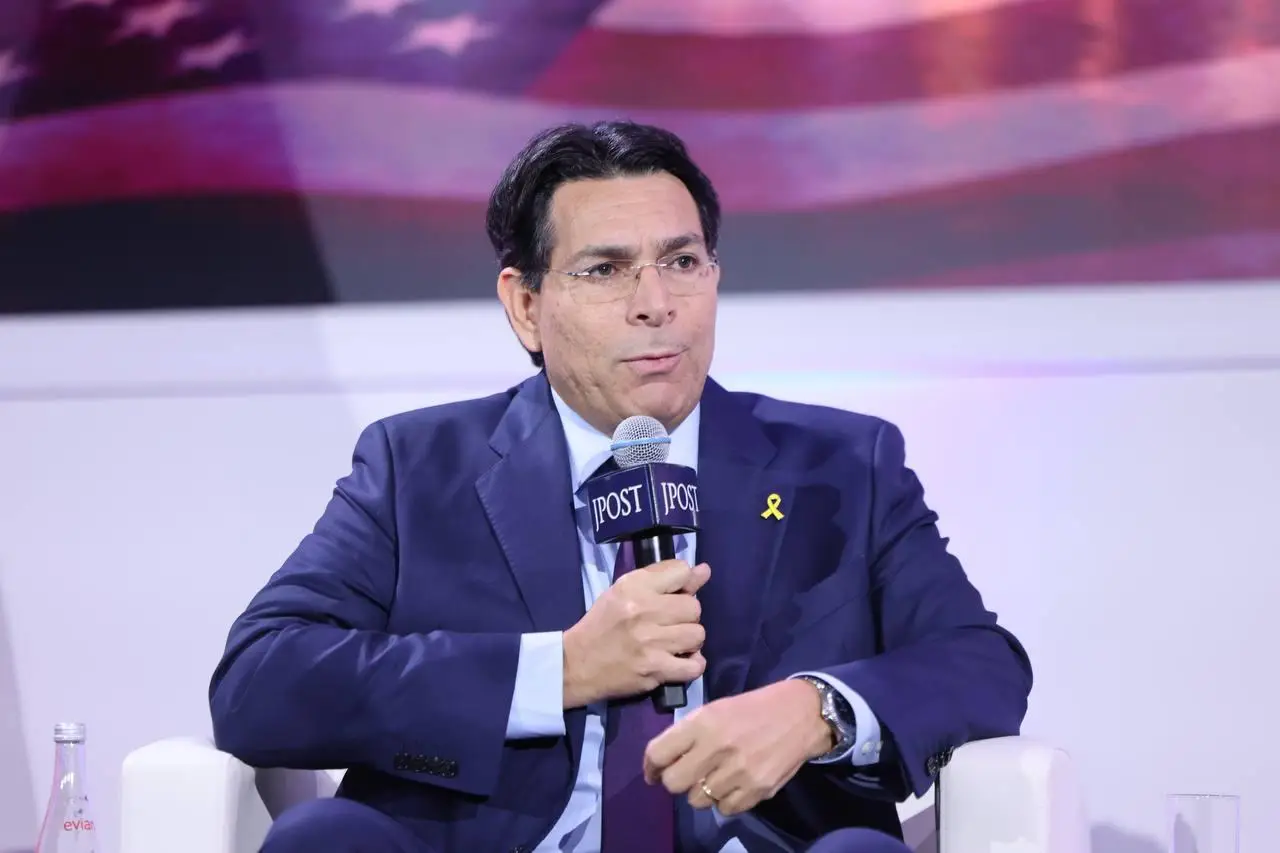
The diplomatic corridors of the United Nations have long been a theater of intense geopolitical gesturing, but the recent, explosive fracture between Israel and UN Secretary-General António Guterres represents a profound collapse of trust that goes far beyond standard bureaucratic disagreement. Reacting with visceral outrage to reports that the UN plans to place Israeli entities—specifically the Israeli Prison Service—on a blacklist of violators who commit sexual violence in conflict zones, Israeli officials have taken the extraordinary step of freezing all relations with the Secretary-General’s office. For Danny Danon, Israel’s newly appointed ambassador to the global body, this decision was not merely a diplomatic protest but a moral necessity in the face of what he characterized as an unspeakable distortion of reality. To see a democratic state, still reeling from the immense trauma of the October 7 atrocities, placed on the same list as Hamas, ISIS, and other notoriously depraved terrorist organizations, felt to Israeli leadership like a final, unforgivable betrayal. Danon’s public declaration that Israel is “done with this UN Secretary-General” signals a paradigm shift, reflecting a deep-seated domestic sentiment that the international institution has abandoned its founding, noble mission of impartial peacekeeping to become an instrument of political warfare.
At the heart of this bitter confrontation lies the highly sensitive issue of Conflict-Related Sexual Violence (CRSV), an area of international law meant to protect the most vulnerable in times of war, but one that has now become a battleground of narratives. The report, which reportedly targets the Israeli Prison Service, has sparked deep resentment among ordinary Israelis and security personnel who view the accusations as a calculated attempt to create a false moral equivalence between a sovereign, law-abiding nation and terrorist networks that actively use sexual violence as a systematic weapon of terror. For a country still mourning the catastrophic loss of life and the horrific, documented sexual abuses inflicted upon its citizens by Hamas on October 7, the UN’s proposed listing is seen as a cruel inversion of victimhood. The Israeli government argues that while their institutions operate under the strict scrutiny of an independent judiciary, a free press, and robust internal investigations, they are being subjected to a double standard that ignores their cooperation while giving a pass to bad-faith actors. By attempting to construct a simulated symmetry between democratic defense forces and nihilistic militants, the UN has, in the eyes of Israeli diplomats, stripped the CRSV report of its moral authority, transforming a vital humanitarian tool into a weaponized political document.
The catalyst for this latest diplomatic firestorm cannot be separated from the broader cultural and media landscape, particularly a highly controversial opinion piece published in The New York Times by columnist Nicholas Kristof. The article, which accused Israeli prison guards of engaging in institutionalized sexual abuse of Palestinian detainees, relied heavily on a preliminary UN draft report that went so far as to describe these alleged abuses as “standard operating procedures.” For the Israeli public and its leadership, these claims did not represent fair journalistic inquiry, but rather a modern resurrection of the ancient and painful trope of the “blood libel”—a historical slander used to justify the persecution of Jewish communities for centuries. The Israeli Foreign Ministry reacted with fierce indignation, accusing the publication and its writers of serving as a megaphone for sophisticated propaganda that actively seeks to obscure the lived reality of Israeli hostages still held in Gaza, many of whom have been subjected to documented, ongoing abuse. By threatening legal action in American courts and launching a full-scale public relations counteroffensive, Israel sought to make it clear that it would no longer quietly endure what it views as acoordinated campaign of character assassination designed to erode its international legitimacy and right to self-defense.
What exacerbates the sense of frustration within the Israeli diplomatic corps is the belief that their genuine attempts at transparency and constructive engagement were completely disregarded by UN investigators. In the months leading up to the report’s finalization, Ambassor Danon and his predecessors held numerous high-level meetings, submitting extensive documentation, empirical data, and detailed, legally rigorous rebuttals to every allegation leveled against their state institutions. Furthermore, Israeli officials took the exceptional step of inviting UN representatives to travel to Israel, offering them unrestricted access to inspect detentional facilities, interview administrative staff, and evaluate the country’s penal system first-hand. The rejection of this invitation, combined with the UN’s reliance on what Israel calls fabricated testimonies and unverified NGO reports, suggested to Jerusalem that the outcome was predetermined. To many observers, this refusal to engage on the ground exposed a bureaucratic insularity within the UN, where the gritty, complex realities of maintaining security in a war zone are often filtered through distant, sanitized, and deeply biased political frameworks in New York and Geneva.
The animosity surrounding this dispute has become intensely personal, centering directly on the figure of António Guterres, whose tenure as Secretary-General has been marked by a steadily deteriorating relationship with the Jewish state. From the Israeli perspective, Guterres has consistently failed to demonstrate the moral clarity required of his office, beginning with his highly controversial remarks shortly after the October 7 massacres when he suggested the attacks “did not happen in a vacuum.” This perceived attempt to contextualize mass slaughter and rape, combined with subsequent revelations regarding the involvement of UNRWA employees in the October 7 atrocities, has convinced Israeli leadership that Guterres is incapable of acting as an honest broker. As Guterres enters the twilight of his mandate, many in Jerusalem believe he is exploiting his final months in office to solidify a divisive legacy, prioritizing ideological point-scoring over genuine diplomacy and conflict resolution. The decision to completely sever ties with his office is a severe, historic measure, yet it reflects Israel’s ultimate refusal to validate a leadership they believe has dragged the United Nations to its lowest ethical point in modern history.
Ultimately, this total breakdown of relations highlights a tragic and widening chasm between Israel and the international community, leaving little hope for collaborative humanitarian progress under the current UN leadership. While the United Nations has kept silent and declined to officially confirm the details of the blacklist, the diplomatic damage has already been done, calcifying a mutual distrust that will likely persist until a new Secretary-General is appointed. For the ordinary people caught in the crossfire of this narrative war, the continuous politicization of human rights advocacy only serves to dilute the impact of genuine investigations into global atrocities. By taking a stand against what they define as a corrupt and biased process, Israeli officials are hoping to draw a firm line in the sand, demanding a return to objectivity, integrity, and basic professional standards in global governance. Until that day comes, the freeze in relations stands as a stark, solemn remainder of a world deeply divided, where even the pursuit of justice and the protection of human dignity have become casualties of geopolitical warfare.