



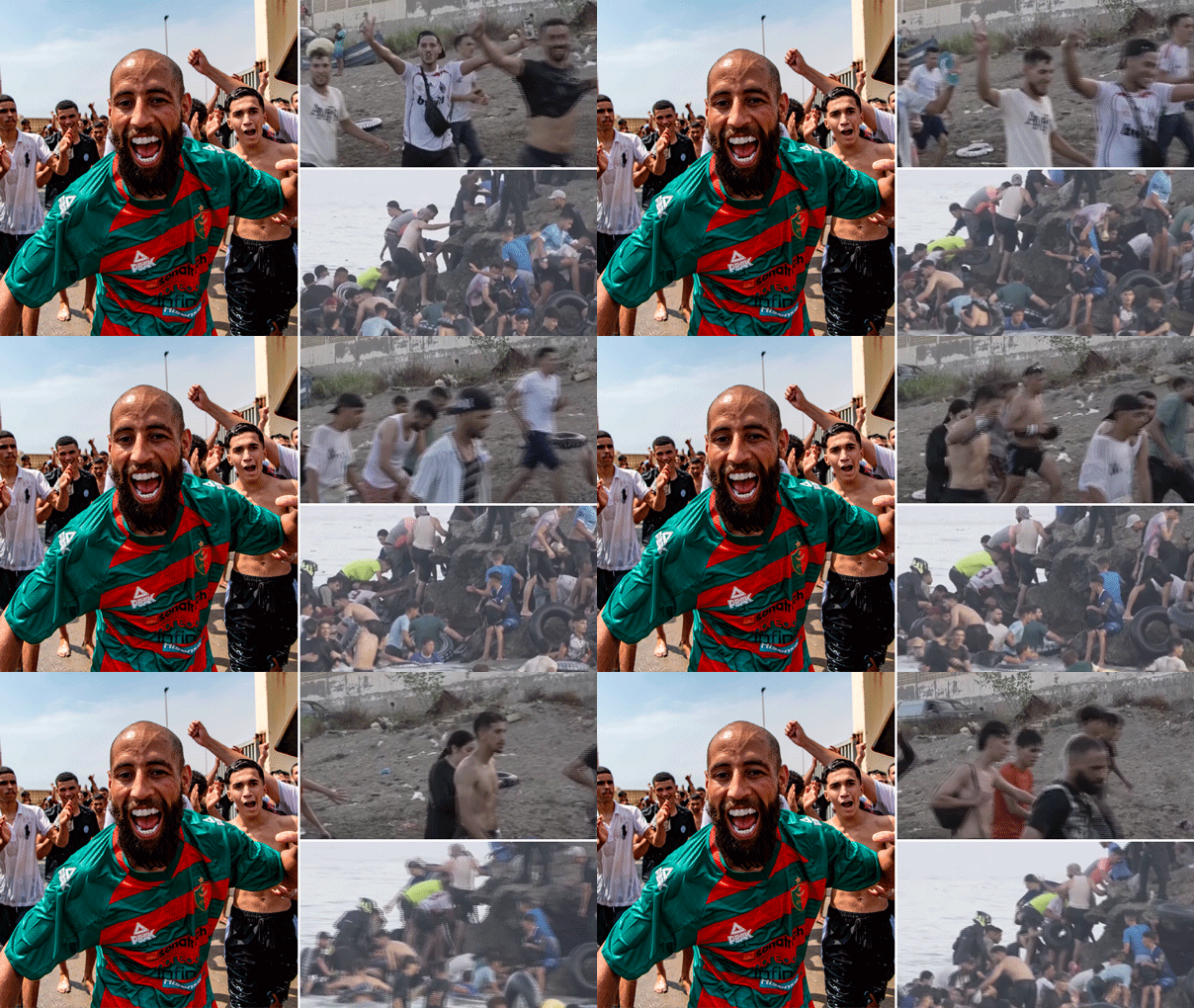
The waves crashing against the shores of Ceuta, a tiny Spanish enclave clinging to the North African coast, have once again become the stage for an acute humanitarian and security crisis. In a dramatic escalation, the Spanish government has deployed its military to support the Civil Guard along the fortified border with Morocco, following an overwhelming influx of thousands of migrants trying to reach European soil. The scene on the ground has been described by local authorities as one of absolute chaos, with security personnel and emergency workers struggling to manage a relentless stream of arrivals. Tragically, the physical toll of this desperate journey has already proven fatal, as authorities confirmed that at least nine people lost their lives in the treacherous waters surrounding the enclave. The sudden surge has transformed the scenic Mediterranean beaches into a highly militarized zone, highlighting the profound human desperation that drives individuals to risk everything for a chance at a new life in Europe.
Behind the staggering statistics of the crossing are the deeply personal and devastating stories of those who made the perilous journey. Visuals from the Tarajal border area depicted hundreds of people—predominantly young men, but also vulnerable families with women and terrified children—swimming around the maritime breakwaters and outer barriers that separate Moroccan territory from Spain. For many, the swim was a final, desperate gamble, but for at least nine individuals, it was their last. Rescue teams and onlookers faced the harrowing sight of lifeless bodies floating in the water as recovery operations continued under the watchful eyes of heavily armed soldiers. This loss of life underscores the raw, human tragedy of global migration, where the dream of safety and opportunity is so often met with cold currents, steel fences, and a fight for survival that claims the lives of the most desperate before they can even set foot on land.
This sudden spike in arrivals represents one of the most severe challenges to Spain’s borders since the historic crisis of 2021, when over 8,000 people crossed into Ceuta over a mere forty-eight hours, triggering a major geopolitical standoff. In Madrid, Prime Minister Pedro Sánchez and Interior Minister Fernando Grande-Marlaska have scrambled to coordinate an emergency response, planning urgent visits to the enclave to assess the damage and reassure a deeply shaken local population. The sheer volume of this week’s crossing has pushed local infrastructure past its breaking point, forcing Spain to rely heavily on its diplomatic ties with Morocco to stem the tide. While Spanish officials report that Moroccan police are actively cooperating on the other side of the border by intercepting attempts and facilitates rapid returns of those who crossed illegally, the recurring nature of these surges reveals the fragile, transactional nature of European border security alliances with North African transit nations.
A central point of contention surrounding this latest surge is a recent and highly controversial Spanish Supreme Court ruling, which local officials in Ceuta point to as a potential catalyst for the chaos. The court’s decision severely restricts the government’s ability to execute immediate, summary deportations of migrants who arrive by sea without providing them with due legal process and individualized assessments. While human rights advocates argue that this ruling is a vital victory for international law and basic human dignity, border security officers complain that it has effectively stripped them of the tools needed to manage sudden, massive influxes. Migration experts, however, caution against attributing the entire migration spike to legal adjustments, raising doubts that desperate families and young travelers stranded in Morocco would have detailed, real-time knowledge of Spanish judicial precedents before deciding to swim for their lives.
The shockwaves of the Ceuta crisis have rapidly rippled outward from the North African coast, exposing deep political fractures across the European Union. Italian Prime Minister Giorgia Meloni reacted swiftly to the news, threatening to suspend Italy’s participation in the Schengen open-border agreement with Spain—a move she argued would be vital to protect her own nation’s sovereignty and the safety of Italian citizens. This swift and defensive response from Rome illustrates how a localized humanitarian crisis in a Spanish enclave can threaten the foundational principles of European integration, such as the freedom of movement. As the European Union rushes to implement stricter, comprehensive migration crackdowns ahead of newly proposed regional rules, the events in Ceuta stand as a stark reminder of Brussels’ ongoing vulnerability and its historical struggle to maintain a unified, humane, and orderly asylum system.
Ultimately, Ceuta remains a vivid, painful symbol of the vast inequalities that divide the Global North from the Global South. As a fragment of Europe physically located on the African continent, the enclave has long served as a magnet for those fleeing conflict, extreme poverty, and a lack of future prospects across Africa. Prior to this week’s overwhelming surge, Spain’s Interior Ministry had already recorded nearly 3,000 land and sea arrivals in Ceuta this year alone, a figure that has now been dramatically eclipsed. As the Spanish military patrols the beaches and the diplomatic crossfire between European capitals intensifies, the heavily fortified border walls of Ceuta continue to stand not just as physical barriers, but as a testament to an ongoing human tragedy where global policy failures are measured in lost lives, shattered families, and a desperate search for dignity.