


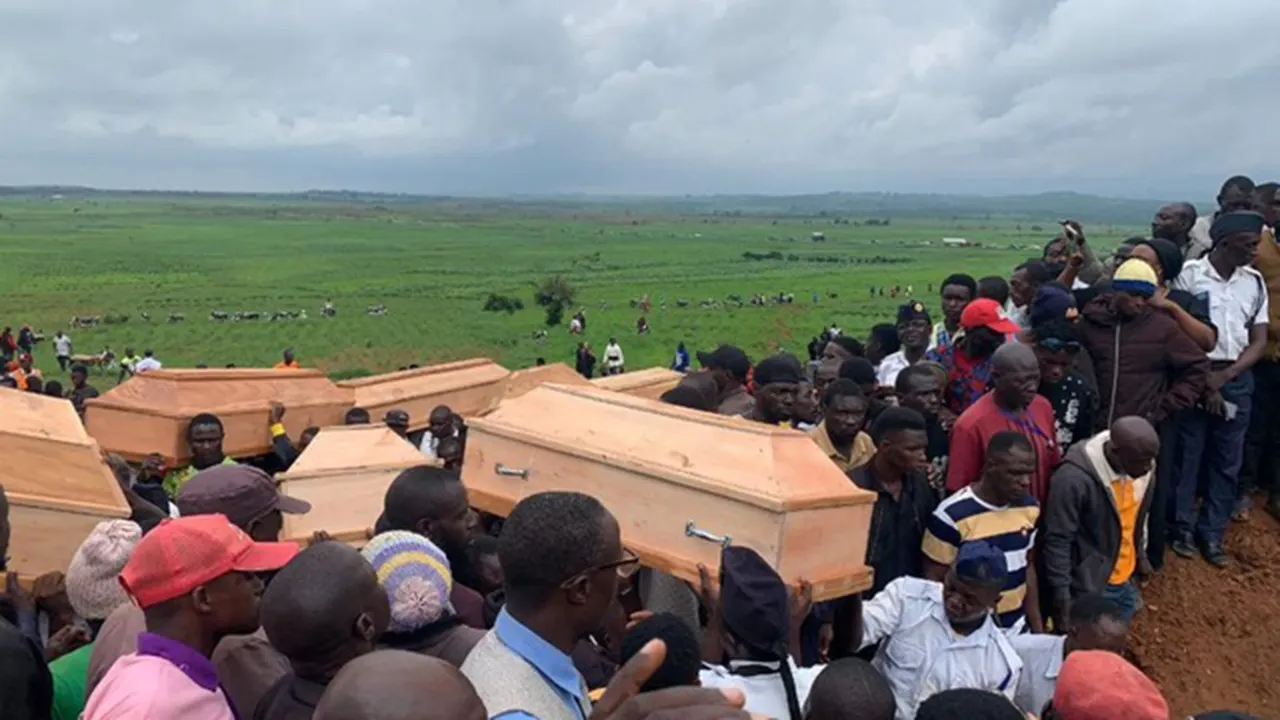
Behind the dry statistics of geopolitical reports lies a deeply moving and agonizing human catastrophe that is quietly tearing through the heart of Nigeria, changing the lives of millions of innocent families forever. For years, the lush, historically peaceful agricultural landscapes of Nigeria’s Middle Belt and southern regions have been converted into terrifying battlegrounds of violence and displacement. A sobering and comprehensive new report by the U.S. Commission on International Religious Freedom (USCIRF) has cast a glaring spotlight on this crisis, revealing that an estimated 30,000 highly organized and heavily armed Fulani militants are now actively operating across the country. The scale of this mobilization has driven a devastating surge in general insecurity and egregious religious freedom violations, culminating in a death toll that now surpasses the casualties inflicted by notorious, globally recognized terrorist organizations like Boko Haram and the Islamic State West African Province (ISWAP). For the vulnerable agrarian populations who call these regions home, this conflict is not an abstract political debate discussed in faraway capital cities; it is an ongoing, daily struggle for survival. What historically originated as localized, resource-driven skirmishes over dwindling fertile land and vital water sources between nomadic Fulani livestock herders and settled farming communities has rapidly morphed into a systematic, heavily armed campaign of terror, leaving behind burning villages, ruined livelihoods, and shattered communities in its wake.
This ongoing tragedy has taken on a deeply troubling sectarian dimension, heavily impacting Nigeria’s sizeable Christian demographic, which accounts for approximately 48 percent of the country’s population. According to the USCIRF findings, militant factions have systematically weaponized psychological terror by launching highly coordinated, lethal attacks during major Christian holidays, such as Christmas and Easter. These calculated incursions are deliberately timed to catch families when they are at their most vulnerable, gathered in local churches to worship, celebrate, and seek community solidarity. The peace of these sacred gatherings is frequently shattered by the sound of gunfire, explosions, and the chilling chanting of religious slogans, leaving worshipers with a permanent sense of dread and severely restricting their fundamental right to practice their faith in peace. However, the crisis is far from a simple, binary holy war; the violence is a complex web of destruction that spares very few in its path. Traditional, non-violent Fulani herders and non-Fulani Muslim communities have also found themselves caught in the crossfire, suffering from brutal cattle raids, village pillaging, and lethal retaliation when they refuse to align with or support the radicalized militant factions. This complex dynamic highlights the fact that while Christian farming communities are disproportionately vulnerable and often targeted, the broader, systemic breakdown of security and the rule of law threatens the fundamental human dignity, safety, and survival of all Nigerians, regardless of their religious beliefs.
The profound human cost of this security vacuum is best understood through the tearful testimonies of those who have lived through the nightmare and are left to pick up the pieces of their broken lives. Henrietta Blyth, the Chief Executive Officer of Open Doors UK & Ireland—an international advocacy organization dedicated to supporting persecuted communities worldwide—has spent years listening to the excruciating stories of survivors from the region. She recalls the immense heartbreak of hearing first-hand accounts from mothers, fathers, and children who have been forced to witness their beloved spouses or offspring brutally executed in front of them, or dragged off into a life of forced labor, captivity, and human trafficking. Blyth emphasizes that while the underlying socioeconomic and political factors driving the conflict are multifaceted, one cannot ignore the stark reality that innocent Christians are paying an astronomical price in blood just to maintain their ancestral way of life. For the hundreds of thousands of displaced individuals currently languishing in overcrowded, under-resourced internally displaced persons (IDP) camps, the immediate future offers little comfort. Deprived of their fields, their homes, and their security, these families are left with the massive, seemingly impossible task of trying to heal from deep emotional trauma and find a way to rebuild their lives in a country where safety remains a luxury.
The escalating humanitarian crisis has sparked heated debates within the international community regarding the best path forward for foreign policy and security interventions. Recently, U.S. Secretary of War Pete Hegseth commented on the global implications of the crisis, pointing out that previous U.S. administrations had actively directed efforts toward countering Islamist terror networks in West Africa in response to the desperate pleas of targeted Nigerian Christians. However, seasoned foreign policy experts with direct, boots-on-the-ground experience in the region argue that standard counterterrorism operations are fundamentally ill-suited for the unique challenges posed by the Fulani militant crisis. Sterling Tilley, a former acting director within the U.S. State Department’s Bureau of Counterterrorism who has worked extensively in Nigeria, cautions that a direct foreign military intervention in the farmer-herder conflict would be highly inadvisable. Tilley, who now directs the prestigious Thomas R. Pickering Graduate Foreign Affairs Fellowship at Howard University, explains that unlike highly centralized insurgent groups such as Boko Haram, which operate out of identifiable, isolated northern strongholds, the Fulani militant groups are decentralized, deeply integrated into local pastoral networks, and scattered across vast geographical areas. An aggressive foreign military deployment would likely exacerbate existing ethnic tensions, trigger wider regional instability, and do very little to resolve the local disputes over resources that fuel the violence in the first place.
At the very core of this persistent cycle of violence lies a severe and disappointing lack of political will from both federal and state authorities within Nigeria. The USCIRF report pulling no punches in its assessment, characterizing the historical responses of the Nigerian government to the ongoing atrocities as completely unsatisfactory at best, and deeply complicit at worst. This paralyzing political inertia is heavily driven by the calculation of domestic political survival, particularly as the nation prepares for intensely contested national elections. As Sterling Tilley points out, the Fulani ethnic group represents an incredibly powerful, cohesive, and highly mobilized voting bloc whose political allegiance can easily sway election outcomes in the North and the crucial Middle Belt regions. Consequently, the political establishment in Abuja has shown an extreme reluctance to take the decisive, sweeping security actions necessary to disarm these militant factions and prosecute those responsible for coordinated massacres. Fearful of alienating a vital political base and losing their grip on power, Nigerian politicians have largely opted for a policy of passive avoidance, leaving agrarian communities to defend themselves with meager resources and fostering a toxic culture of impunity where perpetrators of mass violence face virtually no legal consequences.
To salvage Nigeria’s future and restore safety to its citizens, both the international community and domestic reformers must look past quick, kinetic military fixes and commit to a holistic, human-centered approach to peacebuilding. Sustainable resolution requires addressing the root ecological and economic drivers of the crisis, including the rapid desertification of the northern Sahel region, which has systematically forced nomadic herding communities southward in search of viable grazing lands, bringing them into direct, unmanaged conflict with established farming populations. True justice will only be achieved when the Nigerian government prioritizes the lives of its citizens over political expediency, investing in comprehensive security sector reform, transparent land-use management, and impartial judicial accountability for all armed actors. Furthermore, international partners must transition from purely military aid to robust diplomatic pressure, ensuring that humanitarian assistance is coupled with support for local intercommunal dialogue, trauma healing, and economic rehabilitation for the displaced. Behind every dry policy paper and political election cycle are real human beings who deserve to cultivate their crops without fear, worship in their churches and mosques without the threat of sudden violence, and raise their children in a nation defined by justice, tolerance, and lasting peace.