
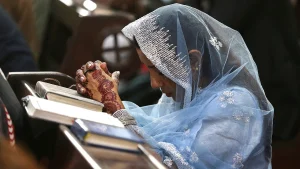


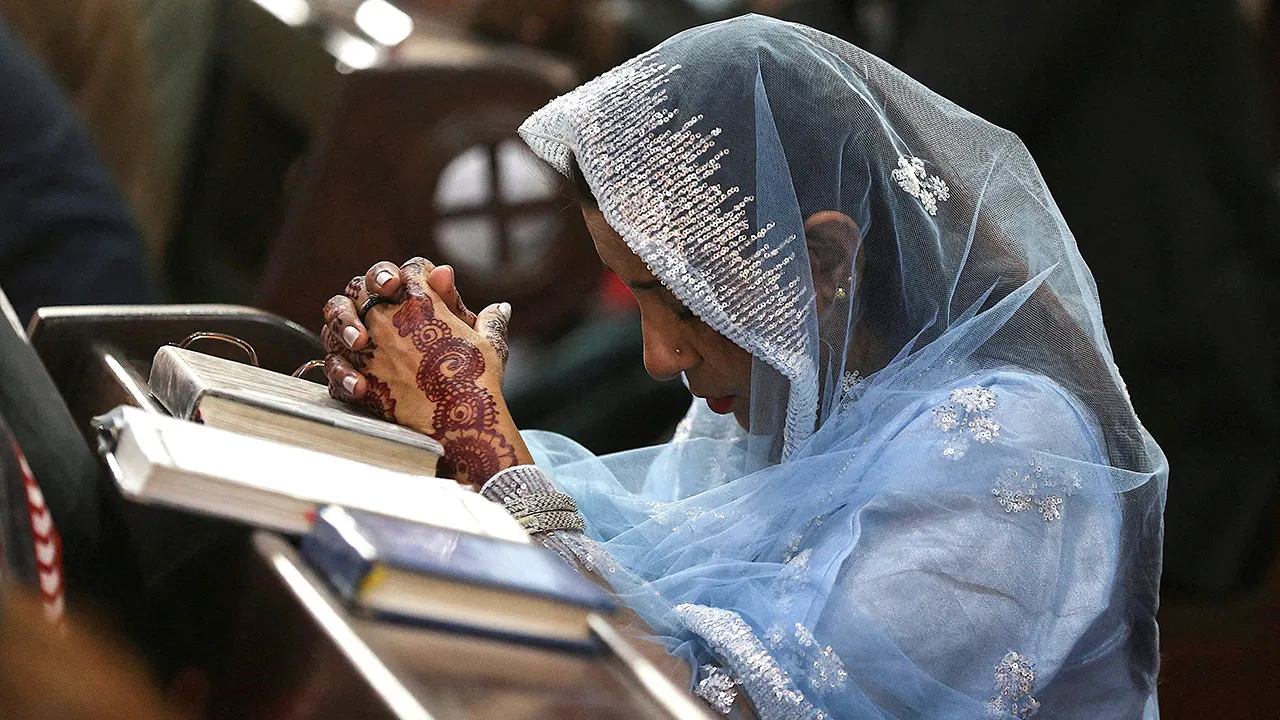
The news landed like a stone in still water, sending ripples of shock and anger through communities that had been praying for a different outcome. For Qaisar Ayub, a Christian man in Pakistan, the Supreme Court’s decision to uphold his conviction and death sentence for blasphemy was not just a legal ruling—it was a sentence of despair, delivered after more than a decade of agonizing uncertainty. His brother, Amoon Ayub, walked free that same day, acquitted after roughly ten years behind bars, but Qaisar’s fate remained sealed by a law that many human rights advocates say has been weaponized against religious minorities. The case began in 2014, when a WordPress site displaying the Ayub brothers’ contact information was found to contain content insulting the Prophet Muhammad. There was never any evidence, according to the American Center for Law and Justice (ACLJ), that either brother was actually responsible for what was posted. Yet the accusation alone was enough to unravel their lives. Amoon was arrested the following year, and both brothers were sentenced to death in 2018. Their appeals failed, and their case dragged through the courts for years, punctuated by postponed hearings and a growing sense that the system was not searching for truth but for an outcome that would appease the mob.
To understand the human weight of this tragedy, one has to imagine the quiet terror of a prison cell in Pakistan, where a man waits to be hanged for a crime he says he never committed. Qaisar and Amoon were not radicals or agitators; they were ordinary men caught in the crosshairs of a deeply flawed legal process. The ACLJ, through its Pakistani counterpart, the Organization for Legal Aid (OLA), began representing Amoon shortly after his arrest in 2015. What they found was a case built on accusations rather than evidence—no proof that the brothers had authored or shared the offensive material, no digital forensics linking them to the WordPress site, no credible witnesses. Instead, there was the chilling reality of Pakistan’s blasphemy laws, which carry a mandatory death penalty and are notoriously difficult to challenge. The brothers spent years in prison, their families torn apart, their faith tested by the cruelty of a system that seemed more interested in public sentiment than in justice. When the Supreme Court finally ruled on October 7, it was a bitter split verdict: Amoon was acquitted, but Qaisar’s conviction and death sentence were upheld. For Qaisar, the ruling meant that the nightmare would continue. For his family, it meant that the man they loved would likely die for a crime that was never proven, and for human rights advocates, it was a stark reminder that in Pakistan, being a Christian can be a death sentence in itself.
The atmosphere surrounding blasphemy hearings in Pakistan is one of fear and intimidation, and that is exactly what the advocates have had to confront. CeCe Heil, senior counsel and international legal director for the ACLJ, described how mobs routinely show up in courtrooms, filming themselves and threatening judges with violence if they do not deliver the harshest punishment. In one trial, a mob made a video declaring that if the judge did not enforce death by hanging, they would kill him with their own hands. In another video, a prominent lawyer involved in numerous blasphemy cases was seen celebrating the fifteen-year journey that led to Qaisar’s sentencing, with a description that read, “There is only one punishment for one who insults the Prophet: The death penalty for Qaisar Ayub.” This is not the stuff of a fair and impartial judiciary; it is the stuff of vigilante justice, where the threat of mob violence hangs over every proceeding. Heil warned that the precedent set by the Supreme Court’s decision could impact every single person currently sitting in prison on blasphemy charges, including at least three other clients of the OLA. The message being sent is clear: accusations are enough, evidence is optional, and the lives of religious minorities are expendable in the name of protecting the Prophet’s honor.
The human cost of this precedent is already visible in the stories of other men whose lives hang in the balance. Shahzad Masih was only sixteen years old when he was accused of blasphemy in 2017. He was a child, still in the process of becoming who he would be, yet five years later he was sentenced to death. His appeals have been repeatedly postponed since 2022, leaving him to rot in prison while the legal system delays any meaningful review of his case. Then there is Intizar Masih, who is awaiting trial for a blasphemous post he is said to have shared on WhatsApp in 2023. One message, one moment of carelessness or perhaps a complete misunderstanding, and his life is now at stake. Ahsan Masih was accused of posting blasphemous content to TikTok in 2023 and was sentenced to death the following year. His appeal hearings have also been postponed, leaving him trapped in the same nightmare. These are not hardened criminals; they are young men, likely targeted because of their faith or personal disputes, caught in a legal labyrinth that offers little hope of escape. Their families watch from the sidelines, helpless, while international organizations issue statements that seem to have no effect. The Open Doors 2026 World Watch List placed Pakistan in its top ten countries where Christians face the most extreme persecution, and these cases are the living proof of that designation. Each postponed hearing is another year of anguish, another year of waiting for a miracle that may never come.
The international community has not been silent, though its words have yet to translate into action. The U.S. State Department told Fox News Digital that it is concerned about religious freedom in Pakistan and throughout the world, and that it regularly discusses this concern with Pakistan. The United Nations has also weighed in. Morris Tidball-Binz, the UN special rapporteur on extrajudicial, summary or arbitrary executions, was asked by the ACLJ to intercede on Qaisar’s behalf. The Human Rights Council secretariat provided a letter that Tidball-Binz and other UN officials wrote to the Government of Pakistan in September 2025, expressing grave concern about the mandatory death penalty for blasphemy charges against Shahzad Masih, Qaiser Ayub, and Amoon Ayub, despite an apparent lack of conclusive evidence. The letter noted that the offenses in question do not qualify as “most serious crimes,” and that the men’s rights to life, to be free from torture and cruel treatment, to be afforded fair proceedings before an independent tribunal, and to be equal before the law were being violated. The Government of Pakistan responded by saying that such matters fall within the judicial domain and that the executive is constitutionally prohibited from intervening in individual cases. That response, while legally convenient, does little to address the underlying injustice. Heil said she finds it “very strange” for a country that postures itself as a more tolerant negotiator between world powers, particularly in the ongoing conflict in Iran, to fail to protect the religious freedoms of its own people. It is a valid point: how can a nation claim to be a mediator on the world stage while its own courts are sending innocent men to the gallows?
Despite the darkness, there is still work being done, and there is still hope, however fragile. The OLA plans to file a review petition with the Supreme Court as early as this week, challenging the lack of evidence that convicted Qaisar. They also plan to reach out directly to the Government of Pakistan to request support, including a presidential pardon for Qaisar. It is a long shot, but it is the only shot left. The ACLJ has also asked the UN special rapporteur to intercede, and the pressure from the international community may yet create some space for mercy. In the meantime, the immediate concern is for Amoon, who has been spared the death penalty but remains in danger from reprisals. Blasphemy accusations in Pakistan can follow a person even after they are acquitted, as extremists take justice into their own hands. The work of the ACLJ and OLA is therefore not just about winning legal battles; it is about protecting lives, preserving families, and reminding the world that every person, regardless of their faith, deserves the right to a fair trial and the presumption of innocence. The story of the Ayub brothers is not just a story about Pakistan; it is a story about the fragile nature of human rights in a world where fear and mob rule can so easily overpower reason and law. It is a story about a family torn apart, a community living in terror, and a legal system that has lost its way. But it is also a story about people who refuse to give up, who continue to fight for justice even when the odds are stacked against them. For Qaisar, the fight is far from over. For all those who believe in human dignity, the fight must continue until every person, no matter their religion, can live without the constant threat of death for a crime they did not commit.