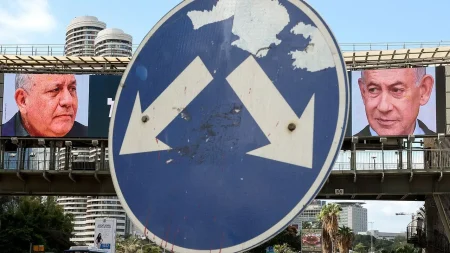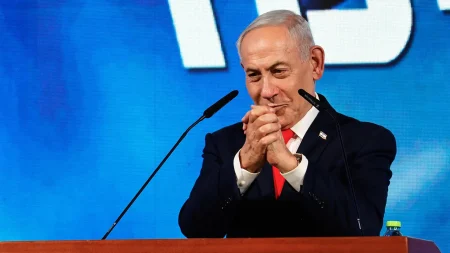



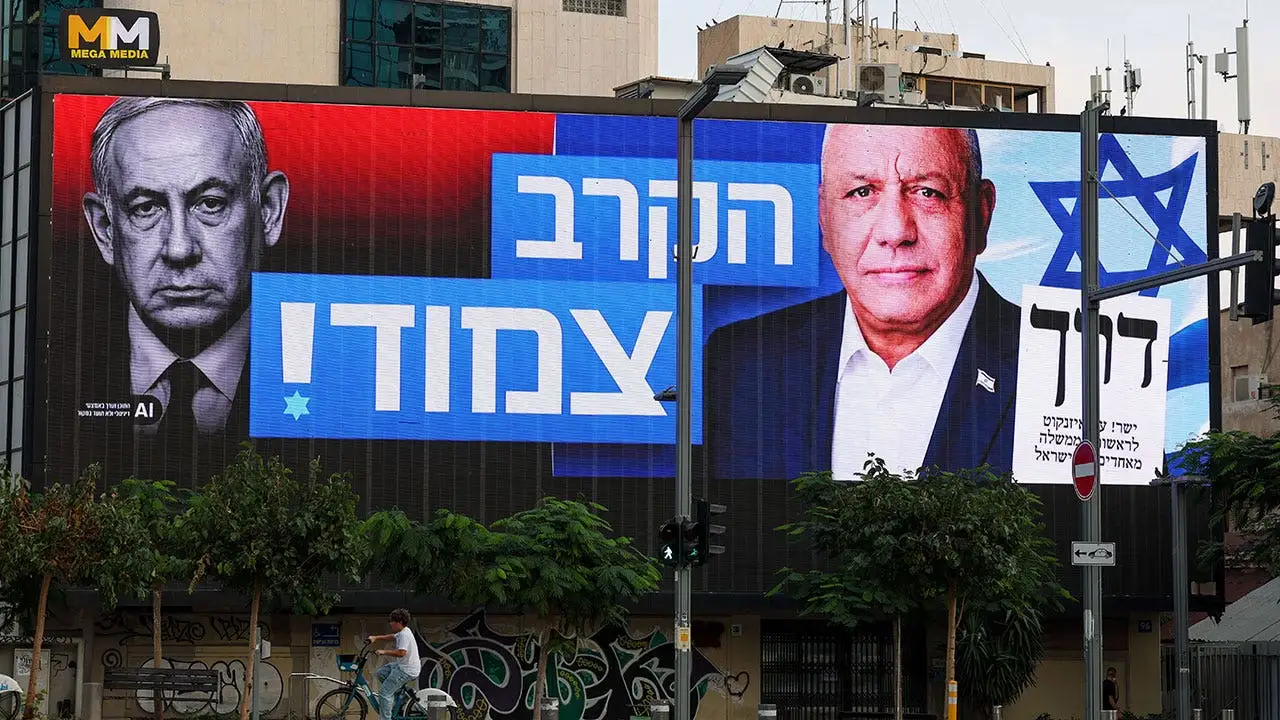
Israel’s final election count has landed with a thud of ambiguity: Prime Minister Benjamin Netanyahu’s political bloc has lost its parliamentary majority, but the opposition has not won one either. The numbers, published by Israel’s Central Elections Committee early Friday, tell a story of stalemate. In the 120-seat Knesset, Netanyahu’s allies captured 53 seats, while the opposition alliance led by former army chief Gadi Eisenkot secured 48. The two predominantly Arab parties, meanwhile, came out of nowhere in historic fashion, winning 19 seats and positioning themselves as potential kingmakers. Within the fragmented picture, Netanyahu’s Likud remained the largest single party with 27 seats, followed by Eisenkot’s Yashar with 21 and former Prime Minister Naftali Bennett’s Beyachad with 12. Voter turnout reached 77.9 percent, a sign of how desperately Israelis on all sides wanted their voices heard. But after all those ballots were counted, the country woke up to a political reality that cannot be solved by arithmetic alone. Neither the right-wing bloc nor the opposition has the 61 seats needed to form a government, meaning the only certainty is a long, messy, behind-closed-doors struggle. “It is a bitter stalemate,” one opposition source said, “but not an impossible situation.” That is the strange kind of hope Israelis are left with: the recognition that the path forward leads not through the ballot box but through back rooms, compromises, and partnerships nobody predicted.
The central puzzle is now how to reach 61 seats, and the answer may lie with political forces that spent years on opposite sides of the barricades. For Netanyahu, the most natural partners have always been the ultra-Orthodox parties, but even that alliance is showing cracks. In a potentially significant development, Israeli journalist Yishai Cohen reported that Rabbi Dov Lando, a leading ultra-Orthodox religious authority, had instructed lawmakers from Degel HaTorah—part of the United Torah Judaism alliance—to open talks with the opposition. The goal, according to the report, is to secure protections for yeshiva students amid the long-simmering dispute over mandatory military service. Channel 12 went further, reporting that figures within the ultra-Orthodox party were considering allowing an Eisenkot-led minority government to survive by providing outside parliamentary support, effectively breaking with Netanyahu. “Our votes are not in Netanyahu’s pocket,” party figures told Channel 12. The office of United Torah Judaism Chairman Yaakov Asher, however, denied that any such instruction had been issued. The denial did little to stop the political chatter, because the stakes are enormous. Eisenkot has pledged to expand military conscription among ultra-Orthodox men, a policy that would upend the traditional exemption granted to yeshiva students. And yet, according to Channel 12, some party figures were willing to consider a compromise on that very issue. The opposition source said Eisenkot’s camp had been preparing for the possibility of cooperating with ultra-Orthodox parties long before the election, which means the options now being discussed were not improvised. They were part of a quiet, deliberate strategy. Such an arrangement would require painful compromises on military service, and it might also require outside parliamentary support from Arab lawmakers—a coalition of opposites that seemed impossible during the campaign.
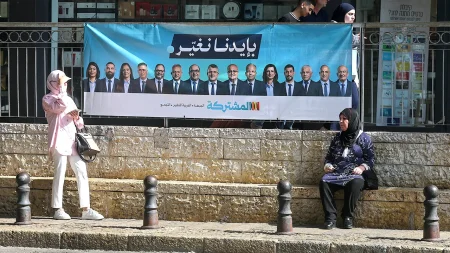
The other great question mark is the Arab parties, whose representation nearly doubled from 10 to 19 seats after a surge in turnout. Their new numbers make them a decisive force, but their intentions remain murky. Channel 12 reported Thursday that Ra’am leader Mansour Abbas had expressed deep skepticism about the possibility of an Eisenkot-led minority government supported by Arab lawmakers. Israeli political commentator Amit Segal, too, argued that the available options had narrowed considerably, pointing to a Netanyahu-Eisenkot unity government or yet another election as the two most plausible outcomes. But Mohammed Majadla, head of the news division at Radio Nas and a political commentator for Channel 12, offered a very different reading in an interview with Fox News Digital. Majadla insisted that both Ra’am and the Joint List—the two major Arab political lists—were ready to use their parliamentary weight to prevent Netanyahu from returning to power. “The two Arab lists agree on two things,” Majadla said. “First, they are prepared to do everything within the political process to ensure Netanyahu does not return to power.” That could mean joining a coalition, offering outside support, or simply abstaining from decisive votes. Their second shared priority, he said, is avoiding another election, which Arab leaders fear could undo their gains. “The ball is now in Eisenkot’s court, not in the Arab parties’ court,” Majadla said. “As far as the Arab parties are concerned, I can tell you they are truly prepared to do everything to make this happen.” He also cautioned that public declarations should not be mistaken for final positions, especially while parties are still jockeying for leverage. The difficulties, however, are real. Eisenkot’s potential partners include politicians who strongly oppose cooperating with ultra-Orthodox factions, and several opposition leaders campaigned explicitly against relying on Arab lawmakers to govern. For an alliance to work, someone is going to have to swallow something they once called unacceptable.
Another possibility remains a national unity government between Likud and Yashar, which would be mathematically simple but politically complicated. Eisenkot made a campaign pledge not to join a government led by Netanyahu, and Netanyahu has spent years portraying Eisenkot as a threat to his own political survival. Yet unity governments in Israel are built on exactly this kind of poisoned history, and the country has seen stranger bedfellows. For Netanyahu, the long coalition process offers multiple opportunities. If Eisenkot receives the mandate to form a government from President Isaac Herzog and then fails, Netanyahu could be given another chance. If that fails too, Israel would be thrown into another election, a prospect almost nobody wants. The opposition source familiar with the discussions pointed to Bennett and former Prime Minister Yair Lapid as two figures with the experience to navigate the maze. “They’ve both played this game many times. They know it, and they’re not rattled,” the source said. Bennett’s years working alongside Netanyahu give him a rare understanding of the prime minister’s negotiating tactics, while Lapid has built alliances across the political spectrum. But experience cuts both ways. It teaches politicians what is possible, but it also teaches them how often negotiations fail. The source suggested that the next government may depend on the ability to forge partnerships that were previously considered implausible. “Whoever manages to forge new partnerships will move forward. Whoever doesn’t will remain stuck,” the source said. That single sentence may be the truest summary of Israeli politics right now: the country is not short on votes, but it is desperately short on trust.
Lapid himself acknowledged the gap between the energy of the campaign and the slow grind of governing in a statement on Friday. “Now comes the truly hard part: trying to form a government,” he wrote on X, urging supporters to be patient. “It takes place in small rooms, slowly, away from the cameras,” he added, explaining that the real work of coalition-building happens outside the spotlight. That process will not occur in a vacuum. The negotiations will take place against the backdrop of the Trump administration’s Middle East agenda, and while no specific American role in the coalition talks has been confirmed, understanding Washington’s regional priorities could shape the decisions of Israeli leaders. The election results are scheduled to be formally submitted to President Herzog on November 4, after final verification procedures, and the new Knesset is expected to be sworn in on November 10. Those dates give the parties a fixed timeframe, but they do not guarantee a solution. In the coming days, Israeli political leaders will enter the small rooms Lapid described, carrying with them the expectations of millions of voters and the unresolved traumas of a country still haunted by the October 7 attacks and the threat of war with Iran. They will negotiate not only over ministries and policy agreements, but over the very meaning of the election result. In a system as fragmented as Israel’s, every coalition is a marriage of convenience, and every marriage requires someone to blink first.
For all the talk of seat counts and coalition formulas, what makes this moment so gripping is how human it is. Behind the numbers are men and women who have spent decades fighting one another, trading insults and accusations, only to find themselves unable to govern without each other. Netanyahu is a master survivor, but his options are narrowing. Eisenkot is the relative newcomer, a general who stepped into politics with a reputation for calm, but who now must master the messy art of political seduction. The ultra-Orthodox leaders are weighing spiritual obligations against political survival. Arab leaders are trying to decide whether to become kingmakers or remain eternal outsiders. And ordinary Israelis are watching, weary and hopeful, aware that another election would prolong the uncertainty they have already endured for years. This is not simply a procedural crisis; it is the human face of a deeply divided society. The election has settled the question of how Israelis voted, but it has not settled the question of who will govern them. In the days ahead, the country will learn whether its leaders can do something rare in modern Israeli politics: look past old grievances, accept uncomfortable compromises, and form a government that can actually lead. The alternative is more paralysis, more campaigns, more months of the same bitter conflict. As the source put it, whoever manages to forge new partnerships will move forward. Whoever refuses will remain stuck. In a country with so much at stake, moving forward may no longer be a political option—it may be the only option left.