


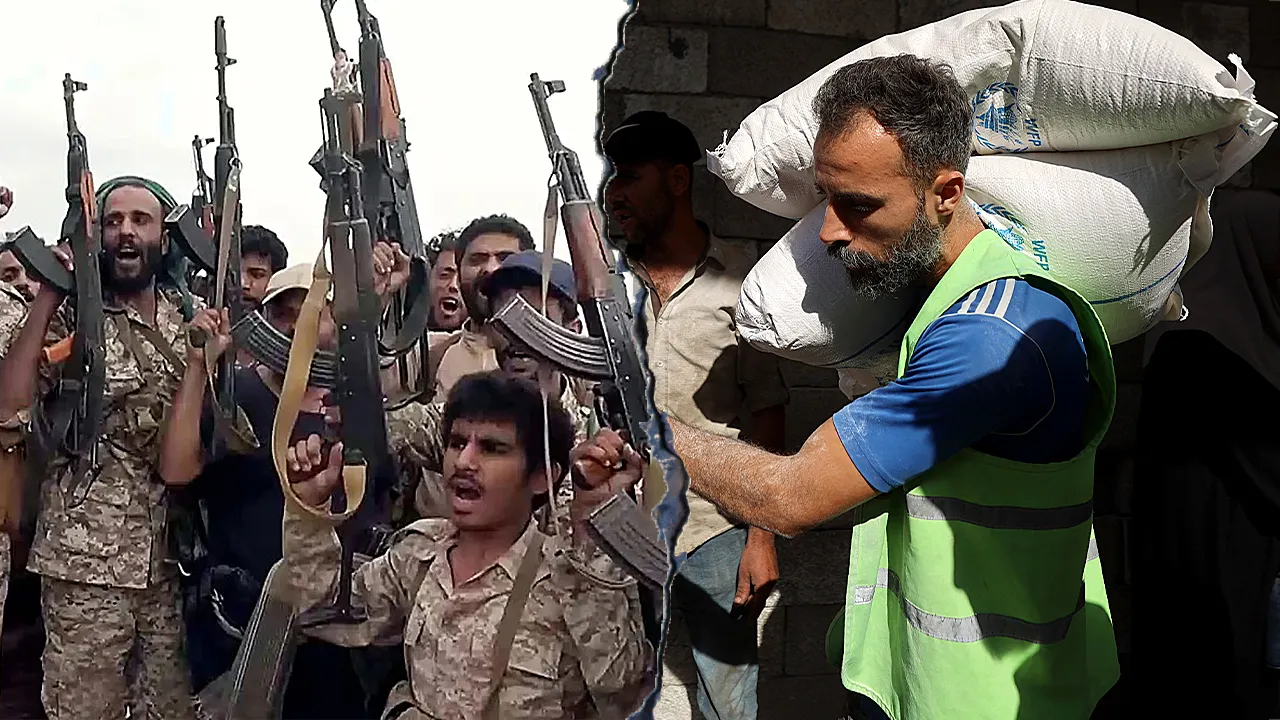
It begins with a quiet ache that most of the world never sees: a phone call, a missed birthday, an empty chair at a family dinner. For nearly two years, the families of 37 World Food Programme workers in Yemen have been living that pain, not knowing when their loved ones will come home. The workers, all Yemeni nationals employed locally by the WFP, including a number who also work for the U.S. government, are being held captive by Iran-backed Houthi terrorists, according to Luke J. Lindberg, the agency’s new executive director. In an exclusive interview with Fox News Digital, Lindberg did not hide the sorrow in his voice. “It’s been almost two years. Away from their families. It breaks my heart,” he said. He spoke of these colleagues not as statistics but as human beings who went out each day to deliver food, medicine, and hope in one of the most dangerous places on Earth, only to be seized and locked away. For Lindberg, who had been in his role for just three days when he raised the crisis with U.S. Ambassador to the United Nations Mike Waltz, the urgency is personal. “These folks are out there to provide basic humanitarian services. They’re not there to influence the political outcomes of a conflict. And so we need to protect them, and we need to get our detained colleagues released,” he said. Ambassador Waltz and the State Department, he added, have been taking the matter seriously, making it a priority alongside the WFP itself. The detention is a stark reminder that humanitarian workers, even those wearing the most neutral of uniforms, can become pawns in a bitter, grinding war.
Yemen’s civil war has never really ended, even as the world’s attention has drifted. The internationally recognized government and the Houthi movement, backed by Iran, have spent years locked in a devastating conflict that has shattered the economy, collapsed public services, and turned millions of ordinary people into aid dependents. More than 18 million Yemenis now face acute food insecurity, and over two million children under five suffer from acute malnutrition, their small bodies fighting just to survive another day. The WFP’s team operates in what Lindberg described as “the most impossible and challenging conditions you can imagine.” It is a place where simply showing up to work can be an act of courage. In that environment, the agency must perform a difficult balancing act: reaching the most vulnerable populations without putting its own staff into unacceptable danger. Lindberg was candid about the limits this creates. “There are areas where we will go into, areas where you can’t go into,” he said. Until the conflict ends and safe passage is guaranteed, there will be places where the WFP simply cannot operate. “Again, the goal is the end of the conflict and allow humanitarian resources to flow into those areas,” he said. Until that happens, protection of staff must remain the priority, because without them, no food reaches anyone. The detainees in Yemen are not names on a list; they are the backbone of that impossible mission, the local faces who know the terrain, speak the language, and are willing to risk everything for their neighbors. Their absence is not just a tragedy for their families; it is a gaping wound in the humanitarian effort itself, a reminder that even the most noble work can be crushed by the machinery of war.
The crisis in Yemen is extreme, but it is far from isolated. Across the world, conflict is now the main driver of acute hunger, accounting for roughly two-thirds of the worst food emergencies. Lindberg warned that an estimated 266 million people are facing severe hunger, a number so large it is almost impossible to grasp. “It means the most challenging levels of hunger we can imagine,” he said. The WFP, which operates in more than 120 countries, is stretched thin, and the pressure is mounting in several flash points at once. Lindberg named Sudan, South Sudan, and Somalia as the most urgent, nations where conflict, displacement, and climate-related disasters are pushing vulnerable communities over the edge. In Sudan, fighting between the Sudanese Armed Forces and the Rapid Support Forces has displaced millions and triggered famine conditions in parts of the country, a catastrophe made worse by a forgotten war that foreign powers are still jockeying over. South Sudan and Somalia face similar convergence of violence, drought, and economic collapse, with entire regions on the brink of famine. Lindberg has made clear he will not stay behind a desk; his first field visit as executive director will be to Sudan, a place where the need is greatest and the danger is real. He spoke not with the detached tone of a bureaucrat but with the urgency of someone who has seen what hunger does to a child, to a mother, to a community. The world, he suggested, has the resources to end the worst of this suffering, but it must choose to act, and it must protect the people who deliver the aid.
The emergencies do not end there. In Gaza, the grinding war has left infrastructure in ruins, restricted access to critical routes, and drained funding, making every food delivery a logistical and political battle. In Haiti, gang violence has turned parts of the country into inaccessible no-go zones, cutting off aid to the most desperate. The Democratic Republic of the Congo is witnessing displacement on a massive scale, with armed groups and counter-insurgency operations forcing millions to flee, and the war in Ukraine continues to shake global food supply chains, driving up prices and pushing more families into poverty. Yet amid this landscape of despair, Lindberg is especially haunted by the human cost of the work itself. “Unfortunately, in the past couple of years, we’ve lost over 700 humanitarians around the world in their active duty,” he said. Seven hundred lifetimes spent trying to help others, lost to bombs, bullets, and the unpredictable chaos of conflict. “To me, that’s the worst possible outcome. It’s really unacceptable,” he said. He made a promise that felt deeply personal: “It’s my commitment to call each one of those family members should that happen, but it’s primarily my goal to not let that happen anymore.” Those words carry the weight of someone who understands that aid work is not just a job; it is a calling, one that too often ends in tragedy. For Lindberg, the real heroes are not the executives in headquarters but the field staff who choose to go out and cook food, hand out rations, and comfort the hungry, day after day, in places where danger is around every corner.
Lindberg did not arrive at this role by accident. A South Dakota native, he served as undersecretary of agriculture for trade and foreign agricultural affairs at the U.S. Department of Agriculture, where he oversaw international assistance programs like the McGovern-Dole Food for Education and Food for Progress. That background gave him a deep understanding of the connection between agriculture, trade, and hunger, and it forged relationships with the global food community. He succeeds Cindy McCain, who stepped down this year, with Deputy Executive Director Carl Skau serving in the interim. Since 1992, every executive director of the WFP has been an American, a tradition that Lindberg now continues. His appointment came after consultations between U.N. Secretary-General António Guterres, Food and Agriculture Organization Director-General Qu Dongyu, and the WFP Executive Board. But the moment that stayed with Lindberg was a phone call from President Donald Trump. “When I was nominated to lead the World Food Program by the United States, President Trump personally took the time to call me and offer me this opportunity,” Lindberg said. The conversation, he explained, revealed a side of the president that the public rarely sees: compassion for the hungry and a belief in peace. “For me to have the opportunity to speak with him about how the World Food Programme can play an important role alongside the U.S. in addressing these humanitarian needs was a special moment that I’ll never forget,” Lindberg said. It was a reminder, he said, that humanitarian work is not a partisan issue; it is a human issue, one that requires leaders to step up and make a difference.
At the heart of Lindberg’s vision is a simple, stubborn commitment: “show up no matter what.” The phrase is not a slogan, but a way of life for the WFP and its partners. It means delivering food safely and effectively, without being dragged into the politics that surround every conflict. “To safely and effectively deliver food, and to really stay out of the politics of it, our goal is to feed hungry people,” he said. It is an ethos that runs counter to cynicism, a refusal to accept that hunger is an inevitable byproduct of war. Lindberg’s debut at the helm of the world’s largest humanitarian agency comes at a time when the needs are immense, funding is tight, and the dangers are growing. Yet he remains focused on the people behind the numbers: the 18 million in Yemen, the millions fleeing famine in Sudan, the children in South Sudan and Somalia, the families in Gaza and Haiti, and the many more the world may have forgotten. He also carries the weight of his 37 detained colleagues in Yemen, their faces and fates a constant reminder that humanitarian action is not for the faint of heart. “It’s really a complex political environment,” he admitted. But he did not let that complexity become an excuse for inaction. Instead, he turned it into a promise: to keep fighting for their release, to protect the workers in the field, and to make sure that the world’s most vulnerable people are not left to starve because wars rage around them. Lindberg’s voice is that of a man who knows the odds, yet chooses hope. It is the voice of someone who believes that even in the darkest places, a meal can be a lifeline, a sign that the world has not forgotten. And it is the voice of a leader who is determined to make sure the heroes on the front lines—the ones who hand out food, cook meals, and risk their lives—are never alone.