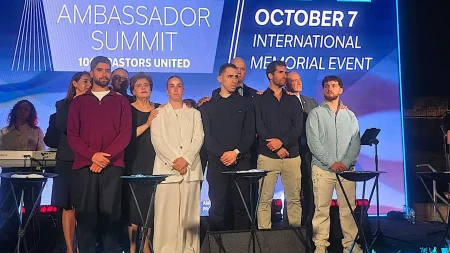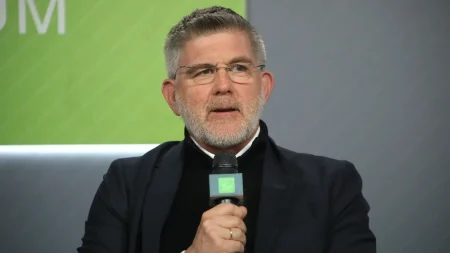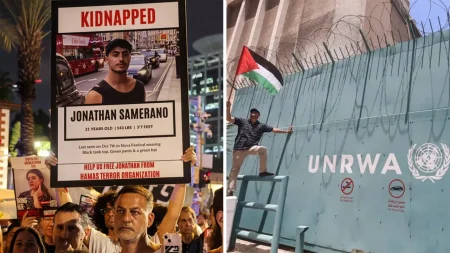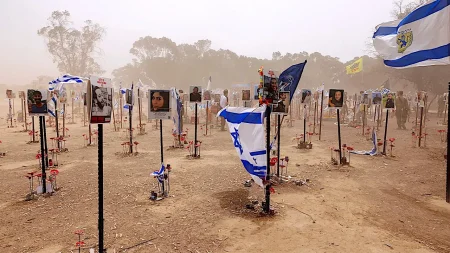





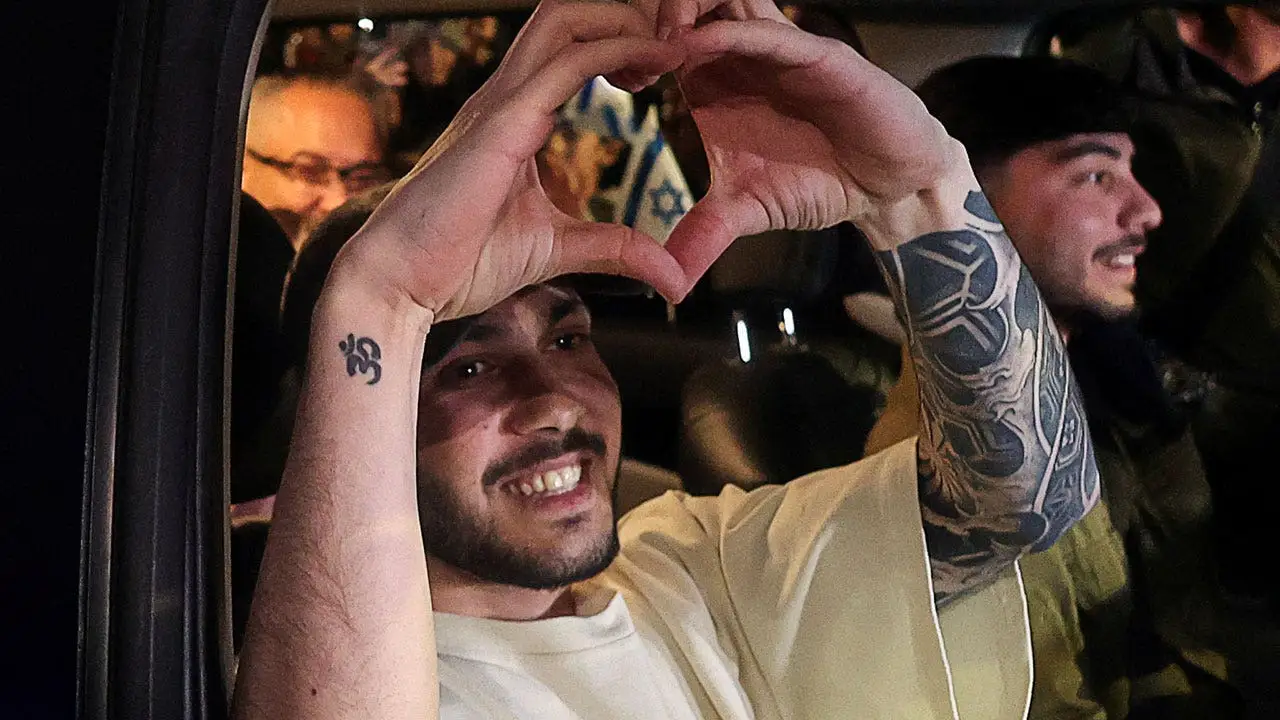
Three years after the music stopped and the sirens began, Eliya Cohen stood in a glass-and-marble hall at the United Nations and tried to make diplomats understand the incomprehensible. He was not a number on a list. He was a groom standing beside his bride, Ziv Abud, a woman he had once believed was dead, and the ring on his finger had been placed there just weeks before this ceremony. The world that had failed to save him had sent ambassadors to hear him speak. Dr. Phil McGraw moderated, but no one could really moderate such testimony. Cohen had spent 505 days in Hamas captivity—more than sixteen months of days and nights that all blurred together. He told the diplomats that his captors had not allowed him to change clothes, to shower, to eat, to drink, or to use a restroom. They had chained him with heavy iron chains by his leg. They had kept lights burning so he could not sleep, then walked into the room again and again, screaming in an effort to terrify him. He described the feeling that survival was almost impossible. Yet, inside that darkness, Cohen found a strange, stubborn discipline. “Don’t think about the violence. Don’t think about the torture. Don’t think about everything,” he remembered telling himself. “Just continue, stay strong. And maybe one day, you will come back home to your family.” He was one of 251 people abducted that morning, when Hamas-led attackers killed about 1,200 people in southern Israel, at homes and at the Nova music festival. It remains the deadliest single day in Israel’s history. Cohen did not need statisticians to tell him that. He lost 48 people he knew that day, and then he lost himself for 505 more.
Ziv Abud carried a different piece of the same broken story, and she stood beside her husband to tell it. In the first dark hours of Oct. 7, she and Cohen had arrived at the Nova festival with her 19-year-old nephew, Amit, and his girlfriend, Karin. When the gunfire and rockets began, they ran to a roadside bomb shelter. It was designed for eight people. At least 29 packed inside. Ziv described how more than 40 terrorists attacked the shelter with grenades and gunfire, and how one man inside kept grabbing grenades and throwing them back outside until he was killed. As the attack continued, Cohen covered Ziv with bodies, shielding her with the dead and wounded. That grotesque act saved her life. She lost consciousness, and when she woke seven hours later, the shelter had become a tomb. “I found myself in a pile of bodies,” she said. She paused, fighting back tears. “It wasn’t even bodies. It was body parts.” She looked around and found that Amit and Karin had been killed. There was no escape, no rescue, no one coming. “I needed to sit with the bodies for seven more hours,” she said. Eventually she was pulled from the wreckage, one of only seven survivors from that shelter. Four people had gone to the festival from the same house that morning. “And I’m the only one that came back home that night,” Abud said. The world would call Ziv a survivor, but she spent the next 505 days not knowing if her beloved was alive. Cohen, meanwhile, was in Gaza convinced that Ziv had died. They were two people grieving each other across an invisible wall. Then, in a kind of miracle that still feels fragile, they found each other again. They married weeks before Tuesday’s ceremony, and Ziv allowed herself to say out loud what she hoped the future would hold: “Kids and family because we are here and we survived. And we need to live a normal life.”
Between the day of the massacre and the day Eliya Cohen finally stood free, there were 505 days of waiting, faith, and incredible stubbornness. Cohen’s survival was not passive. He had no calendar, no clock, no sunlight, no shower, no privacy. He was chained and starved and kept in a state of constant fear, but he refused to let his captors into the only place they could not reach: his mind. He forced himself not to think about the violence or the torture, not to imagine all the terrible things that might be happening back home. Instead, he pictured the possibility of returning to his family—and to Ziv, although he had been told she was dead. That act of imagining, repeated over and over, kept him breathing. Ziv spent those same months campaigning for his release, carrying banners and giving interviews, never knowing whether the man she loved was alive in a tunnel or dead in a ditch. The two were married just weeks before the U.N. ceremony, and their presence in that room was itself a statement. U.S. Ambassador to the United Nations Mike Waltz met with them privately before the event and asked Cohen how he was feeling physically. Waltz told them how good it was to see them “healthy and alive.” Then, from the stage, Waltz revealed something that would break the room. On the night before Cohen’s release, Hamas tried to force him to record a propaganda video saying he had been treated well. Cohen refused. The next day, as he was being released, Hamas put him in front of cameras and ordered him to raise his hands. He refused again. “Eliya, we salute you,” Waltz said, his voice cracking. “I salute you. You are a proud, strong Jew. You’re undefeated, man.” In a world that loves to show victims at their weakest, Cohen had refused to perform his own defeat. That defiance was not just for himself; it was for everyone who needed proof that dignity can outlast cruelty.
Not every survivor was taken into Gaza. Some stayed behind in the ruins of the day and had to learn how to speak again. Oriya Berlin, a young Israeli visual intelligence observer, had arrived at a base near the Gaza border just two days before the attack. On the morning of Oct. 7, she woke up thinking she was hearing thunder. But it was not thunder. “Outside, thousands of missiles were raining down with a single objective: to destroy my life and the lives of my friends,” she said. Berlin and four other soldiers ran barefoot and in pajamas into a small shelter, completely unarmed. They first assumed the attack would look like the training scenarios they had studied—a small squad that Israeli forces could quickly contain. Then came the sound of vehicles and gunfire. She described about 60 heavily armed terrorists attacking the base. At one point, a message appeared in their unit’s WhatsApp group, telling soldiers to shout “IDF” in Hebrew so that Israeli troops could find them. The Hebrew was broken, and their suspicion was immediate: a terrorist had likely taken a soldier’s phone. They stayed silent. Then another group arrived, shouting for soldiers to identify themselves. Berlin heard a burst of gunfire, and then silence. Ten hours after the attack began, special forces finally reached them. When Berlin learned how many of her friends had been murdered or kidnapped, she could not stay home. She was offered a way out of military service, but she refused. She returned as an observer for another six months and later joined the IDF Public Diplomacy Office. “I wanted the world to see that the IDF is not just an intimidating military force on a television screen,” she said. “It was also a 5’2” fake blonde girl like me who simply wanted to protect her home, her family, and her friends.” She has spoken to audiences that ranged from international organizations to high school students who told her she was wasting their time because of their deep-seated anti-Israel hostility. “But I stayed,” Berlin said. “I spoke because the truth demands a voice.” She spoke for the friends who did not survive.
The commemoration was not only about looking backward; it was also about measuring how far the region has come, and how far it still has to go. Ambassador Waltz called Oct. 7 Israel’s 9/11 and Pearl Harbor, noting that more Jews were brutally massacred that day than any day since the Holocaust. He pointed to President Trump’s 20-point peace plan and a U.N. resolution establishing an International Stabilization Force, and he promised that the United States was determined not to repeat the old cycle in which Hamas rebuilds, Iran rearms, and Israelis are attacked again. He offered a broader snapshot of the Middle East: Iran on its back foot, Lebanon with hope, Syria with hope, Iraq with hope. “Oct. 7 completely, and I think irreversibly, has backfired on Iran and all of their terrorist proxies,” Waltz said. “America will stand with the Jewish people,” he added, urging the audience to “be strong, be resilient, be wise.” Israeli Ambassador to the U.N. Danny Danon then turned the focus to the institution hosting the event. “Even in this building, the U.N. is trying to demonize and isolate Israel,” Danon said. “They have turned the victim into the accused, comparing our IDF soldiers to Hamas terrorists.” Colleagues had told him he took criticism of Israel at the U.N. “too personally.” “Indeed, it is personal,” he answered. His daughter is serving right now in the IDF, and his son served as an officer and was supposed to be at the Re’im base next to Gaza on Oct. 7, but at the last minute he was released home for the holiday. “That’s why it’s personal,” Danon said. “The U.N. tries to demonize all of our sons and daughters, our lions and lionesses who give everything so we can freely live in our homeland. So yes, it is personal. It’s personal for all of us.”
For Eliya Cohen and Ziv Abud, though, the long evening eventually came back to something smaller than geopolitics: a husband and wife who wanted to live an ordinary life. Ziv said they hoped to have children and build a family, despite knowing that Oct. 7 and the 505 days that followed would remain part of their story forever. There is no erasing the shelter, the chains, the body parts, the years of not knowing. But the couple chose to stand together, in a building where nations argue over maps and resolutions, and simply be alive. At one point, Dr. Phil asked Cohen what he would say if the terrorists who had abducted and tortured him were watching him in that room. Cohen needed only a few words. “I won,” he said. “I won and I’m here.” Then he turned his message outward, to everyone listening. “Stay proud to be Jewish,” he said. “And stay proud to be Israeli.” He added: “We are here to stay.” That is the heart of this story, and perhaps the reason the testimonies mattered. It was not a story about political strategies or international alliances. It was about a man who was chained and starving and who refused to let his captors write his ending. It was about a woman who sat among the dead and then spent 505 days fighting for a future with a man she had been told was gone. It was about a young soldier who stayed silent in a shelter and later found a voice loud enough to demand that the truth be heard. The United Nations may still debate, but the survivors stood before the world’s ambassadors and testified. Their message, three years after the worst massacre in Israel’s history, is not revenge. It is presence. They are home. They are married. They are speaking. And they are here to stay.