



The Java Sea, a vast and restless expanse of water between some of Indonesia’s most populous islands, has always been both a bridge and a barrier. On Sunday local time, it became the scene of a sudden and unnerving mystery. A passenger ship called the Virgo Transport 8, carrying 240 people, vanished from contact while making what should have been a routine crossing from Surabaya, East Java, to Banjarmasin, the capital of South Kalimantan on the island of Borneo. According to Indonesia’s Banjarmasin Search and Rescue Office, as reported by the Associated Press, the vessel was last tracked roughly 92 miles from a pier in Banjarmasin. Then, nothing. No distress call, no final announcement, no clue as to why the ship’s radio and tracking systems went quiet. For the families and friends of the passengers and crew aboard, the silence is unbearable. They are left to stare at the horizon, to refresh news feeds, to cling to every fragment of information. The vessel had been sailing across the Java Sea, a body of water that is notoriously fickle, capable of sudden storms, towering waves, and deceptive calms. But authorities have not yet confirmed whether weather played any role. What is known is that the Virgo Transport 8 left Surabaya, Indonesia’s second-largest city, before communications were lost. The search-and-rescue operation was launched immediately after the report of a communications failure was received. As of Sunday, no deaths or injuries had been reported. But that small mercy offers little comfort when 240 lives remain unaccounted for, suspended somewhere between departure and destination, between hope and despair.
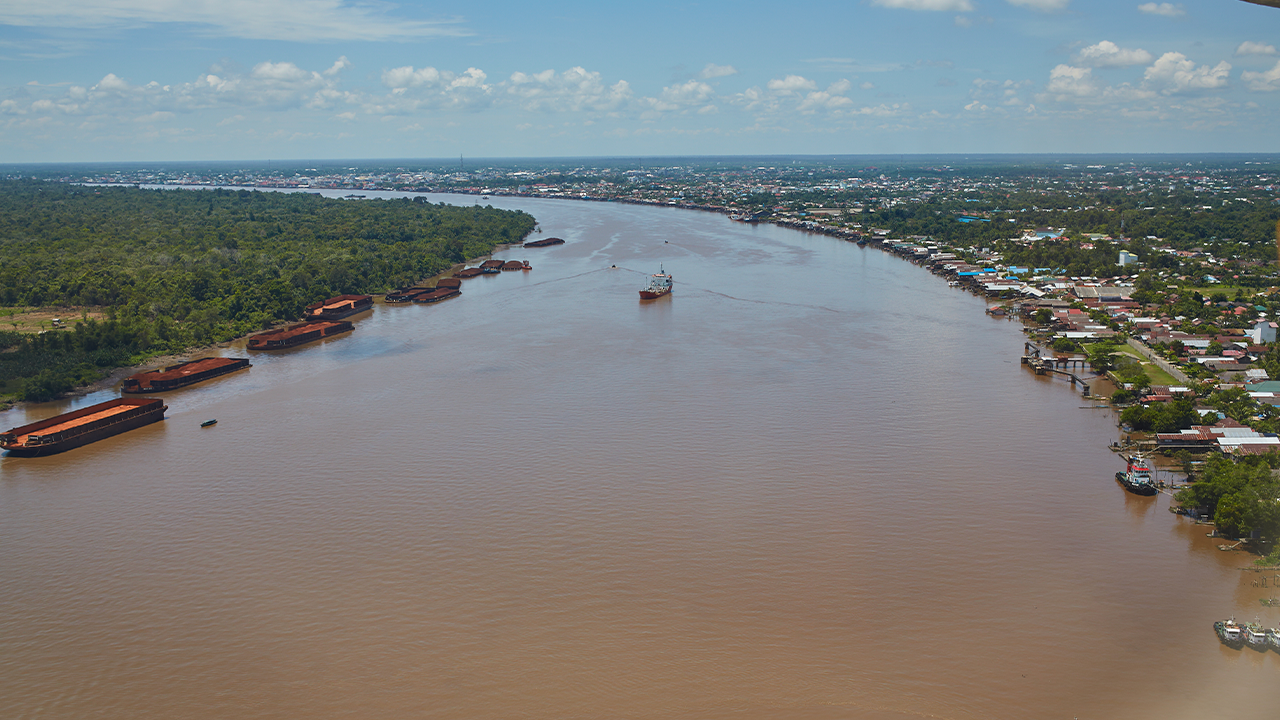
For those trying to make sense of the disappearance, the facts are painfully few. The Virgo Transport 8 was an inter-island passenger ship, a vital link in a country made of more than seventeen thousand islands. It had departed Surabaya, a bustling industrial city on the northern coast of Java, and was headed for Banjarmasin, a riverside city on Borneo that serves as the provincial capital. The distance is not immense, but it is a crossing that demands respect for the sea. The last known position of the ship placed it about 92 miles from the pier in Banjarmasin, meaning it was already within reach of its destination. That is perhaps the cruelest detail: the journey was almost complete. The passengers and crew had likely begun to think of their arrival, of loved ones waiting on the dock, of the next steps in their ordinary lives. Instead, the ship disappeared from radar and radio, and the silence that followed has swallowed everything. The Banjarmasin Search and Rescue Office said that authorities launched a search operation after receiving a report that the ship had suffered a communications failure during the voyage. The phrase “communications failure” covers a wide range of possibilities, from a minor technical problem to something far more serious. It does not necessarily mean the ship is in distress. But in a region where maritime tragedies have happened before, even a technical fault can quickly become an emergency. Officials have not said whether weather conditions were affecting the search, or whether the ship might have drifted off course. They have not announced any confirmed sighting or signal. The only certainty is that the Virgo Transport 8 is out there somewhere, and that time is passing.
Behind the news reports and official statements are the human beings who make up those numbers. Two hundred and forty people is not an abstraction; it is a father returning from work, a mother traveling with a child, a young student heading to school, a merchant carrying goods for trade, a deckhand on his first voyage, a captain with years of experience. Each one had a reason to be on the Virgo Transport 8. Each one had plans, dreams, and people who love them. On the pier in Banjarmasin, where the ship was supposed to arrive, families and friends have gathered, waiting in the thick tropical heat. Some cling to the hope that the ship may simply have lost power and is drifting, that a message will arrive, that the vessel will appear on the horizon. Others are gripped by the cold weight of fear, remembering past disasters that have scarred Indonesia’s maritime history. For those aboard, the crossing probably began as a normal day. They may have waved goodbye to loved ones, found their spots on the deck, listened to the rumble of engines, and watched the coastline of Java recede into the haze. The sea was the same sea that has carried trade and travelers for centuries, an ancient highway in an archipelago where the water is not a barrier but a connection. The loss of contact has shattered the routine of that voyage and turned a mundane journey into a nightmare. While officials classify the event as a communications failure, the families do not use such clinical terms. For them, it is the terrible unknown: the empty harbor, the unanswered phones, the long hours of waiting. They are supported only by the thin thread of official statements, which as of Sunday offered no deaths, no injuries, and no explanation.
The Java Sea is central to this story in more ways than one. It is the waterway that separates Java from Borneo, a stretch of sea that is both a commercial corridor and a challenge to sailors. Indonesia, the world’s largest archipelago, relies on ferries and passenger ships to move millions of people between islands every year. For many, sea travel is the only affordable way to reach family, work, or opportunity. The Virgo Transport 8 was part of that essential web of connections. But the Indonesian seas have also been the scene of repeated tragedies, from overloaded ferries to sudden storms that capsize vessels with little warning. In 2018, a ferry sank in Lake Toba, killing dozens. In 2019, a ferry burned off Jakarta, claiming lives. In 2021, a fire and sinking in Indonesian waters led to more deaths. These memories are part of the collective consciousness of the country, and any maritime incident immediately evokes them. Yet the authorities have cautioned against jumping to conclusions. As of Sunday, there was no confirmation that weather was a factor, no explanation for why the ship lost contact. It is possible that the ship encountered a squall and a freak wave; it is possible that a mechanical failure left it powerless and adrift; it is possible that the ship’s communication equipment simply failed while the vessel continued to sail. The search teams are working with the information available, but the sea does not easily give up its secrets. The last known position, 92 miles from the pier, is a vast search area, especially if winds and currents have pushed the ship since its last contact. Time is measured in hours, and each passing hour makes the task more difficult. Still, the searchers persist, scanning the water with the hope of finding the Virgo Transport 8 intact.
The search-and-rescue operation itself is a race against darkness, weather, and the shifting sea. Indonesian rescue teams have mobilized vessels and aircraft, combing the waters between East Java and South Kalimantan. They are working from the last known coordinates of the ship, trying to project where it might have drifted. The area is busy with commercial shipping, so there is a chance that another vessel may have seen something, or that the missing ship may have been spotted by satellite. Rescue personnel are trained for these moments, but they are also human. They know that behind the coordinates are lives. They push themselves to search every empty stretch of water, every patch of floating debris, every false radar contact that raises hopes and then dashes them. The lack of any confirmed report of deaths or injuries is a fragile but crucial anchor for hope. In maritime incidents, lost communication does not always mean disaster. Vessels have been found later, adrift but safe, their crews and passengers frightened but alive. It is possible that the Virgo Transport 8 is still floating, bobbing on the waves, waiting to be found. It is possible that the passengers are huddled together, listening for the sound of rescuers, praying that someone is looking for them. The search teams are certainly looking. They are covering as much ocean as they can, knowing that every second counts. The official line remains cautious: the ship lost contact, no deaths or injuries have been reported, the search is underway. But between those words lies the immense effort of people who refuse to give up, who know that the sea can be cruel but also that it can grant miracles. The families on shore, the rescuers in the air and on the water, and the passengers somewhere out there are linked by the same thread: the hope that the next report will bring good news.
In the end, this is a story about waiting. The world has heard about the Virgo Transport 8 and its 240 passengers and crew, and for a moment, the attention of the public is turned to the Java Sea. News organizations will continue to follow the search. The Associated Press has reported the essential facts, and Fox News has amplified them, but the story is far from finished. For the people of Indonesia, the disappearance of the ship is not merely a headline; it is a reminder of their own vulnerability on the water, and of the courage of those who travel and work across the archipelago. For the families of those aboard, the waiting is everything. They wait for official updates, for the sound of a phone, for a familiar face walking through the terminal doors. They wait with hope and fear intertwined, knowing that the sea has swallowed too many stories before. Yet they also know that rescue is possible, that the search has not been abandoned, and that there are people who will not stop looking. The Virgo Transport 8 has not been found, and its fate remains unknown. But until the sea gives up the truth, the only answer is to keep searching, to keep hoping, and to hold space for those 240 souls in the heart. The search is still underway. The story is not over. And maybe, in the vast and indifferent ocean, a ship full of living people is still out there, waiting for the first sign of rescuers to appear on the horizon. That is the hope that keeps the waiting bearable, and the hope that defines this moment.