





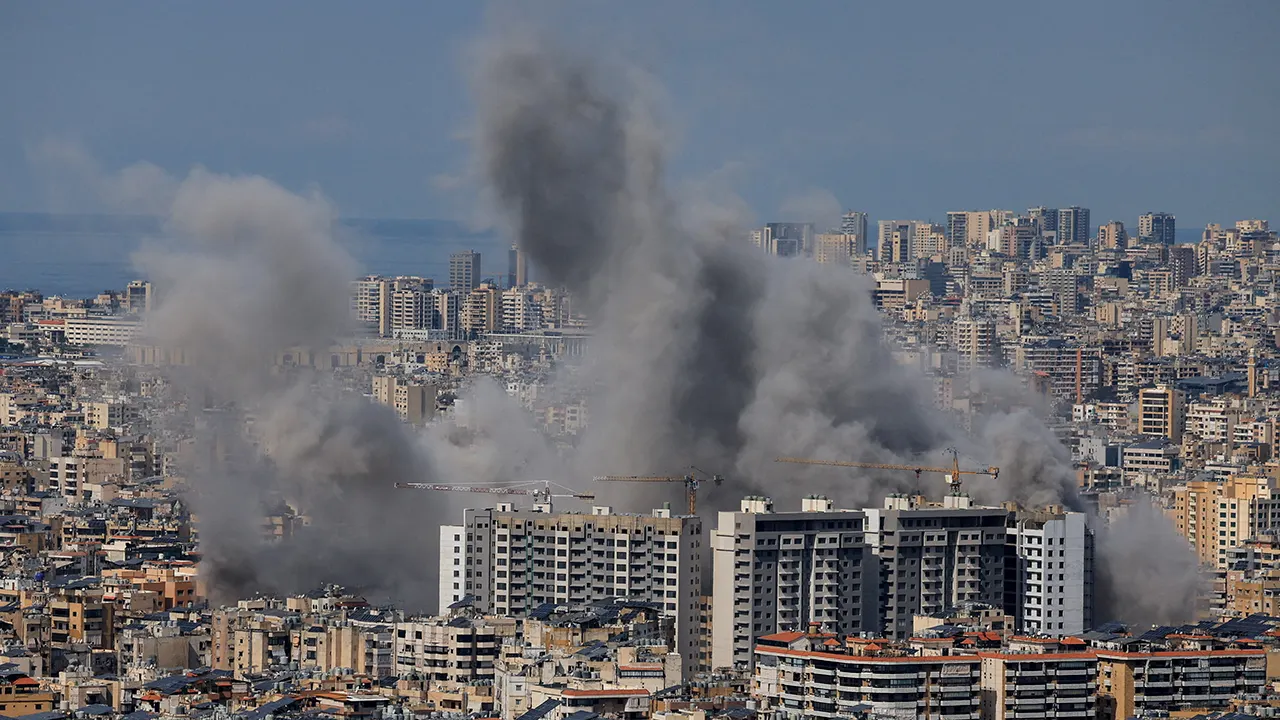
The volatile rhythm of the Middle East recently offered a fleeting glimpse of hope, only for the familiar sounds of sirens and explosions to shatter the illusion of peace once again. Just days after the United States, Israel, and Lebanon announced a delicate, conditional ceasefire framework—one that promised to halt cross-border violence and compel Hezbollah forces to withdraw from southern Lebanon—the fragile agreement was pushed to its absolute limits. On a Sunday that began with tentative hope, northern Israeli communities were suddenly forced into bomb shelters by a heavy barrage of rocket fire launched from Lebanese territory. Though Hezbollah did not immediately claim responsibility for this opening volley, the reaction from Jerusalem was swift and uncompromising. Asserting their right to immediate self-defense, Prime Minister Benjamin Netanyahu’s office characterized the rocket fire as a direct and egregious violation of the newly minted peace framework. Within hours, the skies over Beirut’s southern suburbs darkened with the smoke of retaliatory Israeli airstrikes. These precision strikes targeted facilities the Israel Defense Forces (IDF) described as central command hubs for Hezbollah, sending a clear, unyielding message that any breach of the understanding would be met with overwhelming force, highlighting just how fragile the path to lasting stability remains when decades of animosity are triggered in an instant.
Beneath the geopolitical posturing and high-altitude airstrikes lies a grimmer, subterranean reality that ground troops must confront daily. Parallel to the aerial bombardment, the IDF released striking footage documenting the meticulous and highly dangerous clearance of a hidden, booby-trapped explosives warehouse disguised within a civilian-adjacent area of southern Lebanon. For the individual soldiers stepping into these darkened, narrow corridors, each footstep carries the weight of potential disaster. This facility was not merely a passive storage site but an active, multi-purpose assembly hub, strategically designed to fabricate a lethal network of improvised weaponry. The video broadcasted to the world showed a tense sequence of military engineers navigating the structure, a process that national security experts note requires painstaking care to disable hidden tripwires, pressure plates, or remote-detonation triggers before any documentation or removal can safely begin. By exposing the inner workings of this clandestine laboratory, the military sought to illustrate the pervasive threat looming just beyond Israel’s northern border, revealing a highly organized infrastructure built to wage a protracted guerrilla campaign from the shadows.
To understand the true, terrifying utility of the seized cache, one must look closely at the specific components recovered by the advancing forces. According to Nick Reese, an adjunct professor at NYU’s Center for Global Affairs and a former United States national security adviser, the contents of the dismantled warehouse tell a chilling story of warfare designed to inflict maximum human suffering. Among the debris stood a container packed to the brim with nails, jagged metal shards, and other sharp implements—materials with no logical purpose other than to act as deadly shrapnel. Reese points out that while high-tech military hardware often targets infrastructure or heavy armor, these crude, low-tech shrapnel bombs are specifically engineered to tear through flesh, targeting infantrymen on patrol or civilians walking the streets. These devices are intentionally cheap to manufacture and exceptionally easy to hide, making them a weapon of choice for asymmetric warfare where the primary objective is to sow psychological terror and inflict devastating physical injuries on anyone on foot. The discovery underscores the grim reality of modern regional combat, where military strategies are calculated not just in terms of territory gained, but in the intimate, horrific toll exacted on human bodies.
The sheer variety of materials recovered from the facility highlights the dual-track nature of Hezbollah’s military readiness, balancing crude terror tactics with heavy anti-armor capabilities. Alongside the anti-personnel shrapnel kits, soldiers uncovered large, modified propane tanks, which serve a fundamentally different tactical purpose. As Reese expounded, while nail bombs are designed to devastate soft human targets, these reinforced gas cylinders are typically converted into heavy-payload explosives aimed at shattering reinforced buildings, compromising fortified positions, or disabling heavily armored military vehicles like tanks. This juxtaposition reveals that the uncovered warehouse acted as a centralized, general-purpose munitions hub. It was an assembly line capable of tailoring destruction to match the shifting demands of the battlefield—whether that meant stalling an armored Israeli advance with heavy blasts or terrorizing foot patrols and local populations with localized, unpredictable shrapnel detonations. This localized versatility makes such facilities exceptionally dangerous, as they allow small, localized cells to maintain a diverse arsenal without relying on a highly visible, easily targetable logistics pipeline.
The successful neutralization of this bomb factory did not occur in a vacuum; rather, it was the culmination of an intense, intelligence-driven campaign aimed at decapitating the leadership governing these covert networks. Just days prior to the raid, a high-profile Israeli airstrike in Lebanon successfully targeted and killed Abed Harb, a legendary figure within Hezbollah who served as the commander of the group’s specialized engineering unit and its chief explosives expert. The IDF characterized Harb as a deeply dangerous veteran commander who had orchestrated numerous deadly attacks against Israeli soldiers over a career spanning several decades. Managing an underground network of bomb makers requires a rare blend of scientific precision, logistical cunning, and deep operational security—skills that Harb possessed in abundance. Given Iran’s extensive history of providing financial backing, advanced weaponry, and specialized training to Hezbollah, Harb likely sat at the intersection of foreign state support and raw, localized combat experience, allowing him to endlessly adapt his bomb-making methodologies to counter emerging Israeli defensive technologies and detection methods.
Ultimately, the death of a figure like Abed Harb represents a profound, irreplaceable loss for Hezbollah’s operational capacity, striking at the very heart of its tactical continuity. As Nick Reese observed, Harb’s removal from the battlefield is far more than a routine leadership vacancy; it constitutes a severe depletion of institutional knowledge that cannot easily be replenished. Over twenty years of active engagement, Harb cultivated an intimate, highly sophisticated understanding of the IDF’s operational patterns, which he translated into effective countermeasures taught to junior combatants. His ability to design, disguise, and deploy intricate explosive networks was a cornerstone of Hezbollah’s survival strategy. Without his guiding hand, the group’s engineering units face a steep learning curve and a fragmented chain of command. Yet, as history has repeatedly shown in this volatile corner of the world, every tactical victory and dismantled warehouse is quickly met with renewed determination from the opposition, perpetuating an endless cycle where temporary ceasefires give way to renewed violence. Until the underlying geopolitical grievances are addressed, the devastating dance of rocket fire, airstrikes, and hidden bombs will continue to claim lives, leaving communities on both sides of the border trapped in a state of perpetual, anxious vigil.