


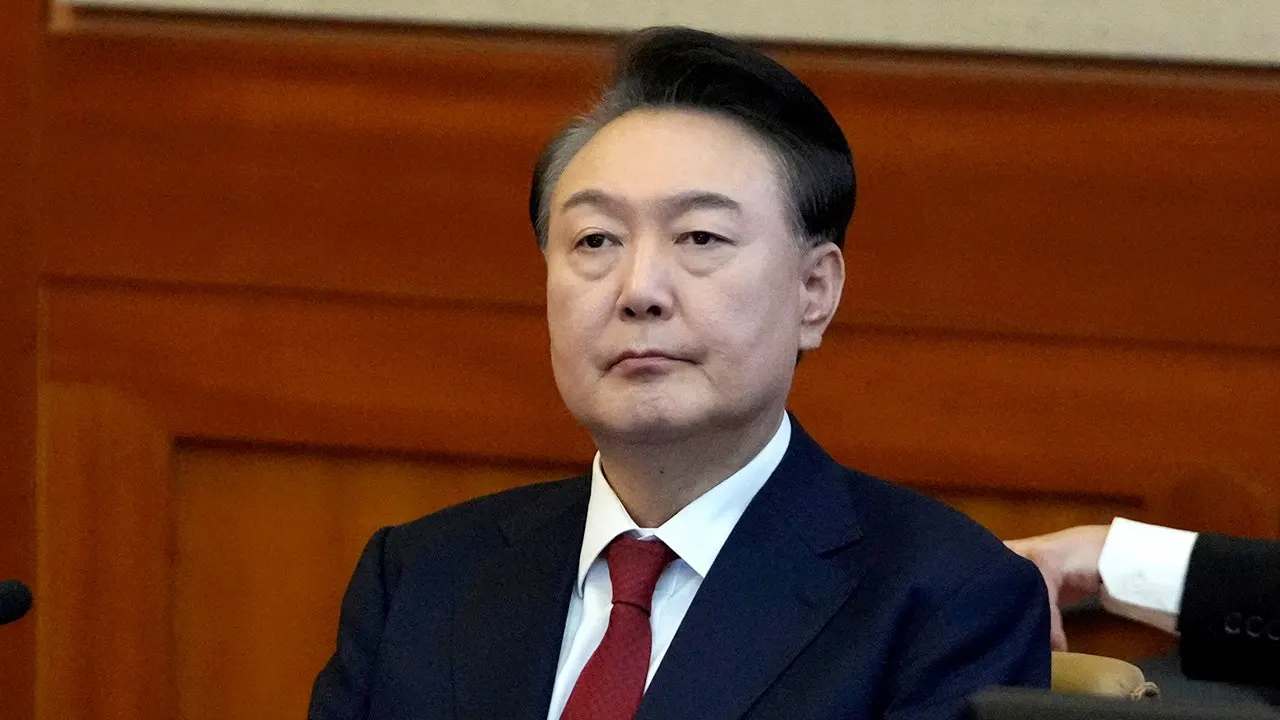
The dramatic downfall of former South Korean President Yoon Suk Yeol, culminating in a historic 30-year prison sentence delivered by the Seoul Central District Court, stands as a stark testament to the turbulent nature of modern South Korean politics and the unyielding strength of its judicial institutions. At 65 years old, Yoon has plummeted from the pinnacle of democratic power into a harsh reality of lifetime confinement that few could have anticipated when he took office. This latest sentencing, which paired him with his former Defense Minister Kim Yong Hyun, addresses a chilling and highly calculated conspiracy: the deliberate coordination of clandestine drone flights into North Korean airspace, designed not to defend the republic, but to manufacture a national security emergency that would justify the imposition of authoritarian rule. For a nation that has spent decades painstakingly building one of Asia’s most vibrant and prosperous democracies, the revelation that its own leader attempted to engineer a catastrophic threat to his people’s safety in order to consolidate his personal power has struck a deep, agonizing chord. The spectacle of a former head of state being condemned to decades behind bars—on top of a previously handed down life sentence for leading an armed insurrection—has left South Koreans grappling with a mixture of profound betrayal and a renewed sense of pride in their country’s ability to hold the highest echelons of power accountable. The court’s decision represents more than just a legal verdict; it is an emotional and cultural reckoning for millions of citizens who watched in real-time as their democratic rights were briefly held hostage by a leader they had entrusted to protect them. To understand the gravity of this sentencing, one must understand how deeply the concept of the presidency is intertwined with the collective memory of South Korea’s historical struggles against authoritarianism.
At the dark heart of this legal saga lies a plot that reads more like a dystopian political thriller than the foreign policy of a major global power: the deliberate provocation of a nuclear-armed neighbor through covert drone operations. In October 2024, the skies over Pyongyang became an unlikely battleground when North Korea accused the South of flying unmanned aerial vehicles deep into its territory to scatter anti-regime propaganda leaflets on three separate occasions. At the time, the world watched with bated breath as tensions on the peninsula threatened to boil over into an all-out military confrontation. Within South Korea, citizens went to sleep wondering if a routine geopolitical spat might spin out of control, entirely unaware that the very anxiety they felt was being meticulously weaponized by their own president. The prosecution successfully argued that Yoon and his inner circle, including Defense Minister Kim, orchestrated these flights with the explicit, cynical goal of inciting a harsh countermeasure from Pyongyang. They wanted to create a palatable optical illusion of imminent conflict—a crisis so seemingly existential that it would provide Yoon with the political cover needed to bypass constitutional norms and declare martial law. This was not a military strategy engineered to deter aggression, but a calculated gamble with human lives, using the ever-present specter of inter-Korean conflict to fabricate an artificial emergency. The sheer recklessness of using the lives of millions of citizens living near the border as bargaining chips in an internal struggle for power highlights the depths of the betrayal felt by the public. When the Defense Ministry initially responded to the flights with a vague “neither confirm nor deny” stance, it was not protecting military secrets; it was participating in a cover-up designed to keep the domestic audience in a state of suspended terror, facilitating a power grab under the guise of national preservation.
The ultimate failure of this elaborate scheme occurred during six chaotic, terrifying hours in December 2024, a night that will forever be etched into the collective memory of the nation. In a sudden, late-night televised address that stunned the world, Yoon appeared on screens across the country to announce the declaration of martial law, a measure not seen in South Korea for over four decades. He justified the extreme decree by launching into a vitriolic tirade, accusing liberal opposition lawmakers of being North Korean sympathizers bent on paralyzing the government and carrying out anti-state activities. As military helicopters hovered over Seoul and armed soldiers entered the halls of the National Assembly, the initial shock of the populace quickly turned into an overwhelming, grassroots wave of resistance. Ordinary citizens braved the freezing winter cold, rushing to the parliamentary building to stand shoulder-to-shoulder with lawmakers who were scaling fences and dodging security barriers to enter the legislative chambers. In a dramatic display of democratic resilience, the parliament voted unanimously to block the decree, forcing Yoon to rescind his order just hours after making it. For the people who watched this brief, terrifying authoritarian experiment unfold, the events of that night were a vivid reminder of how quickly hard-won freedoms can be eroded. It was a human drama of courage versus cowardice; while Yoon hid behind televised speeches and military orders, ordinary people put their bodies on the line to defend their constitution. The six-hour standoff did not just defeat a political maneuver; it permanently shattered Yoon’s legitimacy, paving the way for his eventual arrest in July 2025 and setting the stage for the historic trials that followed.
The judicial process that followed Yoon’s arrest has been characterized by an intense, solemn examination of the responsibility leaders owe to those they govern. In the courtroom of the Seoul Central District Court, the abstract concept of high treason was transformed into concrete legal accountability as prosecutors presented a mountain of evidence detailing how Yoon and Defense Minister Kim systematically compromised national security for personal gain. The prosecutors’ pursuit of the death penalty during the insurrection trial underscores the severity with which the state views the crime of attempting to overthrow democratic governance. While the court ultimately opted for a life sentence for the insurrection charges, and an additional 30 years for the illegal drone operations, the message sent to future leaders was unmistakably clear: the preservation of democratic institutions is paramount, and any attempt to dismantle them will be met with the harshest penalties the law allows. For Kim Yong Hyun, the former Defense Minister, the sentencing represents the tragic end of a once-distinguished military career, serving as a sobering warning to the defense establishment about the dangers of blind loyalty to a corrupt executive over the state constitution. Throughout the trial, Yoon maintained a defiant stance, arguing that his actions fell within his constitutional authority to protect the nation and accusing his political rivals of orchestrating a witch hunt to obstruct his administration. However, this defense rang hollow against the testimonies of military personnel and civil servants who described being pressured to carry out orders they knew were illegal and dangerous, exposing a system where the lines between national defense and political self-preservation had been criminally and deliberately blurred.
This dramatic chapter in South Korea’s history cannot be fully understood without recognizing the deep resilience of its democratic culture, which has consistently refused to allow its leaders to act like monarchs. From the candlelight protests that led to the impeachment of Park Geun-hye in 2017 to the popular uprisings of the 1980s, the citizens of South Korea have repeatedly demonstrated a unique willingness to actively participate in the defense of their state. The rapid collapse of Yoon’s martial law attempt and his subsequent conviction highlight a sophisticated political maturity within the populace, where loyalty is pledged to the constitution and the rule of law rather than to any individual politician. Unlike many nations where political crises of this magnitude lead to systemic instability or military intervention, South Korea navigated this emergency through its existing legal and political frameworks, demonstrating the absolute robustness of its judicial system. The Seoul Central District Court, by delivering these heavy sentences, acted not as an instrument of political vengeance, but as a crucial stabilizer, restoring faith in the concept that nobody is above the law. This active defense of democracy by both the courts and the public is a testament to the heavy price Koreans have historically paid for their freedoms, making them fiercely protective of their democratic heritage. The trials have served as a collective therapy for a nation that felt deeply traumatized by the sudden return of military vehicles to the streets of its capital, providing a sense of closure and reaffirming that the dark days of dictatorship will not be allowed to return.
As the dust begins to settle on these momentous court rulings, South Korea looks toward the future with a mixture of relief, vigilance, and profound introspection. Although Yoon and the prosecutors have appealed the insurrection verdict, prolonging the legal drama, the moral and political judgment of the nation has already been cast. The long-term implications of this crisis on inter-Korean relations remain a point of concern, as the revelation that a South Korean government was willing to manufacture border provocations threatens to complicate future diplomatic efforts with a highly suspicious North Korea. However, the domestic lessons of the Yoon presidency are clear: the institutions of democracy are only as strong as the people who defend them, and vigilant oversight of executive power is an ongoing necessity. In the streets of Seoul, where life has returned to its bustling, high-tech normalcy, the legacy of this crisis is a quiet but powerful resolve. Families walk through the plazas where protests once raged, secure in the knowledge that their democracy has survived its greatest test in a generation and emerged stronger, more transparent, and infinitely more resilient. The story of Yoon Suk Yeol’s fall is a poignant reminder of the fragility of power, but more importantly, it is a celebration of the quiet heroism of ordinary citizens who, when confronted with the shadow of tyranny, successfully chose to stand up, speak out, and reclaim their country’s future.