



The decision to follow one’s conscience and embrace a new faith should be a deeply personal, peaceful journey, but for Said Mansour Rezk Abdelrazek, it became a descent into a living nightmare. Choosing to convert from Islam to Christianity in Egypt in 2016 did not bring him spiritual sanctuary; instead, it marked the beginning of a relentless, multi-year campaign of state-sponsored harassment, arbitrary arrest, and physical abuse. Abdelrazek’s case has since evolved into one of Egypt’s most high-profile and harrowing dramas of religious persecution, culminating on April 13 when state prosecutors abruptly sent his case to a notorious terrorism court while actively preventing his legal counsel from even glancing at his case files. Left languishing in a dark detention cell, cut off from basic medical care and subjected to documented acts of torture and physical violence, his trial has been repeatedly postponed, leaving him in a state of terrifying legal limbo. Abdelrazek’s suffering is a stark, agonizing reminder of the immense human cost borne by those who dare to step outside the state-sanctioned religious boundaries in a nation where freedom of belief remains a highly dangerous liberty.
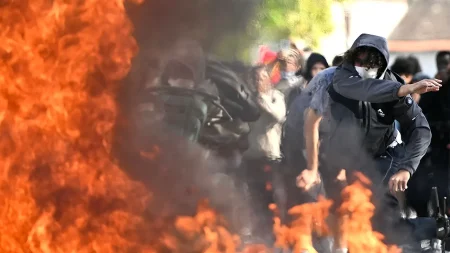
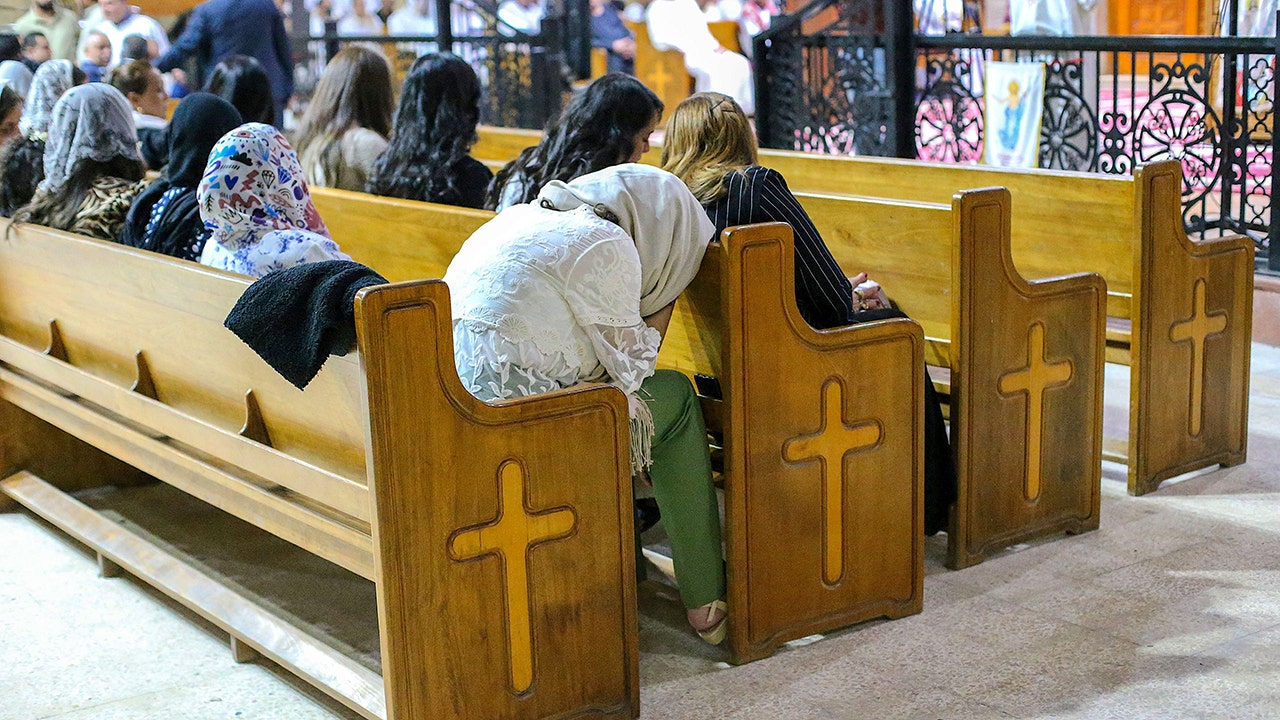
While individuals like Abdelrazek suffer in the quiet isolation of prison cells, entire Coptic Christian communities face sudden, terrifying outbursts of violence in their neighborhoods and places of worship. This grim reality was brought into sharp focus on July 8 in Upper Egypt, when an angry mob of local Muslims marched on a Christian church, hurling stones that shattered windows, damaged a priest’s personal vehicle, and left several injured worshipers bleeding and terrified inside their own sanctuary. The echo of those stones had barely faded when, just days later, another brazen assault targeted the Reverend Matta Roushdy, a 49-year-old priest serving the Virgin Mary and St. Abanoub Coptic Orthodox Church in Dahab, South Sinai. International watchdogs like Open Doors trace these violent episodes back to radical Islamist factions, including remnants of the Muslim Brotherhood, who exploit a broader anti-Christian sentiment that runs deep in conservative rural communities. In these remote areas, weak local law enforcement often stands by passively, leaving vulnerable Christian families to fend for themselves against hostile neighbors, proving that despite a decline in large-scale attacks over the last decade, daily life for ordinary Copts remains fraught with underlying tension and physical danger.
This ongoing domestic crisis presents a jarring geopolitical paradox for the United States, which continues to pour $1.3 billion in annual aid into Egypt, ostensibly to foster stability and partnership in the region. The U.S. State Department has repeatedly expressed formal concern over these human rights violations, with spokespeople pointing back to long-standing American pledges to champion the right of every individual to live out their faith openly, freely, and without fear. Yet, critics and Middle East experts argue that these high-minded diplomatic sentiments ring hollow when contrasted with the sheer volume of financial support flowing from Washington to Cairo. The disconnect between America’s stated moral values and its financial leverage raises pressing questions about why such massive sums of U.S. taxpayer money have failed to secure basic civil protections or halt the state’s prosecution of religious minorities. For advocates on the ground, the lack of decisive international pressure allows the Egyptian government to accept American billions with one hand while turning a blind eye to the erosion of religious liberty with the other.
Beyond the threat of physical violence, Egyptian Christians are stifled by an iron cage of systemic institutional discrimination that effectively locks them out of societal influence. Though Coptic Christians number between 10 and 12 million people—roughly ten percent of Egypt’s massive population—they are invisible in the upper echelons of public life, a reality thoroughly documented in the State Department’s 2025 religious freedom report. Out of a 31-member presidential cabinet, only two seats are held by Christians, and among the country’s 27 appointed provincial governors, only one is Copt. The glass ceiling is absolute in higher education, where not a single public university in the country is headed by a Christian president, and the story is much the same within the powerful ranks of the national security services, the civil service, and the judiciary. This systematic erasure of Christian leadership is paired with an aggressive policing of the digital public square; recently, a Coptic YouTuber named Augustinos Samaan was handed a harsh five-year prison sentence simply for publishing online videos defending his Christian faith, illustrating that any public defense of their beliefs is swiftly branded as an insult to the majority religion.
This deeply divided society is managed by President Abdel Fattah el-Sisi through a delicate, highly calculated strategy of political theater, a dynamic explained by prominent scholar Dalia Ziada. Christian minorities and women represented the absolute bedrock of El-Sisi’s political rise following the chaotic aftermath of the Arab Spring, turning to his military-led government as a desperate shield against the rising tide of the Muslim Brotherhood. Today, El-Sisi maintains the performative appearance of a protector—such as making highly publicized annual appearances at Coptic Christmas Eve services—to satisfy his political base and appease Western critics. But beneath this thin veneer of harmony, Ziada points out that very little structural work is being done to dismantle the systemic biases that keep Christians deeply vulnerable. Copts are not just a statistical minority on paper; they are the literal descendants of Egypt’s ancient pharaonic history and the keepers of its cultural memory, yet they are treated as second-class citizens whose safety is continually bartered for political loyalty.
Amid these systemic hardships, rare moments of accountability offer precious glimmers of hope that change, however slow, might be possible. A historic breakthrough occurred when Coptic Solidarity announced that Egypt’s Ministry of Youth and Sports had launched an investigation and found concrete evidence of discrimination within Alexandria’s Al-Ittihad Club, where a youth soccer coach had excluded a talented young player, Makari Younan, simply because of his Christian name. This marked the very first time the Egyptian state officially acknowledged and intervened in the deep-seated, open secret of anti-Coptic bias in domestic sports, departing from decades of standard government denials. While a single soccer investigation cannot undo centuries of embedded prejudice or instantly free prisoners of conscience like Said Abdelrazek and Augustinos Samaan, it represents a vital crack in the wall of state denial. It proves that persistent, vocal public advocacy can force the government to act, illuminating a long and difficult path forward where true citizenship and human dignity might one day be guaranteed for every Egyptian, regardless of how they choose to pray.