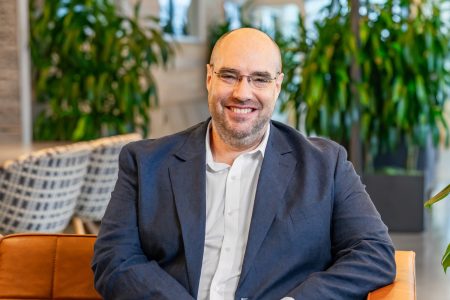




In the Pacific Northwest tech ecosystem, few stories are more telling than the sight of a seasoned Microsoft executive opening an Amazon box. That image greeted Mazhar Mohammed’s LinkedIn network recently, a simple photo with the caption “Alexa, play ‘New Beginnings.’” After more than three decades at Microsoft, Mohammed has joined Amazon as vice president of AWS Streaming and Messaging. His career arc is a study in quiet versatility: he arrived at Microsoft straight from a master’s program as a software design engineer on Windows NT, then moved through messaging, mobile services, and partner experience before becoming corporate vice president for the commerce and fraud protection platform. It’s the kind of résumé that makes a person invaluable—not because of any single product, but because of institutional memory and the ability to adapt as computing shifts from desktops to data centers to clouds. Now he’s on the other side of the rivalry, a move that might feel surprising for someone with such deep Microsoft roots, but it echoes a broader reality in the region: talent flows between the two giants, and a 33-year tenure doesn’t have to define a final chapter. At almost the same time, Microsoft reached into the world of AI enterprise software to fill its own leadership ranks. Chad Thompson has been named corporate vice president of Agent Cloud, a group focused on helping businesses deploy AI agents across their organizations. Thompson comes from Alteryx, but his background includes six years at Amazon, where he left as general manager of Amazon Glow, along with stints at Smartsheet, Exasol and Adobe. In his LinkedIn announcement, Thompson made clear that he sees this as the moment when AI stops being a novelty. “My view: enterprise is where AI pays off,” he wrote. “Not in demos, but in measurable results. Lower costs, faster cycle times, better decisions, and work that gets done without someone pushing it along.” That message resonates with anyone who has watched AI demos dazzle audiences yet fail to make it into daily workflows. Thompson’s mandate is to build the connective tissue that lets software agents actually operate inside companies—not as toys, but as colleagues. Together, Mohammed and Thompson’s moves highlight a peculiar truth about the region’s two tech giants: they compete fiercely, but they also borrow from each other’s DNA, creating a revolving door that keeps the Pacific Northwest at the center of computing’s next era.
While external moves attract attention, Amazon also continues to elevate leaders who have grown up inside the company. Gail Carpenter’s promotion to vice president and chief financial officer of Global Entertainment and Advertising is a case in point. Carpenter, who has spent 11 years at Amazon, was most recently CFO of Worldwide Stores Finance. The new role puts her at the intersection of two of Amazon’s most visible and volatile businesses: entertainment content and advertising. These are areas where the company’s ambitions go far beyond e-commerce, touching streaming and media deals that require a financial hand steady enough to balance creative bets with shareholder expectations. Her longevity inside Amazon suggests she has weathered the company’s famous frugality culture and its willingness to invest heavily in new ventures. Promoting from within also sends a signal to employees that patient, varied experience can lead to some of the most challenging financial roles in the company. Another quiet but significant move involves Andre Woodson Jr., who has taken on the role of manager of U.S. state and local policy communications and external affairs at Amazon. Woodson, a 12-year veteran, previously worked as a regional field communications manager. The new title reflects Amazon’s growing need to engage with governments at the state and local level, where issues like data center siting, warehouse regulations, and tax incentives often matter more than federal policy. It’s a role that requires translation skills—between corporate strategy and community concerns, between facts and sentiment—and Woodson’s long tenure gives him a kind of credibility that outside hires often lack. In a company as large as Amazon, internal moves like these are easy to overlook, but they matter. They shape how the company speaks to the public, how it manages its money, and how it navigates the messy, human work of politics. Carpenter and Woodson represent the quieter half of the talent churn, the steady accumulation of responsibility that keeps a massive organization running while the headline-grabbing hires come and go.
The Seattle area’s biotechnology community is also undergoing a leadership refresh, with AI at the center of the most ambitious plans. Lila Bio, a startup spun out of Nobel laureate David Baker’s lab at the University of Washington, has appointed Kimberly Ma as chief development officer. The company uses AI to design novel proteins that can treat cancer through targeted radiation therapy. This is not the usual immunotherapy story; Lila Bio is trying to make radiation treatment more precise by engineering proteins that home in on tumors and deliver a payload of radiation only where it’s needed. It’s an elegant concept that requires deep expertise in both protein design and clinical development. Ma brings twenty years of oncology drug development experience, most recently as a leader at Abdera Therapeutics, where she worked on similar targeted radiopharmaceuticals. Earlier, she was at RayzeBio, where she led the clinical operations team and supported the company’s initial public offering and its subsequent $4.1 billion acquisition by Bristol Myers Squibb in 2024. That history of shepherding experimental drugs through the clinical pipeline—and through the chaos of an acquisition—is exactly the kind of practical wisdom a young biotech needs. Lila Bio already announced a collaboration with pharmaceutical giant Eli Lilly for solid tumor therapies, so Ma is stepping into a role with momentum, not just potential. Meanwhile, Seattle-based RevealDx, a company developing AI technology to detect potentially cancerous lung nodules, has strengthened its leadership with two appointments. Dr. Ryan Brevard joins as medical director after serving as an advisor to the company and helping it secure FDA clearance. With more than 23 years in critical care and emergency medicine, Brevard understands that a false positive on a lung scan can cause real psychological harm, and that false negatives can be deadly. His presence gives the company credibility with clinicians who are often skeptical of AI. The second appointment, David Austin as vice president of sales, brings nearly three decades of experience in diagnostic imaging, radiology, and medical technology commercialization. Austin’s job is to convince hospitals and clinics that an AI tool can fit into existing workflows without adding friction. Together, Ma, Brevard, and Austin represent the human dimension of medical AI: scientists and doctors and salespeople who have seen how slowly medicine changes, and who know that the best technology is useless if it doesn’t earn trust one clinician at a time.
Outside the realm of medicine, artificial intelligence is reshaping more mundane but equally important institutions. BECU, the Tukwila-based not-for-profit credit union, has named Geoffrey Fonga as vice president of AI transformation. Fonga comes from DataRobot, where he helped organizations adopt and scale AI as a consultant and vendor. But in his new role, he’s on the inside, responsible for making AI actually work for a member-owned financial institution. “For years, I helped organizations adopt and scale AI as an advisor and a vendor,” Fonga said. “Now I get to do the harder, more rewarding part: leading that transformation from the inside.” That distinction—between advising and doing—is one that resonates in an industry where AI projects often stall because nobody owns the messy integration with legacy systems, compliance procedures, and customer trust. Fonga’s previous leadership roles at McKinsey & Company and Wells Fargo suggest he knows how to talk to both risk-averse executives and technical teams. At BECU, his work will likely touch everything from fraud detection to member service, with the challenge of maintaining the credit union’s community-focused ethos while introducing automation. Security and governance of AI are equally important, which explains the appointment of Edna Conway to the advisory council of Known, a Bellevue-based company building accountability infrastructure for AI agents. Conway spent 20 years at Cisco before joining Microsoft in 2020 as vice president and chief security and risk officer for Azure infrastructure. Her career has been defined by the idea that trust must be engineered into technology, not bolted on afterward. As AI agents become more autonomous—making decisions, executing transactions, interacting with customers—the question of accountability becomes urgent. Known is trying to build the infrastructure to answer that question, and Conway’s presence on its advisory council signals that it’s serious about security and risk. In the same enterprise software realm, LogicGate, headquartered in Chicago but with several C-suite executives based in the Bellevue office, has named two new leaders: Steve Smith as managing director for Europe, the Middle East and Africa, and Amanda Meglemre as general counsel. Smith’s role reflects the company’s international growth ambitions, while Meglemre’s appointment suggests a need for strong legal guidance as governance, risk, and compliance software becomes more intertwined with AI. These are not flashy moves, but they show how the industry is maturing—moving from pilots to structures, from enthusiasm to accountability.
Energy is another sector where leadership moves are beginning to reflect a new generation of challenges and opportunities. Hanna Grene has left Microsoft, where she served as global go-to-market and innovation leader for energy, to join Xcel Energy. At Xcel, she will lead the newly established Enterprise Growth and Commercialization group, effective Nov. 16. The move is a telling crossover: for years, Grene helped Microsoft think about energy as a market and a strategic resource, working with utilities and clean-tech companies. Now she’s on the utility side, tasked with turning ideas into commercial services. Xcel Energy, like many utilities, is trying to reinvent itself as a driver of electrification, grid modernization, and renewable energy. Grene’s tech background could help it move with the speed of a software company, even if the regulatory environment keeps things grounded. It’s a reminder that the energy transition isn’t just about engineers and power lines; it’s also about people who can translate between the cultures of big tech and the traditional utility world. Seattle’s Avalanche Energy is going in the opposite direction, building physical devices rather than software services. The startup, which is developing compact fusion devices, has named Chris Riegel as head of talent acquisition. Riegel joins from HiringKit, an HR company he co-founded, and previously worked at Amazon and Unity Technologies. In a tight talent market, finding people who can work on fusion—a field that requires plasma physicists, mechanical engineers, and supply-chain managers—is no small task. Riegel’s experience in both huge tech companies and scrappy startups may help Avalanche attract the kind of people who are comfortable with ambiguity and hungry for impact. The company is also leading a team tackling DARPA’s nuclear battery challenge and launching FusionWERX, a commercial-scale testing facility for fusion technologies in Eastern Washington. The juxtaposition of Grene’s move to Xcel and Avalanche’s hiring push illustrates the spectrum of energy careers today: one path leads into the established grid, the other toward a speculative future of compact fusion. Both are necessary, and both are being built by people making deliberate, human choices about where they can have the most impact.
Finally, the region’s civic and nonprofit circles are also being shaped by the same executives who populate its tech companies. Julie Averill, former chief information officer at lululemon and REI, has joined the UW Foundation Board, which helps raise philanthropic support for the University of Washington. Averill’s background in technology and outdoor retail might seem unrelated to fundraising, but universities need more than donors—they need leaders who understand organizational transformation and can speak the language of both innovation and human need. Her appointment signals that the UW Foundation is looking for people who can connect the university’s research mission to the region’s tech economy. Similarly, Technology Alliance, a nonprofit that advocates for the growth of Washington’s technology sector, has appointed Jen Oleson, a senior director at Seattle-based consulting firm Slalom, to its board. Oleson will serve on the organization’s Research Capacity Committee, a role that likely involves thinking about how universities, companies, and governments can work together to fund research and develop talent. These board positions are often unpaid and rarely make headlines, but they are how the tech community invests in the health of its home. There is also movement in healthcare administration. Ben Helsel has left Premera Blue Cross, a major Washington health insurer, to join Kaiser Permanente as vice president and general manager of commercial markets in Washington. Helsel’s move from one health plan to another might seem like a lateral step, but in the context of Washington’s competitive insurance market, it represents a meaningful shift. Kaiser Permanente is known for its integrated model, where the insurance side and the care delivery side are tightly connected, and that model is expanding in Washington. Helsel’s experience at Premera, where he likely spent years navigating the state’s complicated regulatory and employer landscape, makes him valuable to Kaiser as it attempts to grow its commercial business. All of these appointments—Averill on the UW board, Oleson at Technology Alliance, Helsel at Kaiser—share a common theme: they are less about individual glory than about building institutions. The same people who make headlines when they switch between Microsoft and Amazon are also quietly serving on boards, joining advisory councils, and moving between industries in ways that knit the region together. This is the real story of the Pacific Northwest’s talent churn: it’s not just a game of musical chairs among billion-dollar companies, but a living network of people who carry experience from one challenge to the next. And in the process, they are helping Seattle and Washington state remain not just a place where technology is invented, but where it is governed, applied, and made to serve human purposes.