



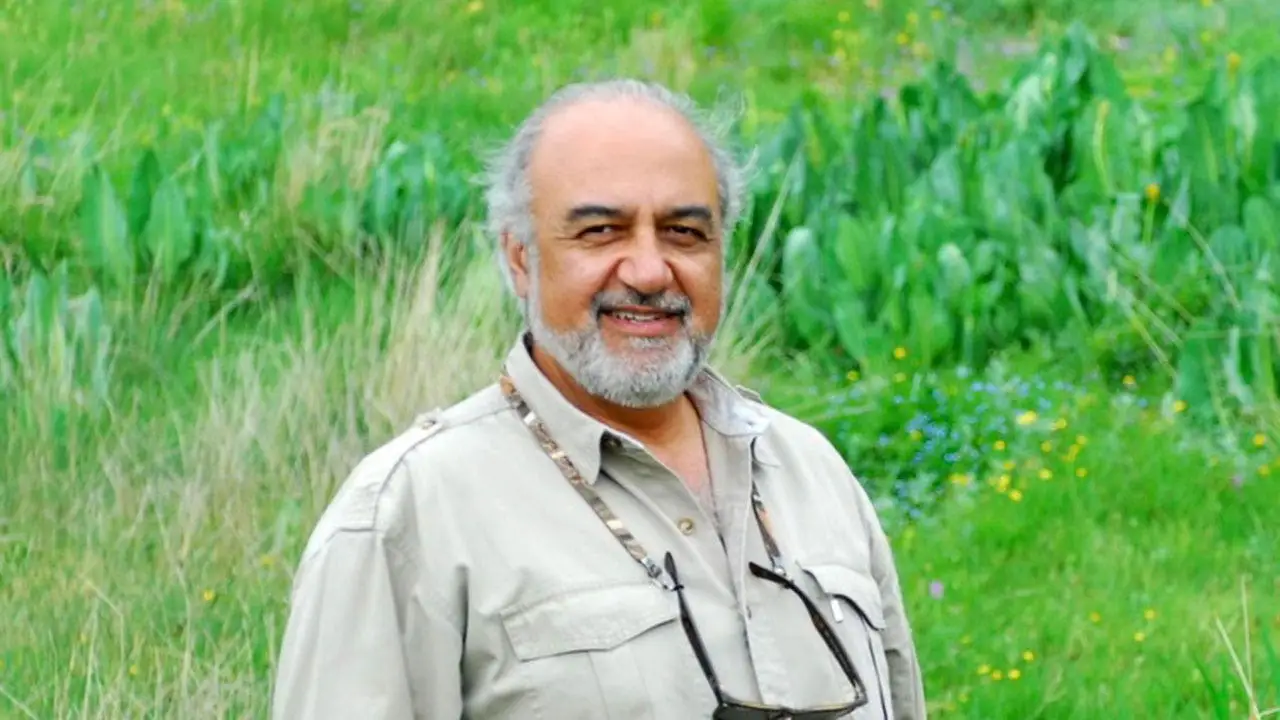
Imagine transitioning from the vast, rugged, and majestic landscapes of the Iranian wilderness, where your life’s mission is the preservation of endangered species, to a cramped, windowless concrete box where the sun never rises and the lights never go out. This was the harrowing reality for Morad Tahbaz, an Iranian-American conservationist who spent nearly six years enduring what he describes as an earthly hell inside the notorious Evin Prison in Tehran. Co-founder of the Persian Wildlife Heritage Foundation, Tahbaz had dedicated his life to protecting the fragile ecosystems of his ancestral homeland, focusing on saving the critically endangered Asiatic cheetah and Persian leopard from the brink of extinction. Yet, in January 2018, his noble pursuits were violently halted when the intelligence branch of the Islamic Revolutionary Guard Corps (IRGC) arrested him and several of his colleagues under a cloud of absurd, fabricated charges. In a poignant demonstration of the regime’s paranoid theater, security officials accused Tahbaz of the surreal crime of training desert lizards to act as espionage agents, claiming the reptiles were engineered to detect uranium deposits and spy on military installations for Israel. This comical, yet chilling allegation was merely a facade for a much more sinister intent: to transform an innocent environmental defender into a political pawn. For the first two years of his captivity, Tahbaz was locked deep within Ward 2A of Evin Prison, a high-security black hole completely controlled by the IRGC, where he spent four grueling months in absolute, suffocating solitary confinement. Under the constant, blinding glare of a fluorescent bulb that robbed him of any concept of day or night, Tahbaz survived on sheer mental resilience, allowed outside only twice a day for mere ten-minute intervals, always forced to wear a heavy blindfold, and restricted to brief, monitored phone conversations with his wife where any utterance of English would immediately cause guards to sever the line.
The psychological warfare did not end when his solitary confinement subsided; rather, it evolved into a different form of existential dread when he was transferred to the general prison population following a sham conviction. Suddenly, the gentle conservationist found himself sharing close quarters with a bizarrely eclectic mix of cellmates, ranging from suspected ISIS foreign fighters to disgraced former Iranian government ministers who had fallen out of favor with the volatile ruling elite. The tangible hardships of poor hygiene, meager food, and overcrowding were far outweighed by the crushing weight of systemic “indefinite uncertainty” that defines the hostage experience in Iran. In such a punitive architecture, prisoners are quickly forced to realize that their release is never bound to any legal timeline or judicial sentence; instead, the regime will easily manifest new, frivolous charges to extend detentions for as long as a prisoner retains geopolitical value. For Tahbaz, this limbo finally ruptured on September 18, 2023, when he was released alongside four other American citizens through a highly controversial, Qatar-mediated agreement that involved the swap of five Iranian detainees and the transfer of $6 billion in frozen Iranian assets to humanitarian bank accounts. Although this complex transaction restored his freedom and brought him back to his family in the United States, it left Tahbaz with a deep sense of unease regarding the structural failures of Western diplomacy. He warns that by rewarding hostage-taking with massive financial payouts and diplomatic concessions without establishing severe, retaliatory consequences, Western powers have essentially reinforced a highly profitable state-sponsored criminal enterprise that has continuously operated since the 1979 Islamic Revolution.
Today, from the safety of his American home, Tahbaz watches the rapidly deteriorating security landscape in the Middle East with a profound sense of dread, knowing firsthand how global conflicts are cruelly weaponized against those still trapped behind bars in Iran. The direct link between international military escalation and the physical treatment of hostages is a brutal reality that he felt on his own skin during his early interrogation sessions. In 2018, when the Trump administration unilaterally withdrew the United States from the Joint Comprehensive Plan of Action (JCPOA)—the landmark 2015 nuclear agreement—Tahbaz’s interrogators reacted with immediate, localized rage, throwing their macro-political frustrations directly into his face during daily, aggressive questioning sessions. The collapse of international treaties and the subsequent implementation of “maximum pressure” policies did not liberate the prisoners; instead, they intensified the hostility of guards who viewed their captives as direct representatives of Washington’s foreign policy. As current military strikes and retaliatory exchanges of fire between the United States, Israel, and Iran threaten to drag the region into an all-out war, Tahbaz fears that the remaining hostages will bear the brunt of this explosive friction. Historically, when external pressures on the regime increase, the value of foreign and dual nationals as human shields and bargaining chips skyrockets, meaning their living conditions deteriorate while their captors hold onto them even tighter as critical leverage in their high-stakes, tit-for-tat geopolitical poker game.
To understand the human cost of this tragic dynamic, one must look past the sterile headlines of geopolitical maneuvering and gaze into the fractured lives of the families currently living through this nightmare. While some high-profile releases like that of 53-year-old Dena Karari—who was allowed to return to California in July after a prolonged exit ban and relentless interrogation—offer temporary glimmers of hope, the chilling reality is that many more dual nationals remain hopelessly ensnared. Because the Islamic Republic refuses to recognize dual citizenship, individuals who hold Western passports are stripped of all consular protections the moment they step onto Iranian soil, leaving them completely vulnerable to being arbitrarily swept up in national security stings. Currently, at least several American citizens and permanent residents remain in Iranian custody, including former journalist Reza Valizadeh, businessman Kamran Hekmati, and Shahab Dalili, each of whose situations highlights a unique, heartbreaking dimension of human suffering. Hekmati is currently fighting a dual battle for survival, grappling with both a two-year prison sentence for visiting Israel a decade ago and a severe, life-threatening diagnosis of bladder cancer. Meanwhile, Dalili, a permanent U.S. resident, was detained while performing the deeply personal duty of attending his father’s funeral, resulting in a devastating ten-year sentence for allegedly cooperating with a hostile state. These are not merely statistics or bargaining chips; they are husbands, fathers, and sons whose lives are ticking away in deteriorating cells, while their families are forced to navigate the delicate, agonizing balance between whispering for quiet diplomacy and screaming to the public for help.
Through his years of enforced proximity to the internal workings of the Iranian state, Tahbaz developed a nuanced, deeply cynical understanding of the economic and political motivations that drive the regime’s behavior, particularly regarding the powerful Islamic Revolutionary Guard Corps. Far from being a monolithic ideological entity solely focused on religious fanaticism, the IRGC operates as a massive, self-serving corporate mafia that maintains an iron grip on the country’s state-connected industries, largely through massive conglomerates like Khatam al-Anbiya. Ironically, Tahbaz notes, the sweeping economic sanctions designed by the West to cripple and isolate the regime have actually served to entrench and enrich these very hardline elements. By forcing Iran’s legitimate trade networks underground, sanctions have birthed a highly lucrative, multi-billion-dollar shadow economy dominated by black and gray markets for oil sales, currency exchange, and smuggled goods—entirely controlled by IRGC-linked entities. Consequently, the corrupt ruling elites have no economic or structural incentive to seek peace, normalize international relations, or see sanctions lifted, as doing so would dismantle the highly profitable monopolies that sustain their luxurious lifestyles and political supremacy. The tragic casualty of this economic warfare is the ordinary Iranian population, who have been abandoned to shoulder the dual burdens of hyperinflation and severe political oppression, illustrating a painful paradox where international pressures intended to punish tyrants instead systematically crush the everyday citizens who yearn for freedom.
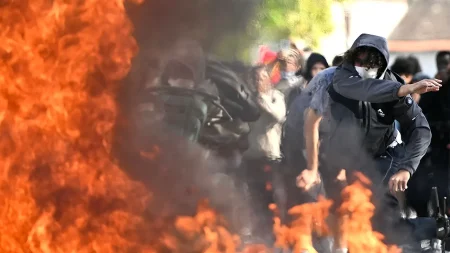
In his highly anticipated memoir, Green Parrots: A Memoir of Survival in Iran’s Evin Prison, scheduled for release on September 29, Tahbaz writes about how he survived this prolonged ordeal by drawing on the patient, observant skills he developed while tracking elusive, endangered wildlife. Just as a conservationist must learn to read the silent signs of the forest, understand the behaviors of predators, and adapt to harsh environments, Tahbaz quietly studied the routines of his captors, finding solace in the unexpected visits of wild parakeets to his prison yard, which became powerful symbols of enduring hope and survival. His story serves as a testament to the resilient human spirit, but his ultimate message remains a sobering warning to the international community: while individual, transactional negotiations may bring a lucky few back to their loved ones, they do nothing to dismantle the violent apparatus of state-sponsored hostage diplomacy. As the flames of the current regional war threaten to consume the Middle East, the anger, hatred, and frustration of the Iranian people continue to boil quietly underneath the surface, waiting for the inevitable moment when they will rise again to reclaim their country from within. Yet, as Tahbaz reflects from his hard-won freedom, any true liberation of Iran must come from the courage of its own citizens standing in the streets, rather than from the empty promises of foreign intervention. Until the world unites behind a strategy of genuine deterrence that makes the taking of foreign lives far too costly for Tehran to sustain, the helpless prisoners currently languishing in Evin’s dark corridors will remain what they have always been: traded commodities in a ruthless, never-ending game of survival.