


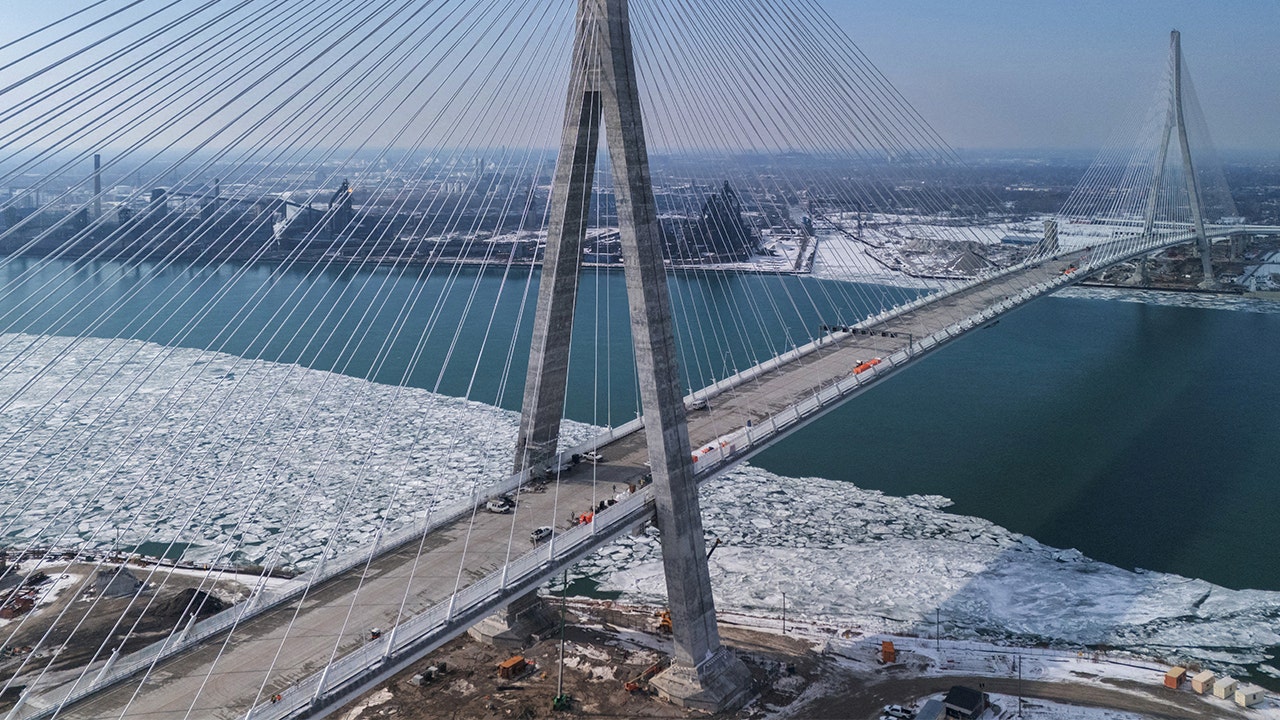
The Detroit River has long served as a glittering, fluid boundary between two nations that share not only the world’s longest undefended border but also a deeply intertwined history of labor, culture, and kinship. It is across this historic waterway, which has witnessed everything from the path of the Underground Railroad to the roaring industrial rise of the automotive age, that the Gordie Howe International Bridge rises. This breathtaking engineering marvel of sweeping cables and soaring concrete is designed to physically manifest the legendary, historic bond between Windsor, Ontario, and Detroit, Michigan. Named after the revered “Mr. Hockey”—a Canadian-born superstar who became an iconic figure of grit and grace while driving the Detroit Red Wings to legendary heights—the bridge was envisioned as much more than a mere transit corridor. It was meant to be a monumental tribute to a shared heritage where sports, family ties, and industrial sweat overlap seamlessly, embodying the spirit of a man who belonged equally to both nations. For nearly a decade, local residents, ironworkers, and civic leaders on both sides of the river watched with a sense of growing awe as the bridge’s massive towers climbed into the midwestern sky, waiting for the historic day when they could finally gather as one family to cut the ribbon and celebrate their collective triumph over geography. The bridge’s physically connected spans, which met in the middle of the river with millimeter precision earlier this year, symbolized a permanent handshake between neighbors. Yet, on the absolute cusp of this long-awaited inauguration, the joyous atmosphere evaporated overnight, replaced by the cold, bitter reality of federal trade politics. This sudden cancellation of the joint opening ceremony feels less like a minor bureaucratic adjustment and more like a heartbreaking, unexpected rift in a lifelong family reunion, leaving communities on both sides feeling the sudden chill of a geopolitical cold front.
The sudden chill that stalled this monumental, cross-border celebration swept down from the highest echelons of American politics when Donald Trump threatened to impose a staggering 50% tariff on Canadian imports, casting a dark, unpredictable shadow over the historically stable trade relations between the neighboring nations. Citing what American officials described as persistent trade discrimination against U.S. interests in critical sectors like auto manufacturing, dairy farming, and the alcohol industry, the White House asserted that Canada’s current policies were granting foreign competitors an unfair marketplace advantage over American companies. In direct, immediate response to this economic saber-rattling, Canada made the difficult and painful decision to officially withdraw from the joint, bipartisan ribbon-cutting ceremony scheduled for Friday, signaling that a festive celebration on a global stage was simply untenable under the threat of severe financial warfare. Jenna Ghassabeh, a spokesperson for Canadian Infrastructure Minister Gregor Robertson, captured the quiet resolve and wounded pride of the nation when she stated that proceeding with a joint celebratory event between the two countries would be entirely inappropriate given the hostile trade actions threatened by the United States earlier in the week. The suddenness of this announcement left local organizers in both Detroit and Windsor reeling, as plans for high-profile speeches, shared feasts, and symbolic handshakes were abruptly dismantled. Though the physical gates of the bridge will still swing open next week to allow the vital, everyday flow of traffic, the grand, unifying ceremony that was meant to showcase international harmony will now be held in isolation, reserved strictly “among Canadians.” This decision leaves a bittersweet taste for those who poured their lives into the project, as they are forced to celebrate an international bridge without their neighbors standing beside them on the stage.
At the heart of this geopolitical standoff are the real, hardworking human beings whose daily lives and livelihoods are directly dictated by the movement of goods across this heavily congested border corridor. For nearly a century, the aging Ambassador Bridge—a privately owned suspension bridge built in the late 1920s—has hummed with the endless, exhausting rumble of commercial semi-trucks, handling a mind-boggling $126 billion in trade in 2023 alone but choking under the weight of modern economic demands. The truck drivers who spend grueling, unpaid hours idling in massive border lines, inhaling exhaust fumes while racing against unforgiving logistical clocks, and the factory workers whose assembly lines rely on the seamless, just-in-time delivery of parts, had pinned their hopes on the Gordie Howe Bridge. In the highly integrated automotive sector of the Great Lakes region, a single car part often crosses the international border up to eight times during assembly, making any delay a threat to factories and paychecks. This new crossing promised to finally ease those agonizing bottlenecks, breathing fresh air into local communities, reducing carbon emissions from idling engines, and offering a modern, efficient, and environmentally conscious pathway that respects the exhausting labor of transit workers. By reducing the physical, emotional, and financial toll of border gridlock, the new bridge was built to serve as a monument to the working class of both nations, who physically labored to construct its massive approach spans and lay its pavement. It is deeply tragic that their monumental achievement, designed to make the daily grind a little easier for thousands of families, has been temporarily overshadowed by political maneuvers that treat this vital economic pipeline as a mere bargaining chip in a high-stakes trade game.
This is far from the first time the multi-billion-dollar infrastructure project has found itself caught in the turbulent, unpredictable crosscurrents of international political posturing and persistent bureaucratic delays. In February, Donald Trump threatened to block the project entirely, pointing fingers at Canada’s broader geopolitical relationships and accusing the province of Ontario of engaging in petty trade practices, specifically citing the competitive removal of American alcohol brands from local liquor store shelves as a slight against American workers. Local leaders, such as Windsor Mayor Drew Dilkens, along with teams of weary engineers and trans-border diplomats, had only recently breathed a collective sigh of relief after painstakingly hashing out a complex, fine-tuned agreement earlier this month regarding how toll revenues would be fairly charged and distributed to drivers. That hard-won compromise was celebrated as a major diplomatic victory, clearing the final administrative runway for the bridge to open to traffic. The emotional whiplash experienced by these local communities—who have tirelessly worked through years of construction delays, political threats, and complex legal battles only to see their final moment of shared triumph hijacked at the federal level—highlights the deep frustration felt when local partnership is undermined by national-level political theater. Every time a major breakthrough is reached by local coordinators, federal level spats threaten to pull the rug out from under their feet. Despite these recurring diplomatic storms, the physical completion of the bridge stands as a testament to the grit of the workers who laid the concrete, showing that local resilience, dedication, and neighborhood cooperation often outlast the loudest political arguments that echo from distant capital cities.
The cancellation of the joint ceremony reflects a deeper, systemic irritation within the Canadian psyche regarding how the nation’s sovereignty, economic contributions, and overall dignity are perceived and treated by its massive southern neighbor. This friction was recently amplified when Canadian political figures, including prominent voices like Mark Carney, fiercely responded to claims suggesting that Canada only manages to exist and thrive because of the generosity of the United States, defending the country’s self-reliance and economic strength on the global stage. For Canadians, the threat of sweeping tariffs is not merely an abstract debate about macroeconomics, trade deficits, or policy adjustments; it represents a direct threat to the financial stability of real families, family-owned dairy farms in Quebec, independent distilleries, and automobile assembly workers in Ontario whose livelihoods are deeply woven into the fabric of the North American economy. When faced with rhetoric that characterizes their country as a dependent territory rather than an equal sovereign partner, Canadian officials felt that standing shoulder-to-shoulder in a smiling, highly publicized ribbon-cutting ceremony would send a message of submission rather than unity. By keeping the opening celebration strictly domestic, Canada chose to assert its national pride, reminding the world that while trade agreements may be fragile, transactional, and subject to political whim, the country’s labor, engineering capabilities, and national sovereignty are absolutely non-negotiable. This proud stance emphasizes that a true bridge cannot be built on unequal terms, and that mutual respect is the only foundation strong enough to support the weight of international trade.
Ultimately, however, no amount of political rhetoric, tariff threats, or canceled invitations can diminish the physical reality of the majestic structure that now spans the Detroit River. Next week, when the first heavy trucks and passenger vehicles drive onto the soaring concrete deck of the Gordie Howe International Bridge, the physical connection between Windsor and Detroit will become an undeniable fact, regardless of whether politicians from Washington and Ottawa shook hands at a ceremonial ribbon-cutting. The citizens of these border communities—who share a deep love for hockey, a rich history of industrial innovation, and generation-spanning family trees—understand that their daily, ground-level connections are far too resilient to be permanently severed by federal disagreements. The enduring spirit of Gordie Howe himself, a man who gave his absolute all to both sides of the border and whose name is permanently etched into the steel of this bridge, serves as a beautiful reminder of what unites these two nations at their core. Long after the current political administrations have faded into the pages of history and the tariff disputes of today have been resolved or forgotten, this bridge will stand tall against the midwestern horizon as a silent, unbreakable monument to the enduring friendship, shared labor, and shared destiny of the people of Canada and the United States. In the end, the bridge itself is the real ceremony; its cables hold the two nations together with a grip far stronger than any treaty, proving that the quiet, everyday connections of ordinary citizens will always outlast the grand gestures of those in power.