






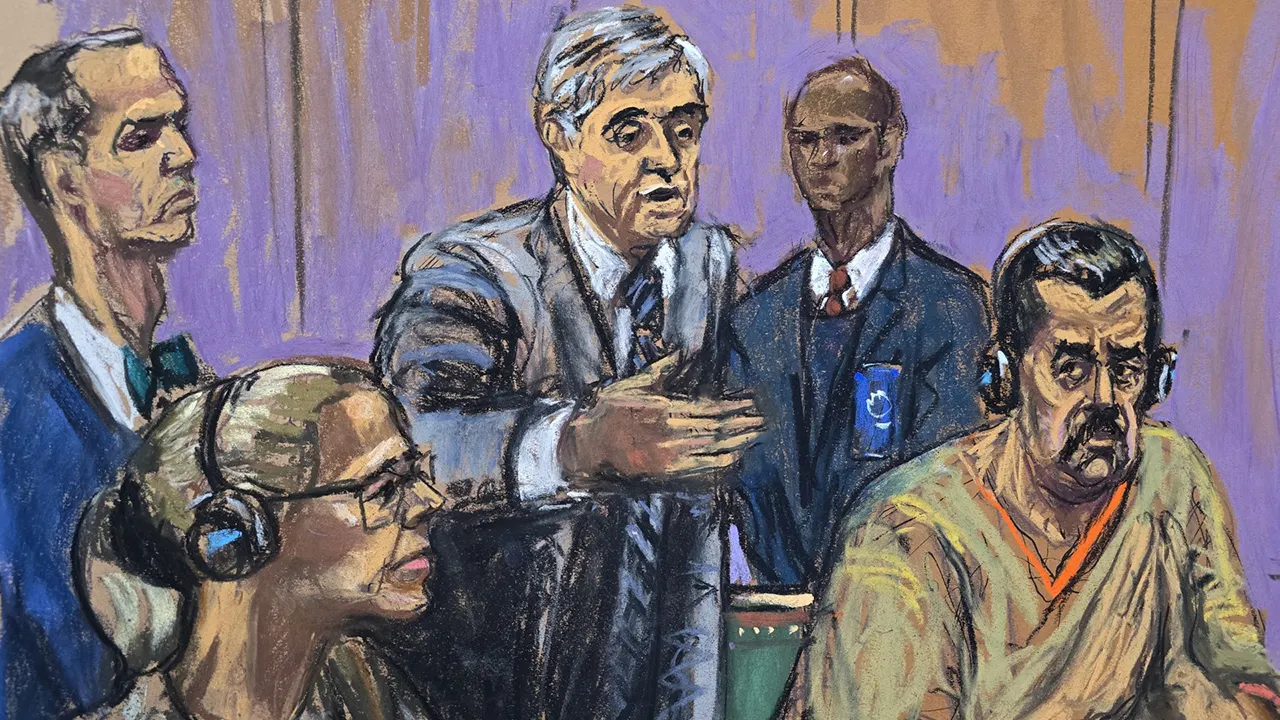
Behind the cold, formal language of international legal complaints lies a profound and collective cry of human grief that has traveled thousands of miles, from the impoverished, sun-baked barrios of Venezuela to the sterile, echoing halls of a federal courthouse in New York. The families of five Venezuelan men, whose lives were brutally cut short by their own government’s iron fist, have initiated a historic civil lawsuit against the country’s former president, Nicolás Maduro. Brought under the auspices of the Torture Victim Protection Act, this civil complaint does not simply seek compensatory and punitive damages; it is a desperate search for truth, a demand for accountability, and a public testament to the lives of young men who were systematically erased by a state apparatus designed to silence them. The lawsuit represents a stunning convergence of geopolitical drama and raw human suffering, establishing a second major legal front for Maduro within the United States. The former leader, who ruled Venezuela from 2013 until his tumultuous departure in 2026, currently resides not in a grand presidential palace but in a stark cell at the Metropolitan Detention Center in Brooklyn, where he is already awaiting a high-profile criminal trial on federal drug trafficking and firearms charges. Because Maduro is physically detained in Brooklyn, the plaintiffs’ attorneys have argued that venue is perfectly proper in the U.S. District Court for the Eastern District of New York, bringing the dark realities of Caracas directly to the doorstep of American justice. For the surviving relatives—mothers who still weep over empty beds, wives forced into sudden widowhood, and children growing up without fathers—this civil action is a courageous leap of faith. It is an effort to pierce the shroud of impunity that has protected Venezuelan elites for decades, utilizing American law to lay bare the machinery of state-sponsored violence that tore their families apart and left behind an enduring legacy of trauma, fear, and silence. This legal mechanism represents a rare glimmer of hope for individuals who have spent years navigating a system that repeatedly turned its back on their suffering, allowing them to finally voice their pain on an international stage free from local intimidation.
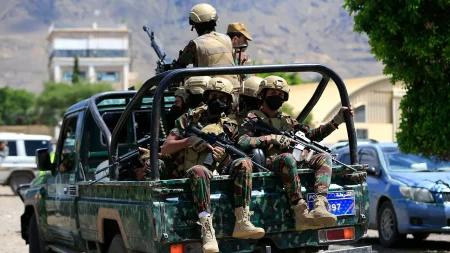
The heart of the lawsuit exposes a terrifyingly consistent pattern of state violence, painting a vivid picture of the sheer terror experienced by ordinary citizens during the operations of the Special Action Forces, widely known by their Spanish acronym, FAES. To understand the emotional core of this legal battle is to understand the absolute nightmares that became a daily reality for residents of Venezuela’s poorest neighborhoods: the complaint describes how, between 2017 and 2021, heavily armed FAES officers routinely launched terrifying, pre-dawn raids on private family homes. Dressed entirely in black tactical gear with their faces completely obscured by dark masks, these state agents shattered the peace of the early morning hours, invading private sanctuaries and instantly paralyzing families with terror. Once inside, the officers systematically isolated their targets, separating young, vulnerable men from their frantic, screaming mothers, wives, and children. In several horrifying instances detailed in the lawsuit, relatives were subjected to the excruciating psychological torture of being severely beaten, detained, or forced to witness the physical abuse and eventual execution of their loved ones. The lawsuit recounts five specific, heart-wrenching incidents involving six victims, outlining how young men were dragged from their beds, forced to their knees, and shot at point-blank range inside their own living rooms. This was not the chaotic byproduct of urban crossfire, but a cold, highly organized campaign of domestic execution designed to eliminate perceived troublesome elements and terrorize entire communities into absolute submission. For the survivors, the memory of those dark, metallic-tasting mornings—filled with the smell of gunpowder, the sight of black-masked figures, and the final, desperate cries of their sons and brothers—remains an open, agonizing wound that they carry with them every single day of their lives. Their homes, once spaces of safety, were transformed into chambers of absolute dread and tragic finality.
The physical violence of these operations did not end with the pull of a trigger; rather, the lawsuit alleges a stomach-churning level of deception and post-mortem manipulation carried out by FAES officers to shield themselves from accountability and maintain a veneer of lawfulness. After executing their victims in cold blood, officers allegedly engaged in a systematic process of rewriting history on the blood-soaked floors of these family homes. To justify their lethal actions, they planted unregistered firearms beside the bodies of the deceased and fabricated evidence to falsely claim that the young men had actively “resisted authority” in violent shootouts with law enforcement. In a particularly grotesque effort to conceal the extrajudicial killings, officers routinely loaded the already lifeless bodies of the victims into state vehicles and transported them to local hospitals, presenting them to emergency medical staff as if they were still clinging to life. This cynical maneuver was designed to create a fraudulent paper trail of active medical intervention, making it appear as though the police had tried to save the very lives they had just systematically ended. Compounding this unspeakable cruelty, the invading officers treated the victims’ modest homes as spoils of war, brazenly looting cash, electronic devices, food, and sentimental family heirlooms while the survivors stood by, frozen in grief and terror. This calculated desecration of both the dead and the living was a deliberate strategy to strip the victims of their dignity even in death, branding innocent youth as dangerous criminals and leaving their families with the agonizing double burden of mourning their dead while fighting a state apparatus that had vilified them. This calculated campaign of post-assault slander meant that families were forced to defend the characters of their deceased sons in public, even as they privately swept the physical remains of the violence from their own floorboards, completely abandoned by any local institutions of justice or civil relief.
The civil lawsuit places the ultimate responsibility for these profound atrocities directly on the shoulders of Nicolás Maduro, arguing that he was not a distant, unaware head of state, but the deliberate architect and public champion of this reign of terror. The complaint alleges that Maduro personally established the FAES in 2017 as a specialized tactical unit within Venezuela’s National Bolivarian Police, specifically designing it to function as a formidable instrument of social control and violent political repression. In the years that followed, even as international human rights organizations sounded urgent alarms, Maduro repeatedly and publicly defended the unit, praised their operations, and offered them absolute political cover. This unwavering support persisted despite a mountain of damning, highly detailed reports from the United Nations High Commissioner for Human Rights, Human Rights Watch, and the United States State Department, all of which documented systematic human rights abuses, arbitrary detentions, and thousands of extrajudicial killings committed by the masked forces. When the victims’ families attempted to seek justice within Venezuela’s borders, they were met with an impenetrable wall of state-sanctioned silence, bureaucratic delays, and outright institutional hostility. Local prosecutors routinely refused to launch independent investigations, ignored eyewitness testimonies, and failed to hold even low-level officers accountable, let alone the high-ranking commanders who authorized the deadly sweeps. By weaponizing the judicial system to protect perpetrators, the Venezuelan government left these families with absolutely no domestic legal recourse, reinforcing the painful message that their lives were expendable, which ultimately compelled them to turn to American courts. This systemic collapse of the rule of law under Maduro’s administration forced the survivors to seek justice beyond their borders, transforming their private grief into a global struggle for fundamental human rights. For these families, the silence of their own institutions was a second betrayal, one that forced them to realize that their only path to truth lay in the hands of international advocates, making them pioneers of a global quest for truth.
This painful search for accountability has now culminated in an American federal courtroom, made possible by a powerful and unique legislative tool known as the Torture Victim Protection Act. This statute serves as a critical bridge for global human rights, permitting foreign citizens to file civil lawsuits in U.S. courts against individuals who, acting under the authority of a foreign government, have committed acts of torture or extrajudicial killing. This legal framework has created a stunning contrast in fortunes: Nicolás Maduro, who once held the absolute power of life and death over millions of Venezuelans from his executive palace, is now housed in the sterile, highly secure confines of the Metropolitan Detention Center in Brooklyn. He faces a mounting storm of legal battles in the United States, anchored by a massive federal criminal indictment charging him with narco-terrorism, drug trafficking, and weapons offenses—charges to which he has pleaded not guilty while dramatically casting himself as a political “prisoner of war.” While Maduro’s high-profile defense attorney, Barry Pollack, and international human rights organizations like Amnesty International have remained quiet in the immediate wake of this civil filing, the pressure on the former leader is undeniably intensifying. For the grieving plaintiffs, the fact that their former oppressor is physically held in a detention center in the very city where they have filed their suit is a deeply poetic, almost surreal twist of tragic fate. It elevates this civil complaint from a merely symbolic gesture of protest to a very real, tangible, and high-stakes legal mechanism that seeks to strip away his remainder of impunity and force him to look at the human cost of his regime’s cruelty. By challenging him in the heart of New York, these families have effectively dismantled the geographical barriers of dictator impunity, asserting that no head of state is ever too powerful to escape the persistent call of legal reckoning.
Ultimately, this landmark civil lawsuit is about far more than legal precedents, punitive damages, or the complex geopolitical chess match played out between Washington and Caracas; it is about the enduring power of human memory in the face of brutal, state-sponsored amnesia. For these five grieving families, no court order or financial award can ever truly fill the empty chairs at their kitchen tables, silence the echoes of gunfire that haunt their nights, or return the beloved sons, husbands, and brothers who were snatched away in the dark. Yet, this legal action offers a vital form of restorative justice that the Venezuelan state has spent years trying to deny them: an official, immutable public record of the truth, documented in an independent court of law where evidence, rather than authoritarian power, determines the narrative. By courageously bringing their private agony into the international spotlight, these families are refusing to let their lost relatives be forgotten as anonymous collateral damage or falsely branded as common street criminals. As the legal proceedings unfold in New York, this case will stand as a monumental test of global human rights accountability, sending a clear, resonant warning to leaders around the world that sovereign borders and political titles cannot offer permanent shelter from the long reach of justice. In a world where the powerful often believe they can abuse their citizens with absolute impunity, the quiet determination of these families serves as a brilliant beacon of hope, proving that the love of survivors is ultimately stronger than the terror of the state. It is a modern-day story of David and Goliath, where the weapons are not slingshots and stones, but truth, courage, and the unwavering refusal to let the memory of the dead be erased by the machinery of tyranny, paving a new way for global accountability.