


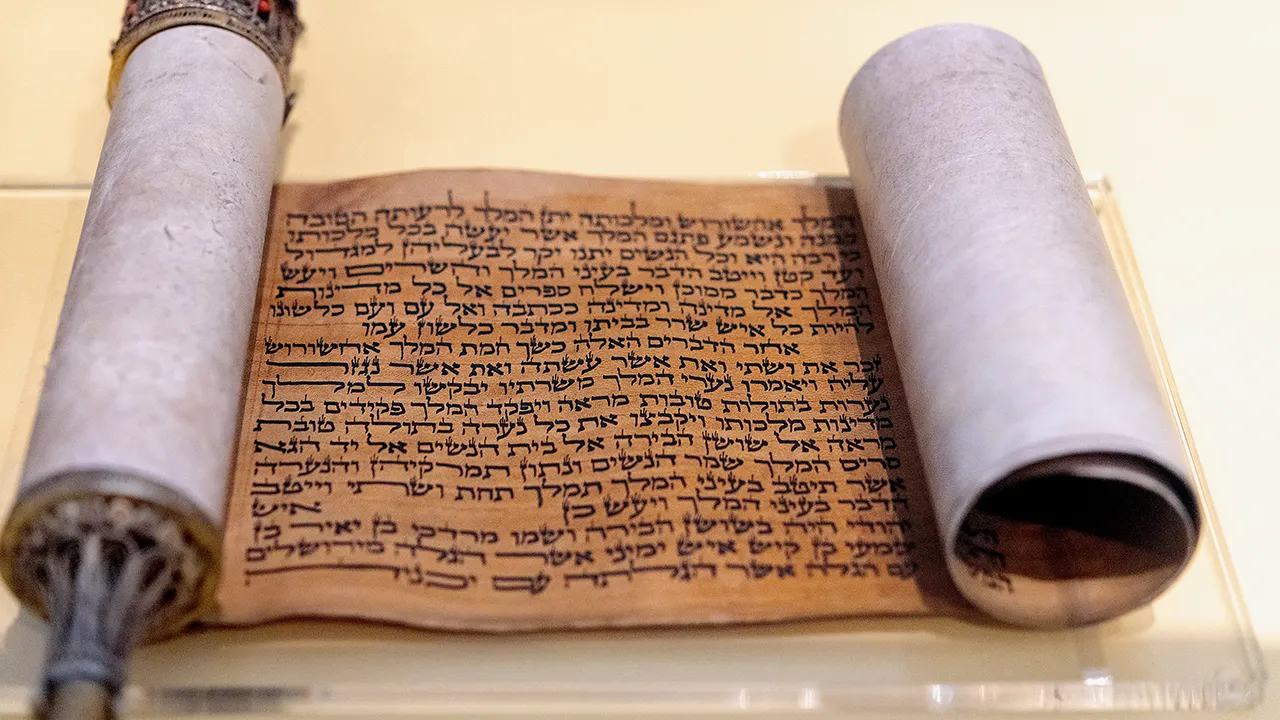
At its heart, this story is about more than a single diplomatic remark; it is about the deeply human struggle over identity, memory, and sacred ground. The controversy began earlier this month when Husam Zomlot, the Palestinian Ambassador to the United Kingdom, stood before an audience at the University of Bradford and made a sweeping and provocative claim: the Bible is a Palestinian book, Jesus was Palestinian, and by extension, Christians everywhere owe their faith to Palestine. Speaking alongside Humza Yousaf, the former first minister of Scotland, Zomlot recalled a private audience with the late Queen Elizabeth II, telling her, “Jesus is our gift to you.” He described the Bible as a text that has been rewritten and used against “the people of the Book,” insisting that Palestinians are the “original Christians” and that all the saints and sacred names of Scripture come from his land. For Zomlot, this was clearly an emotional appeal to rootedness, a way to claim an unbroken connection between modern Palestinians and the landscapes of the Bible. Yet for many Christians and Jews, those words felt less like warm reflection and more like a calculated rewriting of history, stripping away the Jewish identity of Jesus and the Jewish foundation of the Scriptures that billions of people revere as the word of God.
The reaction from America’s evangelical community was swift and forceful, and the voice that rose above the rest belonged to Pastor John Hagee, the founder and chairman of Christians United for Israel, a grassroots movement that claims more than ten million members. Hagee did not mince words when he spoke to Fox News Digital, saying that the Palestinians are not the “people of the Book” and that when the Bible was written, the term Palestinian had not yet even been coined. He called the ambassador’s attempt to claim the Jewish mantle of religion and history as his own a clear sign that his own narrative lacks both truth and substance. To Hagee, this is not just an academic disagreement; it is a spiritual and existential challenge. He described such attacks as contemptible, but warned that their danger depends entirely on who is willing to listen and who is willing to challenge such bigotry. Behind his strong language lies a broader worry: that the ancient story of Israel, the covenant, the prophets, and the Messiah is being quietly rebranded in real time, and that ordinary people, hearing a confident diplomat speak, might accept a polished narrative without ever checking the dusty pages of history. For Hagee, the Bible is not a portable symbol to be claimed by modern political causes; it is a living record of God’s dealings with a particular people in a particular land, a land whose very name tells a story stretching back thousands of years.
What makes Zomlot’s claim so jarring to historians is the simple matter of chronology. Hagee pointed out that describing Jesus as Palestinian because Bethlehem sits today in the Palestinian-controlled West Bank would be like calling television personality Dr. Phil Cherokee simply because he was born in Oklahoma. It is an anachronism, a word that sounds academic but simply means placing people of today into a world that did not exist in their time. In Jesus’ day, the region was called Judea, Galilee, and Samaria. The people who lived there were Jews, and Jesus himself was a Jewish rabbi who observed the Sabbath, kept Jewish dietary laws, and celebrated Passover. The very name Palestine, Hagee explained, was intentionally adopted by the Romans as a replacement for Judea in the decades after Christ’s crucifixion, a deliberate effort to erase the Jews from the land after a series of devastating revolts. If anything, then, the name Palestine was created as a monument to Jewish defeat, not as an ancient truth. To use it as a way to disconnect Jesus from his Jewish identity is, in Hagee’s view, not only historically backwards but also dangerous, especially in a world where radical Islamists remain vocal in their desire to annihilate the Jewish people. He said no reasonable person should entertain such a narrative, particularly given the horrors of October 7, when Hamas terrorists slaughtered over a thousand Israelis in a single day, a brutal reminder that the war against Jewish existence is not a matter of ancient history but a present and bloody reality.
Standing alongside Hagee in this criticism was Ze’ev Orenstein, the director of international affairs for the City of David Foundation in Jerusalem, and his testimony adds a poignant human layer to the debate. Orenstein took the audience on a simple walk through time: Islam dates to the Prophet Muhammad, roughly 1,300 years ago; Jesus lived about 2,000 years ago; King David ruled 3,000 years ago. The order matters. Jesus was Jewish, his disciples were Jewish, and he knew the Hebrew Bible from the inside, reciting its psalms, learning its laws, and weeping over Jerusalem as the city of David. To say that Jesus was a Palestinian, Orenstein argued, is to erase all of that. Judea was the place where Jesus lived, and Jews come from Judea. The word Jew itself comes from the name Judah, the ancient kingdom whose capital was Jerusalem. Orenstein described Zomlot’s comments as an act of cultural and historical appropriation, something close to identity theft, an attempt to rewrite the foundations of faith, history, heritage, values, and ideals for billions of people around the world. He warned that this sets a very dangerous precedent. When a nation’s earliest memories are rewritten in front of the world, when sacred names are swapped for new ones, and when the connection between a people and their holy places is quietly severed, violence often follows. It is not just a matter of hurt feelings; it is the erasure of belonging, and once a people no longer belong to their history, they can be pushed off the land with even greater ease.
This controversy does not exist in isolation. Critics point to a broader and coordinated effort by the Palestinian Authority to reshape the international historical narrative through institutions like UNESCO and the United Nations. In 2016, UNESCO designated the Cave of the Patriarchs in Hebron as a World Heritage site in the name of the “State of Palestine,” even though that cave is believed to be the burial place of Abraham, Isaac, and Jacob, the patriarchs of the Jewish people. In 2023, UNESCO again faced criticism when it designated Tell es-Sultan near Jericho as a World Heritage site in “Palestine,” a location that some scholars connect to ancient Jewish history. Then there was the 2021 United Nations General Assembly resolution that referred to the Temple Mount, Judaism’s holiest site, only by its Muslim name, Haram al-Sharif. Palestinian Authority President Mahmoud Abbas has gone even further, insisting that the site is the “exclusive property of Muslims.” Meanwhile, Rachel’s Tomb in Nablus, a site holy to Jews for centuries, has been increasingly referred to as the Bilal Bin Rabah Mosque. Each of these steps might seem like a bureaucratic detail, a footnote in a long political struggle, but for those who love the Scriptures, they add up to something much larger: a slow, systematic re-labeling of the ancient world. The Bible is not just a book that speaks of spiritual truths; it is also a geography lesson, naming towns and hills, wells and caves, all of them real, all of them walked by real people. When those names are replaced, the Bible itself begins to feel like a fiction, and the people who read it become disconnected from the land that shaped their faith.
At the end of the day, this dispute is about two different ways of seeing the world, one rooted in the land and one shaped by the present political moment. Ambassador Zomlot did not respond to Fox News Digital’s repeated requests for comment, leaving his strong words to stand on their own. For evangelical Christians like John Hagee, the Bible is not merely an ancient text to be debated; it is a living word that anchors their faith in a real God who acted in real history. To hear it called a Palestinian book, to hear Jesus stripped of his Jewishness, is to hear the story of salvation itself being unpicked at its seams. For Jewish observers like Orenstein, the stakes are equally personal. The Jewish people have been exiled, persecuted, and scattered for two thousand years, and the restoration of their homeland is woven into their prayers and their identity. When the world tells them that the land was never theirs, that their Temple Mount is really a mosque, that their ancestors’ tomb is really a mosque, and that their Messiah was never one of them, it is a quiet but relentless assault on the very foundation of their existence. This is why the reaction to Zomlot’s speech was so strong, and why so many people feel compelled to speak out. History is not a distant museum; it is a living flame that each generation must pass on. The question is whether that flame will be passed on faithfully, or whether it will be doused by the waters of modern political convenience. For millions of believers around the world, the answer is clear: let the Bible speak for itself, in the words of the Jewish prophets, priests, and apostles who actually wrote it, and let the land of Judea and Samaria be remembered for what it truly is, the birthplace of a faith that changed the world.