





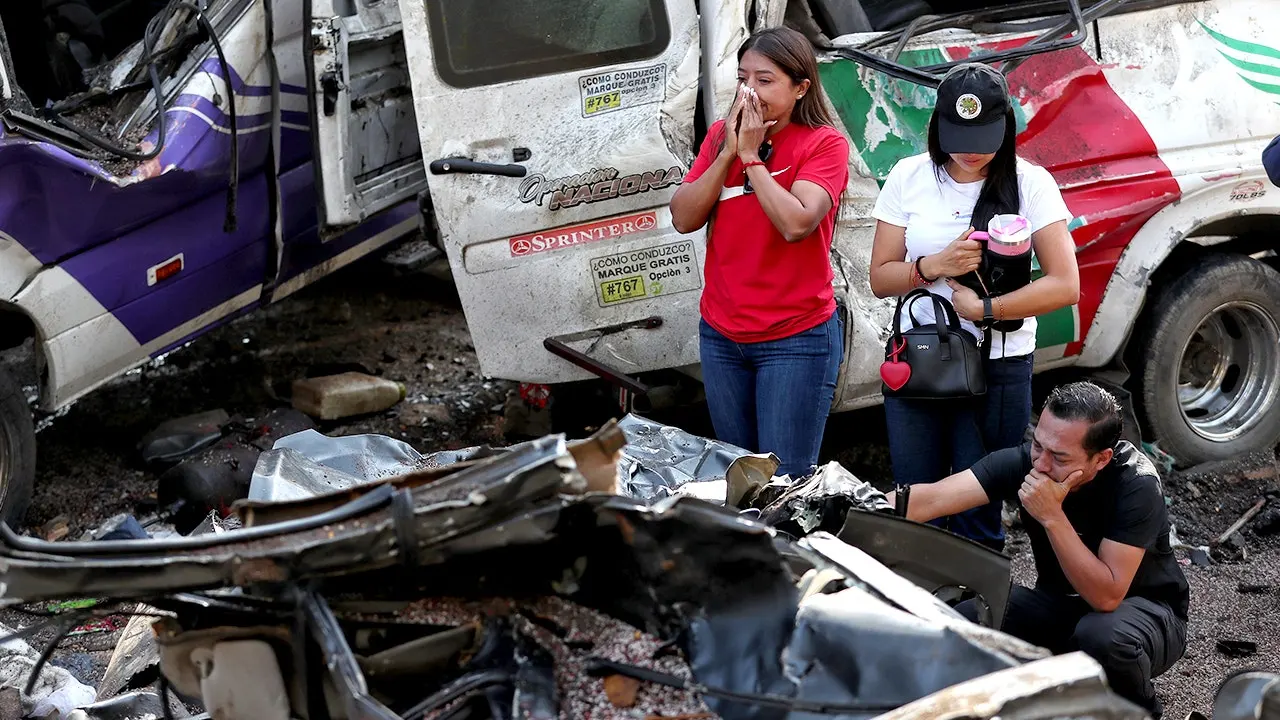
In the heart of southwestern Colombia, where rugged mountains give way to vast plantations and winding highways, tragedy struck with unrelenting force on a humid Saturday afternoon. A bus, packed with unsuspecting passengers—families heading to errands, workers commuting home—became the target of a horrific bombing on the Pan-American Highway in the municipality of Cajibio. The explosion ripped through the vehicle, turning a routine journey into a nightmare of shattered glass, screaming voices, and lives abruptly cut short. As the dust settled and emergency responders rushed to the scene, the toll emerged painfully clear: 20 people were dead, their bodies twisted among the wreckage, while 36 others lay wounded, grappling with injuries that would forever change their worlds. Among the dead, the numbers told a somber story of disproportionate loss—15 women and 5 men, reflecting the everyday burdens women often bear in conflict zones like this, from caregiving to labor that keeps communities afloat. Picture a mother who had just dropped her children at school, dreaming of a simple evening meal, now lost to the chaos. Or a young man striving for a better future, only to have his aspirations extinguished in an instant. This wasn’t just a statistic; it was a brutal interruption of lives filled with quiet hopes and daily struggles, in a region where violence has become an all-too-common shadow.
The injured painted an even more visceral picture of human suffering, with five of them being minors—tender children whose innocence was cruelly violated by the blast that scarred their bodies and souls. Three of these young victims, now in intensive care, fought for survival in stark hospital wards, their small frames hooked to machines that beeped rhythmically against the silence of pain. Governor Octavio Guzmán of Cauca, his voice heavy with grief on social media, shared that the rest of the wounded were scattered across medical facilities, some stable but all bearing the marks of shrapnel and shock. These weren’t mere “casualties” in some distant war; they were fathers nursing broken bones while worrying about unpaid bills, sisters comforting frightened siblings with bandages wrapped around their arms, and elders who had seen enough hardship in their lifetimes. The identification process, overseen by Colombia’s Institute of Legal Medicine, slowly unfolded with painstaking care, involving dentists piecing together shattered teeth, anthropologists reconstructing faces from fragile remains, and forensic experts documenting every detail to give families closure. Families waited anxiously in makeshift camps outside morgues, clutching photos of loved ones lost—mothers sobbing over daughters who never came home from the market, husbands holding each other’s hands in silent desperation. The human cost here extended beyond the flesh; it eroded the fragile trust in safe travel, deepening the isolation felt by communities already battered by poverty and uncertainty.
Nestled in this volatile swath of southwest Colombia, Cajibio and its surroundings have long been a powder keg of unrest, where the lure of illicit wealth clashes violently with the desperation of the impoverished. More than two dozen attacks in just the past three days underscore the relentless cycle of terror gripping the area, a place where illegal armed groups wage ruthless battles for control over vast coca leaf fields—the raw material for cocaine—and strategic river and sea routes that funnel drugs to distant shores in Central America and Europe. These groups, often splintered from once-unified rebellions, operate like predatory shadows, extorting farmers, displacing families, and sowing fear to maintain their criminal empires. Imagine the farmers who till the soil at dawn, their hands calloused from years of labor, yet haunted by midnight raids that demand tribute or death. Or the children who learn to read in schools turned into shelters, their play interrupted by echoes of gunfire. This isn’t just about drugs; it’s about the human toll of systemic neglect, where economic desperation drives people into timber smuggling or forced cultivation, trapping generations in a web of violence that leaves homes abandoned and communities fractured. The Pan-American Highway, a lifeline meant to connect nations, has instead become a perilous artery, scarred by such atrocities that rob the region of its potential, turning fertile lands into battlegrounds and dreams into dust.
At the center of blame stands a figure shrouded in infamy: “Iván Mordisco,” one of Colombia’s most wanted fugitives, whose network orchestrated this act of savagery. General Hugo López, the steely commander of the armed forces, didn’t mince words, labeling the bombing a “terrorist act” masterminded by Mordisco and his allies in the Jaime Martínez faction—dissidents from the defunct Revolutionary Armed Forces of Colombia (FARC), who continue their bloody legacy in defiance of peace accords. These men, once part of a revolutionary dream twisted into a drug-fueled nightmare, now rule through intimidation, their faces plastered on wanted posters in dusty towns while they evade capture in jungle hideouts. Their actions speak to a deeper malaise: personal ambitions fused with territorial greed, where profits from trafficking fund weapons and mercenaries, perpetuating a cycle that has claimed countless lives over decades. Think of the disillusioned youths drawn into these factions, promised brotherhood but delivering only brutality—orphans of war themselves, turning pain into power. For the families mourning on this day, knowing the perpetrators’ names offers little solace; it merely amplifies the outrage, the sense that justice remains elusive in a country where impunity thrives like a stubborn weed.
The international outcry echoed swiftly, as the United Nations High Commissioner for Human Rights stepped forward to condemn these assaults on civilians, urging Colombian authorities to delve deep into investigations and ensure accountability for the perpetrators. In a statement laden with global sorrow, the U.N. voice emphasized the right to life in conflict zones, highlighting how such violence undermines fragile democratic progress and leaves the vulnerable—elders, women, and children—with scars that transcend borders. This wasn’t an isolated incident but part of a larger humanitarian crisis, where reports of drug-related atrocities fuel debates in capitals far from these mountains. Diplomats and aid workers often speak of Colombia’s “armed actors” with a mix of frustration and empathy, aware that beneath the headlines are real people suffering from a war economy that drains resources desperately needed for healthcare and education. Families displaced by these groups tell tales of relentless harassment, their stories a testament to resilience amid despair, yet the U.N.’s call for justice reminds us that true healing requires not just condemnation, but concrete action to dismantle the networks enabling such horrors.
Amid the national anguish, Gov. Guzmán’s declaration of three days of mourning offered a momentary balm to a grieving populace, flags lowered in somber acknowledgement of the lives lost. Churches in Cajibio rang their bells in unison, communities gathering for vigils where neighbors shared stories of the departed—homages to teachers who inspired dreams, bus drivers who ferried hope, and mothers who held families together. This ritual of remembrance humanized the tragedy, transforming impersonal news into a collective outpouring of empathy, where strangers became kin through shared loss. Yet, beneath the wreath-laying and prayers, a quiet urgency persisted: the armed forces’ patrols intensified, intelligence gathered to thwart future threats, and government aid promised to help rebuild shattered lives. For survivors and onlookers alike, this bombing served as a stark reminder of Colombia’s unfinished struggle, where peace remains a mirage in the face of entrenched violence. In their resilience, one sees the unbreakable spirit of a people who, despite the darkness, continue to seek light—planting seeds of hope even as shadows loom, dreaming of a day when highways are conduits of prosperity, not conduits of grief. And as investigations unfold, the world watches, hoping for answers that might finally stem the tide of such senseless destruction.