


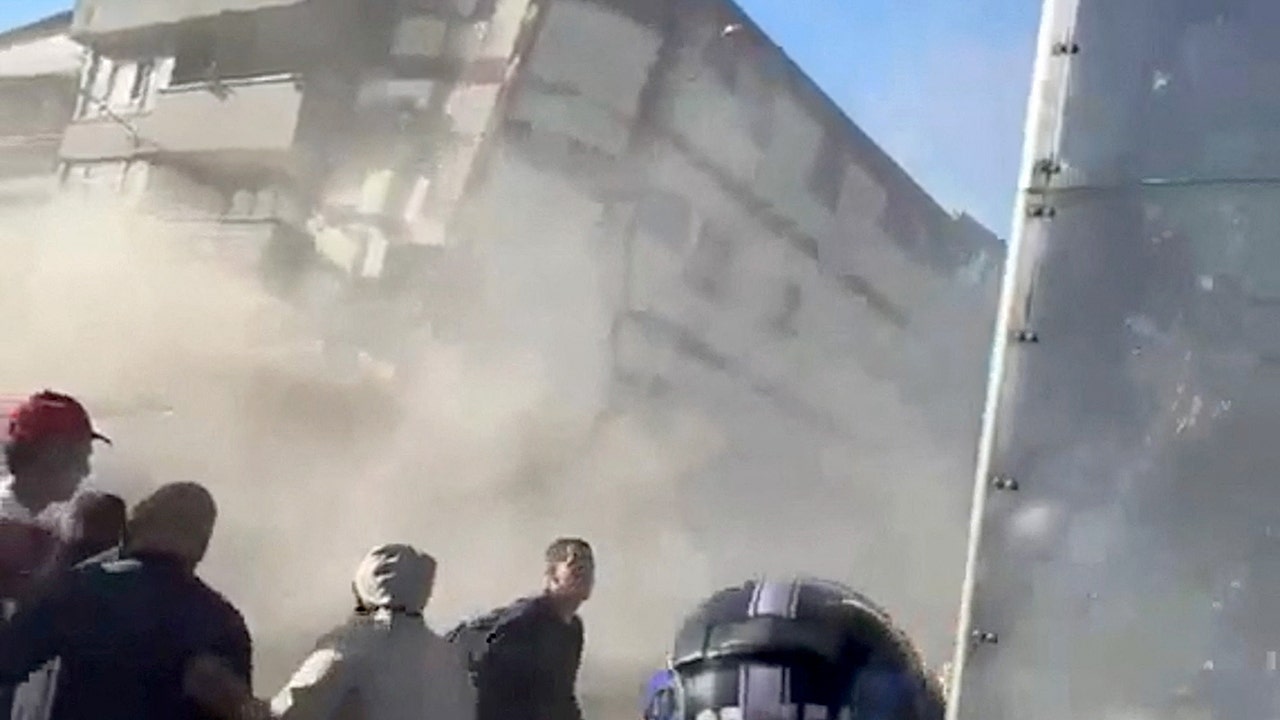
In the soft, early morning light of a Monday that promised nothing more than the routine start of a new week, the ground beneath western Colombia violently betrayed the millions of people who call the region home. At exactly 7:34 a.m., as families prepared breakfast, children readied for school, and commuters began their daily journeys, a massive magnitude 7.4 earthquake ripped through the earth at a depth of 107 kilometers near the town of San Jose del Palmar. Within seconds, the mundane sounds of morning routines were replaced by a low, deafening rumble that swelled into a terrifying roar, shaking the concrete foundations of major cities and quiet rural villages alike. In harrowing footage captured by panicked onlookers, multi-story buildings can be seen swaying violently like blades of grass before their structures ultimately give way, collapsing into suffocating clouds of gray dust as the terrified screams of bystanders pierce the air. For those caught in the epicenter’s reach, the sudden, violent shifting of the earth was a disorienting and deeply traumatizing reminder of humanity’s fragile existence against the sheer, unpredictable forces of nature, turning what should have been an ordinary day into a collective nightmare of falling concrete, dust-choked skies, and an immediate struggle for survival.
The human cost of this sudden seismic upheaval has been devastatingly high, with at least 111 lives lost and another 87 individuals nursing severe physical injuries—numbers that rescue workers fear will climb as more heavy debris is cleared from the impact zones. In Cali, one of Colombia’s largest and most vibrant urban centers, the physical devastation is written on the collapsed facades of more than two dozen structures that now lie in ruin. Mayor Alejandro Eder described a city operating under a cloud of profound anxiety as local rescue teams, pushed to their absolute limits, scramble across twelve identified critical points where people remain trapped in the dark, cramped voids beneath pancaked concrete. Yet, amid the suffocating dread and the smell of pulverized stone, there have been brief, shining moments of hope that fuel the exhausted search-and-rescue teams; the successful extraction of an elderly woman and a young girl, both pulled breathing and alive from the ruins, served as a powerful testament to human resilience and the refusal of emergency workers to give up. Every bucket of rubble cleared by hand and every listening device lowered into the cracks represents a desperate race against time, a battle to bring sons, daughters, mothers, and fathers back to the light before their air and strength run out.
The geography of the disaster paints a picture of widespread tragedy across western Colombia’s varied landscape, spanning from bustling modern cities to isolated, vulnerable rural outposts. The heaviest losses are distributed across several provinces, with Risaralda bearing the brunt of the tragedy with at least 40 confirmed deaths, particularly around the hard-hit municipality of Pereira. In Valle del Cauca, where the cultural hub of Cali is located, 27 lives were claimed, while the remote and heavily forested province of Choco reported nine fatalities, alongside minor losses in Caldas and Antioquia. Choco, a region marked by its stunning Pacific coastline but often isolated by economic and infrastructural challenges, faced a unique set of hurdles; Governor Nubia Carolina Cordoba-Curi warned of significant damage in the provincial capital of Quibdo and pleaded with terrified residents to remain outdoors and vigilant against unpredictable, dangerous aftershocks. The physical disconnection of the region was instantly exacerbated as the civil aviation authority suspended all flights at key airports including Pereira, Manizales, Quibdo, Armenia, Cartago, and Buenaventura, halting travel and complicating the initial flow of specialized medical personnel and heavy rescue equipment to the most battered communities.
For Colombia’s newly inaugurated president, Abelardo De La Espriella, the earthquake represents a sudden and monumental baptism of fire, thrusting his brand-new administration into an immediate state of national emergency just days after taking office. A presidency’s early days are typically characterized by ceremonial optimism, political appointments, and policy debates, but De La Espriella was forced to immediately pivot to crisis management, declaring a state of emergency to mobilize the full weight of the national government’s resources. “The national government has all of its capabilities deployed to protect lives, assist affected communities and deliver aid wherever it is needed,” the president declared, his voice carrying the immense weight of a leader trying to reassure a traumatized public while coordinating a massive, multi-city disaster response. The primary objective of the administration remains clear and singular: saving those who are still breathing beneath the weight of collapsed buildings. This sudden tragedy will undoubtedly define the early trajectory of De La Espriella’s leadership, testing the administrative competence, logistics networks, and emotional intelligence of his young government under the unforgiving spotlight of a national tragedy.
As the scale of the destruction became clear to the world, international allies quickly stepped forward to offer solidarity and practical assistance, highlighting the global community’s interconnectedness in times of acute human suffering. In the United States, Secretary of State Marco Rubio expressed deep concern on behalf of the American government, affirming that the Trump administration is closely monitoring the situation and stands fully prepared to support the Colombian people and President De La Espriella’s government as they navigate the difficult aftermath. Beyond diplomatic pledges of aid, the crisis also triggered immediate practical safety measures for foreign nationals on the ground; Rubio urged Americans traveling or residing in Colombia to enroll in the State Department’s Smart Traveler Enrollment Program (STEP) and closely monitor updates from the U.S. Embassy in Bogota. This rapid diplomatic mobilization underscores how quickly local tragedies resonate on the global stage, transforming a domestic natural disaster into a collaborative international humanitarian effort to save lives, rebuild broken infrastructure, and restore a sense of safety to a deeply shaken nation.
This latest tectonic disaster strikes a region already deeply scarred by seismic instability, casting a long shadow that stretches across national borders in South America. For many in the region, the tremors on Monday morning brought back fresh, painful memories of neighboring Venezuela’s devastating twin earthquakes in June, which claimed over 6,000 lives and left a trail of immense grief, particularly along its Caribbean coast. Though this Colombian earthquake struck deep within the earth—preventing a catastrophic tsunami from forming in the Pacific—the vibrations were powerful enough to be felt in Venezuelan border states like Tachira and as far inland as Barquisimeto, serving as a visceral reminder of the shared geological vulnerability of the Andean nations. As Colombians begin the agonizingly slow process of mourning their dead, clearing the shattered remains of their homes, and healing their physical and psychological wounds, they do so with a quiet, enduring strength that has long characterized their history. The road to recovery will be measured not just in the reconstruction of concrete walls and the reopening of airport runways, but in the steady, patient restoration of community life and the shared hope that rises from the rubble.