


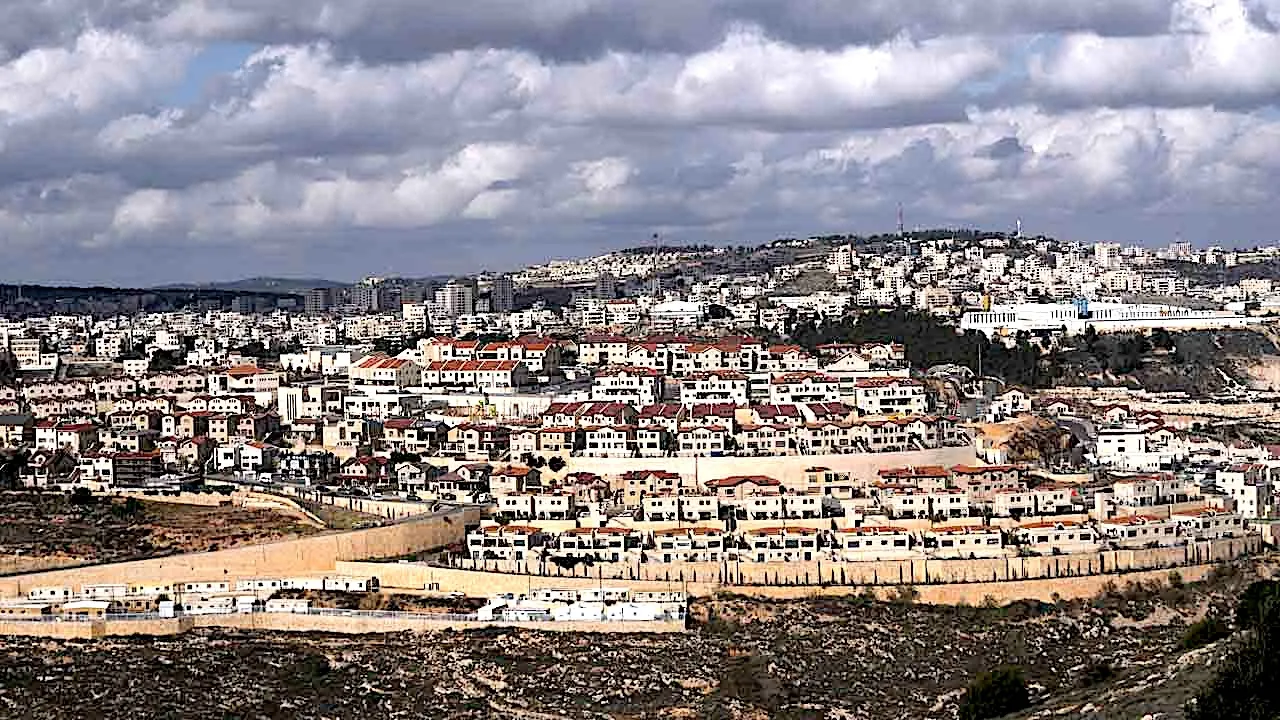
The United Kingdom’s decision to impose sweeping sanctions on Israeli settlements in the West Bank has triggered one of the most serious diplomatic ruptures between Israel and a major Western ally in recent memory. The measures, announced by Foreign Secretary Ed Miliband to Parliament, were framed as a necessary response to what Britain called “unprecedented levels of settler violence and settlement expansion.” They include a ban on imports from Israeli settlements, sanctions on companies and individuals involved in settlement growth, and a refusal to grant export licenses for arms or other goods that materially contribute to the occupation. Israel answered within hours. Foreign Minister Gideon Sa’ar, acting with Prime Minister Benjamin Netanyahu’s approval, announced the closure of the British Consulate in Jerusalem, the removal of British representatives from the International Gaza Support Center in Kiryat Gat, an end to British activities training Palestinian Authority forces in the West Bank, and a ban on entry to 12 British elected officials and other British nationals accused of antisemitic or anti-Israel activity. Sa’ar was blunt: “Measures against Israel will not go unanswered. Whoever acts against Israel, Israel will act against them, and they will lose their influence and relevance in the region.” The confrontation comes at a delicate moment, just weeks before the U.N. General Assembly and less than two months before Israel’s Oct. 27 election. It also drew a sharp warning from a senior Trump administration official, U.S. Ambassador to Israel Mike Huckabee, who suggested Britain could face economic consequences in the United States. The speed and severity of the exchange made clear that this was not a routine diplomatic disagreement but a fundamental collision over the future of the West Bank, the meaning of international law, and the limits of alliance loyalty.
At the heart of the British package is a legal and moral argument that the occupation itself is unlawful. Miliband told lawmakers, “Today, I announce that the official view of the British government is that the occupation is unlawful.” He went out of his way to separate the settlements from the State of Israel, insisting that “the sanctions regime will target illegal settlement and settlement expansion. Not Israel.” Britain will continue to support trade with Israel inside the Green Line, he said, and he “wholeheartedly” opposed the broader Boycott, Divestment and Sanctions movement. The move was not unilateral in spirit. Britain coordinated with France, Canada and other European partners, who jointly expressed alarm about the E1 project east of Jerusalem and other settlement activity that they say threatens the territorial viability of a future Palestinian state. At the same time, the foreign ministers acknowledged Israel’s “legitimate security interests” and repeated their condemnation of Hamas’s Oct. 7 terrorist attack, calling it “the worst antisemitic massacre since the Holocaust.” Their stated goal remains the two-state solution: Israel and “a sovereign, democratic and viable Palestinian state” living side by side in peace and security. Miliband also used the moment to address rising antisemitism in Britain, declaring that “holding British Jews responsible for the actions of the Israeli government is antisemitism, plain and simple.” He reaffirmed Israel’s right to defend itself, called for Hamas to disarm and dismantle its terrorist infrastructure under the U.S.-led 20-point Gaza plan, announced sanctions against the Hezbollah financing institution Al-Qard Al-Hassan, and said Britain was reimposing major economic sanctions on Iran while continuing security cooperation with Israel against shared threats. The message was carefully calibrated: we are not your enemy, but we will not accept settlement expansion. Yet for many Israelis, the distinction felt academic. The sanctions were announced in the language of international law, but they landed as a sweeping condemnation of the entire settlement enterprise, and by extension, of the Israeli government that supports it.
Israel’s response was swift, symbolic, and deeply personal. Closing the British Consulate in Jerusalem is not merely a bureaucratic act; it is a statement that Britain’s diplomatic presence in the city is no longer welcome. Removing British representatives from the International Gaza Support Center and ending British training for Palestinian Authority forces strike at concrete programs that Britain has used to maintain influence and stability in the region. Denying entry to 12 British elected officials and other nationals accused of antisemitic or anti-Israel activity turns the diplomatic conflict into a matter of individual travel and access. Sa’ar accused London of blatant interference in Israel’s internal affairs, saying the sanctions were driven by domestic British politics ahead of the Labour Party conference rather than by genuine concern for peace. Israeli President Isaac Herzog echoed that view, calling the British move a “grave miscalculation” and “gross interference” in Israel’s upcoming election. The timing is hard to ignore. With the U.N. General Assembly approaching and an Israeli election scheduled for Oct. 27, both sides are playing to domestic audiences as much as to the international community. British officials reject the accusation of election meddling, insisting that the measures are an effort to preserve the possibility of a two-state solution before it is too late. But Israeli leaders see a familiar pattern: European governments, facing domestic political pressure from pro-Palestinian constituencies, choose Israel as a convenient target. Sa’ar’s warning that Britain would “lose their influence and relevance in the region” was not just a rhetorical flourish. Israel has been diversifying its diplomatic and economic relationships, and it clearly believes it can absorb the loss of British goodwill. The question is whether Britain, by taking this stand, is genuinely advancing peace or simply making itself feel morally righteous while hardening Israeli public opinion against compromise. The answer depends on whom you ask, and the divide between the two perspectives is now wider than ever.
The United States immediately made clear that it would not join the coordinated sanctions push. Secretary of State Marco Rubio said Washington does not want to see “anything destabilizing” in the West Bank, but that it would not follow Britain, France and Canada in blocking imports from Israeli settlements. The more forceful reaction came from U.S. Ambassador to Israel Mike Huckabee, who warned in a BBC interview that Britain could face real economic consequences. Asked whether the U.K. should expect repercussions, Huckabee said, “I think without a doubt there will be.” He pointed to Florida and other states with anti-boycott laws, arguing that British companies could find themselves unable to do business there. “If the Brits do something like this with a partner, Israel, then they will not be able to do business in Florida,” he said, warning of a “huge economic impact on British businesses.” Huckabee also challenged the legal basis of the British policy, arguing that Israel is permitted under the Oslo agreements to build communities in Area C. He went further, saying, “I feel like that it’s a discrimination against the Israeli government. It’s a discrimination against the Jewish people. And I don’t understand the rationale.” His language reflected the Trump administration’s broader approach: Israel is not an occupier to be sanctioned but a sovereign ally to be defended. Israeli legal activists echoed that view. Nitsana Darshan-Leitner, president of the Tel Aviv-based Shurat HaDin-Israel Law Center, called the sanctions “political theater staged at Israel’s expense.” She argued that the territories are “disputed, not sovereign Palestinian land, and their future must be negotiated by the parties under the Oslo framework.” She also noted that little of the roughly $8 billion in annual U.K.-Israel trade originates in West Bank settlements, so the direct economic impact would be limited. The real effect, she suggested, would be political: shaping Israel’s election debate and emboldening those who see Israel as an international pariah. The American and Israeli critiques share a common theme: Britain is sacrificing a trusted alliance for a symbolic gesture that will not change facts on the ground. But British officials would argue that the facts on the ground are changing every day, and that doing nothing is itself a choice.
The policy has also exposed deep divisions within Britain itself. Conservative lawmaker Tom Tugendhat acknowledged in Parliament that illegal settlements were wrong and that some settlers had committed “outrageous abuses” against Palestinians. But he warned that the government’s response risked hurting ordinary Israelis and Palestinians while doing little to change the situation. “What we reject here is not the intent, but the performative politics,” he said, arguing that acting without sufficiently broad international support would only isolate Britain. An unnamed Labour MP told The Telegraph that the prime minister had faced pressure from colleagues worried about Gaza-related campaigning and losing seats to the Greens, suggesting that domestic electoral politics played a role in the timing and intensity of the announcement. Israeli officials have made the same accusation more bluntly, claiming London is trying to influence Israel’s election. The British government rejects that framing, but the political context is undeniable. The most painful criticism came from Chief Rabbi Sir Ephraim Mirvis, who called Tuesday “a truly dark day for British Jews.” In a statement on X, he wrote, “Today our Government has chosen to ignore the deep concerns expressed by so many of us. These measures will succeed only in bolstering the very extremism they seek to target.” Mirvis argued that the sanctions would not advance peace and could deepen hostility toward Israel at a time of heightened concern about antisemitism in Britain. “Gesture politics of this kind feeds into an increasingly hostile discourse about Israel,” he wrote, warning that the cumulative effect of such policies could “further embolden those, at home and abroad, who use hatred as a weapon against Jews.” Miliband, who opened his statement by describing himself as a “proud British Jew” with “the deepest gratitude to the State of Israel,” seemed to anticipate this criticism. He spoke of his grandmother, who found refuge in Israel after losing her husband and 60 other family members in the Holocaust, and he insisted that his argument was not with the Jewish state or its people. “Our argument is not with the people of Israel, with whom the U.K. has unshakable bonds,” he said. “Our argument is with the conduct of its government.” But for many British Jews, that distinction is hard to hear when the government’s first major action toward Israel is a sanctions regime. The sense of betrayal is real, and it has made the debate far more personal than a typical foreign policy dispute.
Beyond the diplomatic maneuvering and legal arguments, this is a story about people trying to live their lives in the shadow of a conflict that will not end. For Israeli settlers, the British sanctions feel like a denial of their right to build homes in the land they consider their biblical and historical homeland. For Palestinians in the West Bank, the same measures feel like a long-overdue recognition of their suffering under occupation, as their villages shrink and their hope for a state fades. For British Jews, the debate stirs painful memories of being caught between loyalty to their country and love for Israel. And for ordinary Israelis and Palestinians who simply want security, dignity and a future for their children, the latest escalation offers little comfort. The British government says it is acting to save the two-state solution; Israel says it is defending its sovereignty and security; the United States warns of economic consequences; and the Jewish community in Britain fears a new wave of hatred. Each side has a narrative that makes sense to its own supporters, and each narrative contains enough truth to be dangerous. What is lost in the noise is the human reality: the settler family whose neighbors are sanctioned, the Palestinian farmer whose land is threatened by a new outpost, the Israeli soldier who sees every foreign condemnation as proof that the world does not understand, the British Jew who feels abandoned by the institutions of his own country. The sanctions may be carefully targeted, but their emotional fallout is not. They will not dismantle a single settlement, nor will they bring a Palestinian state closer. They will, however, shape the way millions of people understand the conflict and their place in it. The hope, fragile as it is, is that both sides will eventually realize that gestures of punishment and retaliation only deepen the cycles of distrust. The path to peace was never going to run through sanctions and consulate closures. It runs through honest dialogue, difficult compromise, and the recognition that Israelis and Palestinians, British Jews and British Muslims, Americans and Europeans, all share a stake in a future where hatred is not the loudest voice. Until that recognition takes hold, the settlements will keep expanding, the sanctions will keep coming, and the people caught in between will keep paying the price.